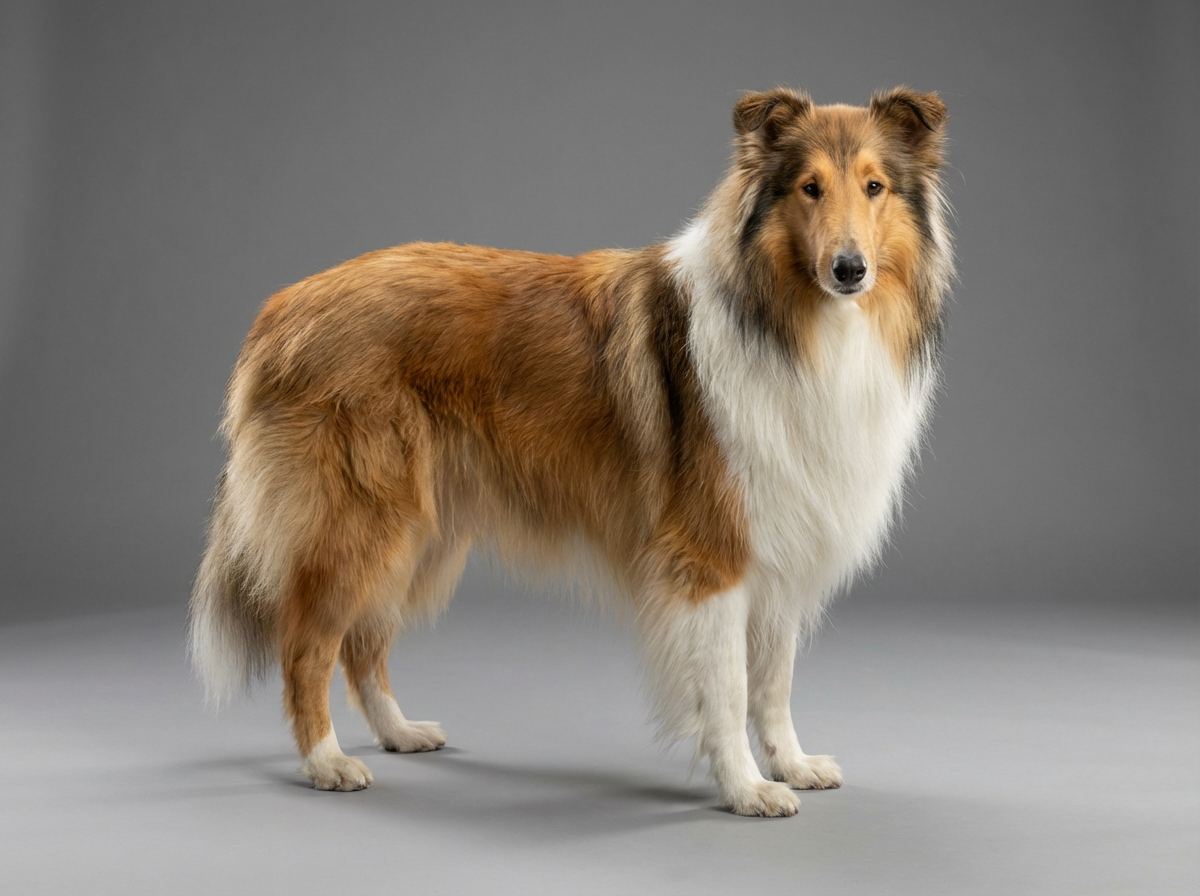
Health
What is wobbler syndrome in a Collie?
Compression of the spinal cord in the neck from vertebral instability or malformation, producing a swaying, unsteady hind-end gait that can spread to the front limbs.

Quick answer
What is wobbler syndrome in a Collie?
Compression of the spinal cord in the neck from vertebral instability or malformation, producing a swaying, unsteady hind-end gait that can spread to the front limbs.
Wobbler syndrome gets its name from the walk. The hind end sways and crosses over, the dog looks slightly drunk from behind, and the front legs — when they go — go with a short, choppy, stilted stride. What is happening is compression of the spinal cord in the neck, where the cervical vertebrae have become unstable or malformed, and the nerve signals travelling down to the legs are being squeezed.
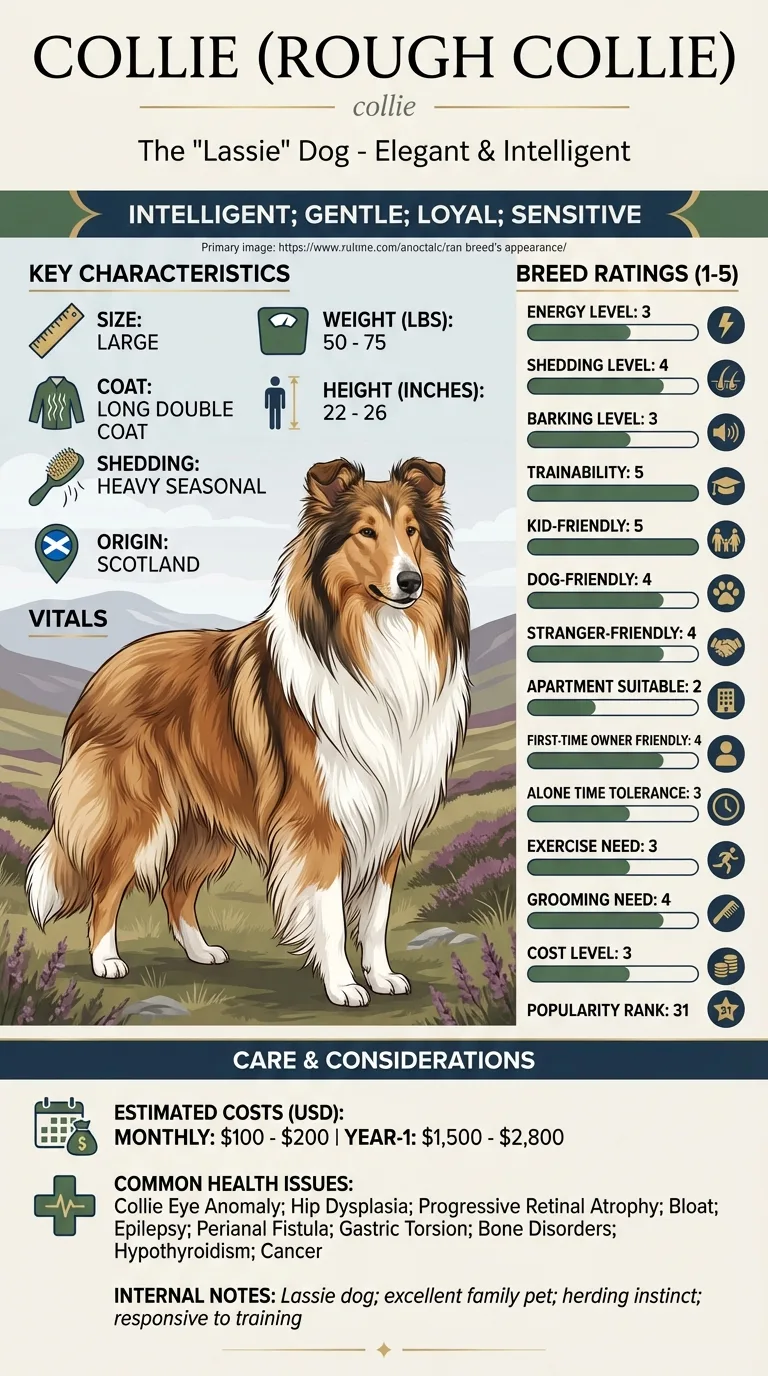
Owners who attribute the first symptoms to age, arthritis or hips, and lose months before anyone images the neck. Also households where the dog's decline is gradual enough to normalise — a slightly wide stance, a bit of scuffing on walks, an odd stumble on stairs — until something more dramatic forces the issue.
This guide is not medical advice. If your dog shows pain, sudden behavior change, or worsening symptoms, consult a licensed veterinarian.
Some links may be affiliate links. We may earn a commission at no extra cost to you. We only suggest products we believe are helpful for dog owners.
We research and check what we publish, but we do not warrant that any figure, date, price, or statement is accurate, complete, or current, and we accept no liability for any loss, cost, injury, or other harm arising from the use of this site. Use it as one reference among several. You remain responsible for your own decisions and for your dog's care - confirm anything that matters with a licensed veterinarian or another qualified professional before you act on it. Full disclaimer.
Wobbler syndrome is compression of the cervical spinal cord caused by vertebral instability or malformation in the neck. It produces a progressive, typically painless-looking change in gait that starts in the hind limbs and may spread to the front. Diagnosis relies on advanced imaging; management ranges from conservative medical care to surgical decompression.
It is a recognised problem of large and giant breeds rather than a common one across dogs generally. In a Collie it is far less frequently the answer than hip dysplasia, which is precisely why it tends to be reached late — after the more likely explanations have been tried and have not worked.
Collies fall in the large-breed weight range, at 50 to 75 pounds, where cervical vertebral instability is recognised. The breed's documented bone disorders and hip dysplasia are relevant here in a specific and slightly perverse way: they supply a plausible competing explanation for the same early signs, which delays the neurological workup that would actually find this. Nothing about the Collie's coat, temperament or energy level drives the condition itself — this is structural.
Nothing in the environment causes wobbler syndrome, but several things make an affected dog worse or accelerate the visible decline. Slick floors force constant micro-corrections through an already unstable neck. Collar pressure and pulling load the cervical spine directly. Repeated jumping down from cars, beds and sofas adds impact through the front end. High-impact activity on a dog already showing gait change compounds the problem.
Book an appointment as soon as you see a persistent change in gait — hind feet crossing or swinging wide, scuffed nails, a wider stance, or repeated stumbling. Say explicitly that you are concerned about a neurological cause in the neck, because that framing changes which images get taken. Go urgently, the same day, if the dog becomes acutely unable to stand, deteriorates suddenly over hours, drags its feet so the tops scuff raw, or loses control of bladder or bowels — rapid progression can mean serious cord compression, and delay costs function that may not come back. Ask directly about referral to a neurologist and about MRI, since plain radiographs frequently do not answer this question.
Collies carry documented hip dysplasia and bone disorders, so a wobbly rear end has an obvious and readily available explanation that happens to be the wrong one. Both conditions produce reluctance on stairs, a changed stance, and difficulty rising.
The useful distinctions: hip pain usually produces a dog that resents having the hip extended and often improves noticeably on anti-inflammatories. Neurological compression produces a dog that places its feet wrongly rather than painfully — knuckling over, dragging, crossing — and does not straighten out with pain relief alone.
This matters practically because imaging follows the hypothesis. Radiographs of the pelvis will not show a compressed cervical cord. If a dog has been treated for hips for months without meaningful improvement, that is itself a reason to ask whether the neck has ever actually been looked at, and advanced imaging such as MRI is generally what settles the question.

Start here: Collie Most Common Genetic Disorders: What to Screen For
See all Collie health problems, which breeds are prone to wobbler syndrome, or the full Collie breed guide for temperament, exercise needs and ownership costs.
This is a condition that is managed rather than cured. Conservative management — activity restriction, harness, anti-inflammatory support under veterinary direction, rehabilitation — can hold many dogs steady for extended periods, and some improve. Surgical decompression, where it is appropriate, typically involves a recovery measured in months rather than weeks, with strictly controlled activity throughout. Progression is common either way; the honest framing is slowing decline and preserving function rather than restoring a normal spine.
Success is a dog that keeps its footing, keeps its dignity, and keeps doing the parts of its life that matter — steady walks, comfortable rest, safe movement around the house — for as long as possible. It is not a return to the gait the dog had at three. Owners who measure against that standard end up disappointed by outcomes that were, medically, quite good.
Almost nothing about early wobbler syndrome points at the neck. The dog rarely cries out, rarely resists having its head handled, and often shows no obvious pain at all. What changes is how it moves.
Watch from directly behind on a flat surface. The hind feet swing wide or cross the midline. The dog stands with its back legs further apart than it used to, as though bracing. Nails on the hind feet start wearing unevenly or scuffing audibly on pavement. On slick floors the back end slides out where it never used to.
When the front limbs become involved the picture changes character — a shorter, stiffer, more deliberate step, sometimes described as walking on stilts. That combination, floaty behind and choppy in front, is characteristic enough that it should send you straight to a vet with the words 'I think this is a neck problem' rather than 'I think it's her hips.'
If you think your Collie has wobbler syndrome, the plan is three steps: write down what you have seen and when it started, book a veterinary appointment rather than waiting for the next flare, and take video of the behaviour or symptom before you go — the thing you are worried about rarely happens in the consulting room. Screening in the parents covers collie eye anomaly, hip dysplasia, progressive retinal atrophy.
What the vet visit should produce is a diagnosis and a written plan, not just reassurance: what is being ruled out, what the monitoring interval is, and which signs mean you come back sooner. Ask what the treatment costs across a year rather than per visit, because that is the number that decides whether you are managing this condition or reacting to it.
Between appointments, keep a short log — dates, what you saw, what changed. It is the single most useful thing an owner brings to a follow-up, and for wobbler syndrome it is often what separates a clear pattern from a guess.
A nine-year-old Collie started scuffing her back nails on walks and standing with her hind legs oddly wide. Given her age and the breed's reputation for hip trouble, she was treated for suspected arthritis — anti-inflammatories, joint supplements, shorter walks. She was no worse, but she was no better either, and eight months on her front legs developed a short, stilted step her owner described as 'walking like a wind-up toy.' A referral and an MRI found cervical compression. She was managed conservatively with a harness, rugs across the tiled hallway, a car ramp and a rehabilitation programme, and she held steady for a further two years. Her owner's one regret was not questioning the hip explanation sooner, once the pain relief so clearly was not working.
Key takeaway: Treatment that produces no improvement is information. If a hip diagnosis is not responding, the neck deserves to be looked at.
Often less obviously than owners expect. Many affected dogs show neck pain only on careful examination, which is part of why the condition is missed — the dog moves badly without complaining.
The nerve fibres serving the hind limbs sit in a position within the cervical cord that tends to be affected earliest by compression, so the rear end typically declines before the front.
Usually not definitively. Plain radiographs may show vertebral changes but cannot show cord compression itself. MRI is generally what gives the answer, which is why referral matters.
No. Some dogs are managed conservatively for a long time. Whether surgery is the right call depends on the site and severity of compression and the rate of progression, and it is a specialist conversation.
It removes a direct source of load on the cervical spine every time the dog pulls or is checked on lead. It is not treatment, but it is one of the few things an owner can change immediately at no real cost.
Hip pain tends to respond to pain relief and produces resistance to hip extension. Neurological compression produces misplaced feet — knuckling, crossing, dragging — that pain relief alone does not fix.
Usually gradually, over months, which is why filming the gait periodically is useful. Sudden deterioration over hours or days is a different situation and warrants urgent veterinary attention.
The early signs are set out in the sections above, and they are the reason to book a veterinary appointment rather than wait. Wobbler Syndrome in Collies is diagnosed by a vet, not from a symptom list, and the sooner it is on record the more options remain open.
Compression of the spinal cord in the neck from vertebral instability or malformation, producing a swaying, unsteady hind-end gait that can spread to the front limbs.
A change in how the dog walks away from you — hind feet crossing or swinging wide, a wider stance, scuffed nails, sliding on smooth floors.
No, though it is frequently mistaken for it in this breed. Hips produce pain-driven lameness; wobblers produce misplaced feet that pain relief alone does not correct.
Yes — switch to a harness so lead pressure stops loading an already compromised neck. It is the fastest change an owner can make.
It is managed rather than cured. Conservative care or surgery can slow decline and preserve function, but a normal spine is not the realistic endpoint.
A one-page prep sheet for this condition: the signs, the questions to ask, what to get priced. Unlocks here.
You get: Vet visit prep sheet
No spam. One-click unsubscribe. See our privacy policy.
Preview page 1 before you decide.