Behavior
What are Collie (Rough Collie) anxiety quick tips?
Start by establishing a routine and providing plenty of exercise. Use positive reinforcement training to build confidence and reduce anxiety triggers.

Quick answer
What are Collie (Rough Collie) anxiety quick tips?
Start by establishing a routine and providing plenty of exercise. Use positive reinforcement training to build confidence and reduce anxiety triggers.
Collie (Rough Collie) anxiety can affect your dog's happiness and behavior.
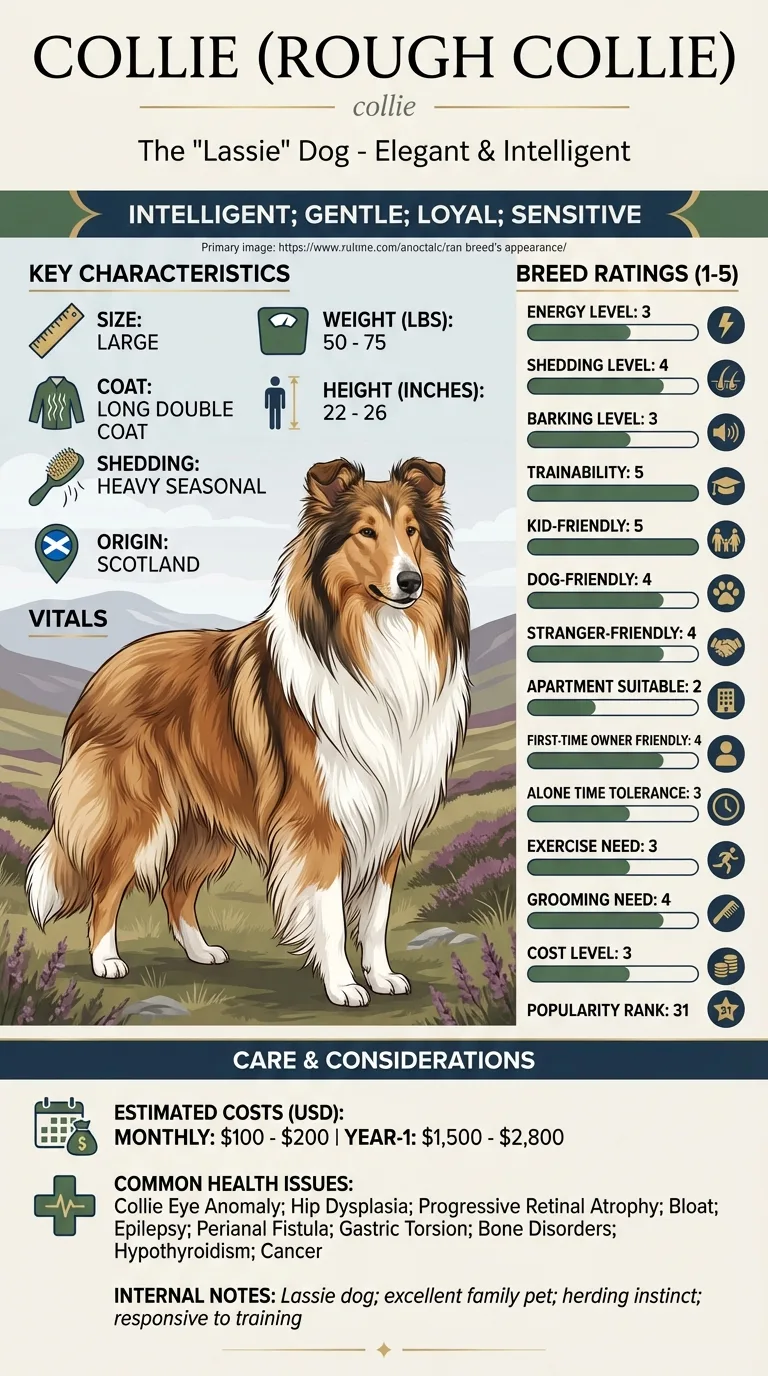
This guide is perfect for Collie owners who are struggling with anxiety issues in their dogs. Whether you're a first-time owner or experienced, you’ll find useful strategies to help your furry friend.
Collie (Rough Collie) anxiety can manifest as nervousness or distress when they are left alone or in unfamiliar situations. Day to day, you may notice your Collie pacing, whining, or attempting to escape when they feel anxious. This behavior can lead to destructive habits if not addressed promptly.
If your Collie's anxiety is severe and impacting their daily life, professional training can offer effective strategies for behavior modification. Look for trainers who specialize in anxiety issues and use positive reinforcement methods.
Consult your vet if your Collie's anxiety leads to destructive behavior, excessive barking, or health issues. A behaviorist can help create a tailored plan to address your dog's specific anxiety triggers.
There are various tools and products that can help manage your Collie (Rough Collie) anxiety effectively. These can assist in creating a calming environment and enhancing training efforts.
Making lifestyle adjustments is crucial for managing Collie (Rough Collie) anxiety. Start by establishing a consistent daily routine. Dogs thrive on predictability, so regular feeding, exercise, and playtime can help reduce anxiety levels significantly.
Consider setting specific times for walks and meals to create a sense of security.
Exercise is also essential. Collies are active dogs that need regular physical activity. A couple of long walks or a fun game of fetch each day will not only burn off excess energy but also help calm their minds.
Incorporate interactive toys or puzzle feeders to keep their minds engaged, especially when you’re not home.
Alone time is another factor to manage. If your Collie struggles with being alone, gradually increase their alone-time windows. Start with short periods and slowly extend them.
This can help your dog adapt to being on their own without feeling anxious. Additionally, create a cozy, safe space where they can retreat when feeling stressed. This should include their bed and some favorite toys to make it inviting.
Finally, be mindful of household routines. If your Collie is reactive to certain noises or activities, try to minimize disruptions. For example, if loud sounds trigger anxiety, consider using white noise machines or calming music.
All these adjustments can enhance your Collie's comfort and help manage their anxiety effectively.
Tracking progress in managing your Collie (Rough Collie) anxiety is vital. Look for small 'micro-wins' like your dog settling more quickly when you leave or being less reactive to loud noises. These signs show that your training is making a difference, even if they seem minor.
However, setbacks are normal. You might notice your Collie reverting to anxious behaviors during stressful situations, like a change in routine or a new environment. Recognizing these patterns can help you adjust your training plan or provide additional support.
To know when your plan is working, pay attention to your Collie's overall behavior. If they start to seek comfort less often or show curiosity about their surroundings, that's a positive sign. Regularly check in with your vet or a trainer to ensure you're on the right track.
If you see little improvement after consistent efforts, it may be time to escalate your approach, perhaps by increasing training sessions or exploring calming products.

The Anderson family, who lived in a bustling suburb, noticed that their Rough Collie, Max, would bark excessively and hide during thunderstorms. Initially, they tried comforting him with treats and toys, but the anxiety persisted. They decided to look for solutions online and implemented a calming routine, including a safe space for Max and anxiety wraps. After some improvement, they sought help from a professional dog trainer who recommended gradual desensitization techniques. Over a few weeks, Max showed significant progress, becoming more relaxed during storms and even enjoying walks again.
Key takeaway: Collie (Rough Collie) anxiety can often be managed through consistent routines, positive reinforcement, and professional guidance when needed.
Collie (Rough Collie) anxiety can stem from various factors, including genetics, early experiences, or lack of socialization. They are sensitive dogs, so changes in their environment or routine can trigger anxiety. Understanding your dog's triggers is key to helping them feel more secure.
Signs of anxiety in your Collie may include excessive barking, destructive behavior, or hiding. You might also notice restlessness or a reluctance to engage in normal activities. Keeping an eye on their behavior during stressful situations can help you identify when they're feeling anxious.
Managing Collie anxiety involves creating a calm environment, providing regular exercise, and establishing a consistent routine. Training exercises that focus on positive reinforcement can also help ease their fears. Consider consulting a professional trainer for tailored techniques.
Medication can be an option for severe anxiety, but it's essential to consult your veterinarian first. They can assess your dog's needs and recommend the best course of action. In many cases, behavior modification and training can be effective without medication.
To help with separation anxiety, start by gradually increasing the time you leave your Collie alone. Provide engaging toys or puzzles to keep them occupied. Training them to associate your departures with positive experiences can also make a significant difference.
Yes, techniques like desensitization and counter-conditioning can be beneficial for anxious Collies. Teaching them commands in a calm environment and rewarding them for positive behavior can help build their confidence. Consistency is crucial, so practice regularly.
Older Collies may develop anxiety due to changes in their environment or health issues. As they age, they can become more sensitive to stressors like loud noises or unfamiliar people. Regular vet check-ups can help rule out health concerns that may contribute to their anxiety.
Managing anxiety in multiple Collies can be challenging, but consistency is key. Create a calm environment and establish a routine for training and exercise. It’s also helpful to work with each dog individually to address their specific anxiety triggers.
Yes, traveling can increase anxiety in Collies due to changes in routine and unfamiliar surroundings. To minimize their stress, try to prepare them by familiarizing them with travel gear and practicing short trips. Bring along their favorite toys or blankets for comfort.
To reduce anxiety in your Collie, consider creating a safe space for them in your home. Use calming techniques like soothing music or pheromone diffusers. Regular exercise and mental stimulation can also help keep their anxiety levels in check.
Separation anxiety in Collies often shows through excessive barking, destructive behavior, or attempts to escape when left alone. It's important to gradually accustom them to being alone and provide engaging toys to keep them occupied during your absence.
Start by establishing a routine and providing plenty of exercise. Use positive reinforcement training to build confidence and reduce anxiety triggers.
Aim for at least 30 to 60 minutes of exercise daily to help reduce anxiety. Regular physical activity can greatly improve your dog's mood and behavior.
Yes, calming collars or pheromone diffusers can help soothe anxious Collies. Always consult your vet before trying new products.
Training duration varies based on the individual dog and the severity of anxiety. Consistent training over weeks or months can lead to significant improvements.
Anxiety and pain look alike from the outside. Get the prep sheet for this breed's separation-anxiety page and take it to the vet.
You get: Vet visit prep sheet
No spam. One-click unsubscribe. See our privacy policy.
Preview page 1 before you decide.
This guide is not medical advice. If your dog shows pain, sudden behavior change, or worsening symptoms, consult a licensed veterinarian.
Some links may be affiliate links. We may earn a commission at no extra cost to you. We only suggest products we believe are helpful for dog owners.
We research and check what we publish, but we do not warrant that any figure, date, price, or statement is accurate, complete, or current, and we accept no liability for any loss, cost, injury, or other harm arising from the use of this site. Use it as one reference among several. You remain responsible for your own decisions and for your dog's care - confirm anything that matters with a licensed veterinarian or another qualified professional before you act on it. Full disclaimer.
Not sure which breed is right for you? Take our 2-minute quiz to find out.
Take the quiz