Behavior
How to stop Boxer myotonia congenita?
Focus on gradual exercise and warm-up routines to manage stiffness in your Boxer.

Quick answer
How to stop Boxer myotonia congenita?
Focus on gradual exercise and warm-up routines to manage stiffness in your Boxer.
Boxer myotonia congenita is a condition that causes muscle stiffness, impacting your dog's ability to move comfortably.
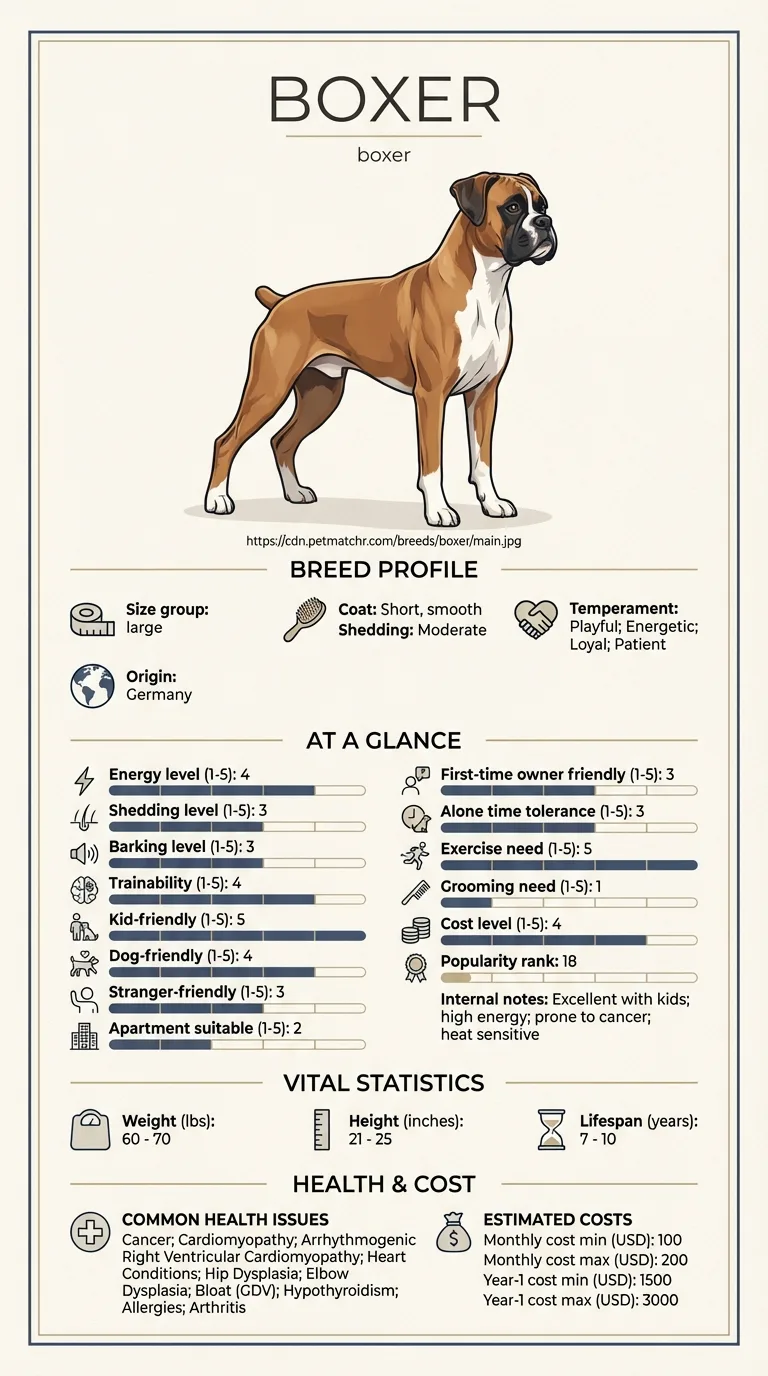
Typically, owners of Boxers who are playful and energetic might notice their dog having difficulty getting up or moving after resting. This can be particularly concerning for active families or first-time dog owners.
This guide is not medical advice. If your dog shows pain, sudden behavior change, or worsening symptoms, consult a licensed veterinarian.
Some links may be affiliate links. We may earn a commission at no extra cost to you. We only suggest products we believe are helpful for dog owners.
We research and check what we publish, but we do not warrant that any figure, date, price, or statement is accurate, complete, or current, and we accept no liability for any loss, cost, injury, or other harm arising from the use of this site. Use it as one reference among several. You remain responsible for your own decisions and for your dog's care - confirm anything that matters with a licensed veterinarian or another qualified professional before you act on it. Full disclaimer.
Check this first
Understanding when Boxer myotonia congenita is an emergency can help you respond quickly. If your Boxer shows severe muscle stiffness, struggles to walk, or collapses, these are red flags. In such cases, you should contact your veterinarian immediately.
Mild cases, on the other hand, may not require urgent care. If your Boxer experiences occasional stiffness after exercise but returns to normal within a few minutes, it may be manageable with a monitoring plan. Keeping track of when these episodes occur can provide valuable information for your vet.
Look for signs like excessive panting, inability to relax, or a sudden change in behavior. These symptoms could indicate that it’s time to call your vet. Always err on the side of caution when it comes to your pet's health.
If any of these apply, call your vet or an emergency clinic now. The rest of this page is for the cases that are not an emergency.
Boxer myotonia congenita is a condition that causes muscle stiffness, affecting the dog's ability to move freely. Day-to-day, you may notice your Boxer having difficulty rising, walking, or climbing stairs. This can lead to frustration for both you and your dog, as they may struggle with normal activities.
Myotonia congenita is relatively common in Boxers, especially as they age. Many owners report seeing symptoms, but the severity can vary widely. Understanding and recognizing these signs can help you manage the condition effectively.
Boxers are genetically predisposed to myotonia congenita, which causes muscle stiffness. This condition is inherited and linked to a specific gene mutation. It can lead to difficulties in movement, especially after periods of rest.
Environmental factors, such as lack of exercise or sudden changes in temperature, can exacerbate symptoms. Stressful situations or inadequate socialization may also trigger more pronounced muscle stiffness in affected dogs.
Consult your vet if you notice sudden changes in your Boxer’s movement or if stiffness persists despite your efforts. A vet can recommend treatments or therapies that may help alleviate symptoms.
Here are some common mistakes that can worsen Boxer myotonia congenita. Avoiding these behaviors will help you support your dog better.
Start here: Boxer Most Common Genetic Disorders: What to Screen For
See all Boxer health problems, which breeds are prone to myotonia congenita, or the full Boxer breed guide for temperament, exercise needs and ownership costs.
You can expect to see improvements in your Boxer within 2 to 4 months of consistent care and management.
Success means your Boxer has more control over their muscle stiffness, can engage in physical activities comfortably, and shows a greater willingness to participate in training exercises.
When Sarah adopted Bella, her energetic Boxer, she soon noticed Bella would often freeze up during playtime. After a vet visit, Sarah learned that Bella had myotonia congenita, a condition causing muscle stiffness. Determined to help Bella adapt, Sarah researched training techniques and consulted a dog trainer experienced with this issue. With a mix of gentle exercise, positive reinforcement, and patience, Bella slowly learned to manage her muscle stiffness. Over time, she became more active and playful, even mastering some fun tricks.
Key takeaway: With proper training and understanding, owners can help their Boxers with myotonia congenita lead happier, more active lives.
Myotonia congenita is an inherited condition that affects muscle function. If your Boxer has this issue, it may be due to genetic factors passed down from their parents. Consulting with a vet can help you understand the implications for your dog's health.
To assist your Boxer, ensure they have a warm-up routine before exercise. Gradual increases in activity can help manage stiffness and improve mobility. Regular veterinary check-ups are also crucial.
Training can help your Boxer adapt to their condition. Focus on low-impact exercises and positive reinforcement techniques to keep them engaged without overexerting them.
Signs include difficulty getting up after rest, stiffness during movement, and a tendency to tremble. If you notice these symptoms, consult your vet for guidance.
While myotonia congenita can affect mobility, it is not life-threatening. However, managing the condition with proper care can significantly improve your Boxer’s quality of life.
If your Boxer has severe stiffness, contact your vet immediately. They may suggest pain management strategies or physical therapy to help alleviate discomfort.
Yes, older Boxers with myotonia congenita may experience more pronounced symptoms. As dogs age, their muscles may become weaker, making it harder for them to move smoothly. It's important to monitor their activity levels and consult a vet for tailored care.
Common signs of myotonia congenita in Boxers include muscle stiffness, difficulty getting up, and trouble with coordination. If your Boxer seems to struggle with movement or is unusually slow, it's best to discuss this with your veterinarian.
To help your Boxer manage myotonia congenita, provide regular, gentle exercise and a warm, comfortable environment. Training can also be beneficial, focusing on short, positive sessions to build their confidence and reduce stiffness.
Surgery is not typically required for myotonia congenita in Boxers, as the condition is generally managed through lifestyle adjustments. However, if your dog has additional health issues resulting from muscle stiffness, a vet may recommend specific treatments.
Focus on gradual exercise and warm-up routines to manage stiffness in your Boxer.
Incorporate low-impact activities and ensure regular vet visits to monitor your Boxer's condition.
Yes, many Boxers with myotonia congenita can lead fulfilling lives with proper care and management.
Use positive reinforcement and keep training sessions short and engaging to avoid overexertion.
Yes, you may incur costs for regular vet visits and potential therapies, which can range from $100 to $200 monthly.
A one-page prep sheet for this condition: the signs, the questions to ask, what to get priced. Unlocks here.
You get: Vet visit prep sheet
No spam. One-click unsubscribe. See our privacy policy.
See a sample page before you decide.
Early access list
The free prep sheet covers the same-day warning signs, a symptom log and the questions to ask. We are considering a fuller kit that adds a cost worksheet for the usual tests and treatments (US price ranges with their sources) and a plain-English guide to ways of covering the bill. It is not built yet; this list tells us whether it is worth building.
One email, no spam, unsubscribe anytime. Information only, not veterinary advice.