Behavior
What are quick tips for managing Great Dane myotonia congenita?
Ensure your Great Dane gets regular, gentle exercise and avoid overexertion. Consistent vet check-ups are essential for monitoring their condition.

Quick answer
What are quick tips for managing Great Dane myotonia congenita?
Ensure your Great Dane gets regular, gentle exercise and avoid overexertion. Consistent vet check-ups are essential for monitoring their condition.
Great Dane myotonia congenita is a condition that causes muscle stiffness, affecting your dog's ability to move comfortably.
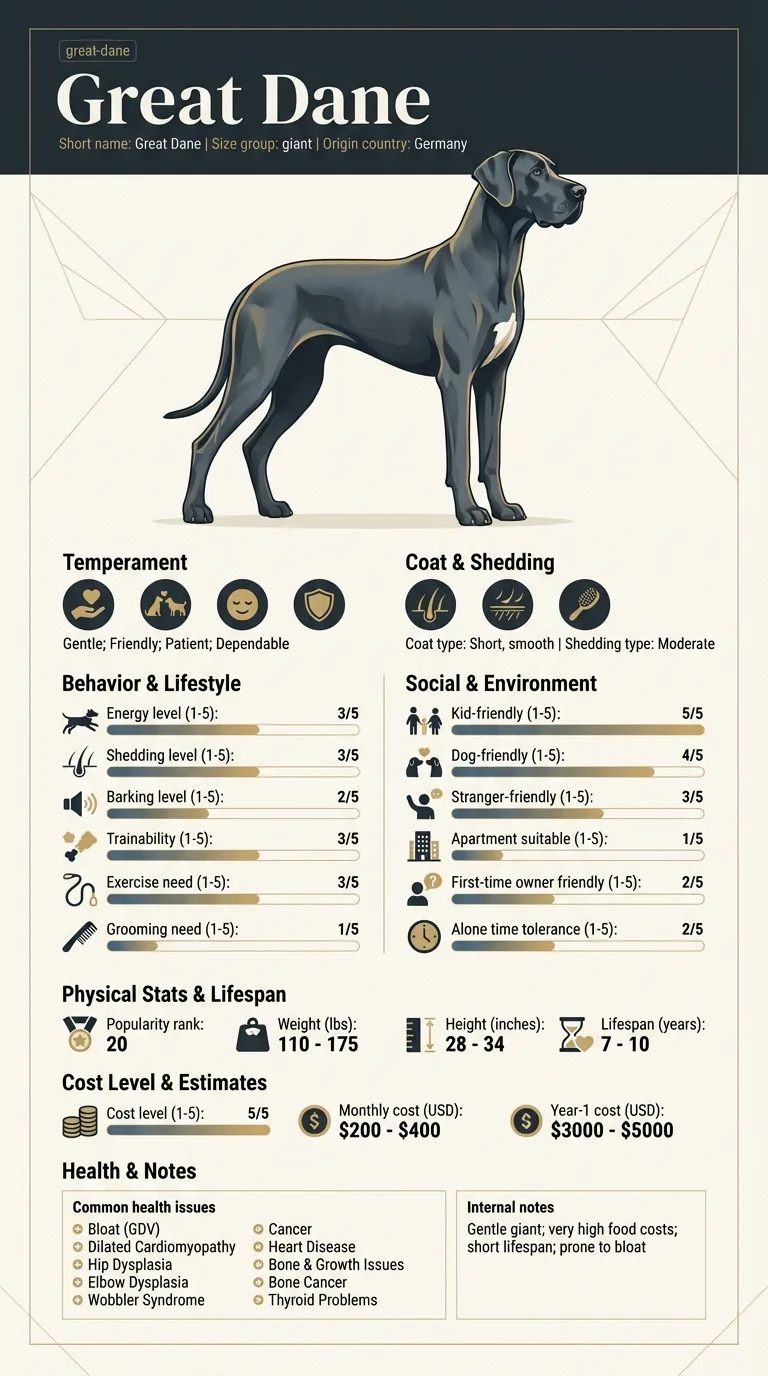
Typically, owners of Great Danes experiencing muscle stiffness may find it hard to engage in regular activities. First-time dog owners or those unfamiliar with this condition may feel particularly overwhelmed.
This guide is not medical advice. If your dog shows pain, sudden behavior change, or worsening symptoms, consult a licensed veterinarian.
Some links may be affiliate links. We may earn a commission at no extra cost to you. We only suggest products we believe are helpful for dog owners.
We research and check what we publish, but we do not warrant that any figure, date, price, or statement is accurate, complete, or current, and we accept no liability for any loss, cost, injury, or other harm arising from the use of this site. Use it as one reference among several. You remain responsible for your own decisions and for your dog's care - confirm anything that matters with a licensed veterinarian or another qualified professional before you act on it. Full disclaimer.
Check this first
Recognizing when your Great Dane's myotonia congenita becomes an emergency is crucial for their health. There are clear signs that require immediate veterinary attention, while mild cases might be monitored at home. Understanding these differences can help you make the right call for your pet.
Red-Flag Signs to Call Your Vet Now: - Severe muscle stiffness that prevents your dog from moving or standing. - Difficulty breathing or any respiratory distress. - Signs of pain, such as whining or reluctance to be touched. - Fainting, lethargy, or unusual behavior that seems out of character. - Symptoms that worsen rapidly, indicating a possible crisis.
Mild Cases to Monitor: If your Great Dane occasionally shows mild muscle stiffness but is otherwise active and eating well, you can typically manage this at home. Keep a close watch on their behavior and note any changes. Consider implementing a gentle exercise routine to help them stay limber, and consult your vet for guidance on how to stop Great Dane myotonia congenita from affecting their quality of life.
In summary, trust your instincts. If you feel something is wrong or if your dog exhibits any severe symptoms, it's always best to err on the side of caution and contact your veterinarian immediately. They can help determine the best course of action for your Great Dane's health.
If any of these apply, call your vet or an emergency clinic now. The rest of this page is for the cases that are not an emergency.
Great Dane myotonia congenita is a condition that causes muscle stiffness, impacting daily activities. Owners may notice their Great Dane experiencing difficulty moving or transitioning between positions, which can be concerning. This issue often becomes evident during playtime or when the dog is excited.
Myotonia congenita is relatively rare in Great Danes but can still occur, especially in specific bloodlines. While not every Great Dane will face this issue, awareness is essential for those who do.
Great Danes can inherit myotonia congenita, a genetic condition that causes muscle stiffness. This breed's large size may exacerbate these symptoms due to the stress on their muscles and joints. If your Great Dane has a family history of this condition, it’s more likely they will exhibit similar issues.
Environmental factors can also play a role in myotonia congenita. Lack of exercise or inappropriate training techniques may worsen muscle stiffness. Stressful situations or inconsistent routines can further exacerbate the condition, making it essential to create a stable environment.
If your Great Dane's muscle stiffness seems severe or worsens over time, schedule a visit with your vet. They can assess the condition and may recommend medications or therapies to help manage symptoms effectively.
Avoiding common mistakes can help manage Great Dane myotonia congenita more effectively. Here are some pitfalls to steer clear of.
Start here: Great Dane Most Common Genetic Disorders: What to Screen For
See all Great Dane health problems, which breeds are prone to myotonia congenita, or the full Great Dane breed guide for temperament, exercise needs and ownership costs.
With consistent care and follow-up with your vet, you can expect to see improvements in your Great Dane's myotonia congenita symptoms within 3 to 6 months.
Success looks like your Great Dane showing improved mobility, reduced muscle stiffness, and a better quality of life through regular exercise and proper training.
Emily adopted Max, a 3-year-old Great Dane, who was diagnosed with myotonia congenita. At first, Max struggled with muscle stiffness, making it hard for him to play and enjoy walks. Emily researched how to stop Great Dane myotonia congenita and found a local trainer experienced with this condition. They worked on a routine that included gentle stretching and low-impact exercises. Over time, Max became more mobile and happy, enjoying his walks and playtime again. Emily learned the importance of patience and understanding Max's needs.
Key takeaway: With the right training and care, you can help your Great Dane manage myotonia congenita and improve their quality of life.
Great Dane myotonia congenita is a muscle condition that causes stiffness and difficulty relaxing muscles. This can lead to issues with movement and can affect the dog's quality of life. It's important to understand how this condition manifests to manage it effectively.
To help your Great Dane, focus on gentle, consistent exercise to maintain muscle tone. Avoid overexertion, as this can worsen symptoms. Regular vet check-ups can also ensure your dog’s health is monitored.
Positive reinforcement training is ideal for Great Danes with myotonia congenita. Use treats and praise to encourage desired behaviors while being patient and understanding their physical limitations. Consistency is key to effective training.
Look for supportive harnesses or mobility aids that can help your Great Dane move comfortably. Supplements that promote joint and muscle health may also be beneficial. Always consult with your vet before introducing new products.
Yes, many Great Danes with myotonia congenita can lead fulfilling lives with appropriate care and management. Regular exercise, a healthy diet, and veterinary support can help them thrive. Adaptations may be needed to accommodate their condition.
Symptoms of Great Dane myotonia congenita include muscle stiffness, especially after rest or exercise. You may notice your dog having difficulty moving or getting up, which can be mistaken for general laziness or aging.
For older Great Danes with myotonia congenita, gentle and consistent exercise is key. Regular, short walks can help manage their muscle stiffness, but always consult your vet for a tailored plan.
Yes, myotonia congenita can increase the risk of accidents due to muscle stiffness, potentially leading to falls or injuries. Regular vet check-ups are important to monitor overall health and address any related concerns.
Training a Great Dane with myotonia congenita requires patience and understanding. Use positive reinforcement techniques and keep training sessions short to avoid fatigue, focusing on basic commands and socialization.
If your Great Dane shows signs of myotonia congenita, such as persistent stiffness or difficulty moving, it's advisable to see a vet. They can provide a proper diagnosis and recommend suitable management options.
Ensure your Great Dane gets regular, gentle exercise and avoid overexertion. Consistent vet check-ups are essential for monitoring their condition.
Use positive reinforcement techniques and be patient. Adapt training sessions to accommodate their physical limitations.
A balanced diet rich in nutrients will help maintain muscle health. Consult your vet for specific dietary recommendations.
A one-page prep sheet for this condition: the signs, the questions to ask, what to get priced. Unlocks here.
You get: Vet visit prep sheet
No spam. One-click unsubscribe. See our privacy policy.
See a sample page before you decide.
Early access list
The free prep sheet covers the same-day warning signs, a symptom log and the questions to ask. We are considering a fuller kit that adds a cost worksheet for the usual tests and treatments (US price ranges with their sources) and a plain-English guide to ways of covering the bill. It is not built yet; this list tells us whether it is worth building.
One email, no spam, unsubscribe anytime. Information only, not veterinary advice.