Living
Which is the better overall choice?
The GSP if you want a high-energy dog without the Corso's guarding instincts and cost; the Corso only makes sense if protection is specifically the goal.

Quick answer
Which is the better overall choice?
The GSP if you want a high-energy dog without the Corso's guarding instincts and cost; the Corso only makes sense if protection is specifically the goal.
Choosing between a Cane Corso and a German Shorthaired Pointer can be tough. Both breeds have unique traits that cater to different lifestyles. Let's break down their differences to help you decide.
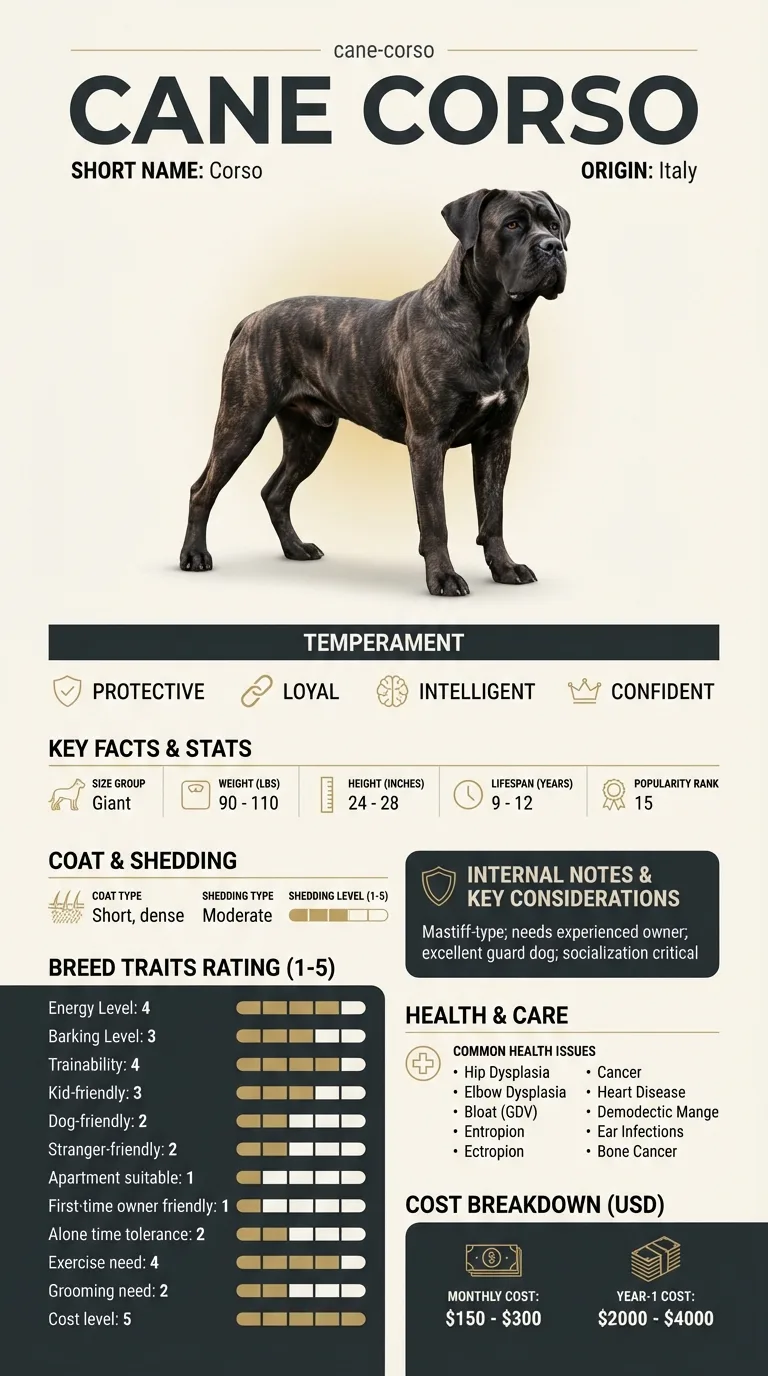
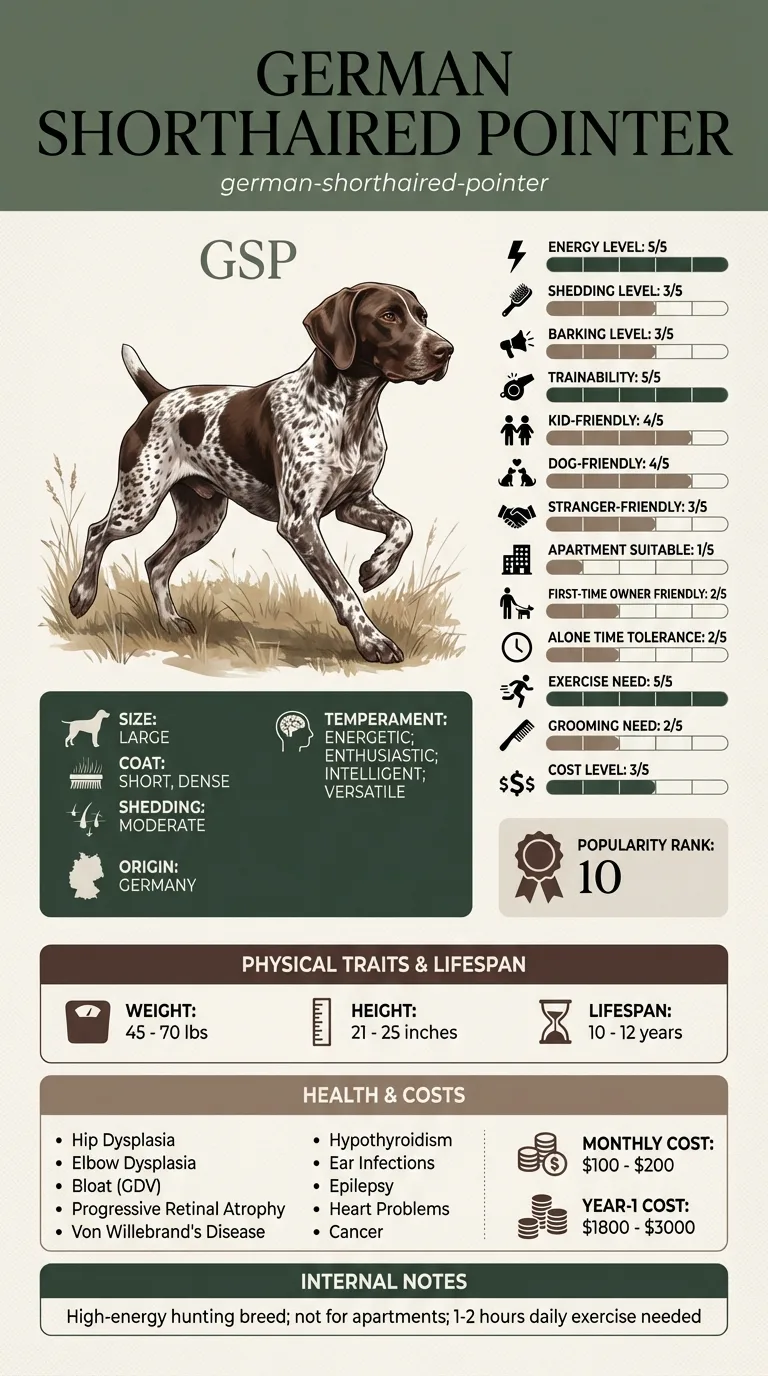
If you're considering adding a dog to your family, you might be wondering which breed is the right fit for your lifestyle. You could be a busy family with kids looking for a friendly companion, or perhaps an active individual seeking a running buddy. Understanding the differences between the Cane Corso and the German Shorthaired Pointer will guide you in making an informed decision.
The Cane Corso is a loyal guardian for those seeking protection, while the German Shorthaired Pointer excels as an energetic family dog.
Choose the Cane Corso if you want a protective dog that thrives with experienced owners and can manage a bit of independence.
Opt for the German Shorthaired Pointer if you're looking for a high-energy, friendly dog that enjoys family activities and outdoor adventures.
| Feature | cane corso | german shorthaired pointer | Winner |
|---|---|---|---|
| Size class | giant | large | Equal |
| Weight | 90–110 lbs | 45–70 lbs | Equal |
| Height | 24–28 in | 21–25 in | Equal |
| Lifespan | 9–12 years | 10–12 years | german shorthaired pointer |
| Exercise need | High (4/5) | Very high (5/5) | cane corso |
| Grooming need | Low (2/5) | Low (2/5) | Equal |
| Shedding | Moderate (3/5) | Moderate (3/5) | Equal |
| Energy level | High (4/5) | Very high (5/5) | Equal |
| Barking | Moderate (3/5) | Moderate (3/5) | Equal |
| Apartment suitability | Very low (1/5) | Very low (1/5) | Equal |
| Good for first-time owners | Very low (1/5) | Low (2/5) | german shorthaired pointer |
| Tolerates being alone | Low (2/5) | Low (2/5) | Equal |
| Trainability | High (4/5) | Very high (5/5) | german shorthaired pointer |
| Good with kids | Moderate (3/5) | High (4/5) | german shorthaired pointer |
| Good with other dogs | Low (2/5) | High (4/5) | german shorthaired pointer |
| Friendly to strangers | Low (2/5) | Moderate (3/5) | german shorthaired pointer |
| Cost level | Very high (5/5) | Moderate (3/5) | german shorthaired pointer |
| Coat | Short, dense | Short, dense | Equal |
| Origin | Italy | Germany | Equal |
| Typical monthly cost | $150–$300 | $100–$200 | Equal |
| Typical first-year cost | $2,000–$4,000 | $1,800–$3,000 | Equal |
The German Shorthaired Pointer is a large breed in its own right -- 45-70 pounds, 21-25 inches -- which puts it closer to Corso territory than most breeds on this list, even though the Corso's 90-110 pounds and 24-28 inches still puts it well ahead. This is a big-dog-versus-bigger-dog comparison, not a size mismatch.
The GSP rates a full 5 out of 5 for exercise need, the top of the scale, against the Corso's already-high 4. This is a pointer bred for all-day fieldwork, and it does not turn that drive off indoors. Both breeds carry high energy day to day, but the GSP's ceiling is higher -- this is not a dog that tires out with a single walk.
Coat care is a tie across the board: both breeds rate low (2/5) for grooming and moderate (3/5) for shedding, and both wear a short, dense coat. If grooming effort is a deciding factor for you, this pairing won't help -- pick based on something else.
Both breeds rate the same rock-bottom 1 out of 5 for apartment suitability -- this is a comparison where neither dog is the apartment-friendly option. Barking ties at moderate, and both tolerate alone time poorly (low, 2/5). A small unit with long solo hours is a mismatch for either breed, not a reason to pick one over the other.
The GSP rates slightly higher on trainability, 5 out of 5 against the Corso's 4, and slightly better for first-time owners too, 2 out of 5 versus 1. Neither number recommends either breed to a true beginner -- both need an owner ready to put in structured, consistent work from day one.
The GSP scores better with kids (4/5 vs 3/5) and other dogs (4/5 vs 2/5), and it's moderately better with strangers (3/5 vs 2/5) -- none of these are dramatic gaps, but they add up. Its temperament runs energetic, enthusiastic, and versatile rather than the Corso's protective, watchful profile, which shows up directly in these household-fit numbers.
This is the biggest health overlap of any pairing here: hip dysplasia, elbow dysplasia, bloat, ear infections, heart problems, and cancer all appear on both breeds' lists. If you're worried about a specific condition, it's likely relevant to both dogs, not just one. Lifespan is close too -- 10-12 years for the GSP against 9-12 for the Corso. The GSP's list adds progressive retinal atrophy, Von Willebrand's Disease, hypothyroidism, and epilepsy; the Corso's adds entropion, ectropion, demodectic mange, and bone cancer.
This is also the closest first-year cost gap in this batch: $1,800-3,000 for the GSP against $2,000-4,000 for the Corso -- a few hundred dollars apart at the low end. Monthly costs remain more separated, $100-200 versus $150-300. The GSP's overall cost rating of moderate (3/5) is still meaningfully below the Corso's very high (5/5), but less so than in most other comparisons.


Closer than most comparisons, but still different -- the GSP runs 45-70 pounds and 21-25 inches, the Corso 90-110 pounds and 24-28 inches. The Corso is still noticeably bigger, just not by the extreme margins seen against smaller breeds.
Extensively -- hip dysplasia, elbow dysplasia, bloat, ear infections, heart problems, and cancer appear on both lists. This is the largest health overlap of any Corso comparison.
The GSP, rating a full 5 out of 5 against the Corso's 4. It's a pointer built for all-day fieldwork and needs a serious daily outlet.
No -- both rate the rock-bottom 1 out of 5 for apartment suitability. Neither breed is a good fit for small-space living.
The GSP, marginally -- 2 out of 5 versus the Corso's 1 out of 5. Neither is genuinely beginner-friendly; both need an experienced hand.
Less than you'd expect: $1,800-3,000 for the GSP versus $2,000-4,000 for the Corso -- the tightest first-year cost gap among these comparisons.
The GSP, rating 4 out of 5 against the Corso's 2 out of 5. Its versatile, sociable temperament makes shared spaces and dog parks a smoother experience.
The GSP if you want a high-energy dog without the Corso's guarding instincts and cost; the Corso only makes sense if protection is specifically the goal.
Corso: $150-300. GSP: $100-200 -- closer than the first-year gap suggests.
The GSP, topping the scale at 5 out of 5 against the Corso's 4 -- expect serious daily activity either way.
Yes, six conditions overlap: hip dysplasia, elbow dysplasia, bloat, ear infections, heart problems, and cancer.
Secure checkout on Stripe. We never see your card.
7-day money-back guarantee. Instant access.
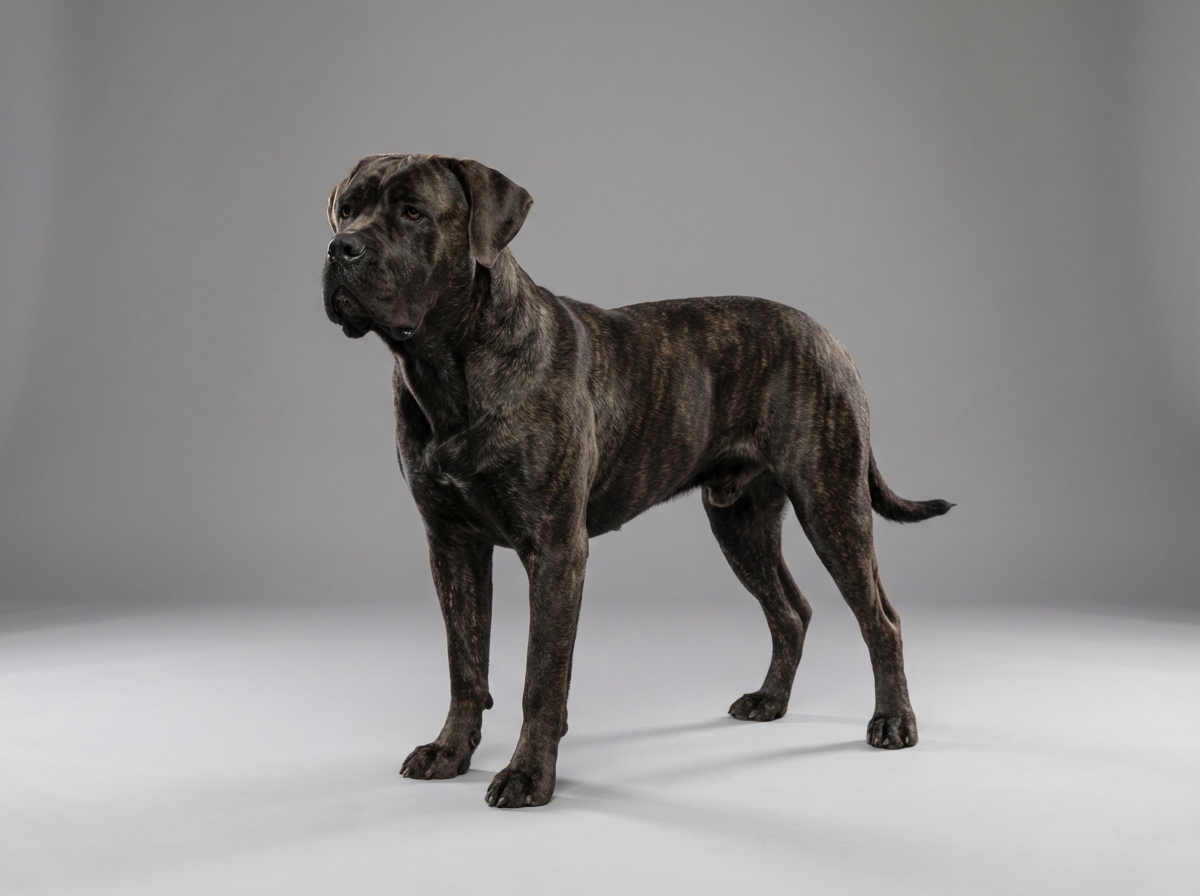
This guide is not medical advice. If your dog shows pain, sudden behavior change, or worsening symptoms, consult a licensed veterinarian.
Some links may be affiliate links. We may earn a commission at no extra cost to you. We only suggest products we believe are helpful for dog owners.
We research and check what we publish, but we do not warrant that any figure, date, price, or statement is accurate, complete, or current, and we accept no liability for any loss, cost, injury, or other harm arising from the use of this site. Use it as one reference among several. You remain responsible for your own decisions and for your dog's care - confirm anything that matters with a licensed veterinarian or another qualified professional before you act on it. Full disclaimer.
Match your lifestyle to the right dog.
Take quizNot sure which breed is right for you? Take our 2-minute quiz to find out.
Take the quiz