Costs
German Shorthaired Pointer cost in Anchorage
About $150–$290/month, $2,150–$3,650 for year one — above average due to real shipping costs, near genuine Alaska hunting grounds that suit this breed's purpose.

See German Shorthaired Pointer price across all cities →
Quick answer
German Shorthaired Pointer cost in Anchorage
About $150–$290/month, $2,150–$3,650 for year one — above average due to real shipping costs, near genuine Alaska hunting grounds that suit this breed's purpose.
A German Shorthaired Pointer in Anchorage costs about $150–$290 a month, with the first year around $2,150–$3,650 — above the national average due to real remote-shipping costs, near genuine Alaska hunting grounds that suit this working breed's real purpose.
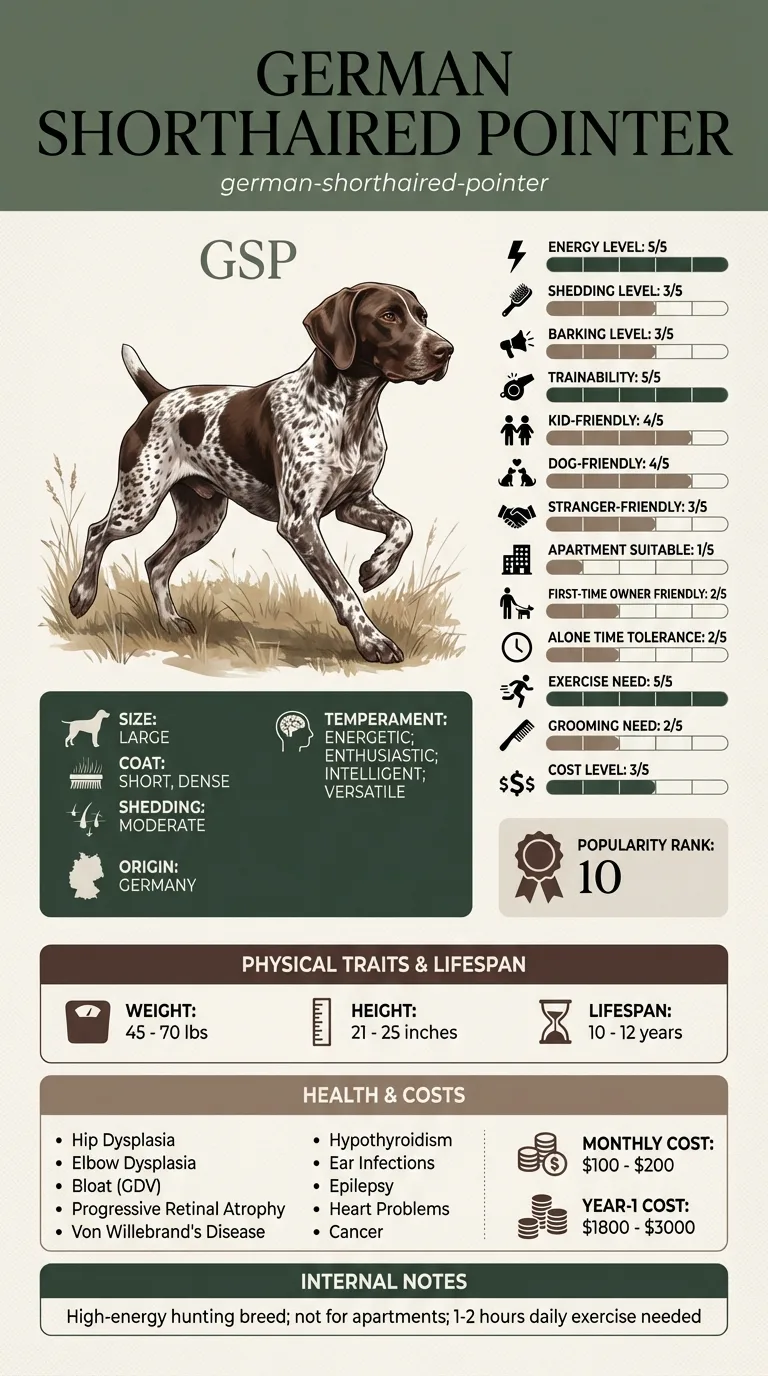
Bloat is a sudden emergency risk given this breed's deep chest — no warning, immediate surgery needed. Hip and elbow dysplasia are the separate, ongoing joint risks worth budgeting real, recurring vet attention for.
These figures reflect Anchorage's shipping-driven, above-average pricing, with this breed's genuinely large food needs factored in against the region's real, structural cost premium.
Estimate · source: estimation · confidence: medium · updated 2026-09-05 · not a quote
| Item | Cost range |
|---|---|
Hunting or field-training gear A genuinely worthwhile investment given Alaska's real, substantial hunting access for this working breed. | $65 - $190 |
One-time setup (initial vet visit, spay/neuter, gear) Covers the first exam, vaccinations, spay/neuter if needed, and gear sized for this breed's large adult weight — priced at Anchorage's above-average rates. | $440 - $745 |
| Item | Cost range |
|---|---|
Food Above the national average for a large, highly active breed, driven by Alaska's real remote-shipping costs. | $72 - $115 |
Heartworm and flea/tick prevention The shortest active season this site covers, thanks to Alaska's climate. | $6 - $12 |
Each range starts from a national baseline for this breed's size class and is then adjusted for local cost of living and veterinary pricing. The baselines, and the source each one came from, are listed on our sources page (dataset 2026.09). Two inputs, the purchase price and the emergency reserve, have no published national figure we could verify, so we leave them to you rather than invent them.
These are planning estimates, not quotes. Your own numbers will move with the individual dog, your vet and your insurer. Build a budget with your own figures.
For a German Shorthaired Pointer in Anchorage, insurance is worth taking seriously given the breed's documented bloat and joint risk, on top of the region's genuinely elevated shipping-driven vet pricing.
This breed's well-documented bloat and joint risk makes insurance worth locking in early — a policy bought before any diagnosis covers costs a self-funded emergency fund alone often can't stretch to match.
Owners with a solid emergency fund and the discipline to leave it untouched for anything but a genuine vet emergency can reasonably self-insure instead.
Anchorage's shipping-driven costs are real, but the region's genuine hunting access is worth using deliberately for this breed's documented working drive.
Alaska's genuine hunting tradition and vast public wilderness access give this all-round gundog breed's documented working drive and extreme exercise needs a real, appropriate outlet, terrain most cities this site covers simply can't offer. For an owner willing to use it, that's a meaningful, practical fit for a breed built for exactly this kind of varied, demanding field work.
That fit comes at a real cost: Alaska's remote-shipping economics push food, supply and vet prices well above the Lower 48 average, and this breed's genuinely substantial food needs, given its size and activity level, make that markup a real, recurring factor in the monthly budget here more than for a smaller or lower-energy breed.
This is the shortest flea-and-tick season on this entire list, just four months, thanks to Alaska's climate, a real, significant saving that partially offsets the shipping-driven costs elsewhere.

An Anchorage family relocating with their German Shorthaired Pointer from the Midwest was caught off guard by how much more a familiar bag of dog food cost at their new local pet store, a direct result of the shipping distance from the Lower 48. What softened the blow was discovering a real, active local bird-hunting community through a chance conversation at that same store, giving their dog genuine field access within its first month in the state. The higher grocery bill felt more justified once the dog had a real, appropriate outlet to match.
Key takeaway: In Anchorage specifically, this breed's real food costs run higher due to shipping, but the region's genuine hunting access offers a real trade worth factoring into the decision to move here with this breed.
About $150–$290, above the national average, driven by Alaska's real remote-shipping costs for food, supplies and vet care.
Roughly $2,150–$3,650, including the initial vet exam, spay/neuter if needed, and gear on top of ongoing monthly costs.
Genuinely, yes — Alaska's real hunting tradition and vast public wilderness access give this breed's documented working drive an appropriate, genuine outlet most cities this site covers can't match.
Alaska's remote-shipping economics push food, supply and vet prices well above the Lower 48 average, a real, structural cost driver rather than a general cost-of-living issue alone.
Worth pricing out given the breed's documented bloat and joint risk, bought while the dog is young and before anything is on record.
Around $920 covers a typical significant vet visit in this market, reflecting Anchorage's above-average, shipping-driven pricing.
About $150–$290/month, $2,150–$3,650 for year one — above average due to real shipping costs, near genuine Alaska hunting grounds that suit this breed's purpose.
This guide is not medical advice. If your dog shows pain, sudden behavior change, or worsening symptoms, consult a licensed veterinarian.
Some links may be affiliate links. We may earn a commission at no extra cost to you. We only suggest products we believe are helpful for dog owners.
We research and check what we publish, but we do not warrant that any figure, date, price, or statement is accurate, complete, or current, and we accept no liability for any loss, cost, injury, or other harm arising from the use of this site. Use it as one reference among several. You remain responsible for your own decisions and for your dog's care - confirm anything that matters with a licensed veterinarian or another qualified professional before you act on it. Full disclaimer.
One sheet with every line item, the emergency fund and when insurance pays off - unlocks on this page.
You get: 12-month budget sheet
No spam. One-click unsubscribe. See our privacy policy.
Preview page 1 before you decide.