Costs
German Shorthaired Pointer cost in Cheyenne
About $95–$190/month, $1,400–$2,400 for year one — among the lowest this site tracks, a real, meaningful offset for this breed's genuinely substantial needs.

See German Shorthaired Pointer price across all cities →
Quick answer
German Shorthaired Pointer cost in Cheyenne
About $95–$190/month, $1,400–$2,400 for year one — among the lowest this site tracks, a real, meaningful offset for this breed's genuinely substantial needs.
A German Shorthaired Pointer in Cheyenne costs about $95–$190 a month, with the first year around $1,400–$2,400 — among the lowest this site tracks, a real, meaningful offset against how much food and routine care this large, high-energy breed genuinely needs.
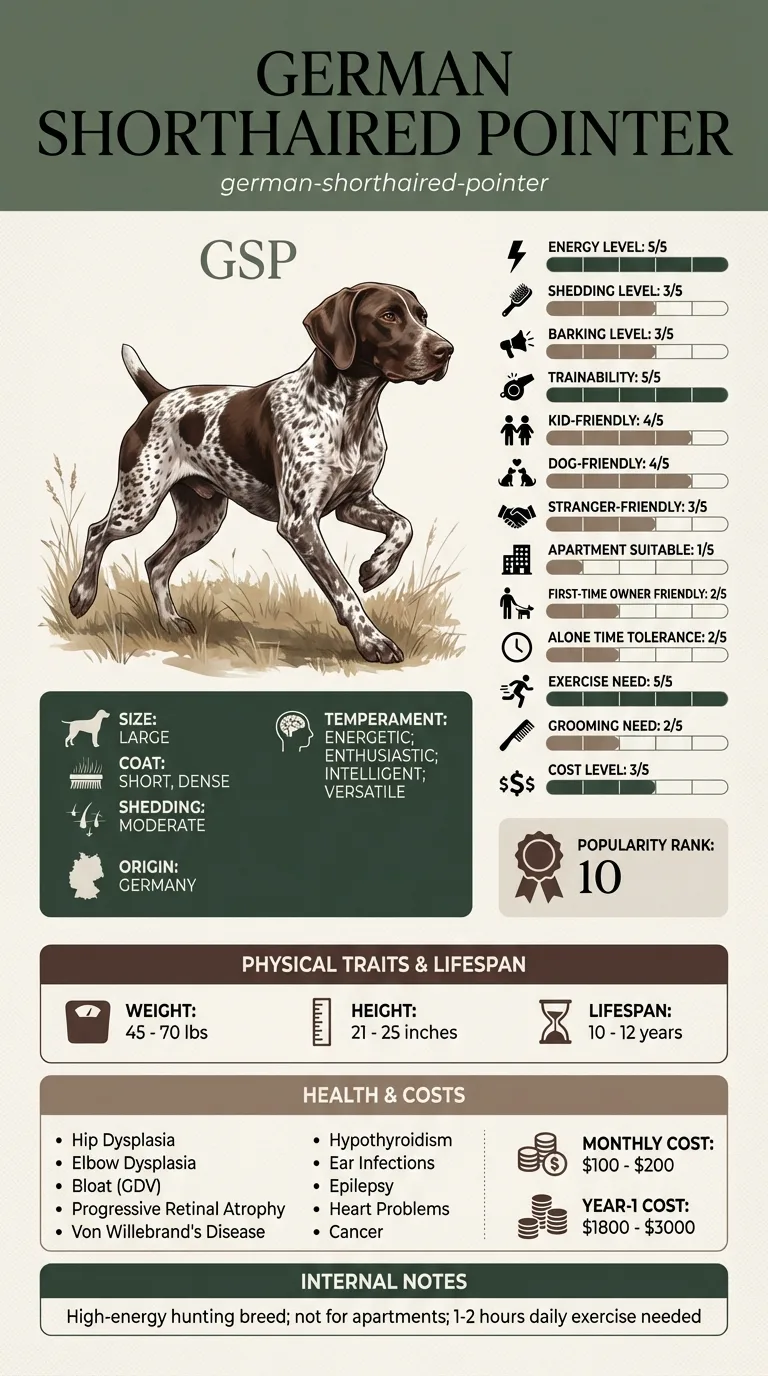
Bloat is a sudden emergency risk given this breed's deep chest — no warning, immediate surgery needed. Hip and elbow dysplasia are the separate, ongoing joint risks worth budgeting real, recurring vet attention for.
These figures reflect Cheyenne's below-national-average general pricing and lack of state income tax, a real, meaningful offset given how much food and care this large, high-energy breed needs.
Estimate · source: estimation · confidence: medium · updated 2026-09-05 · not a quote
| Item | Cost range |
|---|---|
Field or exercise gear A genuinely worthwhile investment given this breed's documented high exercise needs and working heritage. | $50 - $150 |
One-time setup (initial vet visit, spay/neuter, gear) Covers the first exam, vaccinations, spay/neuter if needed, and gear sized for this breed's large adult weight — priced at Cheyenne's below-average rates. | $310 - $530 |
| Item | Cost range |
|---|---|
Food Among the lowest food costs this site tracks for a large, highly active breed, consistent with Cheyenne's generally low price level. | $50 - $80 |
Heartworm and flea/tick prevention Clearly seasonal given Wyoming's high-plains winters. | $8 - $14 |
Each range starts from a national baseline for this breed's size class and is then adjusted for local cost of living and veterinary pricing. The baselines, and the source each one came from, are listed on our sources page (dataset 2026.09). Two inputs, the purchase price and the emergency reserve, have no published national figure we could verify, so we leave them to you rather than invent them.
These are planning estimates, not quotes. Your own numbers will move with the individual dog, your vet and your insurer. Build a budget with your own figures.
For a German Shorthaired Pointer in Cheyenne, insurance is worth taking seriously given the breed's documented bloat and joint risk, even in a market where the general cost of ownership already runs unusually low.
This breed's well-documented joint and bloat risk makes insurance worth locking in early — a policy bought before any diagnosis covers costs a self-funded emergency fund alone often can't stretch to match.
Skipping coverage is a reasonable call for an owner who's already set aside a meaningful cash reserve and is comfortable managing a serious diagnosis without monthly premiums.
Cheyenne's genuinely low general costs and lack of state income tax already work strongly in this breed's favor, given how much a large, high-energy dog like this one needs.
Wyoming's lack of a state income tax and its genuinely low general cost of living work together to meaningfully offset this breed's real, above-average ownership costs, more food volume, more exercise gear, and more frequent joint monitoring given its documented hip and elbow dysplasia risk than most breeds this site tracks. That combination makes Cheyenne one of the more genuinely favorable value cities for a breed that tends to run expensive almost everywhere else.
Cheyenne's high-plains, cold-winter climate also keeps flea-and-tick prevention clearly seasonal rather than year-round, a further real saving on top of the tax and general cost advantage.
Wyoming's status as the least populous state means Cheyenne's veterinary market, while solid for general and routine orthopedic care, has limited board-certified specialists locally, and a complex joint case would typically mean a trip to Denver.

A Cheyenne family researching this breed online braced for the significant costs national guides described, expecting a large, high-energy dog's food and vet bills to strain their budget the way articles suggested. Between Wyoming's lack of income tax and Cheyenne's genuinely low general prices, their actual first-year spending came in well under the national estimates they'd read, even after budgeting seriously for real exercise gear and routine joint monitoring. The savings gave them real room to set aside a larger emergency fund than they'd initially planned.
Key takeaway: In Cheyenne specifically, this breed's real, above-average national costs shrink meaningfully against the city's genuinely low prices and Wyoming's tax advantage.
About $95–$190, among the lowest this site tracks, consistent with Wyoming's generally lower cost of living and lack of a state income tax.
Roughly $1,400–$2,400, including the initial vet exam, spay/neuter if needed, and gear on top of ongoing monthly costs.
Genuinely, yes — this breed's larger size and high exercise needs mean it costs more than average almost everywhere, and Cheyenne's low general pricing and lack of state income tax meaningfully offset that.
General veterinary care is solid, but Wyoming's small population means genuinely fewer specialists, and a complex case requiring board-certified orthopedic surgery would likely mean a trip to Denver.
Worth pricing out given the breed's documented bloat and joint risk, bought while the dog is young and before anything is on record.
Around $650 covers a typical significant vet visit in this market, reflecting Cheyenne's below-average general pricing.
About $95–$190/month, $1,400–$2,400 for year one — among the lowest this site tracks, a real, meaningful offset for this breed's genuinely substantial needs.
This guide is not medical advice. If your dog shows pain, sudden behavior change, or worsening symptoms, consult a licensed veterinarian.
Some links may be affiliate links. We may earn a commission at no extra cost to you. We only suggest products we believe are helpful for dog owners.
We research and check what we publish, but we do not warrant that any figure, date, price, or statement is accurate, complete, or current, and we accept no liability for any loss, cost, injury, or other harm arising from the use of this site. Use it as one reference among several. You remain responsible for your own decisions and for your dog's care - confirm anything that matters with a licensed veterinarian or another qualified professional before you act on it. Full disclaimer.
One sheet with every line item, the emergency fund and when insurance pays off - unlocks on this page.
You get: 12-month budget sheet
No spam. One-click unsubscribe. See our privacy policy.
Preview page 1 before you decide.