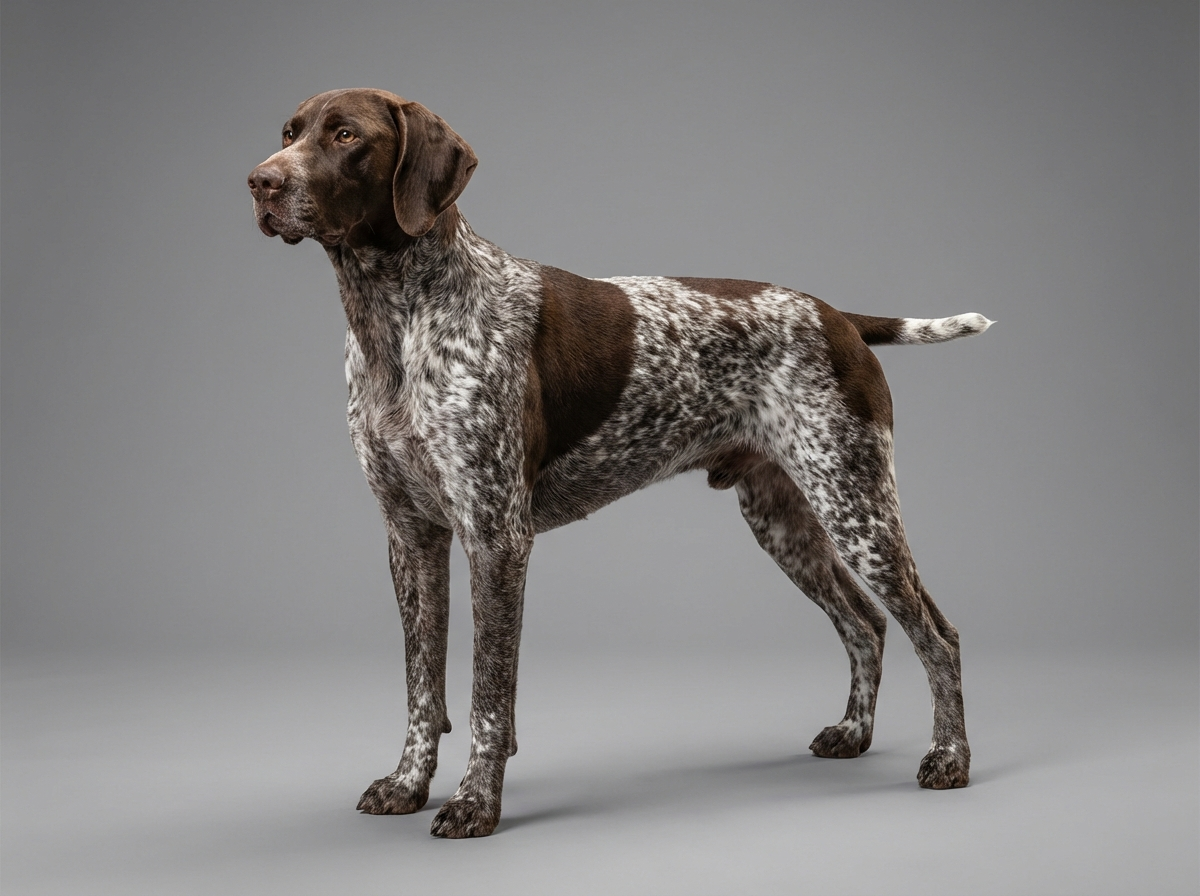
Costs
German Shorthaired Pointer cost in Charleston
About $115–$230/month, $1,700–$2,900 for year one — near average, where real island trails outside the historic core meet this breed's genuine exercise needs.

See German Shorthaired Pointer price across all cities →
Quick answer
German Shorthaired Pointer cost in Charleston
About $115–$230/month, $1,700–$2,900 for year one — near average, where real island trails outside the historic core meet this breed's genuine exercise needs.
A German Shorthaired Pointer in Charleston costs about $115–$230 a month, with the first year around $1,700–$2,900 — close to the national average, where the historic downtown's narrow, cobblestoned streets fall well short of this breed's real exercise needs, though real island trail access nearby fills the gap.
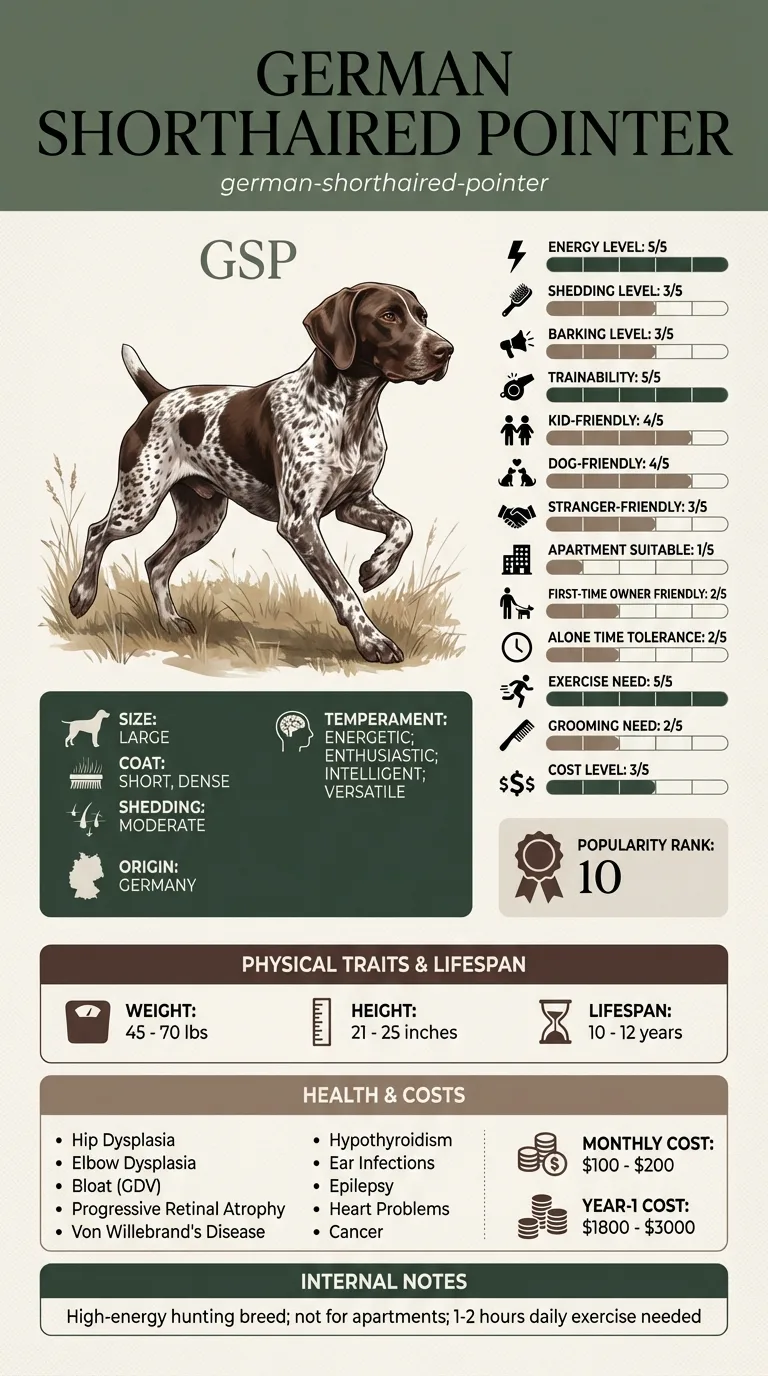
Bloat is a sudden emergency risk given this breed's deep chest — no warning, immediate surgery needed. Hip and elbow dysplasia are the separate, ongoing joint risks worth budgeting real, recurring vet attention for.
These figures reflect Charleston's near-national-average general pricing, with this breed's genuinely substantial food needs factored in against the real trail access found outside the historic core.
Estimate · source: estimation · confidence: medium · updated 2026-09-05 · not a quote
| Item | Cost range |
|---|---|
Field or exercise gear A genuinely worthwhile investment given this breed's documented high exercise needs and working heritage. | $50 - $150 |
One-time setup (initial vet visit, spay/neuter, gear) Covers the first exam, vaccinations, spay/neuter if needed, and gear sized for this breed's large adult weight. | $365 - $620 |
| Item | Cost range |
|---|---|
Food Close to the national average for a large, highly active breed, consistent with Charleston's general cost of living. | $60 - $95 |
Boarding and professional grooming Priced a little above the state average given Charleston's tourism-driven boarding and grooming market. | $20 - $45 |
Heartworm and flea/tick prevention Close to year-round given Charleston's coastal humidity. | $11 - $19 |
Each range starts from a national baseline for this breed's size class and is then adjusted for local cost of living and veterinary pricing. The baselines, and the source each one came from, are listed on our sources page (dataset 2026.09). Two inputs, the purchase price and the emergency reserve, have no published national figure we could verify, so we leave them to you rather than invent them.
These are planning estimates, not quotes. Your own numbers will move with the individual dog, your vet and your insurer. Build a budget with your own figures.
For a German Shorthaired Pointer in Charleston, insurance is worth taking seriously given the breed's documented bloat and joint risk, independent of the region's genuinely average general cost of living.
This breed's well-documented bloat and joint risk makes insurance worth locking in early — a policy bought before any diagnosis covers costs a self-funded emergency fund alone often can't stretch to match.
Skipping coverage is a reasonable call for an owner who's already set aside a meaningful cash reserve and is comfortable managing a serious diagnosis without monthly premiums.
Charleston's costs are close to the national average overall, but building a real routine around James Island or Johns Island trail access matters more here than any single cost-cutting tip.
Charleston's historic downtown, with its narrow cobblestoned streets and dense colonial-era layout, wasn't built with a high-energy sporting breed's real exercise needs in mind, and a walk through the peninsula alone doesn't come close to covering this breed's documented one-to-two-hour daily requirement. What does work is the genuine trail and marsh terrain on James Island and Johns Island, a short drive from downtown, offering real park acreage and varied ground this breed's field-dog instincts can actually use.
Coastal humidity keeps flea-and-tick prevention close to year-round here, and the city's tourism-driven market pushes boarding and grooming prices a little above the state average, a real, if modest, cost for an owner who travels or needs regular professional services.
Charleston's general cost of living otherwise sits close to the national average, a genuinely middle-of-the-road profile for the region.

A Charleston German Shorthaired Pointer owner living in the historic district assumed daily strolls through the peninsula's charming streets would keep their dog content, only to watch it grow increasingly restless and hard to settle at home. A friend's suggestion to try James Island County Park's real trail network changed everything within a single visit, the dog covering genuine distance and returning home calm for the first time in weeks. The family now makes the short drive several times a week, treating it as a non-negotiable part of the routine.
Key takeaway: In Charleston specifically, this breed's real exercise needs require looking past the historic downtown to the genuine trail access the surrounding islands actually offer.
About $115–$230, close to the national average, consistent with Charleston's broader cost-of-living profile.
Roughly $1,700–$2,900, including the initial vet exam, spay/neuter if needed, and gear on top of ongoing monthly costs.
Not on its own — the historic core's narrow streets don't meet this breed's real exercise needs, but genuine trail access on James Island and Johns Island, a short drive away, fills that gap well.
Genuinely middle-of-the-road — Charleston's general cost of living sits close to the national average, though tourism pushes boarding and grooming prices a little above the state average.
Worth pricing out given the breed's documented bloat and joint risk, bought while the dog is young and before anything is on record.
Around $780 covers a typical significant vet visit in this market, reflecting Charleston's near-national-average general pricing.
About $115–$230/month, $1,700–$2,900 for year one — near average, where real island trails outside the historic core meet this breed's genuine exercise needs.
This guide is not medical advice. If your dog shows pain, sudden behavior change, or worsening symptoms, consult a licensed veterinarian.
Some links may be affiliate links. We may earn a commission at no extra cost to you. We only suggest products we believe are helpful for dog owners.
We research and check what we publish, but we do not warrant that any figure, date, price, or statement is accurate, complete, or current, and we accept no liability for any loss, cost, injury, or other harm arising from the use of this site. Use it as one reference among several. You remain responsible for your own decisions and for your dog's care - confirm anything that matters with a licensed veterinarian or another qualified professional before you act on it. Full disclaimer.
One sheet with every line item, the emergency fund and when insurance pays off - unlocks on this page.
You get: 12-month budget sheet
No spam. One-click unsubscribe. See our privacy policy.
Preview page 1 before you decide.