Costs
What is the Maltese first year cost?
Washington DC owners spend $2,500 to $5,000 on a Maltese in the first twelve months. Ongoing care is $140 to $250 a month of that.

See Maltese price across all cities →
Quick answer
What is the Maltese first year cost?
Washington DC owners spend $2,500 to $5,000 on a Maltese in the first twelve months. Ongoing care is $140 to $250 a month of that.
Considering a Maltese in Washington D.C.? It's essential to understand the costs involved.
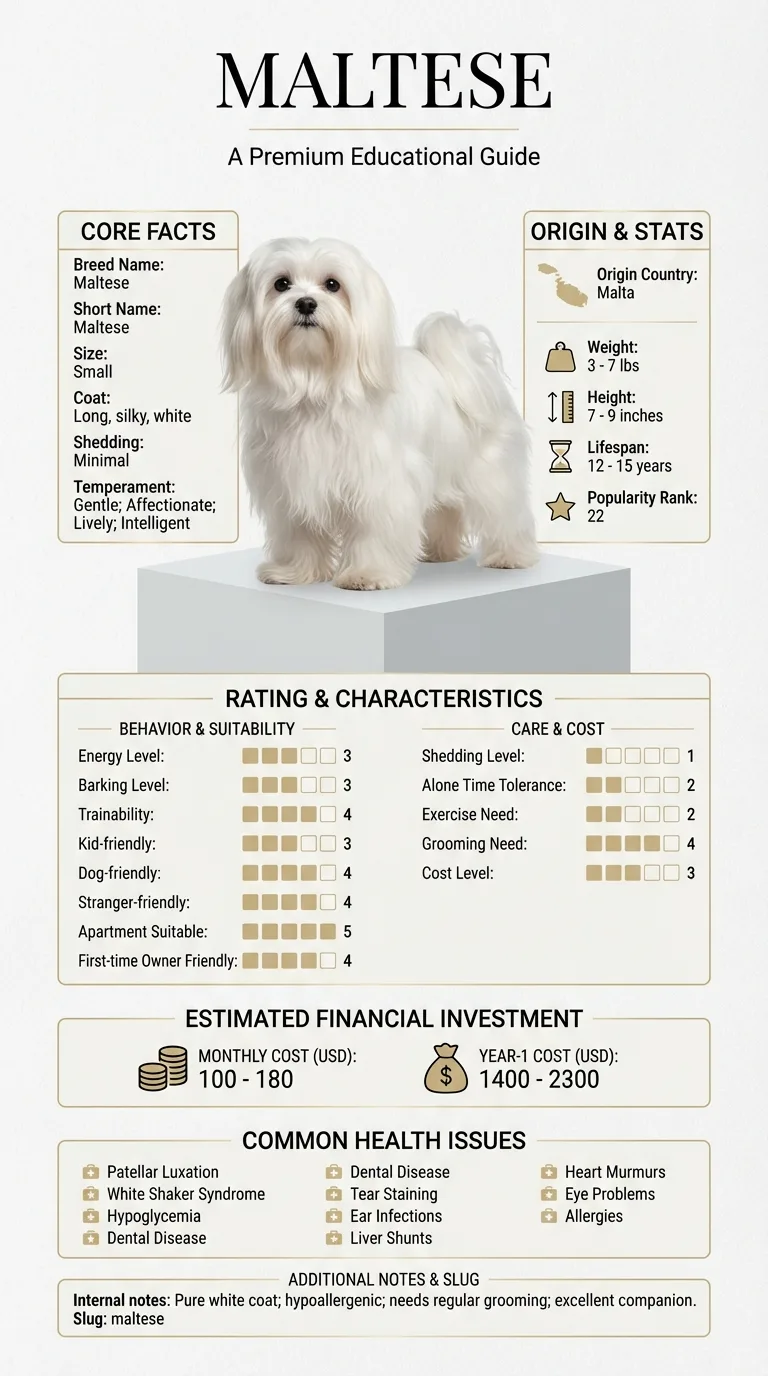
Costs can rise due to emergencies or big-ticket items like surgeries, vet visits, and grooming needs.
The Maltese cost in Washington D.C. can vary widely based on several factors. Initial purchase, veterinary care, grooming, and day-to-day expenses all contribute to the total cost.
Estimate · source: us average · confidence: medium · updated 2026-10-06 · not a quote
| Item | Cost range |
|---|---|
Initial Purchase Prices will depend on the breeder's reputation and location. | $500 - $1500 |
| Item | Cost range |
|---|---|
Grooming Costs Regular grooming is essential for this breed's long coat. | $50 - $100 |
Food Quality dog food prices vary based on brand and quality. | $30 - $50 |
Pet Insurance Insurance can help cover unexpected health issues. | $40 - $70 |
Miscellaneous Expenses Includes toys, training, and other pet supplies. | $20 - $30 |
Each range starts from a national baseline for this breed's size class and is then adjusted for local cost of living and veterinary pricing. The baselines, and the source each one came from, are listed on our sources page (dataset 2026.09). Two inputs, the purchase price and the emergency reserve, have no published national figure we could verify, so we leave them to you rather than invent them.
These are planning estimates, not quotes. Your own numbers will move with the individual dog, your vet and your insurer. Build a budget with your own figures.
When considering Maltese cost in Washington D.C., pet insurance can be a valuable investment.
Insurance is ideal if you want peace of mind regarding costly vet visits.
If you're comfortable covering routine vet fees directly and don’t mind paying out of pocket for unexpected costs, insurance may not be necessary.
Owning a Maltese in Washington D.C. can be manageable with some smart saving strategies. Here are some practical tips to keep your costs down while providing the best care for your furry friend.
When calculating the Maltese cost in Washington D.C., many owners overlook hidden expenses. These can add up quickly and catch you off guard. Here are some common hidden costs you should consider.
The Maltese cost in Washington D.C. can vary significantly due to local factors. Housing prices are relatively high, which can affect the overall expenses associated with dog ownership.
Renters in pet-friendly apartments might face additional pet fees, while homeowners need to factor in potential pet-related costs in their mortgage or HOA fees.

When Sarah, a busy graphic designer in Washington D.C., decided to get a Maltese, she was excited yet anxious about the costs. The first-year expenses for her little companion added up quickly, ranging between $1,400 and $2,300. She started by budgeting for the essentials like food, grooming, and vet visits, but was surprised by the cost of high-quality grooming needed for her Maltese's long, silky coat. Monthly, she found herself spending around $150, factoring in food and routine check-ups. But one unexpected cost was when her dog developed a minor ear infection, leading to an extra $200 vet bill. Sarah learned the importance of budgeting for emergencies, adjusting her monthly expenses to include a little extra for unforeseen costs.
Key takeaway: Owning a Maltese in Washington D.C. can be manageable with careful budgeting, but prepare for unexpected vet bills and grooming needs.
The Maltese is moderately priced, with initial purchase costs ranging from $1,000 to $2,000. Beyond this, ongoing expenses such as grooming, food, and vet visits can add up, making it essential to budget wisely.
In Washington D.C., you can expect to pay between $1,200 and $2,500 for a Maltese puppy. Prices vary based on factors like breeder reputation and lineage.
The monthly cost for a Maltese in Washington D.C. can range from $100 to $180. This includes food, grooming, and basic care, but not unexpected expenses.
This can vary based on the coverage level and your provider.
Annual vet bills for a Maltese may range from $300 to $600, depending on routine care and any unexpected health issues. Regular check-ups are important for their well-being.
This includes initial vet visits, vaccinations, and supplies like crates and toys.
This includes vaccinations, check-ups, and preventive care. Factors like age and health can influence these costs.
Monthly premiums typically range from $30 to $50, depending on coverage. It may save you a lot in unexpected vet bills in the long run.
Unexpected costs for a Maltese may include surgery for health issues or emergency vet visits. Additionally, grooming expenses can add up, especially since their long coat requires regular maintenance. Budgeting an extra $300 to $600 yearly for these surprises is a good idea.
Living in Washington D.C. generally increases the cost of owning a Maltese due to higher vet fees and grooming costs compared to other regions. You might also face increased pet-related fees, such as pet deposits or higher insurance rates. Being aware of these local quirks can help you budget effectively.
The first-year cost for a Maltese in Washington D.C. can range from $1,400 to $2,300. Planning ahead can help you manage these expenses better.
Washington DC owners spend $2,500 to $5,000 on a Maltese in the first twelve months. Ongoing care is $140 to $250 a month of that.
Plan on $140 to $250 a month for a Maltese in Washington DC. Most of that is grooming costs, at $50 to $100.
Insuring a Maltese in Washington DC costs $40 to $70 a month, depending on how much of a claim you cover yourself.
This guide is not medical advice. If your dog shows pain, sudden behavior change, or worsening symptoms, consult a licensed veterinarian.
Some links may be affiliate links. We may earn a commission at no extra cost to you. We only suggest products we believe are helpful for dog owners.
We research and check what we publish, but we do not warrant that any figure, date, price, or statement is accurate, complete, or current, and we accept no liability for any loss, cost, injury, or other harm arising from the use of this site. Use it as one reference among several. You remain responsible for your own decisions and for your dog's care - confirm anything that matters with a licensed veterinarian or another qualified professional before you act on it. Full disclaimer.
One sheet with every line item, the emergency fund and when insurance pays off - unlocks on this page.
You get: 12-month budget sheet
No spam. One-click unsubscribe. See our privacy policy.
See a sample page before you decide.