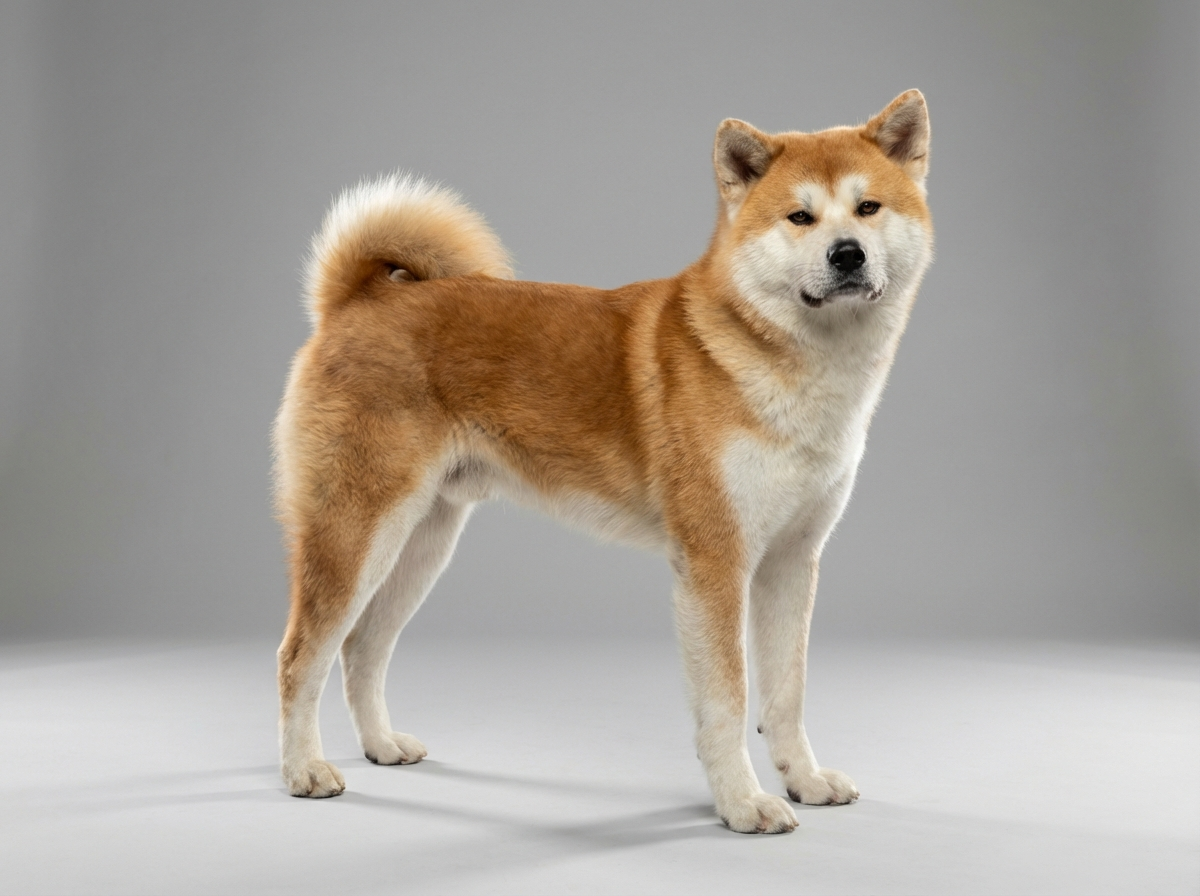
Costs
Akita cost in Atlanta
About $115–$230/month, $1,750–$3,200 for year one.

See Akita price across all cities →
Quick answer
Akita cost in Atlanta
About $115–$230/month, $1,750–$3,200 for year one.
An Akita in Atlanta runs about $115–$230 a month once routine care settles into a pattern, with the first year closer to $1,750–$3,200 after the initial vet work and gear are paid for.
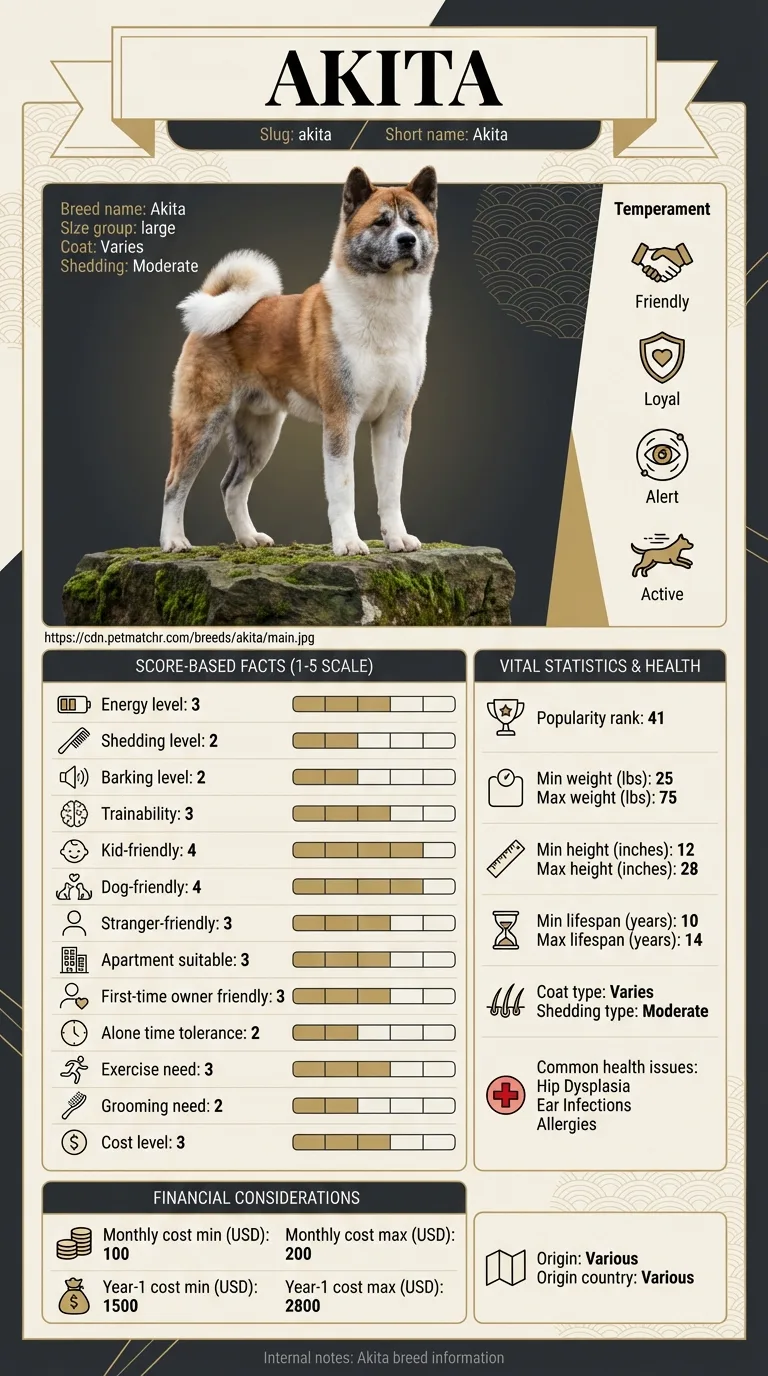
The Akita's size and coat are what push the numbers above a small or short-coated breed's budget — a seasonal double-coat blowout means real shedding-season grooming, and their build means dosing (flea/tick, dewormer, anesthesia if ever needed) is priced for a large dog, not a small one. On top of that, hip dysplasia and ear infections are common enough in the breed that an unplanned vet visit is a real, not hypothetical, line item to plan for.
These figures start from the Akita's typical U.S. cost range and adjust for Atlanta specifically: general prices here sit close to the national average, so the main local factor is Georgia's long warm season pushing parasite prevention toward a year-round cost rather than a seasonal one.
Estimate · source: estimation · confidence: medium · updated 2026-09-05 · not a quote
| Item | Cost range |
|---|---|
One-time setup (initial vet visit, spay/neuter, large-breed gear) Covers the first exam and vaccinations, spay or neuter if needed, and a crate, bed and bowls sized for the breed's adult size — often bought once at adult size rather than replaced as a puppy grows, which is worth planning for upfront. | $450 - $800 |
| Item | Cost range |
|---|---|
Food A large-breed adult Akita (65–130 lbs) eats meaningfully more than a medium dog; a quality food meeting AAFCO adult maintenance standards matters more here than brand name. | $55 - $90 |
Grooming Akitas are largely self-grooming and don't need frequent professional visits, but Atlanta's humidity makes regular at-home brushing (and the occasional bath during the biannual coat blow) matter more for coat health and heat comfort than it would in a drier climate. | $15 - $35 |
Flea, tick & heartworm prevention Priced for a large dog's size. Georgia's climate keeps this active roughly ten to eleven months of the year, which is the single biggest reason this budget runs above a colder-climate estimate. | $20 - $35 |
Ear care A small but real recurring cost specific to the breed and the climate — Akitas' ear shape retains moisture, and Atlanta's humidity adds to that, so routine ear cleaning solution and occasional infection treatment are worth budgeting for even when nothing is currently wrong. | $5 - $15 |
Each range starts from a national baseline for this breed's size class and is then adjusted for local cost of living and veterinary pricing. The baselines, and the source each one came from, are listed on our sources page (dataset 2026.09). Two inputs, the purchase price and the emergency reserve, have no published national figure we could verify, so we leave them to you rather than invent them.
These are planning estimates, not quotes. Your own numbers will move with the individual dog, your vet and your insurer. Build a budget with your own figures.
For an Akita in Atlanta, the insurance decision mostly comes down to hip dysplasia risk versus whether you already have savings set aside specifically for a major vet bill.
Hip dysplasia is common enough in the breed that insurance is worth pricing out while the dog is still young and healthy — premiums are lower before anything shows up on a vet record, and a hip-related surgery is exactly the kind of five-figure-adjacent bill a policy is meant to cover.
If you've already built a dedicated emergency fund in the $2,000–$3,000 range and would rather manage that money yourself than pay a recurring premium, self-insuring is a reasonable choice — just make sure the fund is genuinely set aside and not counted toward other goals.
The realistic savings for an Akita in Atlanta come from routine-care habits, not from cutting corners on the dog's actual needs.
Two things about Atlanta specifically move an Akita's budget away from a flat national number. The first is climate: Georgia's warm, humid stretch runs from roughly March through November in most years, which means a flea/tick/heartworm preventive is realistically a year-round purchase here rather than the five- or six-month season an owner in Minnesota or North Dakota would budget for. That's the single biggest Atlanta-specific line item difference for this breed.
The second is coat maintenance in the heat. Akitas carry a dense double coat built for cold-climate work, and in Atlanta's summer humidity that coat needs more frequent brushing to stay healthy and to actually help the dog regulate heat — a matted or neglected coat traps heat rather than insulating against it. This doesn't necessarily mean more professional grooming visits (Akitas are self-grooming, cat-like dogs and many owners handle brushing at home), but it does mean the brushing routine matters more here than it would in a cooler, drier city, and skipping it has a real comfort and, in extreme cases, heat-stress cost for the dog.
On the housing side, Atlanta has a mix of single-family homes with yards in the suburbs and denser apartment living intown, and a number of intown buildings carry breed or weight restrictions that can affect a large guardian-type breed like the Akita specifically — worth confirming with a landlord or HOA before signing a lease, since it's a housing cost that has nothing to do with vet bills but can matter just as much.

A first-time Akita owner in Atlanta budgeted carefully for food, the initial vet visit and a full year of flea/tick prevention, but didn't think to plan for ear care specifically. By the dog's second summer, recurring ear infections — driven by the combination of the breed's ear shape and Atlanta's humidity — had become a genuine, several-times-a-year vet expense that hadn't been part of the original budget. Switching to a weekly at-home ear-cleaning routine using a vet-recommended solution cut the infection frequency down substantially, and the small recurring cost of the cleaning solution ended up far cheaper than the periodic vet visits it replaced.
Key takeaway: A breed-and-climate combination can create a specific recurring cost (here, ear care) that a generic national budget wouldn't flag — it's worth asking a local vet directly what they see most often in this breed in this particular climate before finalizing a budget.
Plan on roughly $115–$230 a month for food, routine vet care, grooming supplies and parasite prevention. Because Atlanta's climate keeps flea and tick season running most of the year, the prevention line item stays active longer here than it would in a colder city, which is the main reason the range runs a bit above a bare-bones estimate.
Expect somewhere around $1,750–$3,200 for the first year. That includes the ongoing monthly costs above plus one-time setup: an initial vet exam, spay or neuter if it hasn't already been done, core vaccinations, and basic gear sized for a large-breed puppy or adult (crate, bed, bowls) that will need replacing at least once as the dog grows.
It's worth pricing out, mainly because of hip dysplasia. A large, deep-chested breed with a known orthopedic risk is exactly the profile where a single surgery can run into the thousands, and insurance is cheapest when purchased while the dog is young and before anything shows up on a vet record. If you already have a dedicated emergency fund sized for a major surgery, self-insuring is a reasonable alternative — the math is really about whether that fund already exists, not whether the breed is risky.
Hip dysplasia is the one worth budgeting around specifically — it's common enough in the breed that an orthopedic X-ray or consult isn't a remote possibility. Ear infections are the more frequent, lower-cost issue: Akitas' ear shape traps moisture, and in a humid city like Atlanta that can mean more frequent ear cleaning and the occasional infection treatment than a dry-climate owner would see. Some individual Akitas also develop skin allergies, which show up as a recurring rather than one-time cost.
It changes one specific line item meaningfully — parasite prevention — from a seasonal purchase to a near-year-round one. It doesn't change food, routine vet, or grooming costs much on its own; those track the dog's size and Atlanta's general (close to national-average) price level more than the weather does.
Around $750 is a reasonable floor, sized to cover a same-day vet visit and diagnostics without touching the rest of the household budget. If you're not carrying insurance and hip dysplasia is a real concern for your specific dog (based on a vet check or known lineage), a larger fund closer to $2,000–$3,000 is worth building toward, since that's closer to the real cost of a surgical consult and procedure if it comes to that.
About $115–$230/month, $1,750–$3,200 for year one.
Georgia's long warm season keeps flea/tick/heartworm prevention running nearly year-round instead of seasonally.
This guide is not medical advice. If your dog shows pain, sudden behavior change, or worsening symptoms, consult a licensed veterinarian.
Some links may be affiliate links. We may earn a commission at no extra cost to you. We only suggest products we believe are helpful for dog owners.
We research and check what we publish, but we do not warrant that any figure, date, price, or statement is accurate, complete, or current, and we accept no liability for any loss, cost, injury, or other harm arising from the use of this site. Use it as one reference among several. You remain responsible for your own decisions and for your dog's care - confirm anything that matters with a licensed veterinarian or another qualified professional before you act on it. Full disclaimer.
One sheet with every line item, the emergency fund and when insurance pays off - unlocks on this page.
You get: 12-month budget sheet
No spam. One-click unsubscribe. See our privacy policy.
Preview page 1 before you decide.