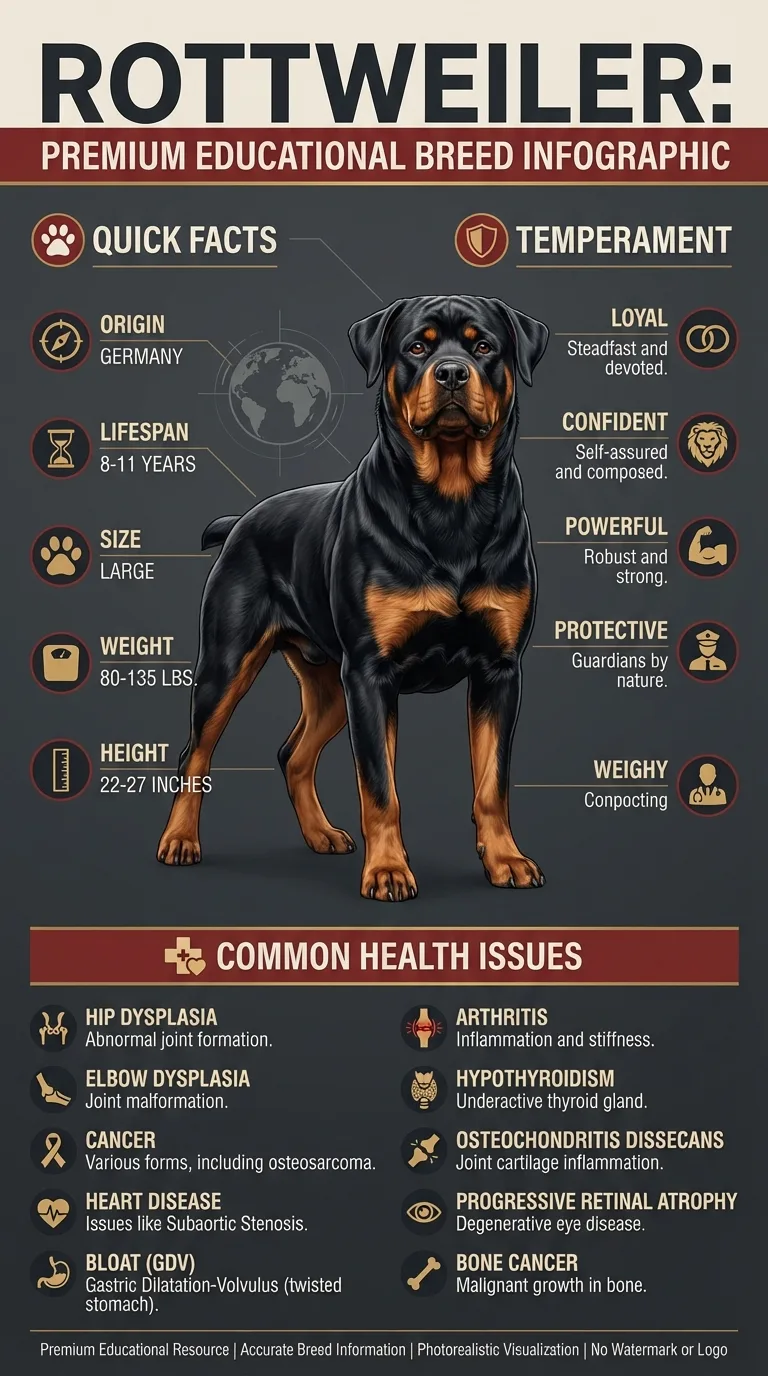
Cancer and bone cancer both appear on the Rottweiler's condition list, and osteosarcoma is the reason the lifespan is what it is.
It is a disease of large heavy breeds, Rottweilers are among the most affected of all, and it typically presents as a limp that does not resolve — often in a limb, often in a middle-aged or older dog, sometimes with visible swelling. It is aggressive and it spreads early.
The practical implication is simple and worth acting on: persistent lameness in a Rottweiler with no obvious injury is an X-ray conversation, not a rest-and-recheck one. Early detection does not make the disease benign, but it changes what options exist.
Heart disease is the other significant entry, making cardiac examination from middle age sensible, and both breeds are deep-chested enough for bloat to be a genuine emergency risk.
Bloat signs — unproductive retching, a distending abdomen, restlessness — should be known in either household, and a preventive gastropexy at neutering is worth discussing for both.
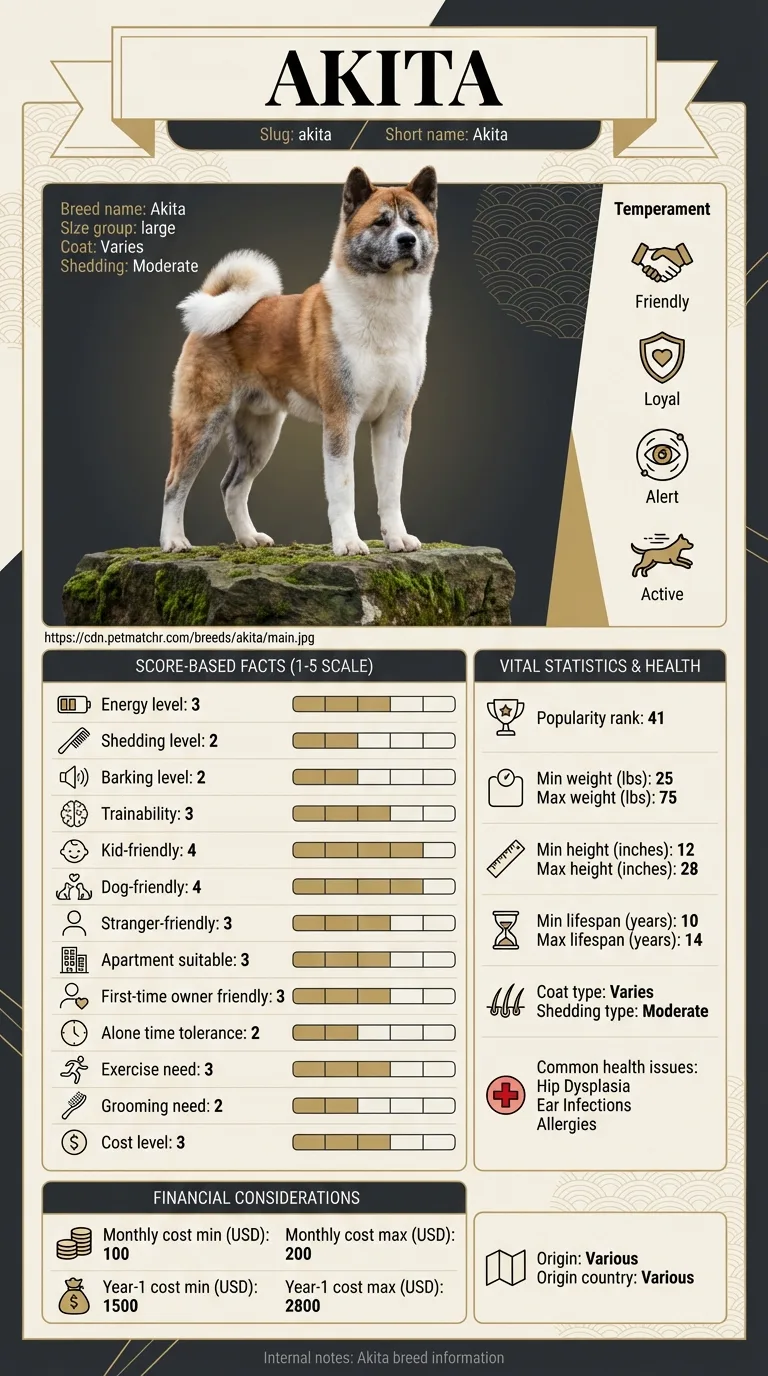
The Akita's list is autoimmune disorders, hypothyroidism, progressive retinal atrophy, hip dysplasia and bloat, and it lives two years longer on average.