Living
Which breed weighs more?
The Rottweiler, at 80-135 lbs, is substantially heavier than the Shar-Pei's 45-60 lbs.

Quick answer
Which breed weighs more?
The Rottweiler, at 80-135 lbs, is substantially heavier than the Shar-Pei's 45-60 lbs.
Chinese Shar-Pei or Rottweiler? On paper they differ most on exercise need, and on the scales Rottweiler is the heavier at 80–135 lbs. Here is how the two compare on everything that shapes an ordinary week.
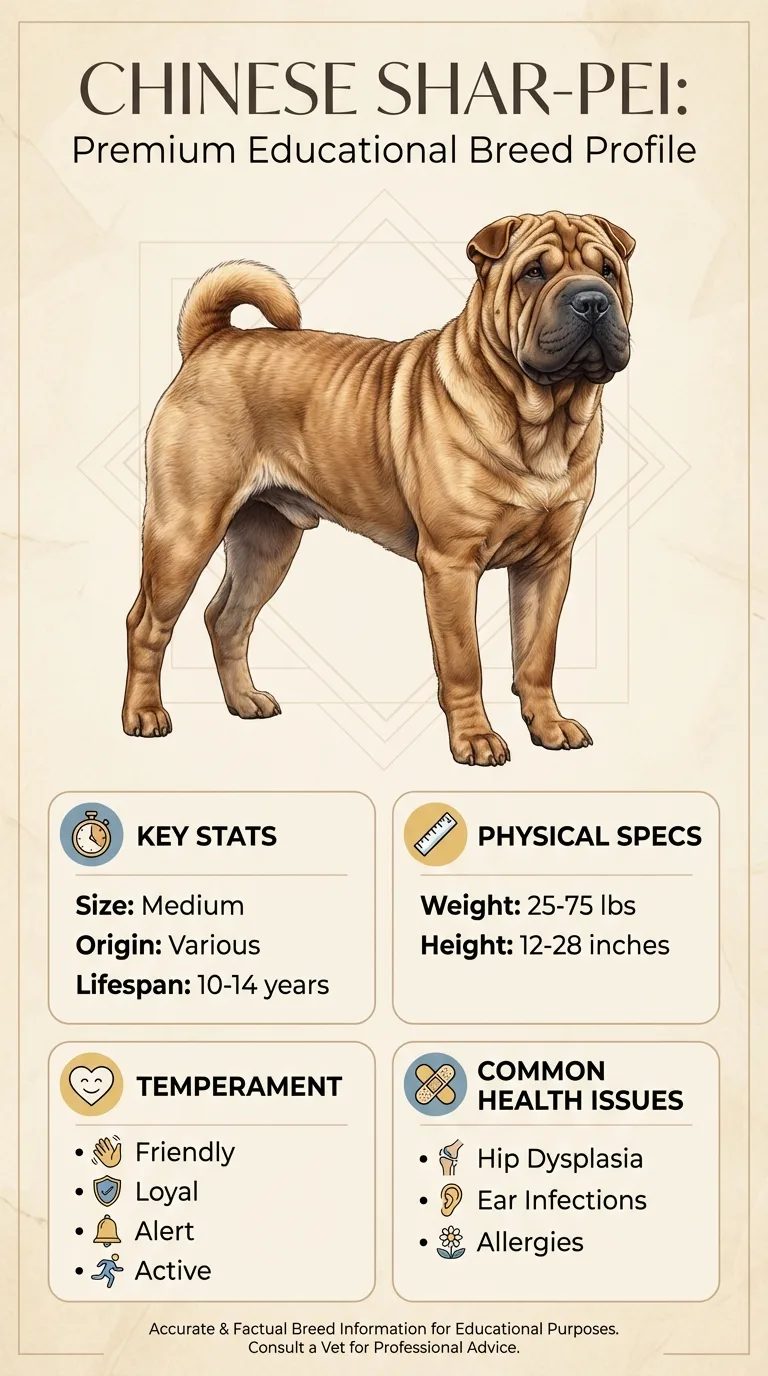
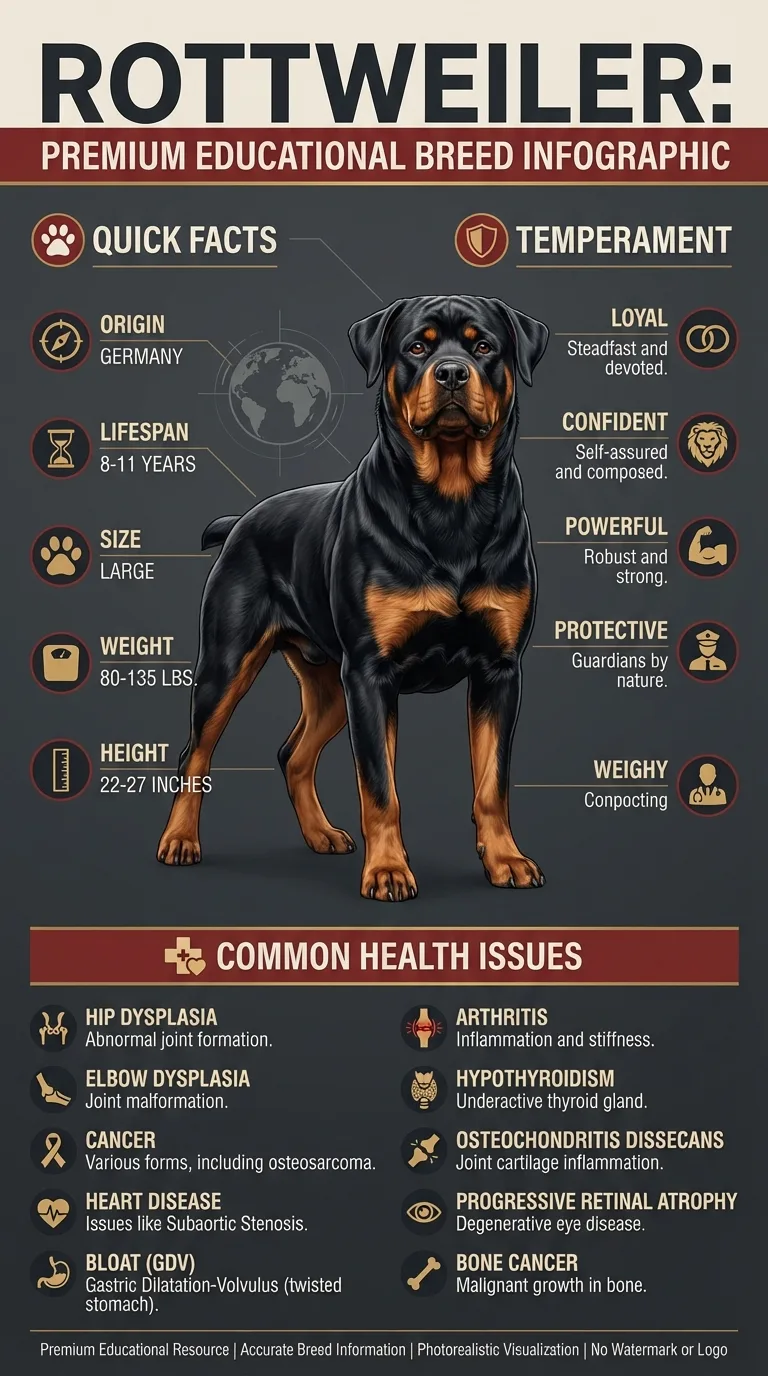
This is for someone already down to Chinese Shar-Pei and Rottweiler and deciding between them. For this pair the decision usually turns on exercise need and energy level, so those are covered first and in most detail. Anyone choosing from a flat has a clear answer here: Chinese Shar-Pei rates 4/5 against 2/5. The focus throughout is on daily consequences rather than breed background.
Between Chinese Shar-Pei and Rottweiler, exercise need is what separates them, and Chinese Shar-Pei is the lower-effort dog of the two to keep.
Choose Chinese Shar-Pei if you are in a flat or a smaller home, shedding is a problem in your house and your walking routine is modest.
Choose Rottweiler if there are young children at home, you already have another dog and you want a dog that picks up training quickly.
| Feature | chinese shar pei | rottweiler | Winner |
|---|---|---|---|
| Size class | medium | large | Equal |
| Weight | 45–60 lbs | 80–135 lbs | Equal |
| Height | 18–20 in | 22–27 in | Equal |
| Lifespan | 8–12 years | 8–11 years | chinese shar pei |
| Exercise need | Low (2/5) | High (4/5) | chinese shar pei |
| Grooming need | Low (2/5) | Low (2/5) | Equal |
| Shedding | Low (2/5) | High (4/5) | chinese shar pei |
| Energy level | Low (2/5) | High (4/5) | Equal |
| Barking | Low (2/5) | Moderate (3/5) | chinese shar pei |
| Apartment suitability | High (4/5) | Low (2/5) | chinese shar pei |
| Good for first-time owners | Low (2/5) | Low (2/5) | Equal |
| Tolerates being alone | Moderate (3/5) | Low (2/5) | chinese shar pei |
| Trainability | Low (2/5) | High (4/5) | rottweiler |
| Good with kids | Moderate (3/5) | High (4/5) | rottweiler |
| Good with other dogs | Low (2/5) | Moderate (3/5) | rottweiler |
| Friendly to strangers | Low (2/5) | Low (2/5) | Equal |
| Cost level | High (4/5) | High (4/5) | Equal |
| Coat | Short and harsh | Double coat, short | Equal |
| Origin | Various | Germany | Equal |
| Typical monthly cost | $100–$200 | $125–$250 | Equal |
| Typical first-year cost | $1,400–$2,900 | $2,000–$3,500 | Equal |
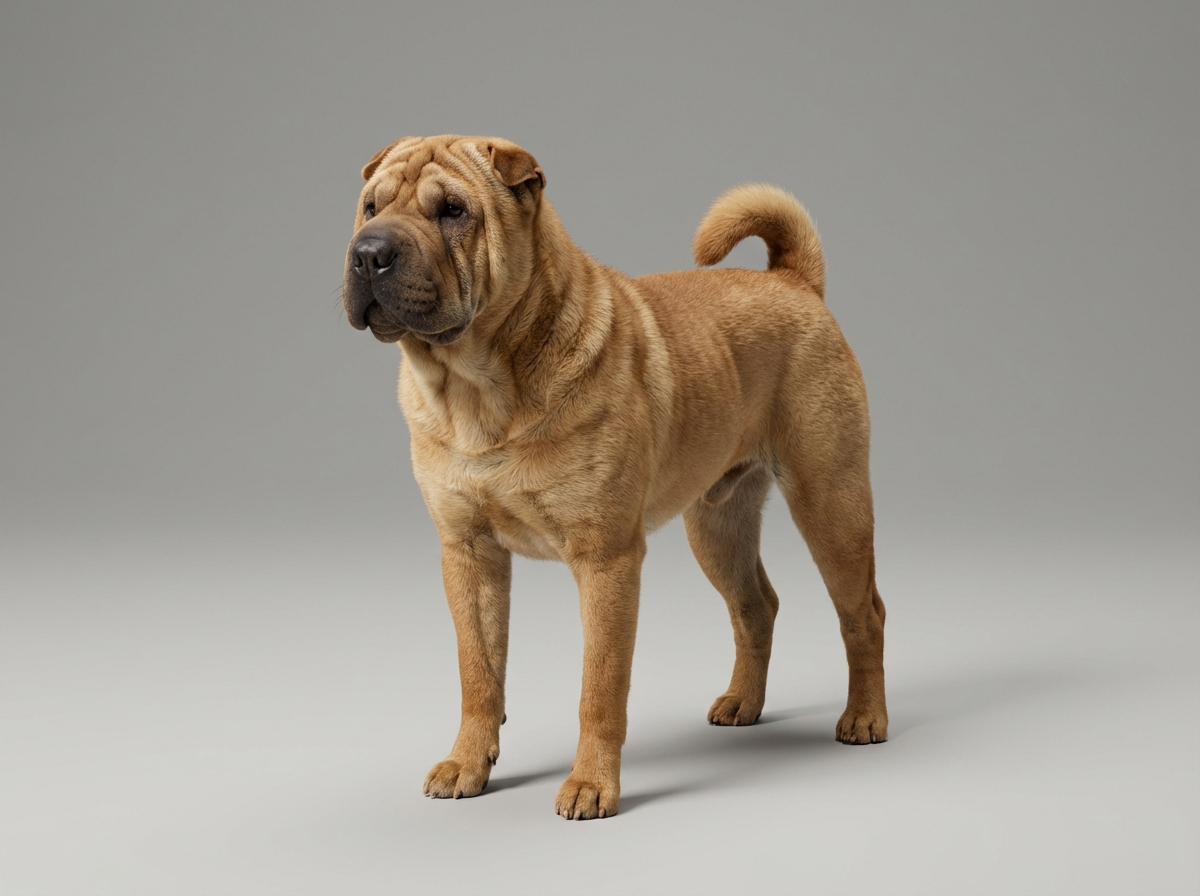
Forty-five to sixty pounds against eighty to a hundred thirty-five - the Rottweiler outweighs the Chinese Shar-Pei by a wide, sometimes more-than-double margin, and its 22-27 inch height dwarfs the Shar-Pei's 18-20. The Shar-Pei's build is famously distinctive: loose, wrinkled skin over a compact, muscular frame, a trait originally useful for fighting dogs to twist free of an opponent's grip. The Rottweiler is built entirely differently - dense, powerful and square, with none of the loose skin, designed for droving cattle and pulling carts. Both are muscular breeds under their respective coats, but a Rottweiler's raw physical presence in a room is simply on another scale than the Shar-Pei's.
Low 2/5 exercise need for the Shar-Pei against high 4/5 for the Rottweiler marks one of the bigger gaps in this comparison. The Shar-Pei's calm, reserved temperament suits a modest daily walk and little else; it's not a breed that thrives on vigorous activity. The Rottweiler, despite its size, carries real working-dog stamina and needs consistent structured exercise - without it, that confident, powerful temperament can turn into destructive boredom or excess weight on a large frame, which stresses joints already at risk for hip and elbow dysplasia. Owners drawn to the Rottweiler's protective presence should be equally prepared for its activity requirements.
Both breeds tie at a low 2/5 for grooming need, a rare match given how different they look, but shedding tells a different story: low 2/5 for the Shar-Pei against high 4/5 for the Rottweiler. The Shar-Pei's short, harsh coat sheds minimally and needs little brushing, though its skin folds require regular cleaning to prevent the dermatitis that shows up on its health list. The Rottweiler's short double coat sheds substantially more despite requiring similarly little brushing effort - the coat itself is low-maintenance, but the volume of loose hair around the house is not, particularly during seasonal shedding periods.
High 4/5 apartment suitability for the Shar-Pei against the Rottweiler's low 2/5 reflects size and exercise needs more than temperament - both breeds actually score close on barking, 2/5 for the Shar-Pei and 3/5 for the Rottweiler, and neither is a nuisance barker by breed reputation. The real dividing line is space: an 80-135 pound dog needs room the Shar-Pei simply doesn't. Alone-tolerance also favors the Shar-Pei, moderate 3/5 against the Rottweiler's low 2/5, making the smaller breed the more forgiving choice for owners with less flexible schedules or smaller living situations overall.
Trainability favors the Rottweiler clearly, high 4/5 against the Shar-Pei's low 2/5, even though both breeds score a matched low 2/5 for first-time-owner suitability. That combination is worth sitting with: the Rottweiler is genuinely trainable but requires an owner experienced enough to handle its size, strength and protective instincts responsibly. The Shar-Pei's independent, reserved nature makes it resistant to training regardless of owner experience - it was bred as a working and guarding dog that made its own decisions, and that independence hasn't faded. Neither breed suits a first dog, but for different reasons: one is hard to manage physically, the other hard to motivate.
Good-with-kids favors the Rottweiler, high 4/5 against the Shar-Pei's moderate 3/5, and good-with-other-dogs follows the same direction, moderate 3/5 against the Shar-Pei's low 2/5 - somewhat counter to the Rottweiler's tough reputation. Both breeds tie at low 2/5 for friendliness toward strangers, and both temperament lists include loyal, though the Shar-Pei pairs it with reserved and independent while the Rottweiler pairs it with confident and protective. Neither breed is a natural fit for households that entertain frequently or expect instant warmth toward new faces; both require deliberate socialization from puppyhood to manage their watchful instincts around strangers and other dogs.
Eight to twelve years for the Shar-Pei against eight to eleven for the Rottweiler puts both breeds on the shorter end of the lifespan spectrum, with the Shar-Pei holding a slight edge. The health lists diverge sharply in length: the Shar-Pei's five conditions include familial Shar-Pei fever, a breed-specific recurring fever syndrome, and entropion, both linked to its distinctive skin. The Rottweiler's ten-condition list is heavier on serious concerns - cancer, bone cancer and heart disease alongside hip and elbow dysplasia and bloat (GDV), reflecting the elevated cancer risk documented in large, deep-chested breeds. Hypothyroidism appears on both lists.
Cost level ties at high 4/5 for both breeds, and the numbers land close: $1,400-2,900 for the Shar-Pei's first year against $2,000-3,500 for the Rottweiler, with monthly costs of $100-200 versus $125-250. The Rottweiler's higher costs track with its larger size - more food, larger equipment, bigger medication doses when needed - while the Shar-Pei's costs lean toward veterinary care for its skin-fold-related conditions and the specialized attention its unique coat and wrinkles sometimes require. Both breeds land firmly in the higher-cost bracket compared with smaller or less health-complicated breeds.
Chinese Shar-Pei weighs 45–60 lbs and lives 8–12 years; Rottweiler weighs 80–135 lbs and lives 8–11 years. The two diverge most on exercise need, energy level and apartment suitability and 2 other rated axes. They are level on cost level, good for first-time owners and grooming need, so those cannot decide it. The table below marks a winner only where one breed is genuinely easier for a typical owner; size and origin are facts rather than merits and stay level. Ratings come from one source applied to both breeds, so they are meaningful against each other rather than as absolute scores.

The Rottweiler, weighing 80-135 lbs against the Shar-Pei's 45-60 lbs - more than double in some cases.
Yes - the Rottweiler rates high 4/5 for trainability against the Shar-Pei's low 2/5, despite both scoring poorly for first-time-owner suitability.
A recurring fever syndrome specific to the breed, one of five health conditions noted on the Shar-Pei's list, tied to its distinctive skin.
The Rottweiler, rated high 4/5 against the Shar-Pei's low 2/5.
They score a high 4/5 for kid-friendliness in this comparison, ahead of the Shar-Pei's moderate 3/5, though both breeds need early socialization.
The Rottweiler's health list includes both cancer and bone cancer specifically, a documented concern in large, deep-chested breeds.
Yes, both fall into the high 4/5 cost bracket, though the Rottweiler's first-year estimate runs somewhat higher at $2,000-3,500 versus the Shar-Pei's $1,400-2,900.
The Rottweiler, at 80-135 lbs, is substantially heavier than the Shar-Pei's 45-60 lbs.
The Rottweiler, rated high 4/5 versus the Shar-Pei's low 2/5.
The Shar-Pei, scoring high 4/5 for apartment suitability against the Rottweiler's low 2/5.
The Rottweiler, with ten conditions listed against the Shar-Pei's five.
Secure checkout on Stripe. We never see your card.
7-day money-back guarantee. Instant access.
Health information here is general and is not veterinary advice. If your dog shows pain, sudden behaviour change, or worsening symptoms, consult a licensed veterinarian.
Some links on this site are affiliate links. We may earn a commission at no extra cost to you, and we only suggest products we believe are helpful for dog owners.
We research and check what we publish, but we do not warrant that any figure, date, price, or statement is accurate, complete, or current, and we accept no liability for any loss, cost, injury, or other harm arising from the use of this site. Use it as one reference among several. You remain responsible for your own decisions and for your dog's care - confirm anything that matters with a licensed veterinarian or another qualified professional before you act on it. Full disclaimer.
Match your lifestyle to the right dog.
Take quizNot sure which breed is right for you? Take our 2-minute quiz to find out.
Take the quiz