Living
Which breed is bigger?
The Bloodhound, at 90-110 lbs, is roughly double the size of the 40-50 lb English Springer Spaniel.

Quick answer
Which breed is bigger?
The Bloodhound, at 90-110 lbs, is roughly double the size of the 40-50 lb English Springer Spaniel.
Bloodhound or English Springer Spaniel? On paper they differ most on trainability, and on the scales Bloodhound is the heavier at 90–110 lbs. Here is how the two compare on everything that shapes an ordinary week.
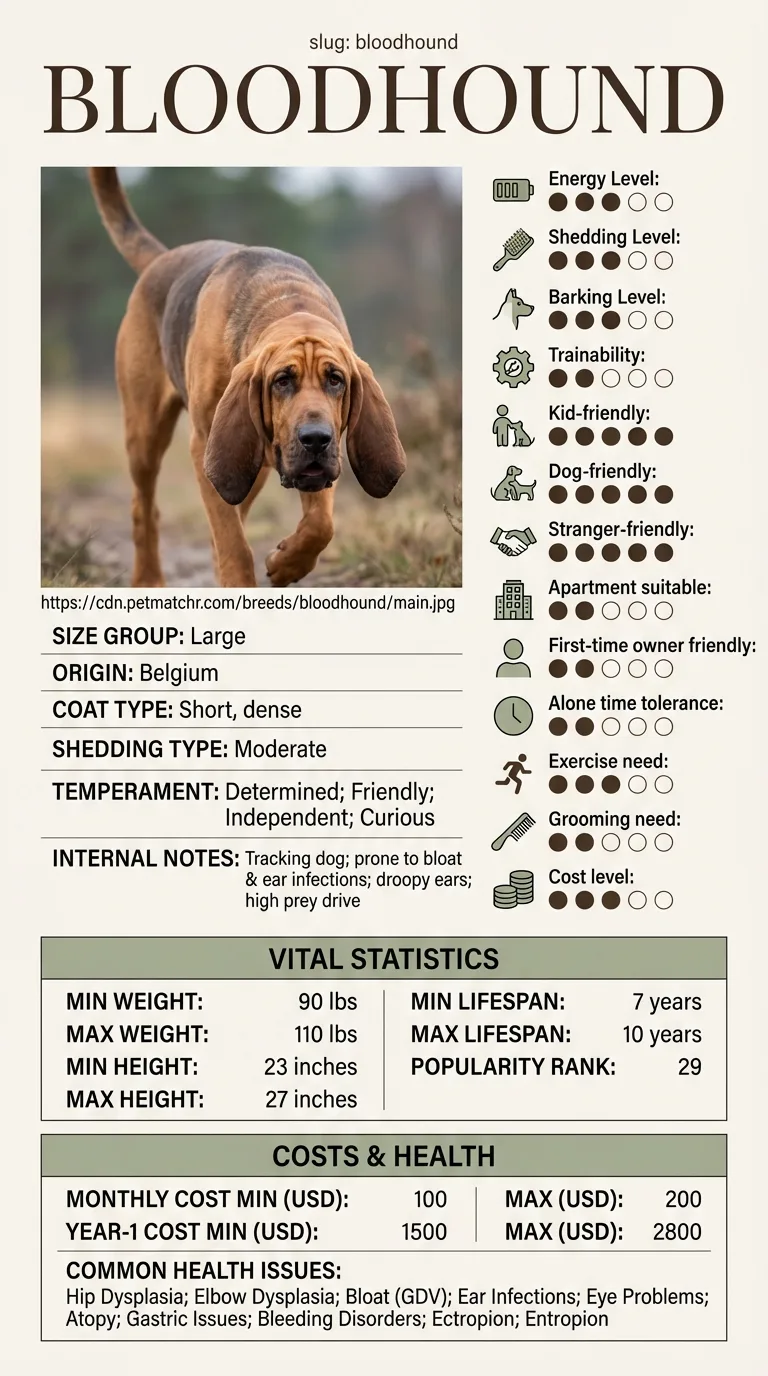
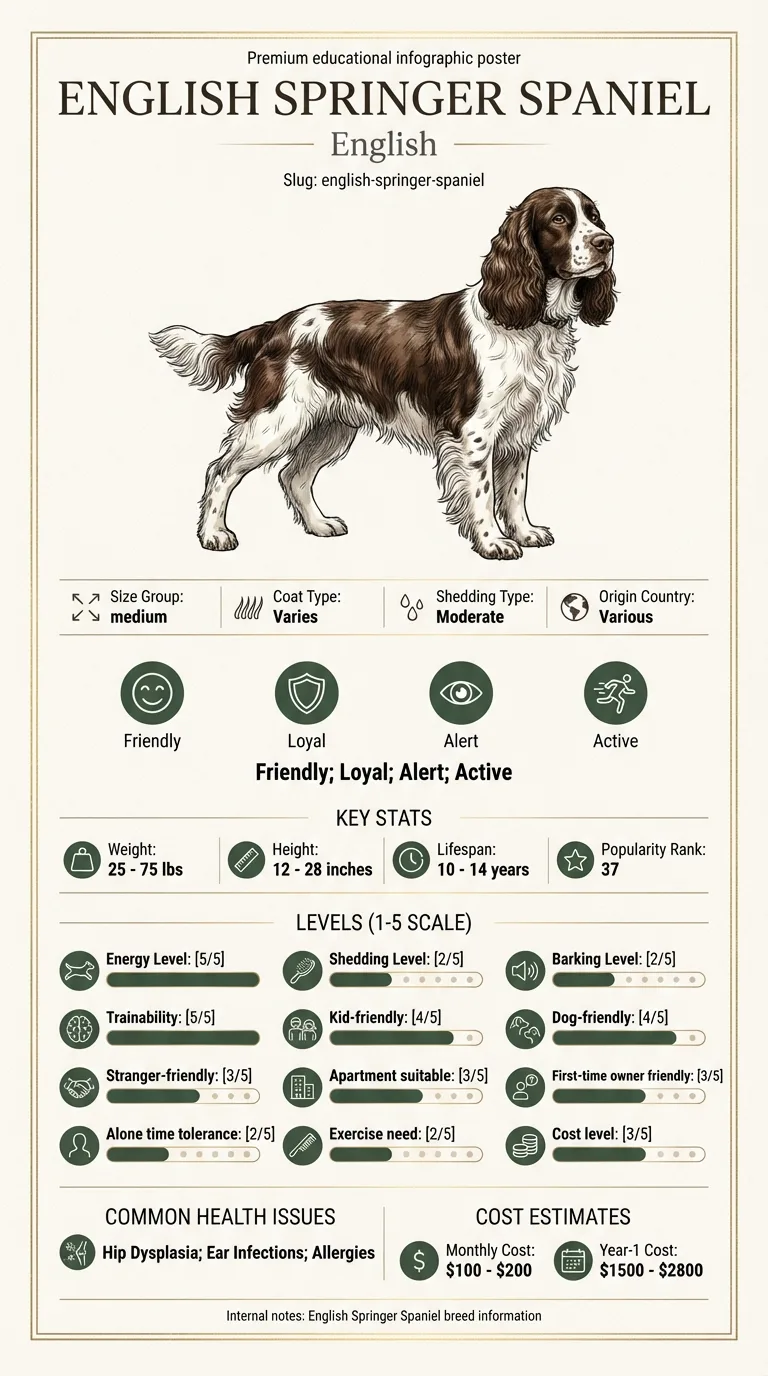
This is for someone already down to Bloodhound and English Springer Spaniel and deciding between them. For this pair the decision usually turns on trainability and exercise need, so those are covered first and in most detail. Both rate 2/5 for flats, so housing does not settle this one. The focus throughout is on daily consequences rather than breed background.
Between Bloodhound and English Springer Spaniel, trainability is what separates them, and Bloodhound is the lower-effort dog of the two to keep.
Choose Bloodhound if you do not want a standing grooming appointment and your walking routine is modest.
Choose English Springer Spaniel if this is your first dog, there are young children at home and you want a dog that picks up training quickly.
| Feature | bloodhound | english springer spaniel | Winner |
|---|---|---|---|
| Size class | large | medium | Equal |
| Weight | 90–110 lbs | 40–50 lbs | Equal |
| Height | 23–27 in | 19–20 in | Equal |
| Lifespan | 7–10 years | 12–14 years | english springer spaniel |
| Exercise need | Moderate (3/5) | Very high (5/5) | bloodhound |
| Grooming need | Low (2/5) | High (4/5) | bloodhound |
| Shedding | Moderate (3/5) | Moderate (3/5) | Equal |
| Energy level | Moderate (3/5) | Very high (5/5) | Equal |
| Barking | Moderate (3/5) | Moderate (3/5) | Equal |
| Apartment suitability | Low (2/5) | Low (2/5) | Equal |
| Good for first-time owners | Low (2/5) | Moderate (3/5) | english springer spaniel |
| Tolerates being alone | Low (2/5) | Low (2/5) | Equal |
| Trainability | Low (2/5) | Very high (5/5) | english springer spaniel |
| Good with kids | High (4/5) | Very high (5/5) | english springer spaniel |
| Good with other dogs | High (4/5) | High (4/5) | Equal |
| Friendly to strangers | High (4/5) | High (4/5) | Equal |
| Cost level | Moderate (3/5) | Moderate (3/5) | Equal |
| Coat | Short, dense | Medium, feathered double coat | Equal |
| Origin | Belgium | Various | Equal |
| Typical monthly cost | $100–$200 | $100–$200 | Equal |
| Typical first-year cost | $1,500–$2,800 | $1,400–$2,900 | Equal |
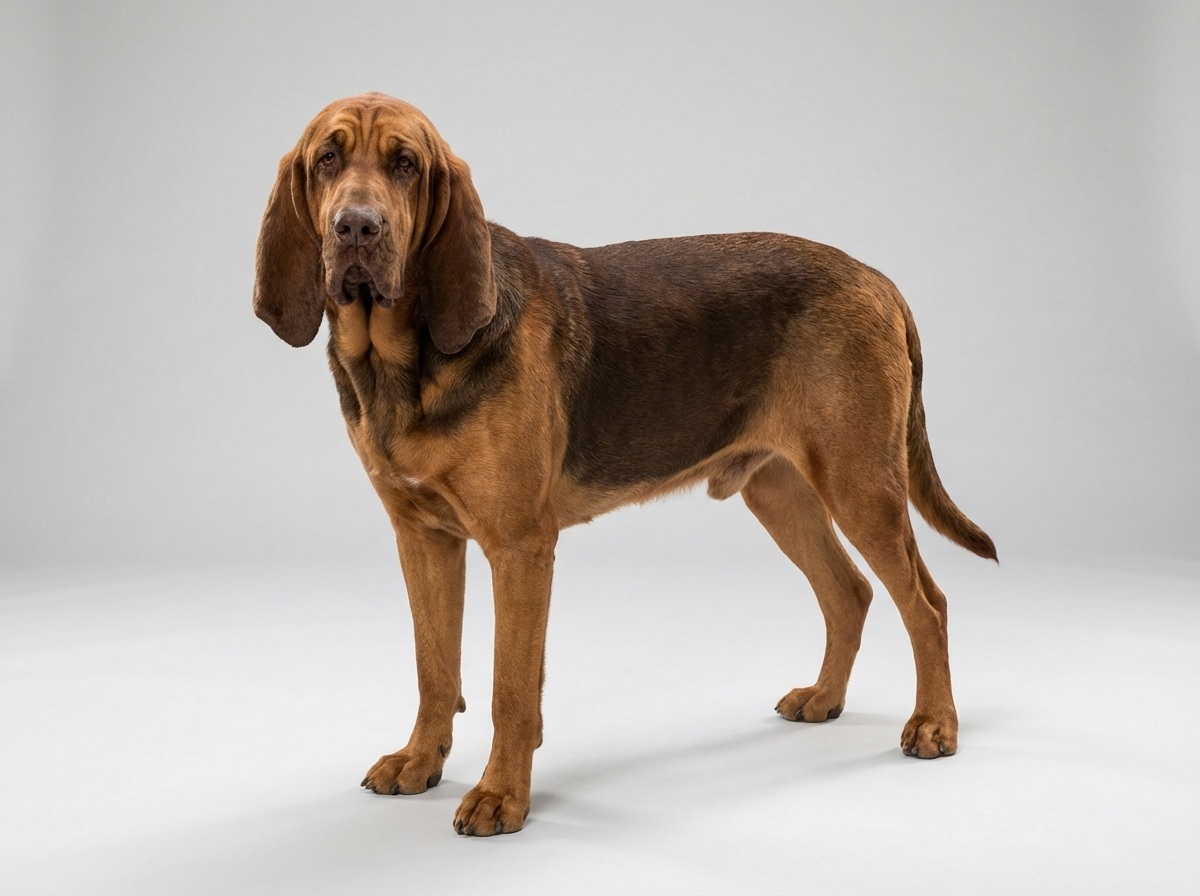
Loose, wrinkled skin and pendulous ears define the Bloodhound's silhouette long before its 90-110 pound frame does - features that trap and hold scent particles close to the nose, useful for tracking even though they require extra cleaning. The English Springer Spaniel carries none of that excess skin: a tighter, more athletic 40-50 pound build reflects its flushing-and-retrieving job in the field. Height tells the same story, up to 27 inches for the Bloodhound against roughly 20 for the Springer. Anyone who has walked both on leash notices the difference immediately - the Bloodhound pulls with its whole body weight behind it, while the Springer moves with quicker, lighter steps.
Eager tops the English Springer Spaniel's temperament list, and its very-high 5/5 exercise rating backs that word up completely - this is a dog bred to work all day in the field flushing birds, and that drive doesn't disappear in a suburban backyard. The Bloodhound's moderate 3/5 rating tells a calmer story: a solid walk covers most of its needs, though a bored Bloodhound will happily invent its own scent trail through the neighborhood given the chance. Households with serious time for structured exercise, fetch sessions or dog sports suit the Springer; a more relaxed daily walking routine suits the Bloodhound noticeably better.
The Bloodhound's short coat needs almost nothing beyond a weekly brush, landing at a low 2/5 for grooming, while the Springer's medium, feathered double coat climbs to a high 4/5 and needs regular brushing to keep the feathering on its legs and ears from matting. Shedding ties at moderate 3/5 for both. What the grooming score for the Bloodhound doesn't capture is the maintenance those long ears and loose skin folds demand - routine cleaning to prevent infection is essentially non-negotiable. The Springer's coat care is more conventional brush-and-bathe work, time-consuming but straightforward, without the skin-fold considerations that come with the Bloodhound's distinctive build.
Both breeds tie at a low 2/5 for apartment suitability here, which is a rarer outcome in this dataset - usually one breed edges ahead. The reasons differ though: the Bloodhound's size alone makes small spaces cramped, while the Springer's very-high energy needs make confinement frustrating regardless of square footage. Both also tolerate being alone poorly, tied at 2/5, and barking ties at moderate 3/5. In practice, a Springer in an apartment needs serious daily exercise commitments to avoid destructive boredom, while a Bloodhound in the same space mostly just needs room to stretch out. Neither is an ideal apartment match, but for different underlying reasons.
Very high 5/5 trainability for the Springer Spaniel against a low 2/5 for the Bloodhound is about as wide as this dataset's trainability gap gets. The Springer's temperament list leads with eager and biddable, a dog engineered across generations to take direction from a handler in the field. The Bloodhound's determined, independent nature means its nose frequently wins out over any command - useful for tracking work, frustrating for basic obedience class. First-time-owner scores echo this: low 2/5 for the Bloodhound, moderate 3/5 for the Springer. A new owner will likely find the Springer's responsiveness a far gentler learning curve than the Bloodhound's singular focus.
Good-with-kids favors the Springer, very high 5/5 against the Bloodhound's high 4/5, though both are solidly family-friendly dogs. Compatibility with other dogs and with strangers ties at high 4/5 for each breed - neither is standoffish. The practical household difference comes down to management: a friendly but 90-plus-pound Bloodhound needs more physical control around small children simply due to size and pulling strength, even without any aggression involved. The Springer's smaller frame and eager, friendly nature make it easier to have underfoot during family chaos. Both breeds welcome visitors readily, so households that entertain often won't find either one a liability at the door.
Seven to ten years for the Bloodhound against twelve to fourteen for the Springer is a substantial gap, nearly half again as long a life expectancy on the Springer's side. The Bloodhound's ten-condition list includes bloat (GDV) and the eyelid conditions ectropion and entropion tied to its loose skin, plus bleeding disorders. The Springer's five-item list includes a breed-specific concern, phosphofructokinase deficiency, an enzyme disorder affecting red blood cells, alongside hip dysplasia, elbow dysplasia, ear infections and progressive retinal atrophy. Both breeds share hip dysplasia and ear infection risk. Given the lifespan gap, prospective Bloodhound owners should weigh that shorter expected timeline into their decision.
Cost level ties at moderate 3/5, and the dollar figures land close together: $1,500-2,800 for the Bloodhound's first year against $1,400-2,900 for the Springer, with monthly costs matching at $100-200 for both. The Bloodhound's larger body drives higher food costs, offset by its minimal grooming needs; the Springer's smaller size costs less to feed but its coat maintenance and very-high exercise needs - think dog-walker fees or daycare for busy owners - can add up in less obvious ways. Neither breed carries a dramatically higher price tag than the other once all the line items are added up.
Bloodhound weighs 90–110 lbs and lives 7–10 years; English Springer Spaniel weighs 40–50 lbs and lives 12–14 years. The two diverge most on trainability, exercise need and grooming need and 1 other rated axes. They are level on tolerates being alone, apartment suitability and barking, so those cannot decide it. The table below marks a winner only where one breed is genuinely easier for a typical owner; size and origin are facts rather than merits and stay level. Ratings come from one source applied to both breeds, so they are meaningful against each other rather than as absolute scores.

The Springer, by a wide margin - it rates a very high 5/5 for exercise need against the Bloodhound's moderate 3/5.
Considerably - the Bloodhound scores a low 2/5 for trainability against the Springer's very high 5/5, largely because its scent drive tends to override handler cues.
The English Springer Spaniel, typically twelve to fourteen years, versus the Bloodhound's seven to ten.
No - both actually tie at a low 2/5 for apartment suitability, the Bloodhound due to its size, the Springer due to its very high exercise needs.
It's a breed-associated enzyme disorder that affects red blood cells, one of five health conditions noted for the English Springer Spaniel.
Both tie at a moderate 3/5 for shedding, so neither has a meaningful edge on loose hair.
Yes, both land at a moderate 3/5 cost level, with first-year estimates within about $100 of each other.
The Bloodhound, at 90-110 lbs, is roughly double the size of the 40-50 lb English Springer Spaniel.
The English Springer Spaniel, at a very high 5/5 versus the Bloodhound's low 2/5.
The English Springer Spaniel, rated high 4/5 against the Bloodhound's low 2/5.
The English Springer Spaniel, at twelve to fourteen years versus the Bloodhound's seven to ten.
Secure checkout on Stripe. We never see your card.
7-day money-back guarantee. Instant access.
Health information here is general and is not veterinary advice. If your dog shows pain, sudden behaviour change, or worsening symptoms, consult a licensed veterinarian.
Some links on this site are affiliate links. We may earn a commission at no extra cost to you, and we only suggest products we believe are helpful for dog owners.
We research and check what we publish, but we do not warrant that any figure, date, price, or statement is accurate, complete, or current, and we accept no liability for any loss, cost, injury, or other harm arising from the use of this site. Use it as one reference among several. You remain responsible for your own decisions and for your dog's care - confirm anything that matters with a licensed veterinarian or another qualified professional before you act on it. Full disclaimer.
Match your lifestyle to the right dog.
Take quizNot sure which breed is right for you? Take our 2-minute quiz to find out.
Take the quiz