Behavior
Bloodhound or Boxer for an active family?
Boxer, rated 5/5 exercise need and very high with kids at 5/5.

Quick answer
Bloodhound or Boxer for an active family?
Boxer, rated 5/5 exercise need and very high with kids at 5/5.
Bloodhound or Boxer? On paper they differ most on exercise need, and on the scales Bloodhound is the heavier at 90–110 lbs. Here is how the two compare on everything that shapes an ordinary week.
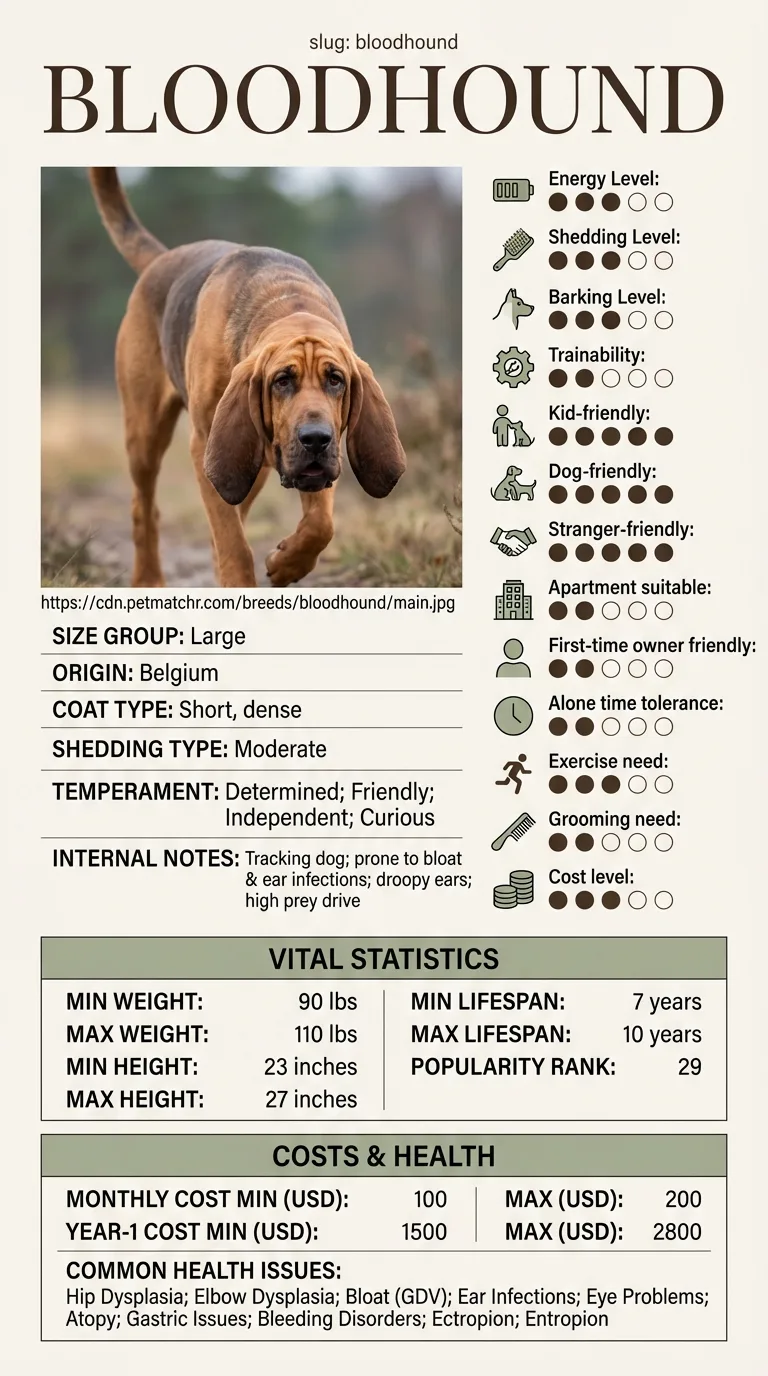
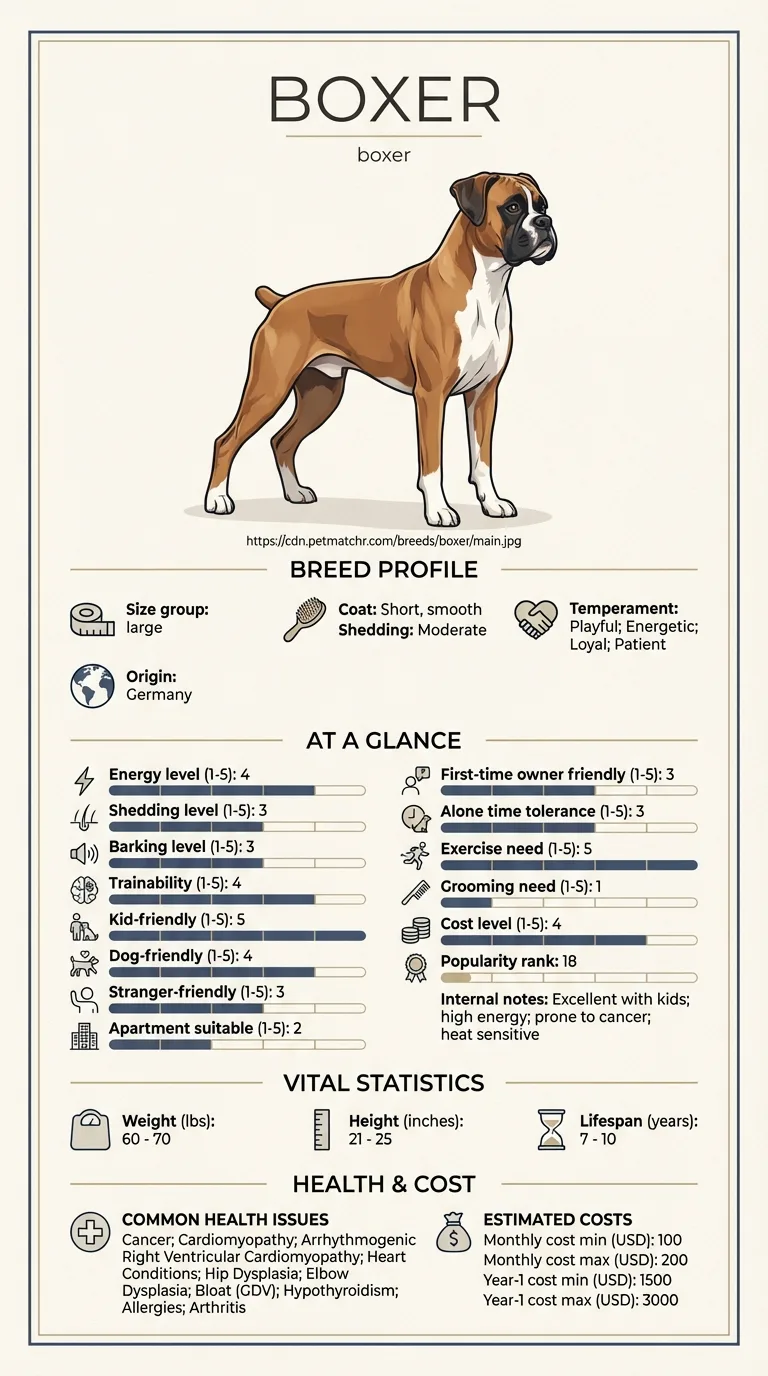
This is for someone already down to Bloodhound and Boxer and deciding between them. For this pair the decision usually turns on exercise need and trainability, so those are covered first and in most detail. Both rate 2/5 for flats, so housing does not settle this one. The focus throughout is on daily consequences rather than breed background.
Between Bloodhound and Boxer, exercise need is what separates them, and Boxer is the lower-effort dog of the two to keep.
Choose Bloodhound if your walking routine is modest.
Choose Boxer if this is your first dog, you do not want a standing grooming appointment and the dog will be alone during the working day.
| Feature | bloodhound | boxer | Winner |
|---|---|---|---|
| Size class | large | large | Equal |
| Weight | 90–110 lbs | 60–70 lbs | Equal |
| Height | 23–27 in | 21–25 in | Equal |
| Lifespan | 7–10 years | 7–10 years | Equal |
| Exercise need | Moderate (3/5) | Very high (5/5) | bloodhound |
| Grooming need | Low (2/5) | Very low (1/5) | boxer |
| Shedding | Moderate (3/5) | Moderate (3/5) | Equal |
| Energy level | Moderate (3/5) | High (4/5) | Equal |
| Barking | Moderate (3/5) | Moderate (3/5) | Equal |
| Apartment suitability | Low (2/5) | Low (2/5) | Equal |
| Good for first-time owners | Low (2/5) | Moderate (3/5) | boxer |
| Tolerates being alone | Low (2/5) | Moderate (3/5) | boxer |
| Trainability | Low (2/5) | High (4/5) | boxer |
| Good with kids | High (4/5) | Very high (5/5) | boxer |
| Good with other dogs | High (4/5) | High (4/5) | Equal |
| Friendly to strangers | High (4/5) | Moderate (3/5) | bloodhound |
| Cost level | Moderate (3/5) | High (4/5) | bloodhound |
| Coat | Short, dense | Short, smooth | Equal |
| Origin | Belgium | Germany | Equal |
| Typical monthly cost | $100–$200 | $100–$200 | Equal |
| Typical first-year cost | $1,500–$2,800 | $1,500–$3,000 | Equal |
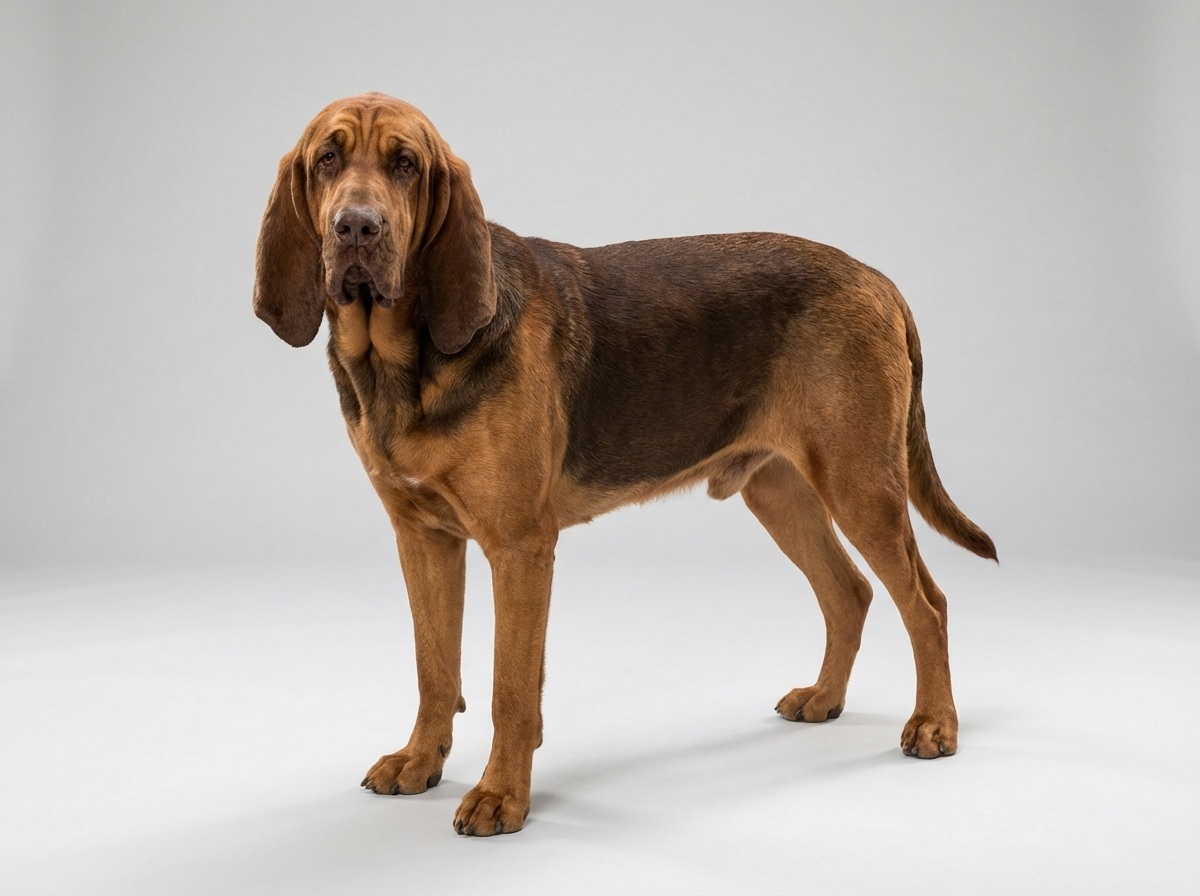
Both breeds share the large size class, but a 90-110 lb Bloodhound outweighs a 60-70 lb Boxer by a considerable margin while standing a couple of inches taller, 23-27 inches against 21-25. The Bloodhound's short, dense coat drapes over loose, wrinkled skin built for scent tracking, while the Boxer's short, smooth coat sits tight over a lean, muscular frame built for agility and power. Despite the shared size class, these are visibly different body types, one built to follow a scent trail for miles, the other built for bursts of athletic movement.
The Boxer needs considerably more activity, rated very high (5/5) exercise need against the Bloodhound's moderate (3/5), and its energy level runs high (4/5) versus the Bloodhound's moderate (3/5). Boxers are playful and energetic by nature and need vigorous daily exercise to avoid boredom-driven mischief, while the Bloodhound's activity comes more from scent-focused walks than high-intensity play. A family that wants a dog to run and play fetch for long stretches will find the Boxer far more willing than the more methodical, nose-led Bloodhound.
The Boxer edges out the Bloodhound on grooming need, very low (1/5) against low (2/5), while shedding ties at moderate (3/5) for both. The Bloodhound's real grooming task isn't coat brushing but wrinkle care, its deep facial folds need regular cleaning to prevent skin irritation and odor, something the smooth-faced Boxer doesn't require. Both breeds are otherwise low-maintenance in the coat department, so the deciding factor for anyone coat-averse really comes down to whether they're willing to manage the Bloodhound's distinctive wrinkles.
Apartment suitability ties at low (2/5) for both breeds, and barking ties at moderate (3/5) too, so neither is a natural fit for tight quarters, though for different reasons: the Boxer's very high energy needs room to burn off, while the Bloodhound simply does better with outdoor access for tracking. The Boxer tolerates being alone slightly better, moderate (3/5) versus the Bloodhound's low (2/5), making it marginally more forgiving for owners who occasionally need to leave a dog home for a full workday.
The Boxer is meaningfully easier to train, high (4/5) against the Bloodhound's low (2/5), and that carries into first-time-owner suitability too, moderate (3/5) for the Boxer versus low (2/5) for the Bloodhound. A Boxer's playful, loyal, patient temperament makes it responsive to consistent training, while the Bloodhound's single-minded devotion to scent tracking often overrides commands in the moment. Neither is a true beginner's breed given their size and exercise needs, but the Boxer offers a noticeably smoother training experience.
The Boxer rates very high (5/5) with kids against the Bloodhound's high (4/5), while both tie at high (4/5) with other dogs. Strangers split them: the Bloodhound rates high (4/5) friendly to strangers, matching its curious, friendly nature, while the Boxer drops to moderate (3/5), often more watchful and protective of its family around unfamiliar faces despite its playful reputation. Families weighing which dog will greet party guests more warmly should lean toward the Bloodhound; those wanting a slightly more protective presence may prefer the Boxer.
Lifespan ties exactly at 7-10 years for both breeds, unusually short for large dogs and a real consideration for either choice. Both health lists include hip dysplasia, elbow dysplasia and bloat (GDV), common large-breed risks, but the Boxer's list adds a cluster of cardiac concerns not seen on the Bloodhound's: cancer, cardiomyopathy, arrhythmogenic right ventricular cardiomyopathy and general heart conditions. Prospective Boxer owners in particular should ask breeders about cardiac screening, since heart disease shows up repeatedly across this breed's ten listed health concerns.
The Boxer costs somewhat more overall, rated high (4/5) cost level against the Bloodhound's moderate (3/5), though monthly costs land close, $100-200 for both, with first-year costs slightly higher for the Boxer at $1,500-3,000 versus the Bloodhound's $1,500-2,800. Given the Boxer's cardiac-heavy health list, ongoing veterinary monitoring, including regular heart screenings, is a realistic added cost beyond routine care, something worth budgeting for over the dog's lifetime rather than assuming from the sticker-level monthly figures alone.
Bloodhound weighs 90–110 lbs and lives 7–10 years; Boxer weighs 60–70 lbs and lives 7–10 years. The two diverge most on exercise need and trainability. They are level on apartment suitability, barking and good with other dogs, so those cannot decide it. The table below marks a winner only where one breed is genuinely easier for a typical owner; size and origin are facts rather than merits and stay level. Ratings come from one source applied to both breeds, so they are meaningful against each other rather than as absolute scores.

The Boxer, rated high (4/5) trainability against the Bloodhound's low (2/5), which tends to follow its nose over commands.
Yes, their health list includes cancer, cardiomyopathy, arrhythmogenic right ventricular cardiomyopathy and general heart conditions, a notably heavier cardiac risk profile than the Bloodhound's.
The Boxer, rated very high (5/5) exercise need against the Bloodhound's moderate (3/5).
Yes, both average 7-10 years, short for large breeds and worth factoring into the decision.
The Bloodhound tends to be, rated high (4/5) friendly to strangers against the Boxer's more watchful moderate (3/5).
The Boxer scores slightly higher, very high (5/5) good with kids against the Bloodhound's high (4/5), though both are considered good family dogs.
The Boxer, rated high (4/5) cost level against the Bloodhound's moderate (3/5), with a slightly higher first-year cost range.
Boxer, rated 5/5 exercise need and very high with kids at 5/5.
The Boxer, rated moderate (3/5) friendly to strangers versus the Bloodhound's high (4/5), suggesting more watchfulness.
The Boxer, rated 1/5 grooming need versus the Bloodhound's 2/5.
The Boxer, whose health list includes cardiomyopathy and other heart conditions not listed for the Bloodhound.
Secure checkout on Stripe. We never see your card.
7-day money-back guarantee. Instant access.
Health information here is general and is not veterinary advice. If your dog shows pain, sudden behaviour change, or worsening symptoms, consult a licensed veterinarian.
Some links on this site are affiliate links. We may earn a commission at no extra cost to you, and we only suggest products we believe are helpful for dog owners.
We research and check what we publish, but we do not warrant that any figure, date, price, or statement is accurate, complete, or current, and we accept no liability for any loss, cost, injury, or other harm arising from the use of this site. Use it as one reference among several. You remain responsible for your own decisions and for your dog's care - confirm anything that matters with a licensed veterinarian or another qualified professional before you act on it. Full disclaimer.
Match your lifestyle to the right dog.
Take quizNot sure which breed is right for you? Take our 2-minute quiz to find out.
Take the quiz