Behavior
What are quick tips for Bloodhound obesity?
Monitor their food intake, ensure regular exercise, and consult your vet for dietary recommendations. Keeping a consistent feeding schedule can help manage their weight.

Quick answer
What are quick tips for Bloodhound obesity?
Monitor their food intake, ensure regular exercise, and consult your vet for dietary recommendations. Keeping a consistent feeding schedule can help manage their weight.
Bloodhound obesity is a common issue that can lead to serious health problems. Managing your dog's weight is essential for their overall well-being.
Owners of Bloodhounds often face challenges with weight management, especially those who may not have experience in training or are unaware of appropriate dietary needs. Busy families or individuals with a less active lifestyle may find it particularly difficult to keep their Bloodhound at a healthy weight.
This guide is not medical advice. If your dog shows pain, sudden behavior change, or worsening symptoms, consult a licensed veterinarian.
Some links may be affiliate links. We may earn a commission at no extra cost to you. We only suggest products we believe are helpful for dog owners.
We research and check what we publish, but we do not warrant that any figure, date, price, or statement is accurate, complete, or current, and we accept no liability for any loss, cost, injury, or other harm arising from the use of this site. Use it as one reference among several. You remain responsible for your own decisions and for your dog's care - confirm anything that matters with a licensed veterinarian or another qualified professional before you act on it. Full disclaimer.
Check this first
Recognizing when Bloodhound obesity becomes an emergency is crucial for your dog's health. If your Bloodhound shows any signs of severe health issues, it's vital to call your vet immediately. Look for symptoms like difficulty breathing, excessive lethargy, or signs of pain when moving. These could indicate more serious conditions that require immediate attention.
On the other hand, if your Bloodhound is simply gaining weight but is still active and happy, you can monitor the situation. Keep an eye on their eating habits, energy levels, and overall behavior. Consider setting a plan for gradual weight loss through diet and increased exercise. If they seem a bit sluggish but not in distress, it’s usually okay to wait and see how they respond to changes in their routine.
In summary, you should act fast if you notice any of these red-flag signs: persistent vomiting, inability to walk or stand, or sudden changes in appetite. For mild cases, focus on lifestyle adjustments and regular vet check-ups. This approach can help prevent serious health issues related to obesity in your Bloodhound.
If any of these apply, call your vet or an emergency clinic now. The rest of this page is for the cases that are not an emergency.
Bloodhound obesity is a common issue that manifests as excessive weight gain in these large, lovable dogs. Owners may notice their Bloodhound becoming less active, struggling to keep up during walks, or having difficulty with basic tasks like climbing stairs. This is often due to a combination of overfeeding, lack of exercise, and the breed's natural tendency to be laid-back.
Obesity is a prevalent concern among Bloodhounds, with many owners reporting weight management challenges. This breed's love for food, coupled with a generally moderate energy level, makes them susceptible to gaining excess weight if not properly monitored.
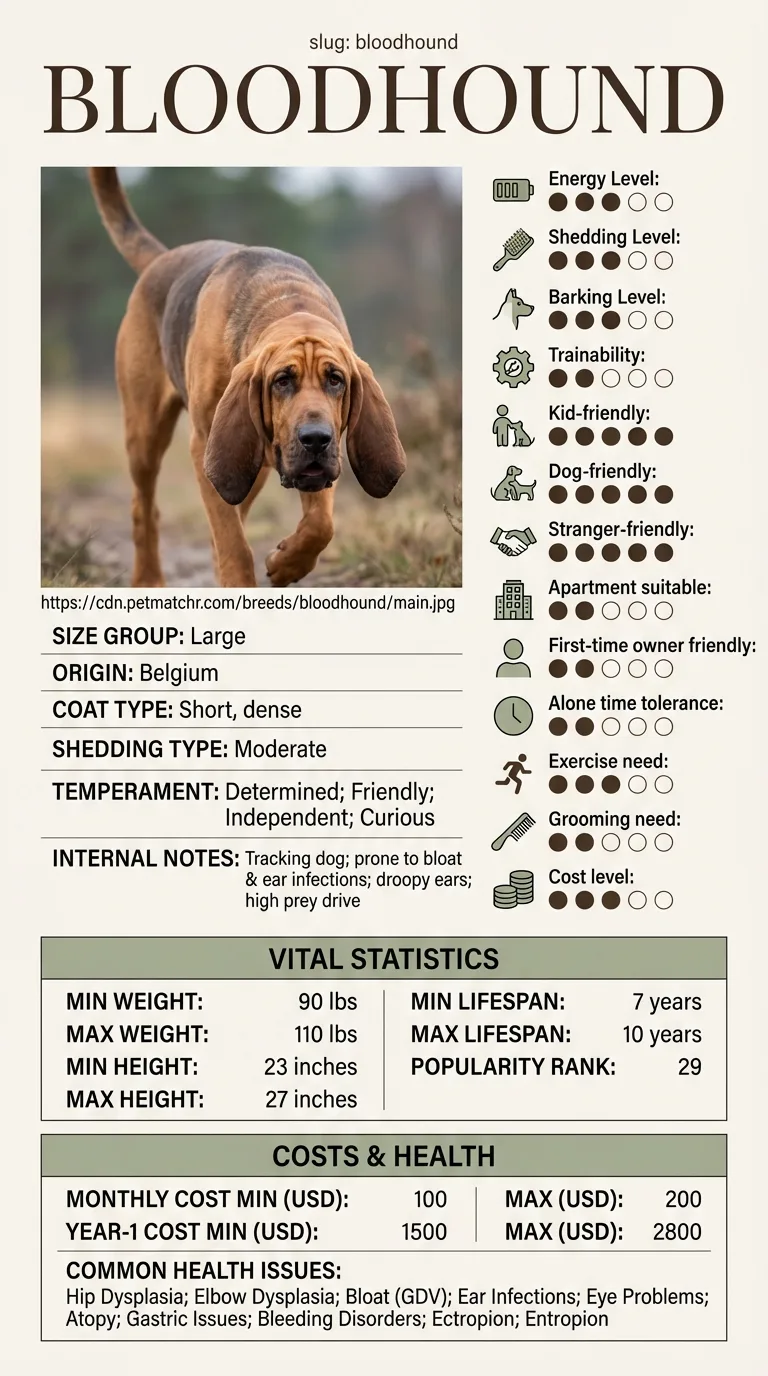
Bloodhounds are a large breed known for their determined nature and love of food. Their strong sense of smell often leads them to be less active when indoors, making them prone to weight gain. Additionally, their independent streak can make training for exercise and diet more challenging.
Obesity in Bloodhounds can also stem from an inactive lifestyle. If they live in small spaces or don’t get enough outdoor activity, they may not burn off calories effectively. Overfeeding, lack of structured exercise, and too many treats can contribute to this issue.
Consult your vet if you notice sudden weight gain or if your Bloodhound struggles with weight loss despite changes in diet and exercise. They can rule out health issues and provide specific dietary recommendations.
Avoiding these common mistakes can help you manage your Bloodhound's weight more effectively.
Start here: Bloodhound Most Common Genetic Disorders: What to Screen For
See all Bloodhound health problems, which breeds are prone to obesity, or the full Bloodhound breed guide for temperament, exercise needs and ownership costs.
With consistent effort, you can start seeing positive changes in your Bloodhound's weight within 3 to 6 months. However, reaching a healthier weight may take longer depending on the dog's starting point and your commitment.
Success looks like your Bloodhound shedding excess weight gradually, gaining more energy, and improving overall health. You should notice them being more active and playful, with a reduced risk of obesity-related health issues.
Max, a 5-year-old Bloodhound, weighed 120 pounds, far above the breed's healthy range. His owner, Sarah, noticed he was lethargic and had trouble keeping up on walks. After consulting their vet, Sarah learned about the importance of a balanced diet and regular exercise. She implemented a structured feeding schedule and daily walks, gradually increasing the distance as Max lost weight. Within six months, Max had shed 20 pounds and was much more active, even playing fetch with the neighborhood kids.
Key takeaway: With dedication to a proper diet and exercise routine, managing Bloodhound obesity is achievable, leading to a healthier and happier dog.
Bloodhound obesity can occur due to overfeeding, lack of exercise, or health issues. Their love for food and slower metabolism can make weight management tricky. Regular vet check-ups can help identify any underlying health problems.
To stop Bloodhound obesity, focus on a balanced diet and controlled portion sizes. Incorporate regular exercise, such as daily walks and playtime, to help burn off calories. Consistency is key, so stick to a routine.
Yes, Bloodhound obesity can lead to serious health issues like diabetes, joint problems, and heart disease. Maintaining a healthy weight is essential for their overall well-being and longevity. Regular vet visits can help monitor their health.
Incorporate positive reinforcement training to encourage active behavior in your Bloodhound. Use treats wisely and engage them in games that promote movement, like fetch or hide-and-seek. This can help make exercise fun.
For older Bloodhounds, it’s important to adjust their diet and exercise routine carefully. Consult your vet for a tailored weight management plan that considers their age and health conditions.
Even with regular exercise, Bloodhounds can gain weight if their diet is not properly managed. Overfeeding, high-calorie treats, or underlying health issues can contribute to obesity, so it's essential to monitor their food intake closely.
Training that focuses on engaging your Bloodhound mentally and physically can help reduce obesity. Incorporate activities like scent work or agility training to keep them active. Regular walks and playtime are also essential.
If you notice significant weight gain or your Bloodhound shows signs of discomfort, it's time to visit the vet. They can assess for any underlying health issues and provide a safe weight-loss plan tailored to your dog.
Monitor their food intake, ensure regular exercise, and consult your vet for dietary recommendations. Keeping a consistent feeding schedule can help manage their weight.
A Bloodhound typically needs about 60 minutes of exercise daily. This can include walks, playtime, and mental stimulation to keep them engaged.
Switch to a high-quality, low-calorie dog food and measure their portions carefully. Avoid giving too many treats, especially those high in fat.
Yes, obesity can significantly shorten a Bloodhound's lifespan due to increased risks of health problems. Maintaining a healthy weight can lead to a longer and happier life.
Yes, look for training programs that focus on weight management and positive reinforcement. These can help your Bloodhound become more active while enjoying the process.
A one-page prep sheet for this condition: the signs, the questions to ask, what to get priced. Unlocks here.
You get: Vet visit prep sheet
No spam. One-click unsubscribe. See our privacy policy.
Preview page 1 before you decide.