DogBreedCompass

Pit Bull or Brittany: A Full Gundog in Thirty-Five Pounds

Both breeds rate 4/5 for exercise and 4/5 for energy, and both are quiet at 2/5 for barking. Then the Brittany rates 5/5 with other dogs against 2/5, and 2/5 for time alone against 3/5.

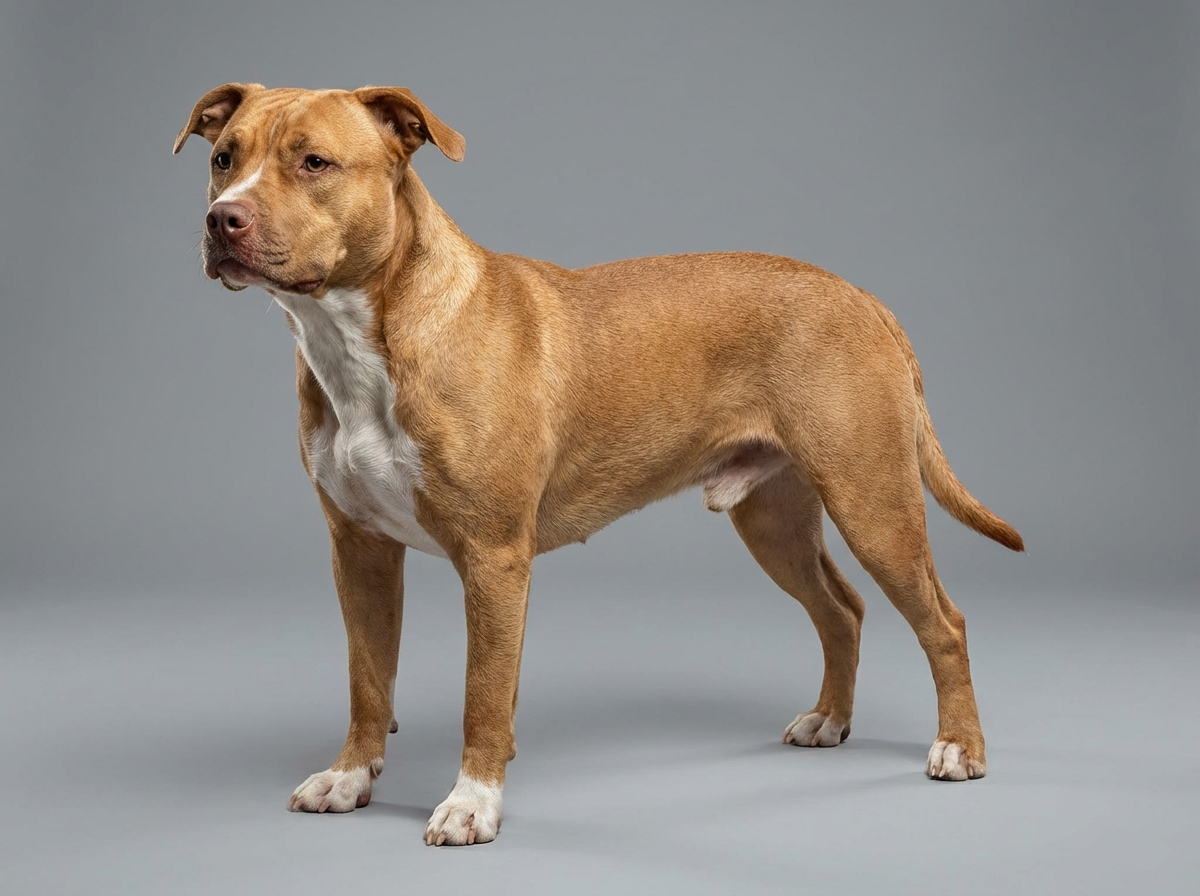
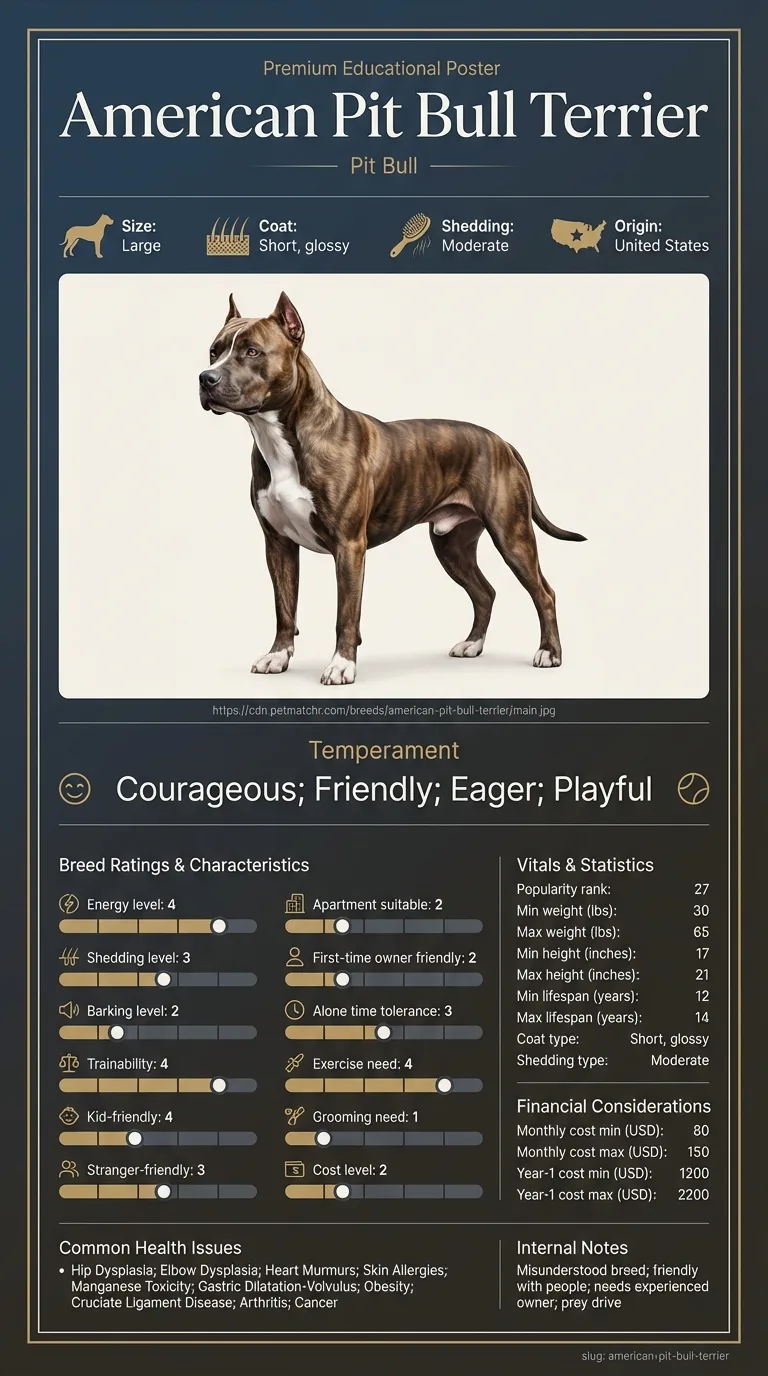
american pit bull terrier infographic
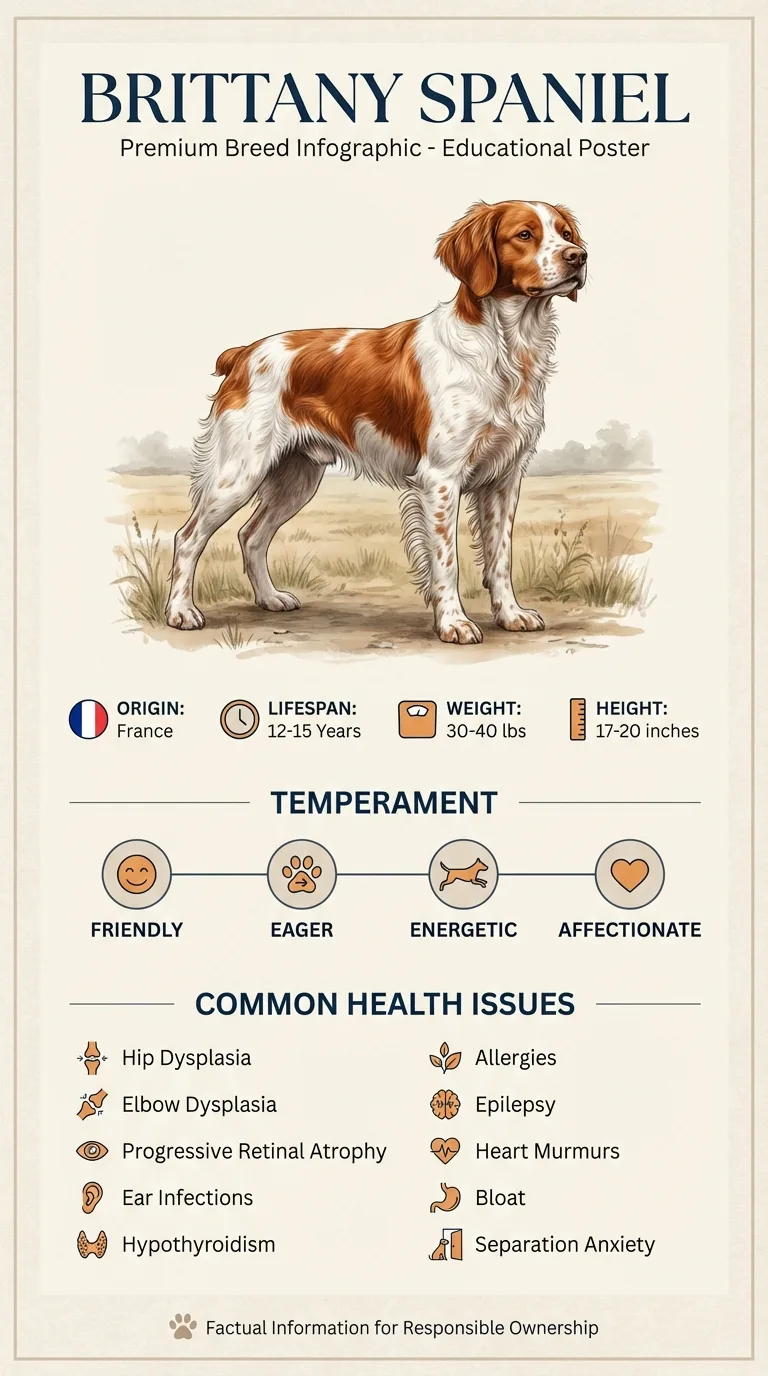
brittany infographic

This page is for an active owner who wants a real working dog without a large dog's footprint, and needs to know what the Brittany's sociability costs on the other side of the ledger.

Quick verdict

The Brittany is the easier dog in public and the harder one to leave at home, while the Pit Bull is the reverse — steady on its own and permanently managed around other dogs.

Choose american pit bull terrier if...

Choose the American Pit Bull Terrier if the house is empty for parts of the day, you want a durable low-maintenance athlete, and you can manage careful introductions to other dogs and check local restrictions.

Choose brittany if...

Choose the Brittany if someone is home much of the day, you want a small, biddable gundog that gets on with every dog and person it meets, and you can supply an hour or more of real activity daily.

Head-to-head comparison

Featureamerican pit bull terrierbrittanyWinner
Weight30–65 lbs30–40 lbsEqual
Height17–21 in17–20 inEqual
Lifespan12–14 years12–15 yearsbrittany
CoatShort, glossyMedium, wavyamerican pit bull terrier
Grooming need1/52/5american pit bull terrier
Shedding3/5 — moderate3/5 — moderateEqual
Energy level4/54/5Equal
Exercise need4/54/5Equal
Trainability4/55/5brittany
Barking2/52/5Equal
Good with kids4/55/5brittany
Good with other dogs2/55/5brittany
Friendly to strangers3/54/5brittany
Apartment suitability2/53/5brittany
Good for first-time owners2/54/5brittany
Tolerates being alone3/52/5american pit bull terrier
Typical monthly cost$80–150$90–180american pit bull terrier
Typical first-year cost$1,200–2,200$1,300–2,500american pit bull terrier

Deep dive

Sweet, obedient and hard to leave

Separation anxiety appears on the Brittany's list of common health issues, which is unusual — most breed lists name diseases rather than behavioural conditions — and its own notes flag the tendency directly.

The cause is the same trait that makes the breed so pleasant. Brittanys were bred to work close to a walking hunter, checking in constantly, taking direction at moderate range rather than ranging out of sight. Selection favoured a dog that stays connected to its person and reads them carefully. That produces a 5/5 trainability and a genuinely biddable temperament, and it also produces a dog that finds a closed door difficult.

What it looks like in practice is worth distinguishing from boredom. Anxiety concentrates on exit points — scratching at doors, chewing frames and window sills — often with vocalising for the whole absence, refusal to eat while alone, drooling, pacing and house-soiling in a dog that is otherwise reliable. Boredom is spread through the house and responds to more exercise. Anxiety does not.

The fix is graduated desensitisation to absence, often measured in seconds to begin with, and it works far better when started in the first months rather than after a crisis. A Brittany that has learned from puppyhood that departures are unremarkable rarely develops the problem.

The Pit Bull's 3/5 is one of the better figures among working breeds. It is content to be off duty, settles hard after exercise, and tolerates a normal working day given a decent walk either side.

So the household filter is straightforward. If the house is empty from eight until six with no midday break, the Brittany is the riskier choice of the two despite being easier in nearly every other respect.

5/5 with dogs against 2/5: two opposite public lives

The Brittany's social ratings are as good as a working breed gets: 5/5 with children, 5/5 with other dogs, 4/5 with strangers.

Gundogs were worked in company — alongside other dogs, around beaters and guns and unfamiliar people — and any dog that could not handle that was not useful. The result is an animal with no guarding instinct, very little reactivity and a genuinely uncomplicated attitude to the world. In practice a Brittany is easy in the places dogs are usually difficult: a busy park, a training class, a multi-dog household, a house full of visiting children.

The Pit Bull is warm with people at 4/5 with children and 3/5 with strangers, and its 2/5 with other dogs is the fact that shapes every walk. The management is specific and permanent: no dog parks, no on-lead greetings with unknown dogs, introductions done slowly on neutral ground with a handler at each end, quieter walking times, and awareness that tolerance can decline at social maturity between eighteen months and three years even in a dog that was easy as an adolescent.

Alongside that sits an administrative layer the Brittany never encounters. Breed restrictions in tenancy agreements, housing rules and insurance policies commonly cover bully-type dogs, often on the basis of appearance rather than pedigree. Check yours in writing before committing.

One trait the two share is prey drive. The Brittany's is described in its own notes as high — it is a bird dog, and cats, rabbits and anything small and fast will trigger a chase. The Pit Bull's is noted too. Neither is a dog to trust unsupervised with small pets, though a Brittany raised with a household cat usually manages.

For first-time owners the Brittany's 4/5 against 2/5 reflects how much easier a sociable, biddable dog is to take out into the world.

The same 4/5, delivered differently

An hour to ninety minutes suits both breeds, and the content is where they part.

The Brittany wants ground and a task. It is a pointing dog: it quarters open country, uses its nose, freezes on scent, flushes and retrieves. Off-lead running in a safe space, scent games, retrieving with rules, gundog training and canicross all suit it, and at 5/5 trainability it takes to formal work quickly. It is also one of the better small running companions, comfortable at distance and light enough on its joints to keep doing it into old age.

Mental work counts for a real share of the requirement, which matters on a wet February evening — twenty minutes of nose work and a shorter walk leaves a Brittany satisfied.

The Pit Bull's version is more purely physical: a brisk walk plus a flirt pole, spring pole, tug session or twenty minutes of structured training. It is strong rather than fast over distance, it enjoys weight pull and similar work, and it settles hard once the work is done.

Both are 4/5 for energy and neither is a breed that copes with under-exercise. An unspent Brittany becomes frantic and clingy, feeding straight into the anxiety problem; an unspent Pit Bull becomes mouthy, destructive and harder to manage around other dogs.

Coats are close. The Brittany's medium wavy coat rates 2/5 for grooming with 3/5 shedding — a brush a couple of times a week, attention to the feathering on the legs and ears, and checking for grass seeds after working in long vegetation. The Pit Bull's 1/5 is a curry mitt once a week and nothing else.

Cost is close too: $90–180 a month against $80–150, both at the cheaper end of this site.

Ears, eyes and a heart murmur worth checking

The Brittany's health list runs hip dysplasia, elbow dysplasia, progressive retinal atrophy, ear infections, hypothyroidism, allergies, epilepsy, heart murmurs, bloat and separation anxiety.

Ear infections are the most reliable recurring cost. Drop ears on a dog that swims and pushes through cover trap moisture, and the answer is weekly checks, cleaning as directed and thorough drying after wet work. Head shaking, scratching, odour or discharge means an appointment rather than more cleaning.

Progressive retinal atrophy is the entry with a test. It causes gradual loss of vision beginning with night blindness, and DNA testing is available in the breed, so a breeder should know both parents' status. Ask for it alongside hip and elbow scores.

Heart murmurs are worth a specific mention because they are easy to act on. A murmur picked up at an early vaccination appointment may be innocent or may be the first sign of a structural problem, and the distinction is made by echocardiography rather than by listening again in six months.

Epilepsy recurs in some lines and is a fair breeder question. Bloat is on the list, so split meals, quiet time around eating and a known out-of-hours route are sensible for a deep-chested sporting dog.

The Pit Bull's list is hip and elbow dysplasia, skin allergies, heart murmurs, bloat, obesity, cruciate ligament disease, arthritis and cancer. Skin allergies are its most common day-to-day complaint — paw chewing, ear trouble, itchy pink skin — and cruciate disease its most likely orthopaedic emergency.

Both breeds are helped enormously by staying lean, and that is the one variable entirely under an owner's control.

Lifespan slightly favours the Brittany at 12 to 15 years against 12 to 14, and both are good figures for athletic medium dogs.

Which household each breed suits

The Brittany is one of the more underrated dogs on this site. It offers most of what people want from a sporting breed — biddability, stamina, a working nose, an easy temperament — in a package light enough to lift into a car and small enough for a modest house. Its 3/5 for apartments is generous but not absurd for a well-exercised adult.

What it needs is company and a job. Give it both and it is close to an ideal active family dog. Give it neither and you get an anxious, clingy, unsettled animal, and the anxiety is much harder to fix than the exercise.

The Pit Bull suits a different pattern: a household where the dog is alone for stretches, where walks happen at quieter times, and where the owner is willing to do the management and the paperwork. In exchange it is durable, cheap, almost maintenance-free in coat, and unusually steady on its own.

With children both are good — 5/5 and 4/5 — with opposite cautions. A Brittany is bouncy and will knock a toddler over in enthusiasm; a Pit Bull is stronger and will do the same with more force. Neither has a temperament problem with children.

If the shortlist genuinely contains both, the question is almost never exercise, because they ask for the same hour. It is who is home during the day, and what happens when another dog appears on the path.

Answer those two honestly and the choice usually makes itself.

American Pit Bull Terrier vs Brittany Spaniel at a glance

Both breeds rate 4/5 for exercise and 4/5 for energy, and both are quiet at 2/5 for barking. Then the Brittany rates 5/5 with other dogs against the Pit Bull's 2/5, and 2/5 for tolerating time alone against 3/5.

The Brittany is the easier dog out in public — sociable with virtually every dog and person it meets — and the harder one to leave at home alone. The Pit Bull runs the opposite way: steadier on its own, but permanently managed carefully around other dogs.

Choose the American Pit Bull Terrier if the house is empty for parts of the day, you want a durable low-maintenance athlete, and you can manage careful introductions to other dogs and check local restrictions. Choose the Brittany if someone is home much of the day, you want a small, biddable gundog that gets on with every dog and person it meets, and you can supply real daily activity.

Frequently asked questions

Why is separation anxiety on the Brittany's health list?

Because it is common enough in the breed to be treated as a clinical issue. Brittanys were bred to work close to a walking hunter and stay connected to their person, and that same trait makes a closed door difficult.

How do I tell anxiety from boredom?

Anxiety concentrates on exit points — doors, frames, window sills — often with vocalising for the whole absence, refusal to eat alone and house-soiling in a clean dog. Boredom is spread through the house and responds to more exercise.

Which is better with other dogs?

The Brittany at 5/5 against 2/5. Gundogs were worked in company and have no guarding instinct. The Pit Bull needs planned introductions on neutral ground and quieter walking times.

Is a Brittany big enough to be a running partner?

Yes — it is a full pointing dog in 30 to 40 pounds, comfortable at distance and light enough on its joints to keep doing it into old age. It is one of the better small running companions available.

Do they need the same amount of exercise?

Both rate 4/5, meaning an hour to ninety minutes. The Brittany wants ground and scent work, and mental work counts toward the total. The Pit Bull's version is more purely physical and it settles hard afterwards.

What health testing should a Brittany breeder have done?

Hip and elbow scores, progressive retinal atrophy DNA status on both parents, and honest information about any epilepsy in the line. A cardiac check is worth asking about too, given heart murmurs on the list.

Which is cheaper to keep?

The Pit Bull marginally, at $80–150 a month against $90–180. Both sit at the cheaper end of this site, and insurance is the variable most likely to separate them in practice.

Quick answers

View more answers
Living

Pit Bull or Brittany: which should I choose?

The Brittany if someone is home much of the day and you want a small, biddable gundog that is easy with every dog and person. The Pit Bull if the house empties during the day and you can manage careful introductions to other dogs.

Costs

Which is cheaper to own?

The Pit Bull at $80–150 a month against $90–180, and $1,200–2,200 in the first year against $1,300–2,500. Both are inexpensive dogs to run.

Health

What is the Brittany's most reliable recurring cost?

Ear infections. Drop ears on a dog that swims and works cover trap moisture, so weekly checks, cleaning and thorough drying after wet walks are part of ownership.

Training

Which is easier to train?

The Brittany at 5/5 against 4/5, and both are genuinely trainable. The Brittany's biddability is the flip side of its attachment, which is why it struggles more with being left.

Related DogBreedCompass guides

  • American Pit Bull Terrier breed guideThe Pit Bull profile covers temperament, exercise and the practical realities of ownership.
  • Brittany breed guideThe Brittany profile covers fieldwork, companionship needs and the breed's exercise expectations.
  • common genetic disorders in BrittanysThe breed's inherited risks are worth reading as a set before choosing a litter.
  • separation anxiety in Pit Bull TerriersBoth breeds can struggle when left, and telling anxiety from boredom changes what actually helps.
  • ear infections in Pit Bull TerriersEar trouble affects both, though for different reasons — drop ears in one, allergies in the other.
  • American Pit Bull Terrier vs English Springer SpanielReaders weighing sporting spaniels usually want the larger springer assessed alongside.

Related guides

Important reminder

Health information here is general and is not veterinary advice. Screening, murmurs and behavioural concerns should be discussed with your own veterinarian.

Some links on this site are affiliate links. We may earn a commission if you buy through them, at no additional cost to you.

Find Your Perfect Breed

Match your lifestyle to the right dog.

Take quiz

Find your match

Not sure which breed is right for you? Take our 2-minute quiz to find out.

Take the quiz