Health
Is there a genetic reason Pugs overeat?
Research suggests appetite-regulating gene variants may contribute, though the science is still evolving.

Quick answer
Is there a genetic reason Pugs overeat?
Research suggests appetite-regulating gene variants may contribute, though the science is still evolving.
Some Pugs may not just enjoy food more; their brain's hunger signal may genuinely be turned up louder than in other dogs.
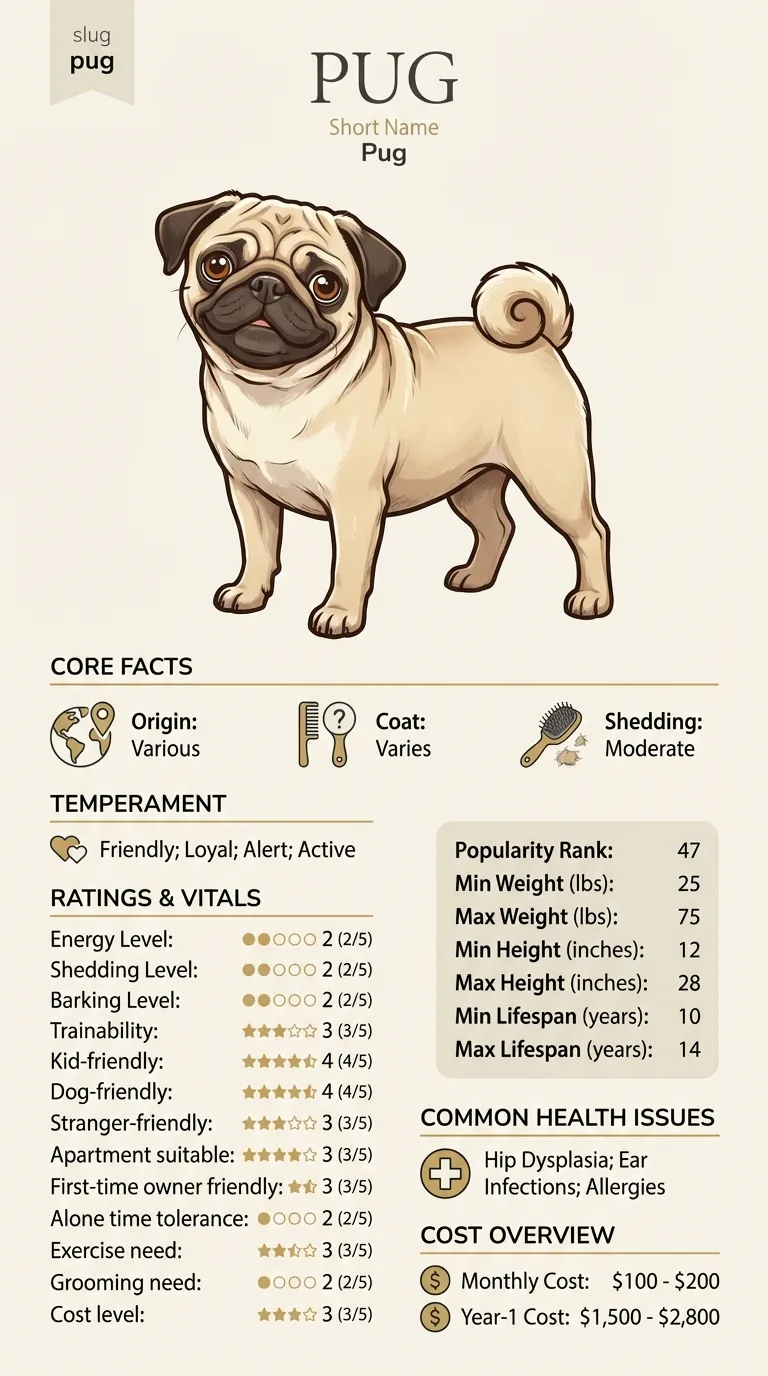
This is useful context for owners who feel like they're doing everything right, controlled portions, regular exercise, and still struggling with a Pug who seems perpetually hungry and prone to weight gain, since it reframes the problem as biological rather than a training failure.
This guide is not medical advice. If your dog shows pain, sudden behavior change, or worsening symptoms, consult a licensed veterinarian.
Some links may be affiliate links. We may earn a commission at no extra cost to you. We only suggest products we believe are helpful for dog owners.
Research into canine obesity genetics has identified appetite-regulating gene variants that may explain why some Pugs experience hunger more intensely than dogs without them, reframing this breed's well-documented obesity tendency as partly biological rather than purely a matter of feeding habits or willpower, while still requiring active, structured management from owners.
A strong, persistent food motivation is widely reported anecdotally across this breed, and while the specific genetic research is still developing, obesity itself is one of this breed's most consistently documented health concerns.
Emerging genetic research suggests appetite-regulating gene variants may be more prevalent in this breed, contributing to a stronger, more persistent hunger drive that goes beyond typical food motivation seen in dogs generally.
Feeding structure, whether portions are measured and consistent versus free-fed or supplemented with extra treats, plays a major role in whether a strong underlying hunger drive translates into actual weight gain.
Talk to your vet if your dog seems persistently and unusually food-driven despite consistent portion control, or if you're struggling to manage weight gain despite your best efforts, since a tailored feeding and weight-management plan may help more than generic advice.
See all PUG health problems, which breeds are prone to genetic predisposition to obesity, or the full PUG breed guide for temperament, exercise needs and ownership costs.
Building a structured feeding routine can start immediately, with measurable weight changes typically visible within four to eight weeks of consistent portion control and monitoring.
Success means a healthy weight maintained through consistent structure and management, not necessarily a dog who stops acting hungry, since a strong appetite drive may remain part of this individual dog's biology regardless of weight outcome.
Research into canine obesity genetics has identified variants in genes involved in the appetite-regulation and energy-balance pathway, including genes related to the POMC signaling system that helps the brain register fullness, as being associated with increased hunger drive and obesity risk in certain breeds. It's worth being appropriately careful here: this is an active and evolving area of research, and the specific gene variants and their exact role in Pugs specifically are not as definitively established as they are in some other breeds where this connection has been more thoroughly studied. What's reasonably well supported is the broader concept: some individual dogs' brains may register hunger and fullness differently due to genetic factors, independent of how much they're actually being fed.
Understanding a possible genetic appetite driver doesn't mean weight management is out of an owner's hands; it means the strategy needs to account for a dog who may never feel simply "satisfied" the way a dog without this drive would. Strict, measured portions rather than free-feeding, using a portion of the daily food allowance for training rewards rather than adding extra treats on top, and redirecting a persistently food-motivated dog's energy toward puzzle feeders and enrichment rather than constant snack requests all become more important, not less, if a genetic hunger driver is part of the picture. The goal shifts from expecting the dog to feel less hungry to building an environment that manages the behavior despite that hunger drive.

Despite carefully measuring his food, Tank the Pug's owner struggled for years with his persistent begging and slow, steady weight creep. A conversation with her vet about possible genetic appetite drivers reframed her approach: rather than assuming Tank would eventually feel satisfied with the same portions, she added a slow-feeder bowl and redirected his begging into short training sessions using part of his daily food allowance as rewards. Tank's weight stabilized within two months, though his owner said his enthusiasm at mealtime never really diminished. She'd simply built a system that worked with that drive instead of expecting it to go away.
Key takeaway: For a dog whose hunger drive may be genuinely stronger due to biology, success looks like managing the behavior around that drive rather than waiting for the dog to feel less hungry on its own.
Research has identified appetite-regulating gene variants associated with increased hunger and obesity risk in some breeds, and it's a reasonable, though still evolving, hypothesis for why this breed seems especially food-motivated. It's not the same as a settled, fully proven fact specific to Pugs.
No, quite the opposite. If a genetic hunger driver is part of the picture, strict portion control and structured feeding become more important, since the dog can't be relied on to self-regulate the way a less food-driven dog might.
Research has looked at genes involved in the POMC appetite-regulation pathway, which helps signal fullness to the brain, among other genes related to energy balance, though the specific findings and their strength vary by breed and study.
Measured, consistent portions rather than free-feeding, using part of the daily food allowance for training treats rather than adding extras, and offering puzzle feeders or enrichment can help redirect food motivation without adding calories.
Some genetic testing panels include markers related to appetite and obesity risk, though given the evolving nature of this research, results should be discussed with your vet as one data point rather than a definitive answer.
Not necessarily; a strong appetite on its own isn't a disease, but combined with this breed's documented obesity tendency, it's a trait worth actively managing through structured feeding rather than assuming it will self-correct.
Research suggests appetite-regulating gene variants may contribute, though the science is still evolving.
No, it means structured feeding and portion control matter even more, not less.
Use measured portions, redirect food motivation into puzzle feeders, and count treats within the daily total.
Some panels include relevant markers, though results should be discussed with your vet as one data point.
Not alone, but combined with this breed's obesity tendency, it needs active, structured management.
A one-page prep sheet for this condition: the signs, the questions to ask, what to get priced. Unlocks here.
You get: Vet visit prep sheet
No spam. One-click unsubscribe. See our privacy policy.
Preview page 1 before you decide.