Behavior
What are quick tips for Havanese anxiety?
Provide a safe space, use calming toys, and maintain a consistent routine to help your Havanese feel more secure.

Quick answer
What are quick tips for Havanese anxiety?
Provide a safe space, use calming toys, and maintain a consistent routine to help your Havanese feel more secure.
Havanese anxiety can be a real challenge for owners and their furry friends.
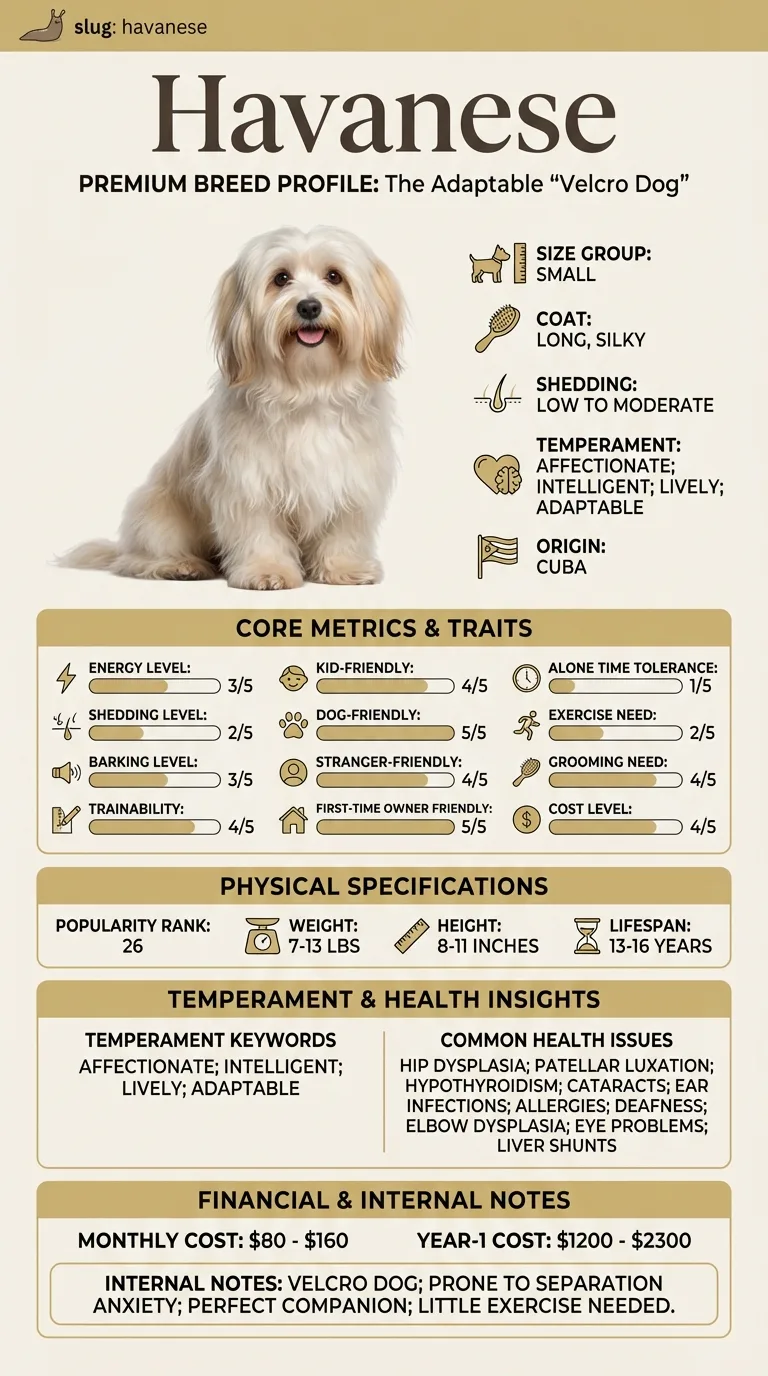
This guide is for Havanese owners dealing with anxious behaviors, as well as those considering bringing a Havanese into their home.
Havanese anxiety often manifests as clinginess, excessive barking, and destructive behavior. These dogs thrive on companionship and can become distressed when left alone. Their anxiety may lead to persistent whining or pacing, especially in unfamiliar situations or when their owners are out of sight.
If your Havanese anxiety persists despite your efforts, professional training can help. Look for trainers experienced with anxiety issues, as they can provide valuable strategies tailored to your dog.
If you notice signs of severe anxiety, such as excessive barking, destructive behavior, or self-harm, consult a vet or a certified behaviorist. They can recommend specific treatments or therapies to help your Havanese.
Various tools and products can help manage Havanese anxiety effectively. These can support your training efforts and create a calming environment for your furry friend.
When dealing with Havanese anxiety, lifestyle adjustments can make a big difference. Start with your daily schedule. Try to create a consistent routine for feeding, playtime, and walks.
Havanese thrive on predictability, which can help reduce their anxiety levels.
Next, consider exercise. While Havanese don’t need extensive workouts, regular short walks and play sessions can help burn off excess energy. This can positively impact their mood and reduce stress.
Even a few minutes of interactive play can lift their spirits.
Finally, focus on alone-time training. Gradually increase the time your Havanese spends alone. Start with just a few minutes and slowly build up.
Use positive reinforcement with treats and praise to make this experience enjoyable. This will help them feel more secure when you’re not home.
Adjustments to your household routines can also help ease their anxiety. Designate a quiet space with their favorite toys and a comfortable bed where they can retreat when feeling overwhelmed. Avoid loud noises and sudden changes in the environment that might frighten them.
Overall, these changes can create a calmer atmosphere for your Havanese, helping to mitigate anxiety and improve their quality of life.
Tracking progress with Havanese anxiety can feel overwhelming, but recognizing small victories is key. Micro-wins can include your dog being calmer during short departures or showing less distress during loud noises. Celebrate these moments, as they indicate that your training is making a difference.

It's important to remember that setbacks might happen. If your Havanese regresses, such as barking more or refusing to settle, it may be a sign that the training needs adjustment. On the other hand, if your dog seeks comfort in a favorite toy instead of panicking, this is a positive sign.

If you notice that anxiety levels remain high despite your efforts, it might be time to escalate your plan. Consider consulting a professional trainer or a veterinary behaviorist for tailored strategies. Early intervention can lead to quicker resolutions, helping your Havanese feel more secure.

When Sarah adopted Bella, her Havanese, she quickly noticed Bella was anxious whenever left alone. Bella would bark excessively and chew furniture, making it hard for Sarah to leave the house. To help Bella, Sarah tried various home techniques, such as leaving a favorite toy with her and playing calming music during her absence. As Bella's anxiety persisted, Sarah decided to consult a dog trainer who specialized in anxiety issues. The trainer recommended a structured routine and short departures to help Bella adjust. They also introduced a crate as a safe space for Bella. Over time, Bella started to feel more secure and responded well to the training. Now, she can stay alone for short periods without stress, and Sarah feels less worried. Although Bella still has her moments, they have made significant progress together, showing that with patience and the right help, Havanese anxiety can improve.
Key takeaway: Havanese anxiety can be managed through consistent training, structured routines, and professional help. Owners should be patient and seek support when needed.
Havanese anxiety often stems from their strong attachment to their owners. This breed is known as a 'Velcro dog,' meaning they thrive on companionship and can become anxious when left alone. Factors like changes in routine, new environments, or lack of socialization can also contribute.
Signs of Havanese anxiety include excessive barking, destructive behavior, or clinginess. They may also pace, whine, or have accidents indoors. Observing these behaviors can help you identify when your pup is feeling stressed.
Managing Havanese anxiety involves providing a safe space, regular exercise, and mental stimulation. Training your dog to feel comfortable alone can also help. Consistency and positive reinforcement are key to reducing anxiety.
Yes, Havanese anxiety training is necessary for helping your dog feel secure. Training can include crate training, desensitization techniques, and teaching commands that promote calmness. Seeking professional help can also be beneficial.
In some cases, medication can help manage severe anxiety in Havanese dogs. It's essential to consult a veterinarian to determine if this is the right option for your pet. Medication should accompany behavioral training for the best results.
Preventing anxiety in your Havanese involves early socialization and creating a stable environment. Regular routines, interactive toys, and plenty of affection can help your dog feel secure. Starting these practices early can lead to a calmer adult dog.
To help your Havanese feel safe while traveling, create a comfortable space for them in the car. Bring familiar items like their bed or favorite toy. Frequent breaks can help reduce anxiety by allowing them to stretch and relieve themselves.
Older Havanese may experience anxiety due to health changes or a decrease in activity. Maintain a consistent routine and provide gentle exercise. Consult your vet for tailored anxiety solutions, including possible medications.
Start by socializing your Havanese gradually. Introduce them to new dogs in a controlled environment. Use positive reinforcement to reward calm behavior, which can help reduce their anxiety during interactions.
Adding another dog can sometimes help alleviate loneliness, but it might not work for every Havanese. Assess your dog’s personality; if they are highly social, a companion might help. However, if your Havanese is territorial, this could increase anxiety.
Havanese are known as 'Velcro dogs' due to their strong attachment to their owners. They can develop separation anxiety, making them distressed when left alone. Gradually increasing their alone time can help them adjust and feel more secure.
Provide a safe space, use calming toys, and maintain a consistent routine to help your Havanese feel more secure.
Gradually train your Havanese to be alone by starting with short periods and increasing the time as they become more comfortable.
Interactive toys and puzzle feeders can engage your Havanese and help distract them from their anxiety.
Identify the triggers for their barking and work on desensitizing them to those situations, along with consistent training.
Yes, Havanese are known for their affectionate nature and may require more attention than other breeds.
Anxiety and pain look alike from the outside. Get the prep sheet for this breed's separation-anxiety page and take it to the vet.
You get: Vet visit prep sheet
No spam. One-click unsubscribe. See our privacy policy.
Preview page 1 before you decide.
This guide is not medical advice. If your dog shows pain, sudden behavior change, or worsening symptoms, consult a licensed veterinarian.
Some links may be affiliate links. We may earn a commission at no extra cost to you. We only suggest products we believe are helpful for dog owners.
We research and check what we publish, but we do not warrant that any figure, date, price, or statement is accurate, complete, or current, and we accept no liability for any loss, cost, injury, or other harm arising from the use of this site. Use it as one reference among several. You remain responsible for your own decisions and for your dog's care - confirm anything that matters with a licensed veterinarian or another qualified professional before you act on it. Full disclaimer.
Not sure which breed is right for you? Take our 2-minute quiz to find out.
Take the quiz