Behavior
What are some Belgian Malinois excessive barking quick tips?
Provide daily exercise and mental stimulation, use positive reinforcement for quiet behavior, and consider a calming environment to reduce stress.

Quick answer
What are some Belgian Malinois excessive barking quick tips?
Provide daily exercise and mental stimulation, use positive reinforcement for quiet behavior, and consider a calming environment to reduce stress.
Belgian Malinois excessive barking can be a frustrating behavior for owners to manage. This strong, intelligent breed is known for its vocal tendencies, which can lead to annoyance and stress.
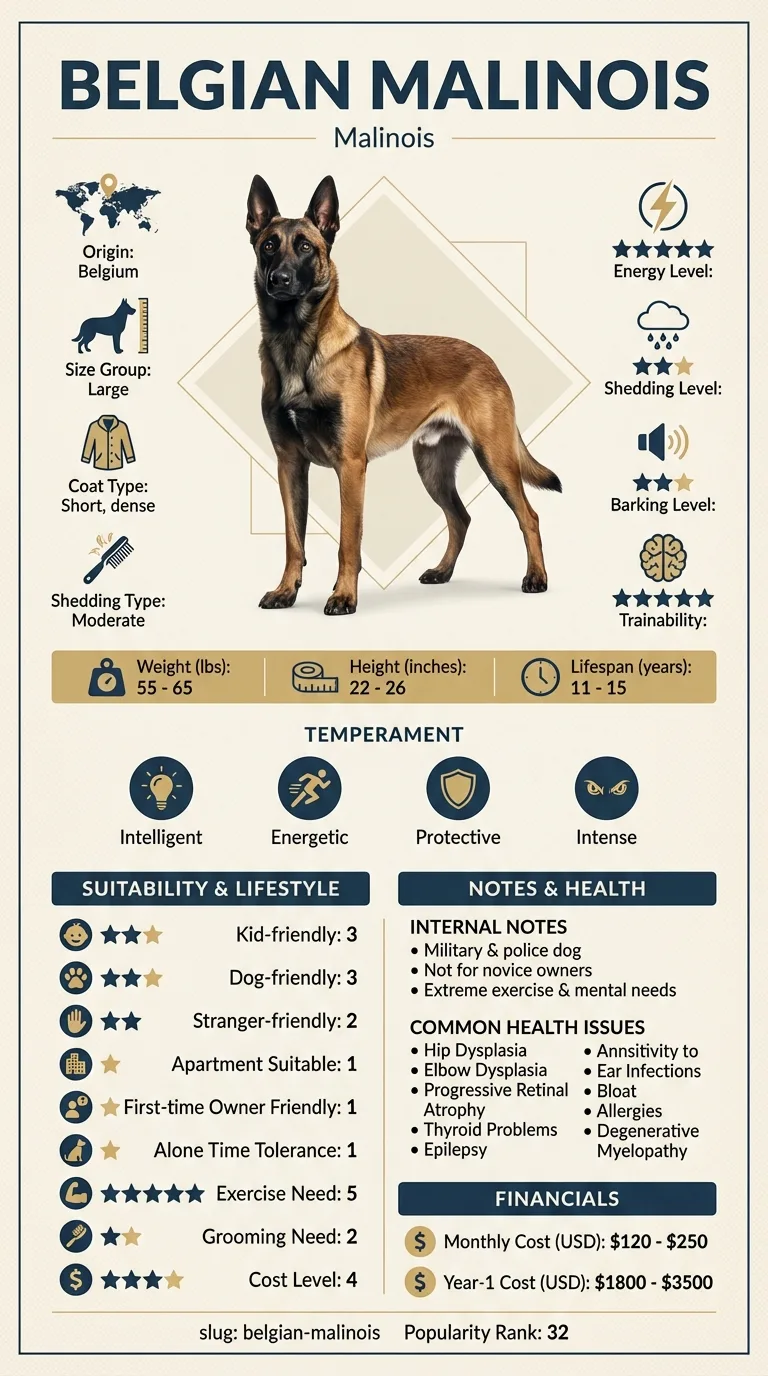
Typically, first-time dog owners or busy families may struggle with this issue. Owners who live in apartments or have close neighbors may find it particularly challenging to manage their Malinois's vocalizations.
This guide is not medical advice. If your dog shows pain, sudden behavior change, or worsening symptoms, consult a licensed veterinarian.
Some links may be affiliate links. We may earn a commission at no extra cost to you. We only suggest products we believe are helpful for dog owners.
We research and check what we publish, but we do not warrant that any figure, date, price, or statement is accurate, complete, or current, and we accept no liability for any loss, cost, injury, or other harm arising from the use of this site. Use it as one reference among several. You remain responsible for your own decisions and for your dog's care - confirm anything that matters with a licensed veterinarian or another qualified professional before you act on it. Full disclaimer.
Belgian Malinois excessive barking is a common issue that can be frustrating for owners. These intelligent and energetic dogs often bark to express excitement, alertness, or anxiety. If you're dealing with a Malinois that seems to bark at everything, understanding the triggers can help you manage this behavior effectively.
Excessive barking is a relatively common issue among Belgian Malinois. Their high energy and protective nature often lead them to bark more than other breeds, especially if their physical and mental needs aren't met.
Belgian Malinois are naturally protective and alert dogs. Their intelligence and high energy levels can lead them to bark excessively when they perceive a threat or are bored. This breed's instinct to guard can cause them to vocalize often, especially if they feel their territory is being encroached upon.
Environmental factors play a big role in excessive barking. If your Malinois is left alone for long periods or lacks sufficient exercise, they may bark out of frustration or loneliness. Additionally, noisy surroundings or not enough mental stimulation can lead to increased barking as they try to communicate their distress.
If your efforts at home don’t reduce the barking, consider hiring a professional trainer. A trainer experienced with Belgian Malinois can provide personalized strategies and help you understand your dog's specific needs.
If excessive barking suddenly increases, it’s wise to consult your vet. Changes in behavior can signal underlying health issues or anxiety that may need treatment.
Start here: Belgian Malinois Most Common Genetic Disorders: Screening
See all Belgian Malinois health problems, which breeds are prone to excessive barking, or the full Belgian Malinois breed guide for temperament, exercise needs and ownership costs.
With consistent training and patience, you can start seeing improvements in your Belgian Malinois's excessive barking within 4 to 8 weeks.
Success means your dog barks less frequently and only when necessary, and can follow commands to stop barking on cue.
Avoiding common missteps can help manage your Belgian Malinois's excessive barking. Here are some mistakes to watch out for.
Recognizing when excessive barking becomes an emergency is crucial for your Belgian Malinois's well-being. If your dog is barking excessively due to fear, anxiety, or pain, it’s essential to act quickly. Signs like persistent barking accompanied by pacing, hiding, or aggression could indicate a serious issue that requires immediate veterinary attention.

When Sarah adopted Max, her Belgian Malinois, she quickly realized he had a barking problem. Max barked at every passerby and even at shadows, driving Sarah and her neighbors to distraction. With a busy job and little experience in dog training, Sarah felt overwhelmed. However, she committed to a structured training plan that included daily exercises and positive reinforcement techniques. After several weeks, Max learned to respond to cues and barked less often. Now, he only barks to alert Sarah when someone is at the door, making their home much quieter and enjoyable.
Key takeaway: With the right training and dedication, you can significantly reduce excessive barking in your Belgian Malinois, creating a more peaceful environment.
Belgian Malinois are known for their protective instincts and high energy. They may bark excessively due to boredom, anxiety, or a need to alert you about potential threats. Understanding the root cause is essential for addressing this behavior effectively.
To reduce excessive barking, start by providing plenty of physical and mental stimulation. Regular exercise and interactive toys can help keep your Malinois busy. Additionally, consider training techniques, such as positive reinforcement, to encourage quiet behavior.
Yes, it's common for Belgian Malinois to be vocal. Their barking is often a form of communication or a sign of alertness. However, if the barking becomes disruptive, it may require intervention through training and behavior modification.
Positive reinforcement training is effective for managing excessive barking. Reward your dog for being quiet and redirect their attention when they bark. Consistency is key, so practice regularly and be patient as your dog learns.
Yes, excessive barking can be a sign of separation anxiety in Belgian Malinois. If your dog barks excessively when left alone, it’s important to address this issue with gradual desensitization and possibly consulting a professional trainer.
Ensure your Malinois gets enough exercise daily, engage them with interactive toys, and establish a calm environment. Training sessions should also focus on commands like 'quiet' to reinforce desired behavior.
Socialization is crucial for a Belgian Malinois. Gradually exposing them to different people and environments can help reduce their barking at strangers. Consider training techniques that reward calm behavior around new individuals.
Training your Belgian Malinois to stop excessive barking involves consistency and patience. Positive reinforcement techniques can help, such as rewarding quiet behavior or redirecting their attention when they start barking. Sometimes, professional training may be beneficial.
Yes, excessive barking can indicate stress or anxiety in your Belgian Malinois. If the barking seems excessive and is accompanied by other signs of distress, it’s important to evaluate their environment and routine. Consulting a vet or a behaviorist can provide further guidance.
To manage Belgian Malinois excessive barking, ensure they receive enough exercise and mental stimulation. Use training commands consistently, and consider creating a quiet space for them when they become overly excited. Regular routines can also help reduce anxiety-driven barking.
Provide daily exercise and mental stimulation, use positive reinforcement for quiet behavior, and consider a calming environment to reduce stress.
A Belgian Malinois typically needs at least 1-2 hours of exercise each day to stay mentally and physically stimulated, which can help minimize excessive barking.
Yes, consistent training with positive reinforcement can significantly reduce excessive barking. Focus on commands that encourage quiet behavior.
Excessive barking can indicate boredom, anxiety, or even health issues. Observing your dog's behavior can help identify the cause.
Behaviour changes often start with pain. The prep sheet for this page covers what to rule out, and what to ask.
You get: Vet visit prep sheet
No spam. One-click unsubscribe. See our privacy policy.
Preview page 1 before you decide.