Living
Which is heavier?
The Rottweiler, at 80-135 lbs versus the GWP's 60-70 lbs.

Quick answer
Which is heavier?
The Rottweiler, at 80-135 lbs versus the GWP's 60-70 lbs.
German Wirehaired Pointer or Rottweiler? On paper they differ most on exercise need, and on the scales Rottweiler is the heavier at 80–135 lbs. Here is how the two compare on everything that shapes an ordinary week.
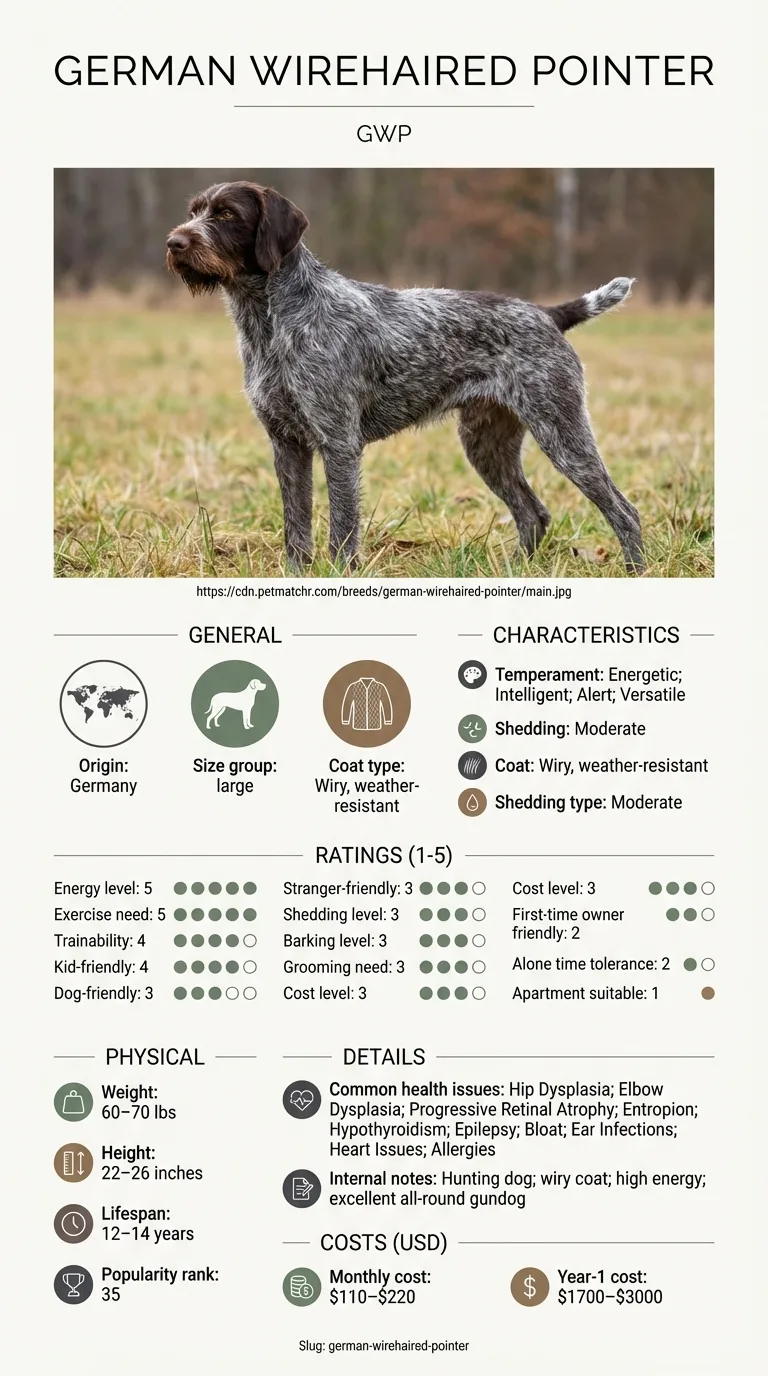
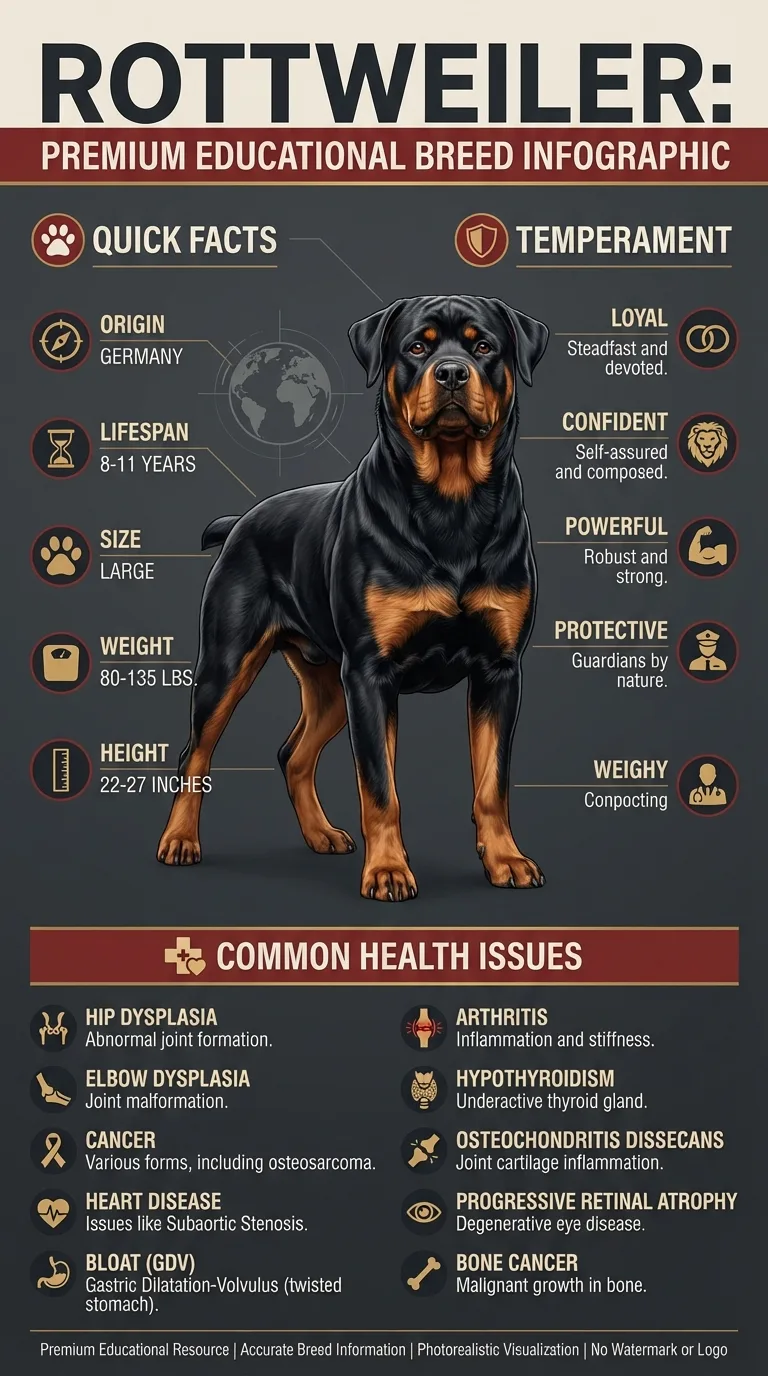
This is for someone already down to German Wirehaired Pointer and Rottweiler and deciding between them. Because the two are so evenly matched, the page works through every axis rather than leading with one. Anyone choosing from a flat has a clear answer here: Rottweiler rates 2/5 against 1/5. There is no origin story here — only what changes about your week.
Between German Wirehaired Pointer and Rottweiler, they are closer than most pairings, and the choice comes down to temperament, and Rottweiler is the lower-effort dog of the two to keep.
Choose German Wirehaired Pointer if shedding is a problem in your house, a smaller dog suits your car, your home or your back and you want a dog that can keep up with an active routine.
Choose Rottweiler if you do not want a standing grooming appointment, your walking routine is modest and you want a dog that is more watchful with visitors.
| Feature | german wirehaired pointer | rottweiler | Winner |
|---|---|---|---|
| Size class | large | large | Equal |
| Weight | 60–70 lbs | 80–135 lbs | Equal |
| Height | 22–26 in | 22–27 in | Equal |
| Lifespan | 12–14 years | 8–11 years | german wirehaired pointer |
| Exercise need | Very high (5/5) | High (4/5) | rottweiler |
| Grooming need | Moderate (3/5) | Low (2/5) | rottweiler |
| Shedding | Moderate (3/5) | High (4/5) | german wirehaired pointer |
| Energy level | Very high (5/5) | High (4/5) | Equal |
| Barking | Moderate (3/5) | Moderate (3/5) | Equal |
| Apartment suitability | Very low (1/5) | Low (2/5) | rottweiler |
| Good for first-time owners | Low (2/5) | Low (2/5) | Equal |
| Tolerates being alone | Low (2/5) | Low (2/5) | Equal |
| Trainability | High (4/5) | High (4/5) | Equal |
| Good with kids | High (4/5) | High (4/5) | Equal |
| Good with other dogs | Moderate (3/5) | Moderate (3/5) | Equal |
| Friendly to strangers | Moderate (3/5) | Low (2/5) | german wirehaired pointer |
| Cost level | Moderate (3/5) | High (4/5) | german wirehaired pointer |
| Coat | Wiry, weather-resistant | Double coat, short | Equal |
| Origin | Germany | Germany | Equal |
| Typical monthly cost | $110–$220 | $125–$250 | Equal |
| Typical first-year cost | $1,700–$3,000 | $2,000–$3,500 | Equal |
Both breeds sit in the large class, but the Rottweiler dwarfs the GWP in raw mass: 80-135 lbs against the Pointer's 60-70 lbs, though their heights are close (22-27 inches for the Rottweiler, 22-26 for the GWP). A Rottweiler can weigh nearly double a GWP while standing barely taller, reflecting its much heavier, more powerful build versus the Pointer's leaner, athletic sporting frame. Anyone picturing these two together should expect the Rottweiler's bulk and the GWP's wiry agility to look and move very differently, even at similar heights.
The GWP edges ahead on exercise need, very high (5/5) against the Rottweiler's high (4/5), though both energy levels sit close (5/5 vs 4/5, called a tie). A Rottweiler's power-based temperament -- loyal, confident, protective -- still needs real daily work, just not necessarily the miles of running a hunting-bred GWP craves. Owners picturing a working session with either dog should plan structured activity: retrieving and field work for the GWP, strength-and-obedience style exercise for the Rottweiler, both aimed at preventing the boredom that either breed can turn destructive.
Grooming favors the Rottweiler at low (2/5) against the GWP's moderate (3/5) -- its short double coat needs little more than a weekly brush. Shedding tells the opposite story: the Rottweiler sheds high (4/5), noticeably more than the GWP's moderate (3/5) wiry coat. Rottweiler owners often find themselves managing more loose hair around the house despite less time spent actively grooming, while GWP owners spend a bit more time on coat maintenance but see less fur underfoot as a result.
Neither breed suits small-space living, but the GWP is worse off: very low (1/5) apartment suitability against the Rottweiler's still-poor low (2/5). Barking ties at moderate (3/5) for both. Tolerance for being alone also ties, low (2/5) for each -- both breeds were bred to work closely with people, the GWP in the field and the Rottweiler as a guardian and drover, and both tend to struggle when left isolated for long stretches. A large yard and consistent companionship matter more than square footage for either dog.
Trainability ties at high (4/5) for both breeds, but first-time owner suitability is where the real challenge shows: both rate low (2/5), meaning neither the GWP nor the Rottweiler is an easy pick for a novice. The GWP's energetic, versatile hunting drive and the Rottweiler's confident, powerful, protective temperament each demand an owner who can provide firm, consistent structure early. Experienced handlers looking for a dog that responds well to training will find either breed capable, but new owners should approach both with realistic expectations about the commitment required.
Good with kids ties at high (4/5) for both, and good with other dogs ties at moderate (3/5) too -- genuine similarities despite their different working histories. The gap opens with strangers: the GWP rates moderate (3/5) friendliness while the Rottweiler drops to low (2/5), consistent with its protective, watchful temperament. Households that host frequently or live somewhere with regular foot traffic should factor in the Rottweiler's more guarded instincts around unfamiliar visitors, something the more alert-but-approachable GWP handles somewhat more easily.
The GWP holds a real lifespan edge, 12-14 years against the Rottweiler's notably shorter 8-11 years -- a gap common to giant and heavy large breeds. Health overlap is substantial: hip dysplasia, elbow dysplasia, bloat (GDV), hypothyroidism, and progressive retinal atrophy appear on both lists. Past that, the Rottweiler's list skews toward serious conditions -- cancer, heart disease, arthritis, osteochondritis dissecans, and bone cancer -- while the GWP adds entropion, epilepsy, ear infections, heart issues, and allergies. The Rottweiler's cancer risk in particular is worth discussing directly with a vet or breeder before committing.
The GWP costs less on paper: moderate (3/5) overall against the Rottweiler's high (4/5), with monthly costs of $110-$220 versus $125-$250 and first-year costs of $1,700-$3,000 versus $2,000-$3,500. The Rottweiler's larger size drives higher food costs, and its shorter lifespan combined with cancer and heart disease risk can mean more significant veterinary spending later in life. Owners comparing the two on cost alone should weigh not just the sticker price but the higher likelihood of major medical expenses with a Rottweiler as it ages.
German Wirehaired Pointer weighs 60–70 lbs and lives 12–14 years; Rottweiler weighs 80–135 lbs and lives 8–11 years. No rated axis separates them by more than a single point, which makes this one of the closer pairings on the site. They are level on tolerates being alone, barking and good with other dogs, so those cannot decide it. Where the table declares a winner it means less work for the owner, nothing more; descriptive rows are left as ties on purpose. The value here is in the differences between the two columns; treat any single score as approximate.

The German Wirehaired Pointer, typically 12-14 years, considerably longer than the Rottweiler's 8-11 years.
No -- both rate low (2/5) for first-time owner suitability, meaning an experienced, active handler is recommended for either breed.
The GWP, rating moderate (3/5) versus the Rottweiler's low (2/5) -- the Rottweiler's protective, watchful temperament makes it more reserved with unfamiliar people.
The Rottweiler, rating high (4/5) shedding against the GWP's moderate (3/5), despite needing less grooming overall.
Yes -- cancer and bone cancer both appear on its health list, alongside heart disease and arthritis, making it a breed where regular veterinary monitoring matters as it ages.
The Rottweiler, rating high (4/5) on overall cost against the GWP's moderate (3/5), with a higher first-year range of $2,000-$3,500 versus $1,700-$3,000.
Both rate moderate (3/5) for sociability with other dogs -- neither is a natural dog-park extrovert, and both benefit from early socialization.
The Rottweiler, at 80-135 lbs versus the GWP's 60-70 lbs.
The German Wirehaired Pointer, rating very high (5/5) versus the Rottweiler's high (4/5).
The Rottweiler, rating low (2/5) grooming need versus the GWP's moderate (3/5).
The Rottweiler, described as loyal, confident, and protective by temperament.
Secure checkout on Stripe. We never see your card.
7-day money-back guarantee. Instant access.
Health information here is general and is not veterinary advice. If your dog shows pain, sudden behaviour change, or worsening symptoms, consult a licensed veterinarian.
Some links on this site are affiliate links. We may earn a commission at no extra cost to you, and we only suggest products we believe are helpful for dog owners.
We research and check what we publish, but we do not warrant that any figure, date, price, or statement is accurate, complete, or current, and we accept no liability for any loss, cost, injury, or other harm arising from the use of this site. Use it as one reference among several. You remain responsible for your own decisions and for your dog's care - confirm anything that matters with a licensed veterinarian or another qualified professional before you act on it. Full disclaimer.
Match your lifestyle to the right dog.
Take quizNot sure which breed is right for you? Take our 2-minute quiz to find out.
Take the quiz