Living
Which is the better overall pick?
It's close, but the Amstaff edges it on livability, lower grooming, better apartment fit, slightly longer lifespan, while the Springer wins if you already own another dog.

Quick answer
Which is the better overall pick?
It's close, but the Amstaff edges it on livability, lower grooming, better apartment fit, slightly longer lifespan, while the Springer wins if you already own another dog.
American Staffordshire Terrier or Welsh Springer Spaniel? On paper they differ most on grooming need, and on the scales American Staffordshire Terrier is the heavier at 40–70 lbs. Here is how the two compare on everything that shapes an ordinary week.
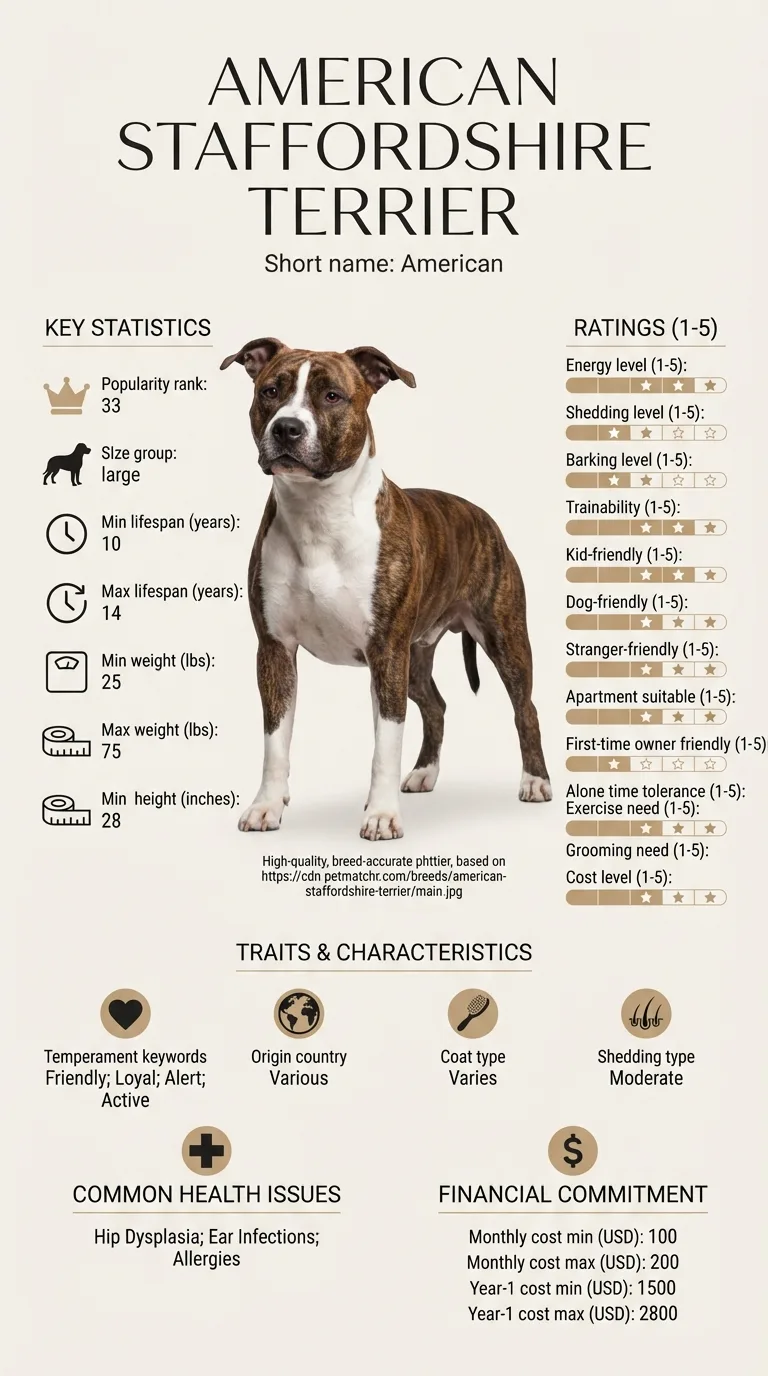
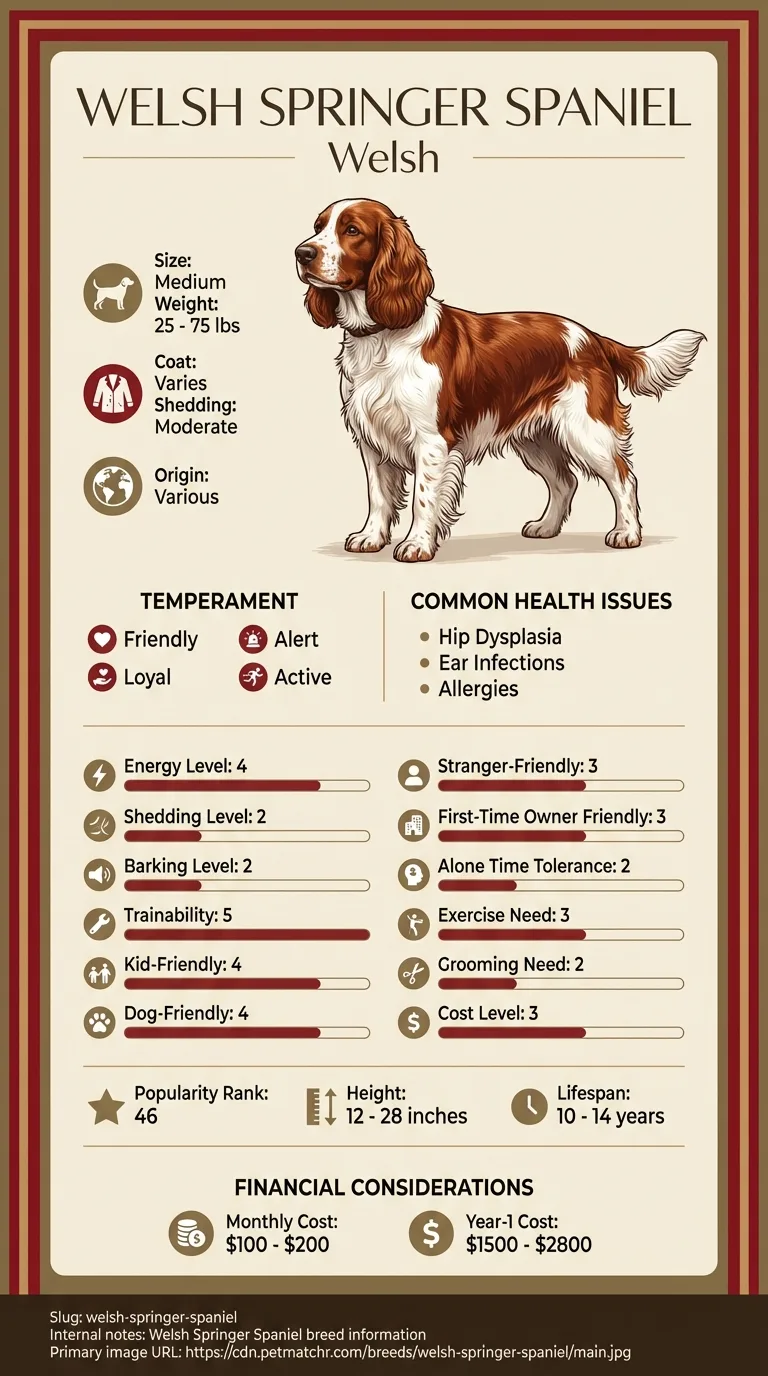
This is for someone already down to American Staffordshire Terrier and Welsh Springer Spaniel and deciding between them. For this pair the decision usually turns on grooming need and good with other dogs, so those are covered first and in most detail. Anyone choosing from a flat has a clear answer here: American Staffordshire Terrier rates 3/5 against 2/5. The focus throughout is on daily consequences rather than breed background.
Between American Staffordshire Terrier and Welsh Springer Spaniel, grooming need is what separates them, and American Staffordshire Terrier is the lower-effort dog of the two to keep.
Choose American Staffordshire Terrier if you are in a flat or a smaller home, you do not want a standing grooming appointment and the dog will be alone during the working day.
Choose Welsh Springer Spaniel if you already have another dog, a smaller dog suits your car, your home or your back and you want a dog that is more watchful with visitors.
| Feature | american staffordshire terrier | welsh springer spaniel | Winner |
|---|---|---|---|
| Size class | medium | medium | Equal |
| Weight | 40–70 lbs | 35–55 lbs | Equal |
| Height | 17–19 in | 17–19 in | Equal |
| Lifespan | 12–16 years | 12–15 years | american staffordshire terrier |
| Exercise need | High (4/5) | High (4/5) | Equal |
| Grooming need | Very low (1/5) | Moderate (3/5) | american staffordshire terrier |
| Shedding | Moderate (3/5) | Moderate (3/5) | Equal |
| Energy level | High (4/5) | High (4/5) | Equal |
| Barking | Low (2/5) | Moderate (3/5) | american staffordshire terrier |
| Apartment suitability | Moderate (3/5) | Low (2/5) | american staffordshire terrier |
| Good for first-time owners | Moderate (3/5) | Moderate (3/5) | Equal |
| Tolerates being alone | Moderate (3/5) | Low (2/5) | american staffordshire terrier |
| Trainability | High (4/5) | High (4/5) | Equal |
| Good with kids | High (4/5) | High (4/5) | Equal |
| Good with other dogs | Low (2/5) | High (4/5) | welsh springer spaniel |
| Friendly to strangers | High (4/5) | Moderate (3/5) | american staffordshire terrier |
| Cost level | Moderate (3/5) | Moderate (3/5) | Equal |
| Coat | Short, stiff and glossy | Medium, straight and water-resistant | Equal |
| Origin | Various | Various | Equal |
| Typical monthly cost | $100–$200 | $100–$200 | Equal |
| Typical first-year cost | $1,400–$2,900 | $1,400–$2,900 | Equal |
Line these two up and you'd guess they're closer in size than most matchups on this site, both stand 17-19 inches, though the Amstaff carries more weight on that frame at 40-70 lbs against the Welsh Springer's leaner 35-55 lbs. The Amstaff is the stockier, more muscled dog; the Springer is built for a day in the field, not for pulling weight.
Exercise need is tied at 4/5 for both breeds, and so is energy level. Neither is a couch-only dog, both want real daily activity, not a lap around the block, so the choice here comes down to what kind of activity you enjoy rather than how much of it either dog needs.
Here's a real difference: the Amstaff needs almost no coat care (1/5), while the Welsh Springer Spaniel sits at a moderate 3/5, with a medium, water-resistant coat that mats and picks up debris on field walks. Shedding is a wash between them, both moderate at 3/5, but the Springer is the one that will cost you more brushing time.
The Amstaff rates moderate (3/5) for apartment living and for tolerating alone time; the Welsh Springer scores lower on both, at 2/5. Barking tips slightly toward the Amstaff being quieter too, at 2/5 versus 3/5. None of these gaps are dramatic, but they stack in the Amstaff's favor for small-space, alone-a-lot situations.
Trainability is tied at 4/5 and first-time-owner suitability is tied at 3/5, genuinely evenly matched dogs to raise and train. If anything separates them for a novice, it's temperament rather than trainability: the Springer runs reserved with strangers, the Amstaff runs confident and outgoing, and that shapes how much early socialization work you'll need to put in.
Good with kids, tied at 4/5. Where they split is other dogs: the Welsh Springer Spaniel rates high (4/5) and the Amstaff rates low (2/5), a real consideration if you already have a dog or plan to add one later. The Amstaff flips that pattern with strangers, rating higher (4/5) than the Springer's moderate 3/5.
Lifespan favors the Amstaff slightly, 12-16 years against the Springer's 12-15. Hip dysplasia appears on both health lists, but past that they diverge, the Amstaff's risks lean toward cerebellar ataxia and heart disease, while the Springer's include epilepsy, glaucoma, and hypothyroidism, a cluster more typical of field spaniel lines.
Cost is about as close as this site gets: both breeds carry a moderate 3/5 cost rating, both run $100-200 a month, and both land in the same $1,400-2,900 first-year range. Budget planning doesn't really factor into choosing between these two, the deciding data points are elsewhere.
American Staffordshire Terrier weighs 40–70 lbs and lives 12–16 years; Welsh Springer Spaniel weighs 35–55 lbs and lives 12–15 years. The two diverge most on grooming need and good with other dogs. They are level on cost level, energy level and exercise need, so those cannot decide it. The table below marks a winner only where one breed is genuinely easier for a typical owner; size and origin are facts rather than merits and stay level. Ratings come from one source applied to both breeds, so they are meaningful against each other rather than as absolute scores.

Very close, both stand 17-19 inches at the shoulder. The main difference is weight: the Amstaff is the heavier, more muscular dog at up to 70 lbs, while the Welsh Springer tops out around 55 lbs.
Shedding is a tie at moderate (3/5) for both. Grooming isn't, though, the Amstaff needs almost none (1/5) while the Welsh Springer's coat requires regular brushing (3/5).
Both rate a moderate 3/5 for first-time owners, so neither has a clear edge on paper. The Springer's reserve around strangers means it may need more deliberate socialization early on.
The Amstaff, by a small but consistent margin, 3/5 versus 2/5 for apartment suitability, and the same gap for tolerating time alone.
$100-200 for either breed, this is one pair where cost genuinely doesn't help you decide.
Hip dysplasia is common to both. Beyond that the lists don't overlap, the Springer's risks (epilepsy, glaucoma, hypothyroidism) are a different cluster from the Amstaff's (cerebellar ataxia, heart disease, cruciate tears).
The Welsh Springer Spaniel, clearly, it rates 4/5 for getting along with other dogs against the Amstaff's 2/5. If you have or plan to add a second dog, that gap matters.
It's close, but the Amstaff edges it on livability, lower grooming, better apartment fit, slightly longer lifespan, while the Springer wins if you already own another dog.
The same for both: $100-200.
Equal, both rate 4/5, meaning daily real activity for either dog.
The Amstaff, by about a year on average (12-16 vs. 12-15 years).
Secure checkout on Stripe. We never see your card.
7-day money-back guarantee. Instant access.
Health information here is general and is not veterinary advice. If your dog shows pain, sudden behaviour change, or worsening symptoms, consult a licensed veterinarian.
Some links on this site are affiliate links. We may earn a commission at no extra cost to you, and we only suggest products we believe are helpful for dog owners.
We research and check what we publish, but we do not warrant that any figure, date, price, or statement is accurate, complete, or current, and we accept no liability for any loss, cost, injury, or other harm arising from the use of this site. Use it as one reference among several. You remain responsible for your own decisions and for your dog's care - confirm anything that matters with a licensed veterinarian or another qualified professional before you act on it. Full disclaimer.
Match your lifestyle to the right dog.
Take quizNot sure which breed is right for you? Take our 2-minute quiz to find out.
Take the quiz