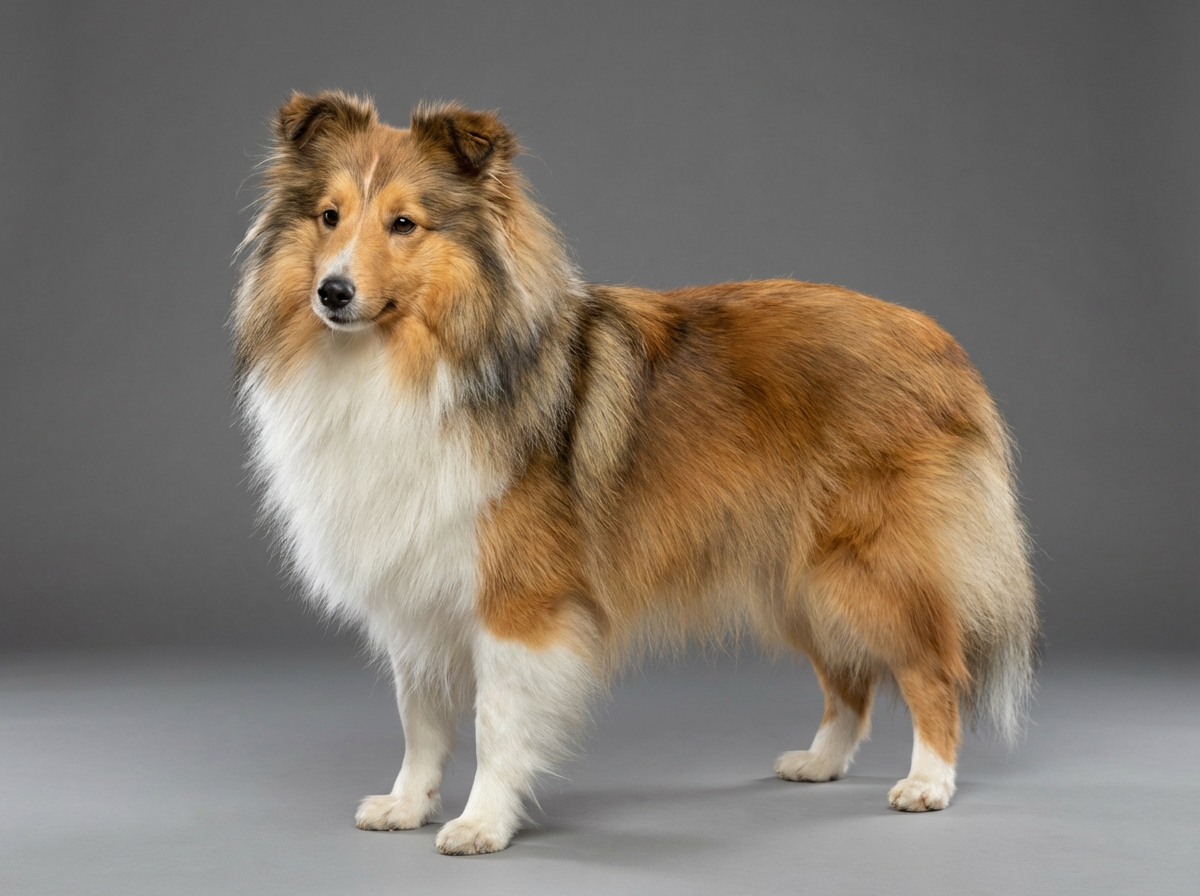
Costs
Shetland Sheepdog cost in Burlington
$82–$153 monthly and $1,122–$2,346 in year one, near average, with Vermont's spring mud season the one predictable annual spike in a long-coated breed's grooming costs.

See Shetland Sheepdog price across all cities →
Quick answer
Shetland Sheepdog cost in Burlington
$82–$153 monthly and $1,122–$2,346 in year one, near average, with Vermont's spring mud season the one predictable annual spike in a long-coated breed's grooming costs.
Vermont is one of the few places in the country where mud has its own season on the calendar. From roughly late March into May, frost comes out of the ground, thousands of miles of dirt road soften, and trail organisations across the Green Mountains ask people to stay off the higher paths entirely until things firm up. Vermonters plan around it. So should anyone bringing home a dog with a long, dense double coat and heavy leg feathering.
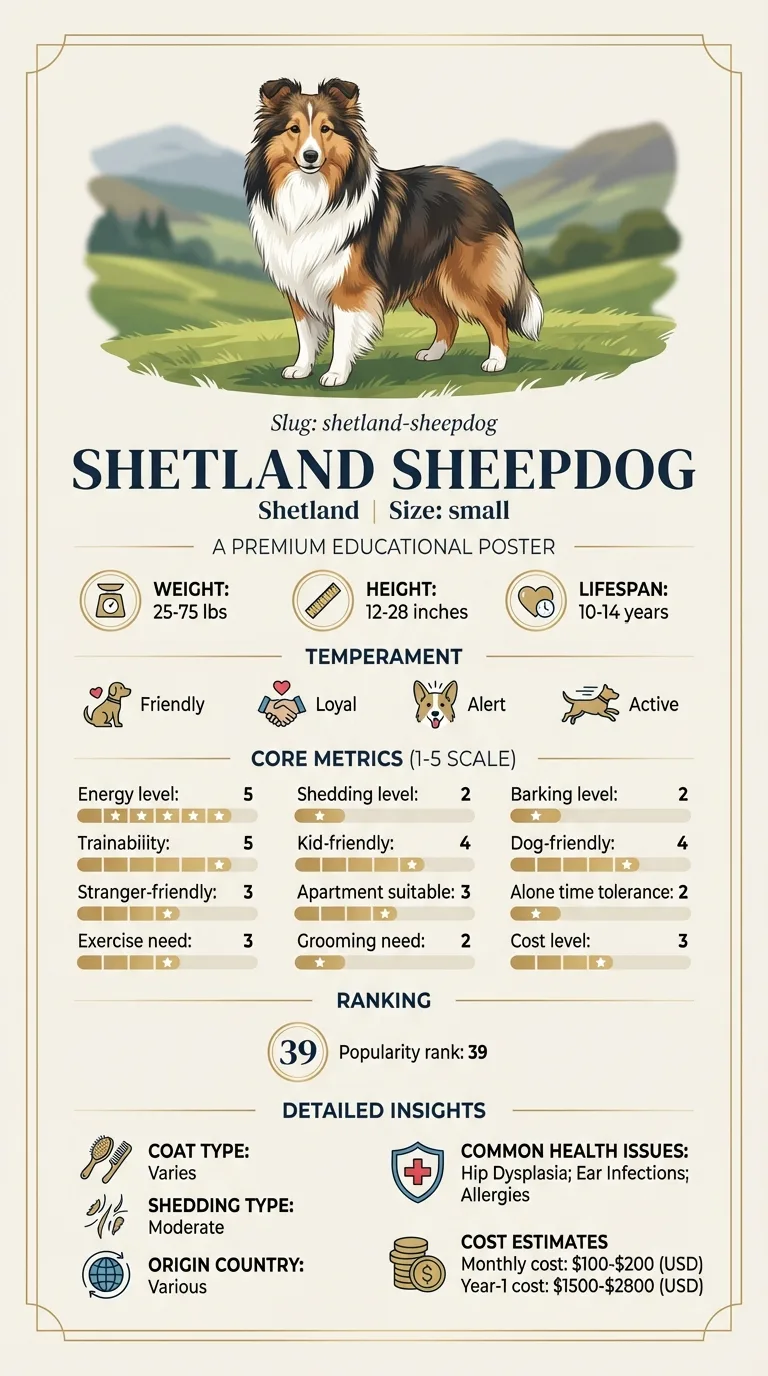
Five conditions are documented in this breed: Collie Eye Anomaly, MDR1 Drug Sensitivity, Dermatomyositis, Hypothyroidism and Patellar Luxation. MDR1 is worth resolving early, because it is an inherited sensitivity to a group of routinely used veterinary drugs, including some parasite preventives and anesthetics, that can cause severe harm at an ordinary dose.
Burlington sits near national averages, with a short parasite season pulling one cost down and a predictable spring grooming spike pushing another up.
Estimate · source: estimation · confidence: medium · updated 2026-09-06 · not a quote
| Item | Cost range |
|---|---|
Startup (exam, sterilization, towels, hose station) A drying setup by the door is listed deliberately; in Vermont it is working equipment, not a nicety. | $340 - $570 |
| Item | Cost range |
|---|---|
Food Small-breed portions at Vermont retail pricing, which sits close to the national figure. | $33 - $56 |
Routine coat maintenance Covers ten months of the year. Spring is separately budgeted because mud changes the workload entirely. | $26 - $54 |
Each range starts from a national baseline for this breed's size class and is then adjusted for local cost of living and veterinary pricing. The baselines, and the source each one came from, are listed on our sources page (dataset 2026.09). Two inputs, the purchase price and the emergency reserve, have no published national figure we could verify, so we leave them to you rather than invent them.
These are planning estimates, not quotes. Your own numbers will move with the individual dog, your vet and your insurer. Build a budget with your own figures.
In a small veterinary market, insurance is partly about affording a referral you may need to travel for rather than about routine local costs.
Buy young, while all four of the acquirable conditions on this breed's list are still eligible for cover.
An owner with a real reserve and a dog already cleared on eye screening and MDR1 status can carry the risk directly at Vermont's moderate price level.
Almost all of the money at stake in Burlington is decided in one six-week window, and it is decided by habit rather than by spending.
The problem is specific rather than general. A Sheltie's coat is not uniformly long; it is longest exactly where it matters least in dry weather and most in mud, on the trousers behind the hind legs, the skirt along the belly, and the feathering behind the front legs. That is the geometry that turns a muddy walk into forty minutes of work.
Wet mud dries into the undercoat and then mats. A mat that forms in April is still there in June unless it is dealt with, and by then removal is a scissors job rather than a comb job. The owners who get through a Vermont spring cheaply are the ones who rinse and dry the legs and belly after every outing, which sounds fussy and takes about five minutes with a hose and a towel by the door.
The alternative is what most first-year owners actually do, which is let it slide for a fortnight and then pay a groomer to sort out a coat that now needs a full de-matting session. In a small vet and grooming market like Vermont's, that appointment is also harder to get at short notice, because everyone else's dog has the same problem in the same six weeks.
Vermont's veterinary market is small. That is not a criticism of its quality, but it does mean fewer clinics to compare on price and less slack in the schedule when you need something quickly. For a breed with five documented conditions it is worth establishing a relationship with a practice early rather than shopping around at the moment you need help.
Against that, the climate genuinely suits this dog. Six months of parasite prevention rather than twelve halves a recurring cost, and a double coat handles a Champlain Valley winter without any purchased assistance. The winter-gear budget that a short-coated small breed forces on its owner does not exist here.
Exercise is easy for most of the year and awkward for two windows: deep winter and mud season itself. Burlington's bike path along the Lake Champlain waterfront is paved, which makes it the reliable option in both, and it is free. For a dog with an exercise need rated four out of five, having one dependable all-conditions route matters more than having many fair-weather ones.

A Shetland Sheepdog in Burlington costs what the table below says, and the plan for keeping it there is simple: budget the first-year figure before you buy, then treat the monthly figure as the floor rather than the target.
| Line | Burlington range |
|---|---|
| First year | $1,122–$2,346 |
| Monthly | $82–$153 |
The two numbers move for different reasons. First-year cost is dominated by one-off items — purchase or adoption, vaccination, neutering, equipment — so it is the number to have saved before the dog arrives. The monthly figure is food, preventatives, grooming and insurance, and it is the one that decides whether ownership is sustainable in Burlington on your income. Steps that reliably lower both: buy from a source that screens for the breed's known conditions, take out insurance before the first claim rather than after, and price local grooming and boarding before you commit.
A Burlington owner sailed through her Sheltie's first winter with almost no extra spending, then lost most of that saving in three weeks of April. Daily walks on a softening dirt road left the dog's trousers and belly caked, she brushed the top coat and assumed that was enough, and by early May the undercoat behind both hind legs had felted into mats a groomer had to cut out. The following spring she hosed the legs down at the door every day and the extra appointment was not needed at all.
Key takeaway: Vermont's mud season is predictable, which makes it the rare dog cost you can plan away with a towel rather than a payment.
$82 to $153, close to the national midpoint, with a shorter parasite season pulling one line item below average.
$1,122 to $2,346, and it is worth allowing for one extra grooming appointment in spring rather than being surprised by it.
For this coat, yes. Long feathering on the legs and belly holds wet mud, which dries into the undercoat and mats, and de-matting costs more than routine grooming.
Rinse and dry the legs and belly after each walk. Five minutes at the door beats a de-matting session six weeks later.
It means fewer clinics to compare and less scheduling slack. Establishing a relationship with one practice early is worth more here than shopping on price.
Roughly $535, in line with Vermont's near-average clinic pricing.
$82–$153 monthly and $1,122–$2,346 in year one, near average, with Vermont's spring mud season the one predictable annual spike in a long-coated breed's grooming costs.
The long feathering on legs and belly does, particularly when wet mud dries into the undercoat. Regular rinsing and drying through Vermont's mud season prevents most of it.
This guide is not medical advice. If your dog shows pain, sudden behavior change, or worsening symptoms, consult a licensed veterinarian.
Some links may be affiliate links. We may earn a commission at no extra cost to you. We only suggest products we believe are helpful for dog owners.
We research and check what we publish, but we do not warrant that any figure, date, price, or statement is accurate, complete, or current, and we accept no liability for any loss, cost, injury, or other harm arising from the use of this site. Use it as one reference among several. You remain responsible for your own decisions and for your dog's care - confirm anything that matters with a licensed veterinarian or another qualified professional before you act on it. Full disclaimer.
One sheet with every line item, the emergency fund and when insurance pays off - unlocks on this page.
You get: 12-month budget sheet
No spam. One-click unsubscribe. See our privacy policy.
Preview page 1 before you decide.