Old English Sheepdog vs Rottweiler: Which Suits Your Home?
Quick answer
Which is the better overall pick for most households?
The OES suits a family wanting a big, kid-friendly dog that's easygoing with strangers; the Rottweiler suits someone wanting a watchful, protective dog and who has handled large breeds before.
Old English Sheepdog or Rottweiler? On paper they differ most on grooming need, and on the scales Rottweiler is the heavier at 80–135 lbs. Here is how the two compare on everything that shapes an ordinary week.
This is for someone already down to Old English Sheepdog and Rottweiler and deciding between them. For this pair the decision usually turns on grooming need and friendly to strangers, so those are covered first and in most detail. Both rate 2/5 for flats, so housing does not settle this one. It is written for the decision rather than the breed history.
Quick verdict
Between Old English Sheepdog and Rottweiler, grooming need is what separates them, and Rottweiler is the lower-effort dog of the two to keep.
Choose old english sheepdog if...
Choose Old English Sheepdog if your walking routine is modest, there are young children at home and you already have another dog.
Choose rottweiler if...
Choose Rottweiler if you do not want a standing grooming appointment, you want a dog that picks up training quickly and you want a dog that can keep up with an active routine.
Head-to-head comparison
Feature
old english sheepdog
rottweiler
Winner
Size class
large
large
Equal
Weight
60–100 lbs
80–135 lbs
Equal
Height
20–24 in
22–27 in
Equal
Lifespan
10–12 years
8–11 years
old english sheepdog
Exercise need
Moderate (3/5)
High (4/5)
old english sheepdog
Grooming need
Very high (5/5)
Low (2/5)
rottweiler
Shedding
High (4/5)
High (4/5)
Equal
Energy level
Moderate (3/5)
High (4/5)
Equal
Barking
Moderate (3/5)
Moderate (3/5)
Equal
Apartment suitability
Low (2/5)
Low (2/5)
Equal
Good for first-time owners
Low (2/5)
Low (2/5)
Equal
Tolerates being alone
Low (2/5)
Low (2/5)
Equal
Trainability
Moderate (3/5)
High (4/5)
rottweiler
Good with kids
Very high (5/5)
High (4/5)
old english sheepdog
Good with other dogs
High (4/5)
Moderate (3/5)
old english sheepdog
Friendly to strangers
High (4/5)
Low (2/5)
old english sheepdog
Cost level
High (4/5)
High (4/5)
Equal
Coat
Long, shaggy double coat
Double coat, short
Equal
Origin
Various
Germany
Equal
Typical monthly cost
$110–$240
$125–$250
Equal
Typical first-year cost
$1,700–$3,200
$2,000–$3,500
Equal
Deep dive
Size and build
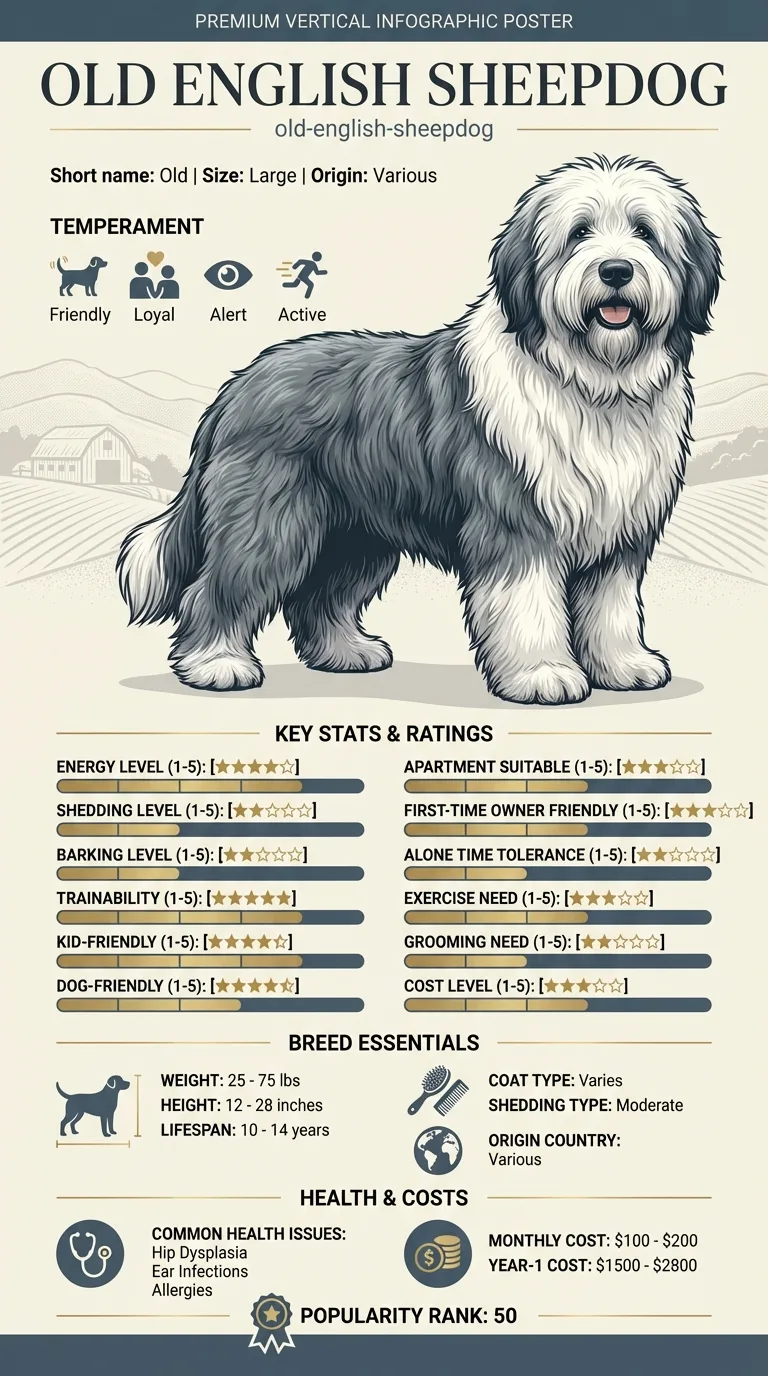
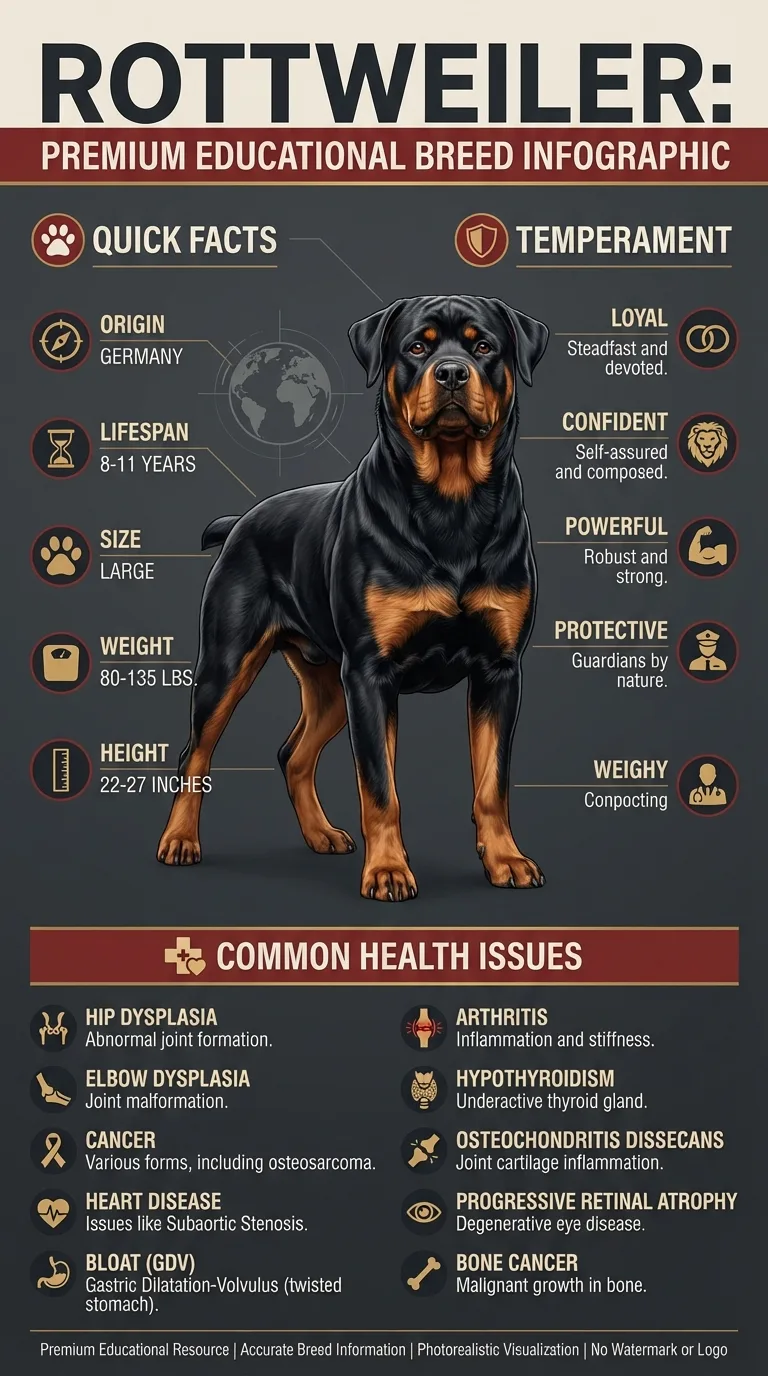
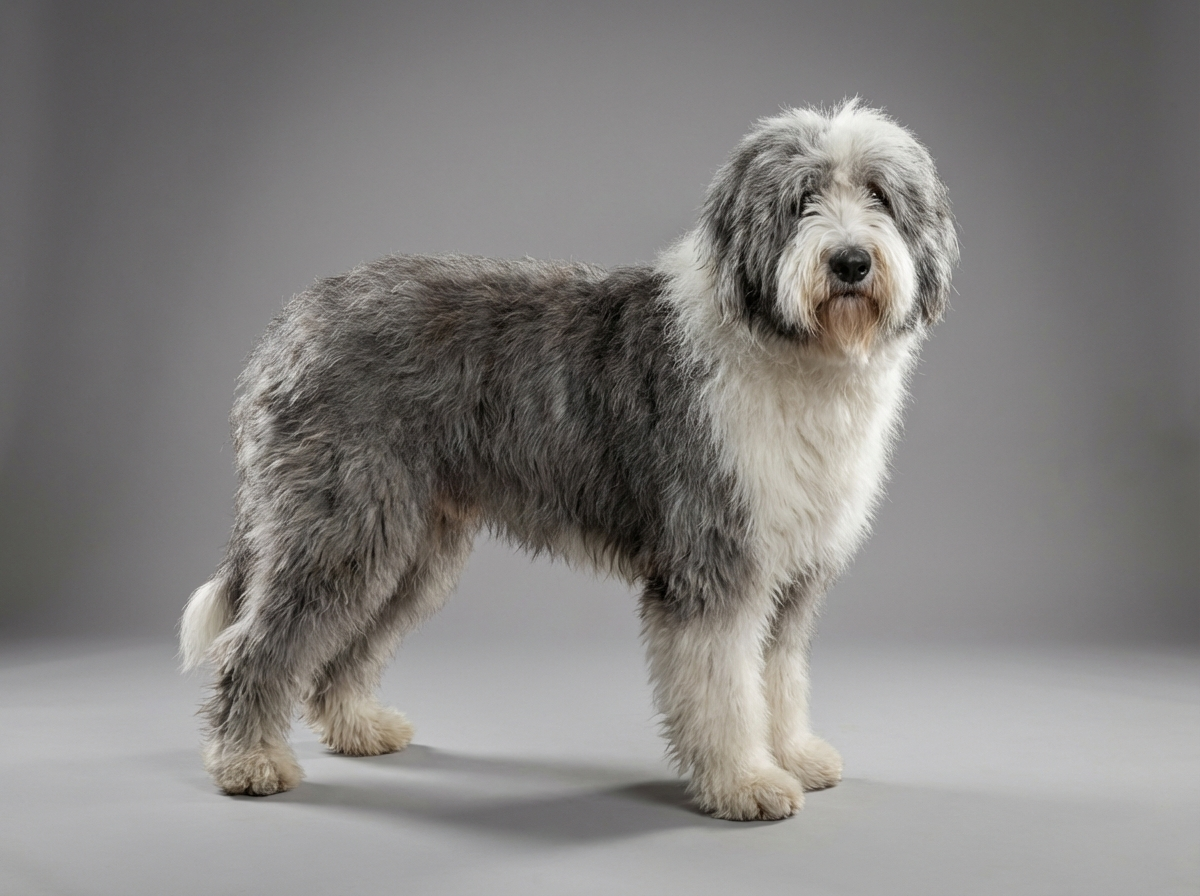
Weight is the biggest gap here: the Rottweiler runs 80 to 135 pounds against the OES's 60 to 100, and stands a bit taller too, 22-27 inches to 20-24. Both are large breeds, but the Rottweiler is built more like a block of muscle while the OES carries its bulk under a mop of coat. Expect the Rottweiler to feel heavier than its coat suggests, and the OES to look bigger than it actually is.
Energy and exercise
The Rottweiler needs more consistent exercise, rated 4 out of 5 against the OES's 3. This is a working breed bred for pulling carts and driving cattle, and it shows in the activity requirement. The OES's moderate rating means it's satisfied with less, though less for a large herding dog still isn't nothing.
Grooming and shedding
This one favors the Rottweiler heavily. Its short coat rates just 2 out of 5 for grooming effort, a quick brush covers it, while the OES demands a 5, regular professional grooming or serious at-home commitment. Shedding is a tie, both rated 4, so the Rottweiler's easier coat doesn't mean less hair around the house, just less time spent managing it.
Apartment living, noise and time alone
Neither breed is suited to small-space living, both rate a 2 for apartment suitability and a 3 for barking, and both tolerate being alone poorly (2/5). This pairing is really a large-house-and-yard decision more than an apartment one; picking between them on space alone won't tell you much since they land in the same place.
Training and owner experience
The Rottweiler trains a bit more readily, 4 out of 5 against the OES's 3, but both are rated low (2/5) for first-time-owner suitability. Neither breed is a gentle introduction to dog ownership, the Rottweiler's size and protective instincts and the OES's independent streak both call for someone who's handled a dog before.
Kids, other dogs and visitors
The OES pulls ahead across the board here. With kids it's 5 versus the Rottweiler's 4; with other dogs it's 4 versus 3; and with strangers the gap widens considerably, 4 versus a low 2. The Rottweiler's guarding instincts, useful for a family that wants a watchful dog, translate into real wariness around visitors that the OES simply doesn't share.
Health and lifespan
The OES tends to live longer, 10-12 years versus the Rottweiler's shorter 8-11. The Rottweiler's health list is also considerably longer, ten conditions including Cancer and Bone Cancer as separate entries, plus Heart Disease and Arthritis. Hip Dysplasia, Bloat, and Hypothyroidism show up on both lists, so those three are worth researching regardless of which breed you choose.
Cost to keep
Both rate a high 4 out of 5 for overall cost, and the ranges sit close together: $110-$240 monthly for the OES versus $125-$250 for the Rottweiler, with first-year costs of $1,700-$3,200 and $2,000-$3,500 respectively. The Rottweiler's higher first-year number likely reflects its size, larger food volume, and the training investment a big, strong dog usually needs.
Old English Sheepdog vs Rottweiler at a glance
Old English Sheepdog weighs 60–100 lbs and lives 10–12 years; Rottweiler weighs 80–135 lbs and lives 8–11 years. The two diverge most on grooming need and friendly to strangers. They are level on tolerates being alone, apartment suitability and barking, so those cannot decide it. In the table, a "winner" means easier for an ordinary household — not better. Size, coat and origin are recorded without a verdict. Because both breeds are scored the same way, the gaps are reliable even where the absolute numbers are rough.
Old English Sheepdog vs Rottweiler: Which Suits Your Home? - Old English Sheepdog vs Rottweiler at a glance
Frequently asked questions
Is the Rottweiler bigger than the Old English Sheepdog?
Yes, it runs 80-135 lbs to the OES's 60-100, and stands slightly taller. Both are large breeds, but the Rottweiler carries noticeably more mass.
Which sheds more?
They're tied at 4 out of 5. The Rottweiler's short coat is far easier to groom, but it doesn't shed meaningfully less than the OES's high-maintenance coat.
Is either good for a first-time owner?
No, both rate a low 2 out of 5 for first-time-owner suitability. This comparison generally suits someone who's already raised a large dog.
How do they do with strangers?
Very differently. The OES rates a 4 for friendliness to strangers, while the Rottweiler rates a low 2, consistent with its background as a guarding and protection breed.
What should I budget monthly?
$110-$240 for the OES and $125-$250 for the Rottweiler. First-year costs run $1,700-$3,200 and $2,000-$3,500.
Do they share health risks?
Yes, three: Hip Dysplasia, Bloat, and Hypothyroidism appear on both lists. The Rottweiler's list is longer overall and includes cancer risks not present on the OES's list.
Which lives longer?
The OES, typically 10-12 years versus 8-11 for the Rottweiler, a meaningful gap for a decision that will shape a decade or more with the dog.
Which is the better overall pick for most households?
The OES suits a family wanting a big, kid-friendly dog that's easygoing with strangers; the Rottweiler suits someone wanting a watchful, protective dog and who has handled large breeds before.
Costs
What's the monthly cost?
Close either way, $110-$240 for the OES, $125-$250 for the Rottweiler.
Behavior
How much exercise does each need?
The Rottweiler needs more, rated 4/5 against the OES's moderate 3/5, expect real daily activity requirements from the Rottweiler.
Health
Which lives longer?
The OES, at 10-12 years versus the Rottweiler's 8-11, worth weighing against the Rottweiler's longer list of ten known health conditions.
Related DogBreedCompass guides
Old English Sheepdog breed guide – Readers comparing the two usually want the full profile of Old English Sheepdog before deciding.
Rottweiler breed guide – The same for Rottweiler, so the comparison can be checked against the detail.
Old English Sheepdog vs Alaskan Malamute – Alaskan Malamute is the closest breed to Old English Sheepdog on the measured axes, so it is the natural next comparison.
Rottweiler vs Rottweiler Mix – Rottweiler Mix sits closest to Rottweiler, which makes it the alternative worth ruling out.
Old English Sheepdog vs Rottweiler Mix – Rottweiler Mix is the other breed Rottweiler is most often weighed against.
Rottweiler health problems – The health pages set out what each breed is actually screened for.
Health information here is general and is not veterinary advice. If your dog shows pain, sudden behaviour change, or worsening symptoms, consult a licensed veterinarian.
Some links on this site are affiliate links. We may earn a commission at no extra cost to you, and we only suggest products we believe are helpful for dog owners.
We research and check what we publish, but we do not warrant that any figure, date, price, or statement is accurate, complete, or current, and we accept no liability for any loss, cost, injury, or other harm arising from the use of this site. Use it as one reference among several. You remain responsible for your own decisions and for your dog's care - confirm anything that matters with a licensed veterinarian or another qualified professional before you act on it. Full disclaimer.