English Springer Spaniel vs Yorkshire Terrier: Which Suits Your Home?
Quick answer
Springer or Yorkie - what's the real trade-off?
Space and exercise capacity versus grooming time. The Yorkie fits small homes and low-activity schedules; the Springer needs room to run but is lower-maintenance on coat care relative to its size.
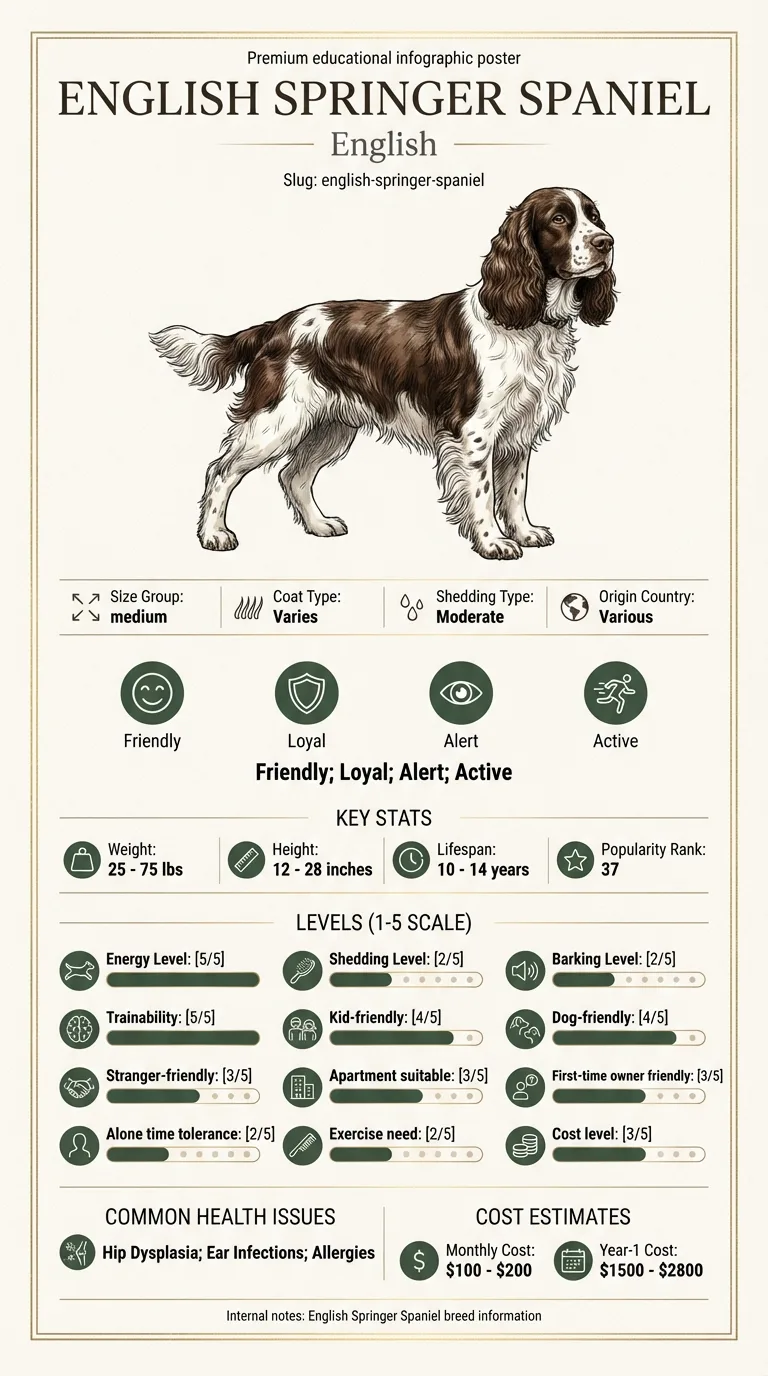
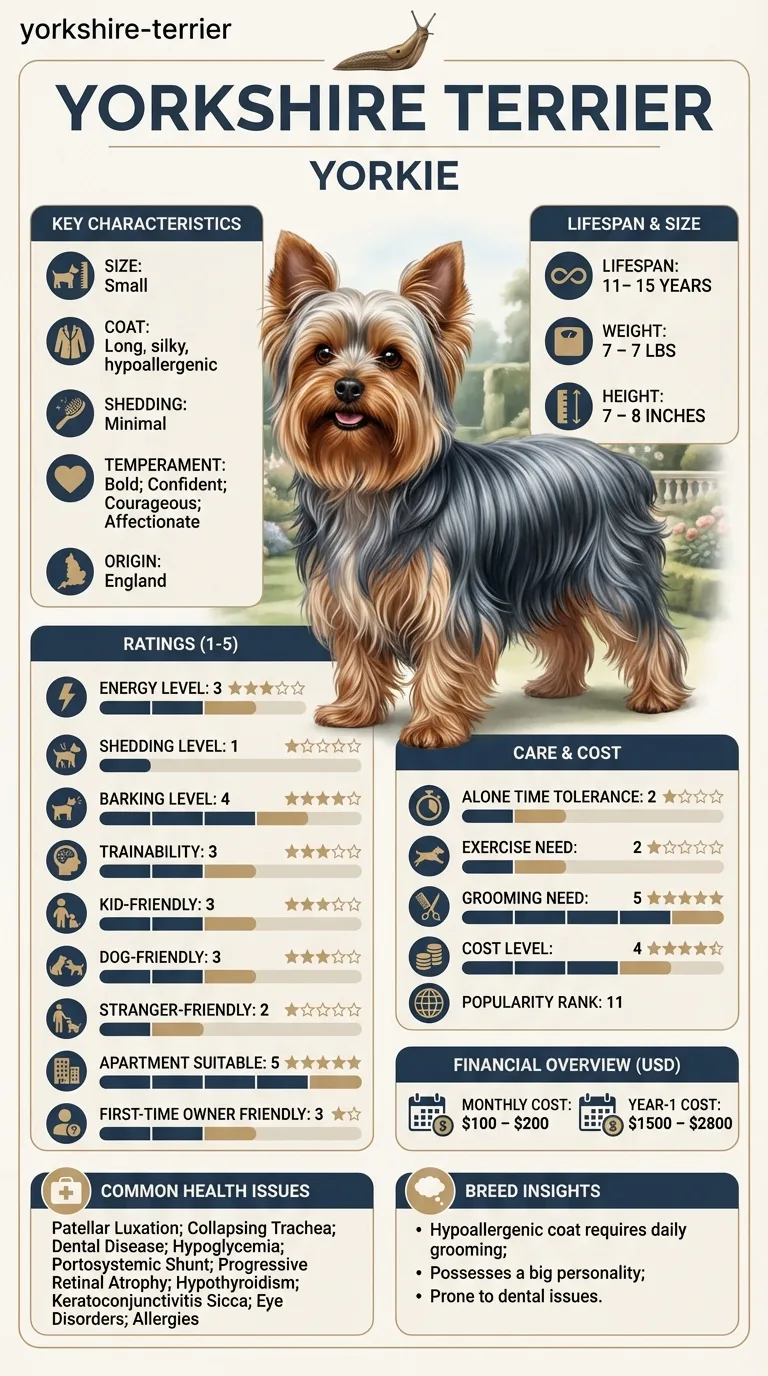
English Springer Spaniel or Yorkshire Terrier? On paper they differ most on exercise need, and on the scales English Springer Spaniel is the heavier at 40–50 lbs. Here is how the two compare on everything that shapes an ordinary week.
This is for someone already down to English Springer Spaniel and Yorkshire Terrier and deciding between them. For this pair the decision usually turns on exercise need and apartment suitability, so those are covered first and in most detail. Anyone choosing from a flat has a clear answer here: Yorkshire Terrier rates 5/5 against 2/5. The focus throughout is on daily consequences rather than breed background.
Quick verdict
Between English Springer Spaniel and Yorkshire Terrier, exercise need is what separates them, and Yorkshire Terrier is the lower-effort dog of the two to keep.
Choose english springer spaniel if...
Choose English Springer Spaniel if you do not want a standing grooming appointment, there are young children at home and you already have another dog.
Choose yorkshire terrier if...
Choose Yorkshire Terrier if you are in a flat or a smaller home, shedding is a problem in your house and your walking routine is modest.
Head-to-head comparison
Feature
english springer spaniel
yorkshire terrier
Winner
Size class
medium
small
Equal
Weight
40–50 lbs
4–7 lbs
Equal
Height
19–20 in
7–8 in
Equal
Lifespan
12–14 years
11–15 years
Equal
Exercise need
Very high (5/5)
Low (2/5)
yorkshire terrier
Grooming need
High (4/5)
Very high (5/5)
english springer spaniel
Shedding
Moderate (3/5)
Very low (1/5)
yorkshire terrier
Energy level
Very high (5/5)
Moderate (3/5)
Equal
Barking
Moderate (3/5)
High (4/5)
english springer spaniel
Apartment suitability
Low (2/5)
Very high (5/5)
yorkshire terrier
Good for first-time owners
Moderate (3/5)
Moderate (3/5)
Equal
Tolerates being alone
Low (2/5)
Low (2/5)
Equal
Trainability
Very high (5/5)
Moderate (3/5)
english springer spaniel
Good with kids
Very high (5/5)
Moderate (3/5)
english springer spaniel
Good with other dogs
High (4/5)
Moderate (3/5)
english springer spaniel
Friendly to strangers
High (4/5)
Low (2/5)
english springer spaniel
Cost level
Moderate (3/5)
High (4/5)
english springer spaniel
Coat
Medium, feathered double coat
Long, silky, hypoallergenic
Equal
Origin
Various
England
Equal
Typical monthly cost
$100–$200
$100–$190
Equal
Typical first-year cost
$1,400–$2,900
$1,400–$2,900
Equal
Deep dive
Size and build
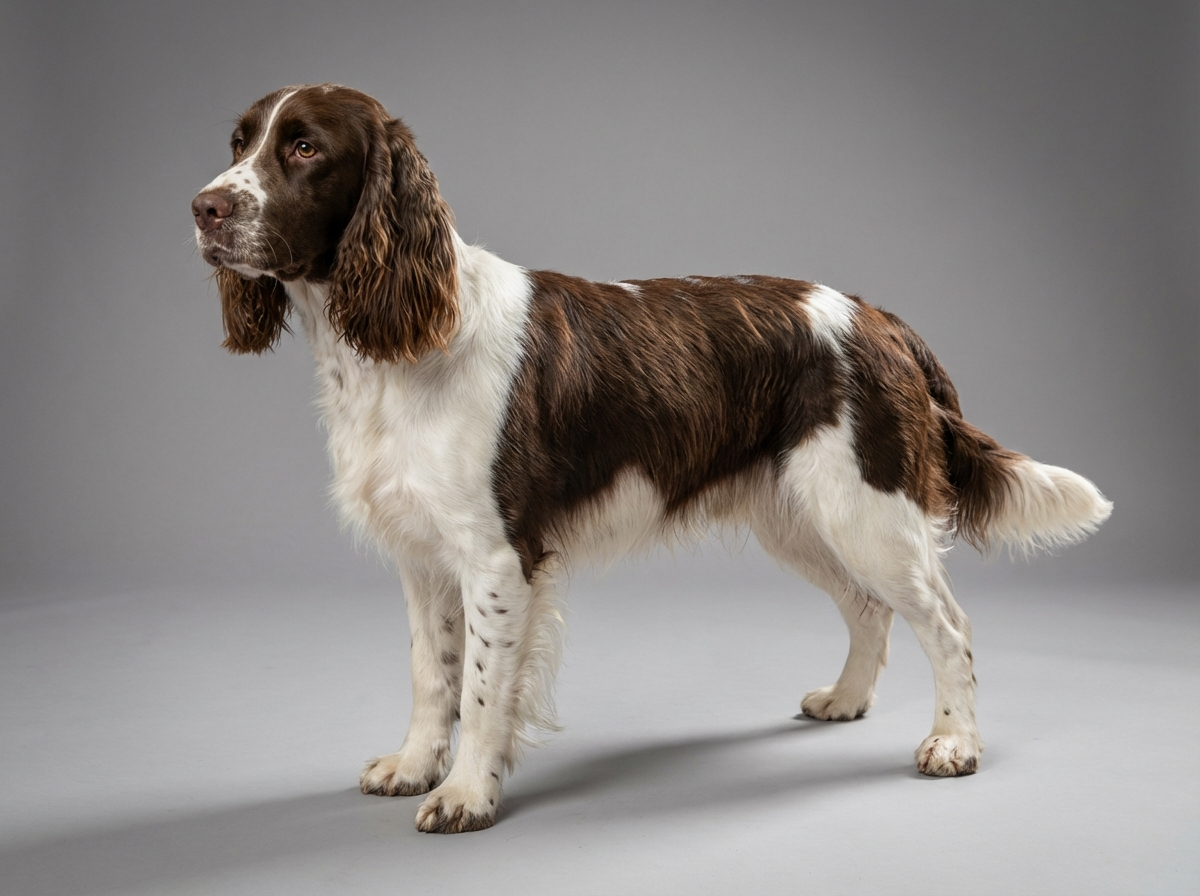
Put a Yorkshire Terrier next to an English Springer Spaniel and the difference is almost comic - 4-7 lbs against 40-50, 7-8 inches against 19-20. The Springer can outweigh a Yorkie by ten times over depending where each dog falls in its range, which affects everything from crate size to how each one handles rough play or a bump from a running toddler.
Energy and exercise
Despite that size gap, the Yorkie isn't a low-energy toy dog on paper - it rates 3/5 on energy, only two points below the Springer's 5/5. Exercise need is where the real split shows up: 2/5 for the Yorkie against 5/5 for the Springer, since even an energetic Yorkie's short legs only cover so much ground compared to a field-bred spaniel.
Grooming and shedding
The Yorkie flips the usual small-dog-is-easier assumption on its head - grooming rates 5/5, the maximum on this scale, for that long silky coat, against the Springer's 4/5. Shedding goes the other way, though: just 1/5 for the Yorkie versus 3/5 for the Springer, and the Yorkie's coat is often described as hypoallergenic as a result of that low shedding rate.
Apartment living, noise and time alone
Apartment suitability strongly favors the Yorkie, 5/5 against the Springer's 2/5. Worth flagging, though: the Yorkie barks more, 4/5 versus the Springer's moderate 3/5 - small dogs and quiet buildings don't always go together, whatever the apartment-suitability score alone might suggest to a first-time apartment renter shopping by that single number. Alone tolerance ties at low, 2/5, for both breeds regardless of size.
Training and owner experience
Trainability favors the Springer, 5/5 versus the Yorkie's 3/5, but first-time-owner suitability ties at moderate, 3/5, for both breeds. The Yorkie's smaller size and lower exercise need offset its more moderate trainability score when it comes to overall beginner-friendliness, even though it takes more consistent effort to get a Yorkie reliably obedient than it does with the eager, biddable Springer.
Kids, other dogs and visitors
The Springer outscores the Yorkie with kids, 5/5 versus 3/5, with other dogs, 4/5 versus 3/5, and with strangers, 4/5 versus 2/5. The Yorkie's own temperament list - bold, confident, courageous - describes a dog with a big-dog attitude packed into a small-dog body, which can mean less patience for rough handling from kids or unfamiliar people than the raw numbers alone suggest.
Health and lifespan
Lifespans overlap closely, 12-14 years for the Springer against 11-15 for the Yorkie. The Yorkie's health list runs considerably longer, ten conditions against the Springer's five, and includes issues tied specifically to its small size - collapsing trachea, hypoglycemia, and portosystemic shunt are all substantially more common in tiny breeds than in larger ones like the Springer. Dental disease is also listed for the Yorkie, common in small-mouthed breeds generally.
Cost to keep
The Yorkie rates higher on the cost scale, 4/5 against the Springer's 3/5, though the monthly dollar ranges are close, $100-190 for the Yorkie against $100-200 for the Springer. First-year totals tie exactly at $1,400-2,900, so the cost gap is mostly a monthly-scale rating difference rather than a large dollar-figure one in practice, likely reflecting the Yorkie's heavier grooming schedule.
English Springer Spaniel vs Yorkshire Terrier at a glance
English Springer Spaniel weighs 40–50 lbs and lives 12–14 years; Yorkshire Terrier weighs 4–7 lbs and lives 11–15 years. The two diverge most on exercise need, apartment suitability and energy level and 4 other rated axes. They are level on tolerates being alone and good for first-time owners, so those cannot decide it. The table below marks a winner only where one breed is genuinely easier for a typical owner; size and origin are facts rather than merits and stay level. Ratings come from one source applied to both breeds, so they are meaningful against each other rather than as absolute scores.
English Springer Spaniel vs Yorkshire Terrier: Which Suits Your Home? - English Springer Spaniel vs Yorkshire Terrier at a glance
Frequently asked questions
How much smaller is the Yorkie than the Springer?
Dramatically - the Yorkie weighs 4-7 lbs against the Springer's 40-50, and stands 7-8 inches against 19-20. It's one of the widest size gaps on this site.
Which sheds more?
The Springer, 3/5 versus the Yorkie's 1/5. The Yorkie's coat is often marketed as hypoallergenic, though it demands the most grooming of any breed in this comparison (5/5).
Is either a good first-time-owner dog?
They tie at 3/5. The Yorkie's small size and low exercise need help it there despite moderate trainability; the Springer's higher trainability offsets its bigger exercise demands.
Which is quieter in an apartment?
Neither, really. The Yorkie fits the space better (5/5 apartment suitability vs the Springer's 2/5) but barks more (4/5 vs 3/5) - worth knowing if thin walls are a concern.
What does each cost?
Close either way - $100-190 a month for the Yorkie, $100-200 for the Springer, with first-year totals tying exactly at $1,400-2,900.
Do their health risks overlap?
Only on progressive retinal atrophy. The Yorkie's list is longer and leans toward small-breed-specific issues like collapsing trachea and hypoglycemia; the Springer's includes hip dysplasia and a breed-specific metabolic condition.
Which is friendlier to strangers?
The Springer, 4/5 versus the Yorkie's 2/5 - consistent with the Yorkie's own temperament description as bold and courageous rather than universally outgoing.
Space and exercise capacity versus grooming time. The Yorkie fits small homes and low-activity schedules; the Springer needs room to run but is lower-maintenance on coat care relative to its size.
Costs
Which costs more monthly?
About the same - $100-190 for the Yorkie, $100-200 for the Springer.
Living
Which needs more exercise?
The Springer by a wide margin, 5/5 versus the Yorkie's 2/5.
Health
Which breed lives longer?
The Yorkie's range tops out higher, up to 15 years versus the Springer's 14.
Yorkshire Terrier breed guide – The same for Yorkshire Terrier, so the comparison can be checked against the detail.
English Springer Spaniel vs Labradoodle – Labradoodle is the closest breed to English Springer Spaniel on the measured axes, so it is the natural next comparison.
Health information here is general and is not veterinary advice. If your dog shows pain, sudden behaviour change, or worsening symptoms, consult a licensed veterinarian.
Some links on this site are affiliate links. We may earn a commission at no extra cost to you, and we only suggest products we believe are helpful for dog owners.
We research and check what we publish, but we do not warrant that any figure, date, price, or statement is accurate, complete, or current, and we accept no liability for any loss, cost, injury, or other harm arising from the use of this site. Use it as one reference among several. You remain responsible for your own decisions and for your dog's care - confirm anything that matters with a licensed veterinarian or another qualified professional before you act on it. Full disclaimer.