Living
Better apartment dog?
The Standard Schnauzer, rated high 4/5 for apartment suitability versus the Springer's low 2/5.

Quick answer
Better apartment dog?
The Standard Schnauzer, rated high 4/5 for apartment suitability versus the Springer's low 2/5.
English Springer Spaniel or Schnauzer (Standard)? On paper they differ most on apartment suitability, and on the scales English Springer Spaniel is the heavier at 40–50 lbs. Here is how the two compare on everything that shapes an ordinary week.
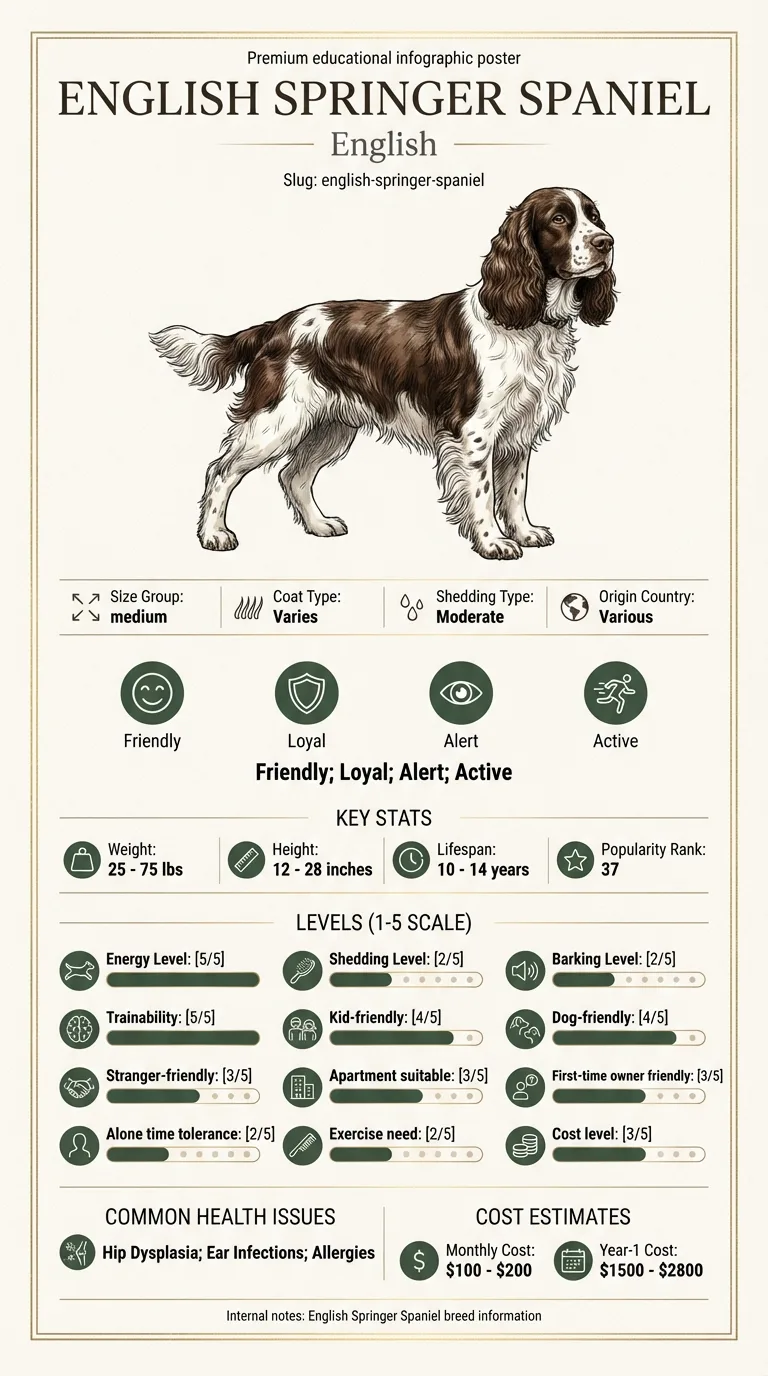
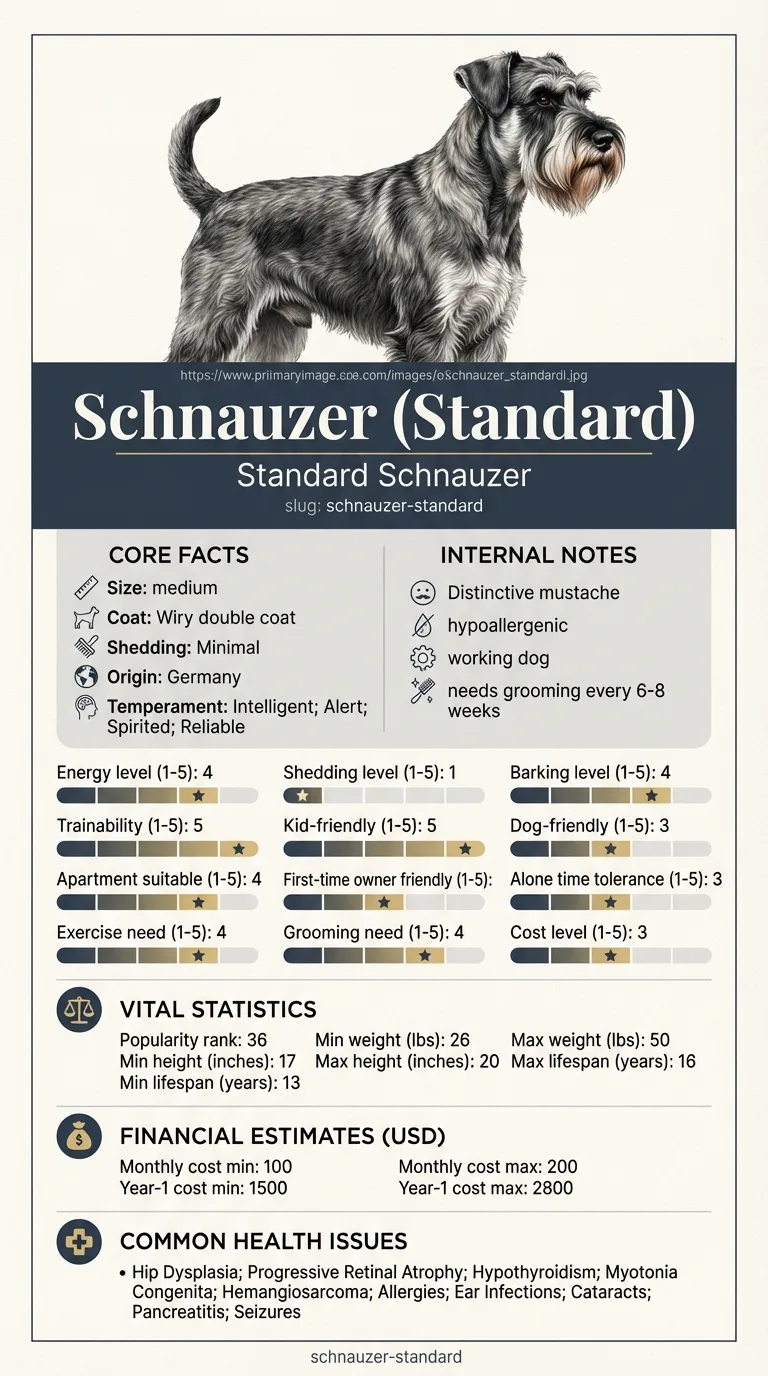
This is for someone already down to English Springer Spaniel and Schnauzer (Standard) and deciding between them. For this pair the decision usually turns on apartment suitability and shedding, so those are covered first and in most detail. Anyone choosing from a flat has a clear answer here: Schnauzer (Standard) rates 4/5 against 2/5. It is written for the decision rather than the breed history.
Between English Springer Spaniel and Schnauzer (Standard), apartment suitability is what separates them, and Schnauzer (Standard) is the lower-effort dog of the two to keep.
Choose English Springer Spaniel if you already have another dog and you want a dog that can keep up with an active routine.
Choose Schnauzer (Standard) if you are in a flat or a smaller home, shedding is a problem in your house and your walking routine is modest.
| Feature | english springer spaniel | schnauzer standard | Winner |
|---|---|---|---|
| Size class | medium | medium | Equal |
| Weight | 40–50 lbs | 26–50 lbs | Equal |
| Height | 19–20 in | 17–20 in | Equal |
| Lifespan | 12–14 years | 13–16 years | schnauzer standard |
| Exercise need | Very high (5/5) | High (4/5) | schnauzer standard |
| Grooming need | High (4/5) | High (4/5) | Equal |
| Shedding | Moderate (3/5) | Very low (1/5) | schnauzer standard |
| Energy level | Very high (5/5) | High (4/5) | Equal |
| Barking | Moderate (3/5) | High (4/5) | english springer spaniel |
| Apartment suitability | Low (2/5) | High (4/5) | schnauzer standard |
| Good for first-time owners | Moderate (3/5) | Moderate (3/5) | Equal |
| Tolerates being alone | Low (2/5) | Moderate (3/5) | schnauzer standard |
| Trainability | Very high (5/5) | Very high (5/5) | Equal |
| Good with kids | Very high (5/5) | Very high (5/5) | Equal |
| Good with other dogs | High (4/5) | Moderate (3/5) | english springer spaniel |
| Friendly to strangers | High (4/5) | Moderate (3/5) | english springer spaniel |
| Cost level | Moderate (3/5) | Moderate (3/5) | Equal |
| Coat | Medium, feathered double coat | Wiry double coat | Equal |
| Origin | Various | Germany | Equal |
| Typical monthly cost | $100–$200 | $100–$200 | Equal |
| Typical first-year cost | $1,400–$2,900 | $1,500–$2,800 | Equal |
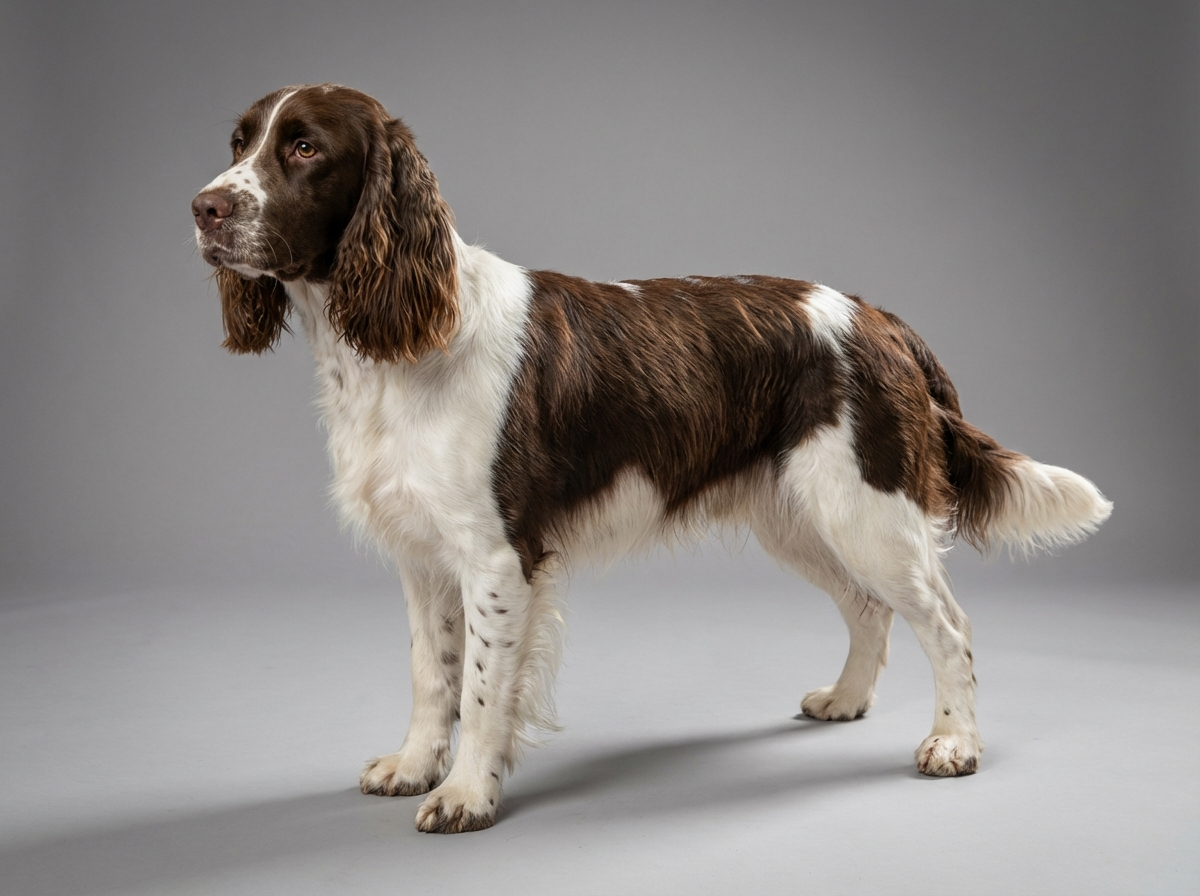
Weight ranges actually overlap here — a Standard Schnauzer's 26-to-50-pound range meets the Springer's 40-to-50-pound frame right at the top, and heights are close too, 17 to 20 inches against 19 to 20. This is one of the more evenly matched size comparisons in the tool: a smaller Schnauzer and a larger Springer could plausibly be the same size, though a typical Schnauzer's wiry double coat and more square, compact build read visually different from the Springer's leaner, feathered sporting silhouette even at equal weight.
The Springer edges ahead on exercise need, very high 5/5 against the Schnauzer's high 4/5, and energy level ties the two at very high versus high — both genuinely active breeds rather than one clearly outpacing the other. A Standard Schnauzer's spirited, alert temperament channels energy into watchfulness and engagement as much as pure physical activity, while a Springer's eager, biddable nature is more purely field-dog drive. Both need real daily exercise; neither is a good match for an owner hoping a short walk will be enough.
Grooming ties at high, 4/5, for both breeds, but shedding diverges sharply — moderate, 3/5, for the Springer against very low, 1/5, for the Schnauzer's wiry double coat, which needs hand-stripping or clipping but sheds very little as a result. A Schnauzer owner trades a slightly more technical grooming routine for a notably cleaner home; a Springer owner's grooming effort goes more toward brushing out a feathered coat that still sheds at a moderate, noticeable rate.
Apartment suitability favors the Schnauzer, high 4/5 against the Springer's low 2/5, but barking flips the advantage — high, 4/5, for the Schnauzer versus moderate, 3/5, for the Springer, consistent with the breed's reputation as an alert watchdog. Tolerating time alone slightly favors the Schnauzer too, moderate 3/5 against the Springer's low 2/5. Altogether, the Schnauzer suits smaller living spaces better on paper, provided its owner is prepared for more vocal alerting than the quieter, but space-hungrier, Springer.
Trainability ties at very high, 5/5, for both breeds — both rank at the top of this scale. First-time-owner suitability ties too, at moderate 3/5 each, so neither has a clear edge for a novice. Where the two differ is temperament flavor rather than trainability itself: the Springer's eager, friendly, biddable nature makes it responsive and easygoing in training, while the Schnauzer's intelligent, alert, spirited character means it learns just as fast but with more independent opinions along the way, similar to other Schnauzer varieties.
Good with kids ties at very high, 5/5, for both — a strong match either way for a family. The Springer edges ahead on good with other dogs, high 4/5 against moderate 3/5, and on friendly to strangers, high 4/5 against moderate 3/5, reflecting the Schnauzer's somewhat more reserved, watchdog-influenced temperament. A household that entertains often or keeps multiple dogs likely finds the Springer marginally more accommodating; a household that values a more discerning, alert presence may prefer the Schnauzer.
The Schnauzer wins on lifespan, 13 to 16 years against the Springer's 12 to 14. Both share hip dysplasia, progressive retinal atrophy, and ear infections, but their standout risks differ: the Springer's list adds the breed-specific phosphofructokinase deficiency and elbow dysplasia, while the Schnauzer's longer ten-item list includes hemangiosarcoma, a form of cancer, alongside myotonia congenita, a rare muscular condition specific to the breed, and pancreatitis. Buyers of either breed should ask specifically about the conditions unique to that breed rather than only the shared ones.
Cost level ties at moderate, 3/5, for both breeds, and the dollar figures land close together too: $100–$200 monthly for both, with first-year costs of $1,400–$2,900 for the Springer against a slightly lower $1,500–$2,800 for the Schnauzer. This is one of the more cost-neutral comparisons in the tool — neither breed carries a clear financial advantage, so cost is unlikely to be the deciding factor between these two for most households weighing this particular pair.
English Springer Spaniel weighs 40–50 lbs and lives 12–14 years; Schnauzer (Standard) weighs 26–50 lbs and lives 13–16 years. The two diverge most on apartment suitability and shedding. They are level on cost level, good for first-time owners and grooming need, so those cannot decide it. In the table, a "winner" means easier for an ordinary household — not better. Size, coat and origin are recorded without a verdict. Because both breeds are scored the same way, the gaps are reliable even where the absolute numbers are rough.

Closer than most comparisons here — a Standard Schnauzer's 26–50 lb range overlaps the Springer's 40–50 lb range at the top end, and their heights differ by only a couple of inches.
Neither, clearly — the Schnauzer actually rates higher for barking, high 4/5, against the Springer's moderate 3/5, despite being the more apartment-suited breed.
The Schnauzer, very low 1/5, against the Springer's moderate 3/5, thanks to its wiry, hand-stripped coat.
The Standard Schnauzer, 13–16 years, versus the Springer's 12–14 years.
The Springer Spaniel, rated high 4/5, against the Schnauzer's moderate 3/5.
Not meaningfully — both tie on cost level and monthly cost, with first-year costs within a few hundred dollars of each other.
The Schnauzer's list includes hemangiosarcoma and myotonia congenita, both fairly breed-specific, while the Springer's standout is phosphofructokinase deficiency, a metabolic condition.
The Standard Schnauzer, rated high 4/5 for apartment suitability versus the Springer's low 2/5.
The Standard Schnauzer, rated high 4/5 for barking against the Springer's moderate 3/5.
Neither — both tie at very high, 5/5, for trainability.
The Standard Schnauzer, 13–16 years, versus the Springer's 12–14 years.
Secure checkout on Stripe. We never see your card.
7-day money-back guarantee. Instant access.
Health information here is general and is not veterinary advice. If your dog shows pain, sudden behaviour change, or worsening symptoms, consult a licensed veterinarian.
Some links on this site are affiliate links. We may earn a commission at no extra cost to you, and we only suggest products we believe are helpful for dog owners.
We research and check what we publish, but we do not warrant that any figure, date, price, or statement is accurate, complete, or current, and we accept no liability for any loss, cost, injury, or other harm arising from the use of this site. Use it as one reference among several. You remain responsible for your own decisions and for your dog's care - confirm anything that matters with a licensed veterinarian or another qualified professional before you act on it. Full disclaimer.
Match your lifestyle to the right dog.
Take quizNot sure which breed is right for you? Take our 2-minute quiz to find out.
Take the quiz