The Pomeranian fits apartments, first-time owners, and tighter budgets far better. The Corso is worth it only if you specifically want a large protective breed with the space and experience to match.
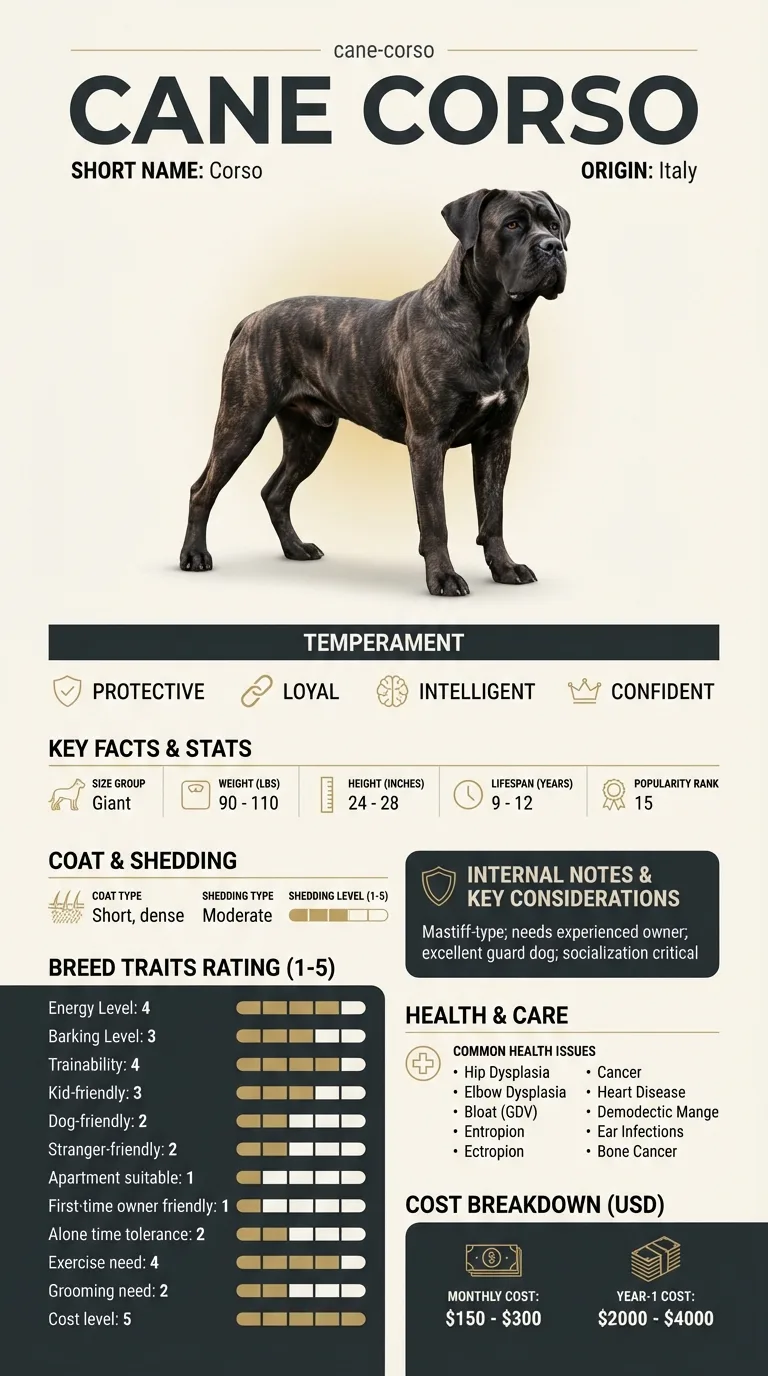
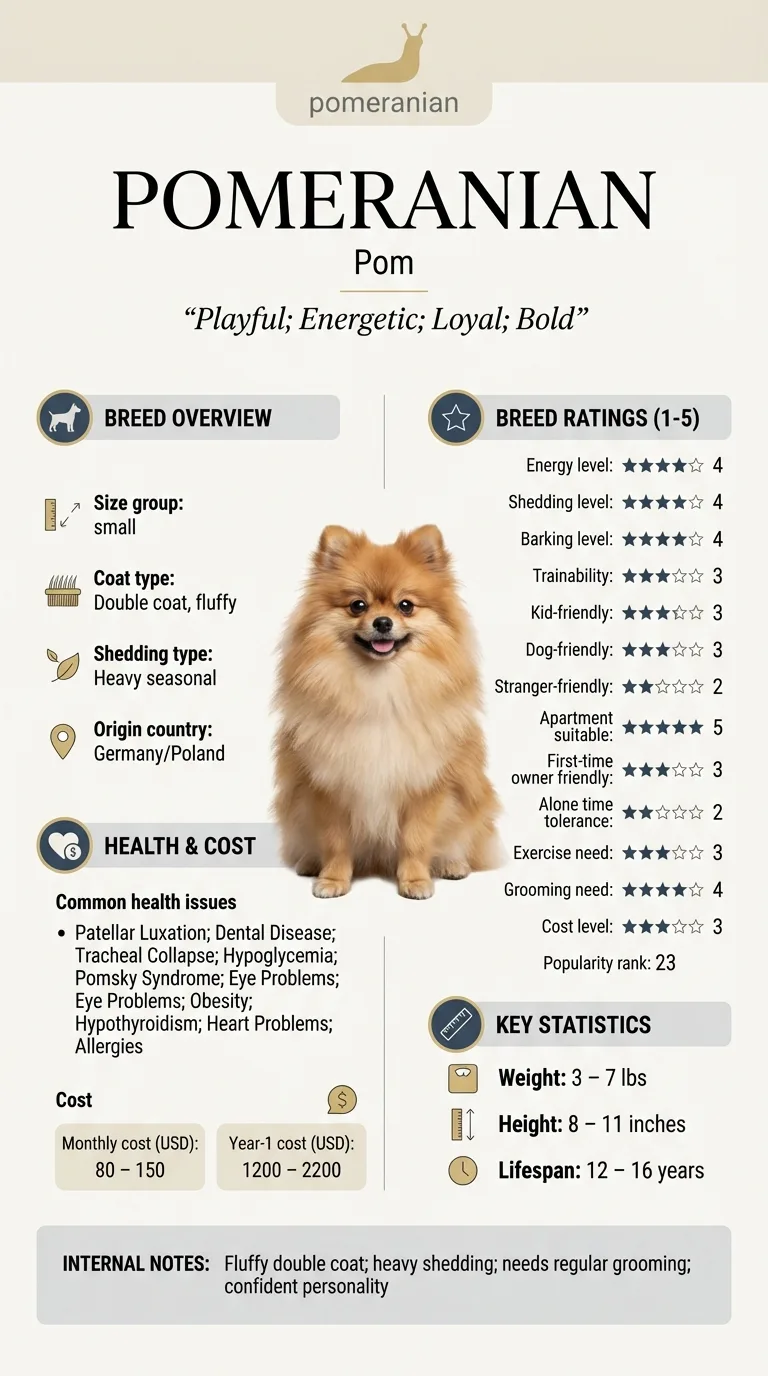
Cane Corso or Pomeranian? On paper they differ most on apartment suitability, and on the scales Cane Corso is the heavier at 90–110 lbs. Here is how the two compare on everything that shapes an ordinary week.
This is for someone already down to Cane Corso and Pomeranian and deciding between them. For this pair the decision usually turns on apartment suitability and grooming need, so those are covered first and in most detail. Anyone choosing from a flat has a clear answer here: Pomeranian rates 5/5 against 1/5. There is no origin story here — only what changes about your week.
Quick verdict
Between Cane Corso and Pomeranian, apartment suitability is what separates them, and Pomeranian is the lower-effort dog of the two to keep.
Choose cane corso if...
Choose Cane Corso if you do not want a standing grooming appointment, shedding is a problem in your house and you want a dog that picks up training quickly.
Choose pomeranian if...
Choose Pomeranian if you are in a flat or a smaller home, this is your first dog and your walking routine is modest.
Head-to-head comparison
Feature
cane corso
pomeranian
Winner
Size class
giant
small
Equal
Weight
90–110 lbs
3–7 lbs
Equal
Height
24–28 in
8–11 in
Equal
Lifespan
9–12 years
12–16 years
pomeranian
Exercise need
High (4/5)
Moderate (3/5)
pomeranian
Grooming need
Low (2/5)
High (4/5)
cane corso
Shedding
Moderate (3/5)
High (4/5)
cane corso
Energy level
High (4/5)
High (4/5)
Equal
Barking
Moderate (3/5)
High (4/5)
cane corso
Apartment suitability
Very low (1/5)
Very high (5/5)
pomeranian
Good for first-time owners
Very low (1/5)
Moderate (3/5)
pomeranian
Tolerates being alone
Low (2/5)
Low (2/5)
Equal
Trainability
High (4/5)
Moderate (3/5)
cane corso
Good with kids
Moderate (3/5)
Moderate (3/5)
Equal
Good with other dogs
Low (2/5)
Moderate (3/5)
pomeranian
Friendly to strangers
Low (2/5)
Low (2/5)
Equal
Cost level
Very high (5/5)
Moderate (3/5)
pomeranian
Coat
Short, dense
Double coat, fluffy
Equal
Origin
Italy
Germany/Poland
Equal
Typical monthly cost
$150–$300
$80–$150
Equal
Typical first-year cost
$2,000–$4,000
$1,200–$2,200
Equal
Deep dive
Size and build
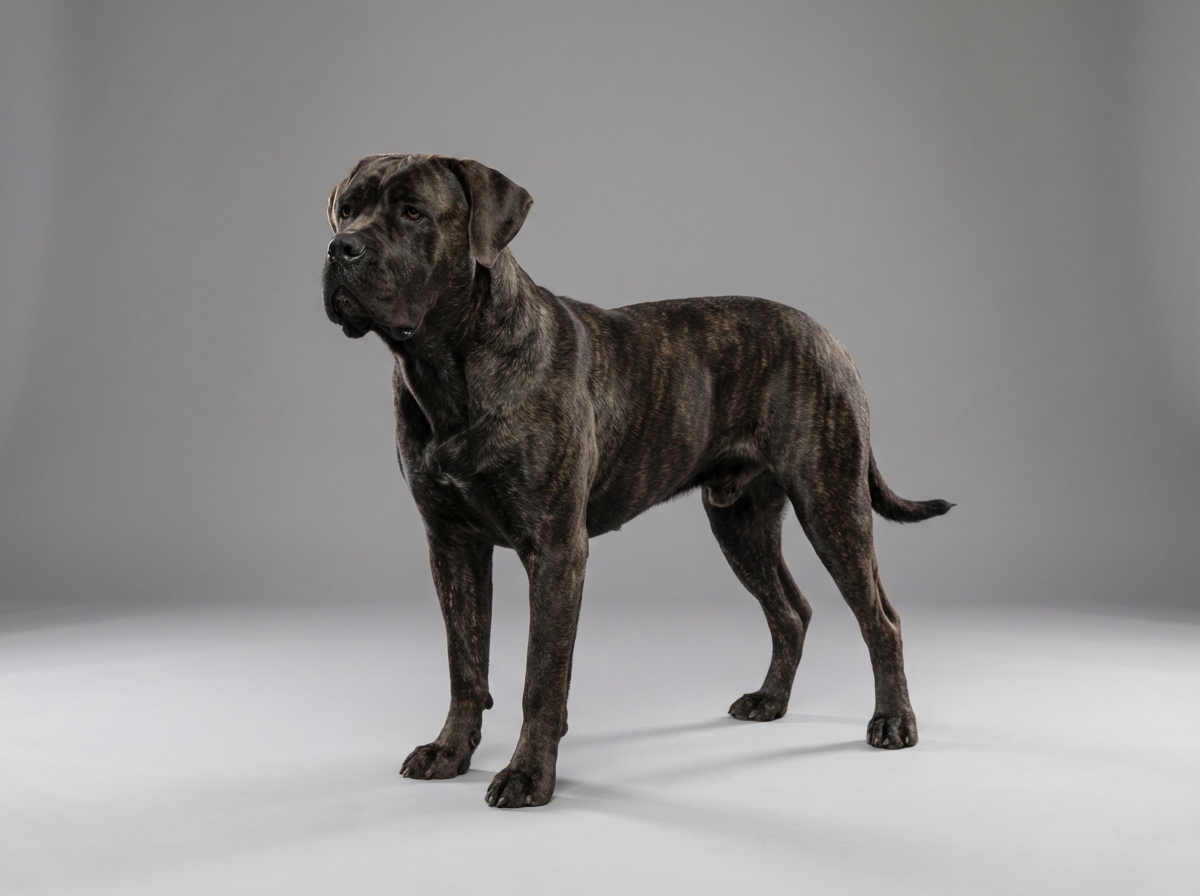
The Pomeranian weighs 3 to 7 pounds and stands 8 to 11 inches; the Cane Corso weighs 90 to 110 pounds and stands 24 to 28. This is one of the largest size mismatches in any breed comparison, a full-grown Corso outweighs a Pomeranian by roughly fifteen times. Supervise any interaction between the two closely if you happen to own both.
Energy and exercise
Energy level ties at high (4/5) for both, which is notable given how tiny the Pomeranian is, these are lively, alert little dogs, not lap ornaments. Exercise need favors the Corso needing more, high, 4/5, versus the Pomeranian's moderate, 3/5, but the Pomeranian's energy shows up more in constant motion and vocalizing than in needing long walks.
Grooming and shedding
The Pomeranian's fluffy double coat demands real attention, high grooming need (4/5) and high shedding (4/5) to match. The Corso needs almost nothing by comparison: low grooming (2/5) and only moderate shedding (3/5). If a shedding-free house matters to you, neither breed delivers it, but the Pomeranian will leave more hair around per pound of dog.
Apartment living, noise and time alone
The Pomeranian is rated a very high 5/5 for apartment suitability against the Corso's 1/5, an easy call on paper. Barking cuts the other way, though: the Pomeranian rates high (4/5) against the Corso's moderate (3/5), so a small unit with a Pomeranian may mean more noise complaints, not fewer. Both breeds tolerate solitude poorly.
Training and owner experience
The Corso is the more trainable of the two on paper, high, 4/5, versus the Pomeranian's moderate, 3/5, but it's a much tougher first dog: 1/5 for first-time owners against the Pomeranian's 3/5. Pomeranians can be strong-willed and prone to small-dog stubbornness, so easier doesn't mean effortless, it means more forgiving of an inexperienced handler's mistakes.
Kids, other dogs and visitors
Kids ties at moderate (3/5) for both breeds, a Pomeranian's tiny frame makes it easy to injure around young children despite a generally playful temperament. The Pomeranian edges ahead with other dogs, moderate, 3/5, versus the Corso's low, 2/5, while the two tie on friendliness to strangers, both rated low (2/5), neither breed is instinctively outgoing with people it doesn't know.
Health and lifespan
The Pomeranian's expected lifespan, 12 to 16 years, comfortably outpaces the Corso's 9 to 12. Health risks barely overlap: the Pomeranian's list runs toward small-breed staples like patellar luxation, tracheal collapse, and dental disease, plus obesity and hypothyroidism, while the Corso's centers on hip and elbow dysplasia, bloat, and cancer. Heart problems appear on both lists, though as different specific conditions, so it's worth a cardiac check either way.
Cost to keep
The Corso costs more to keep on every measure here, very high (5/5) cost level against the Pomeranian's moderate (3/5), $150-$300 monthly against $80-$150, and $2,000-$4,000 against $1,200-$2,200 in the first year. Food is the obvious driver, but the Pomeranian's grooming needs will still add up over a year of upkeep.
Cane Corso vs Pomeranian at a glance
Cane Corso weighs 90–110 lbs and lives 9–12 years; Pomeranian weighs 3–7 lbs and lives 12–16 years. The two diverge most on apartment suitability, grooming need and good for first-time owners and 1 other rated axes. They are level on tolerates being alone, energy level and good with kids, so those cannot decide it. Where the table declares a winner it means less work for the owner, nothing more; descriptive rows are left as ties on purpose. The value here is in the differences between the two columns; treat any single score as approximate.
Cane Corso vs Pomeranian: Which Suits Your Home? - Cane Corso vs Pomeranian at a glance
Frequently asked questions
Are Pomeranians good apartment dogs?
Very, they rate a full 5/5 for apartment suitability. Keep in mind they also rate high (4/5) for barking, so noise, not space, is the more likely issue in close quarters.
Is a Pomeranian easier to train than a Cane Corso?
Not exactly, the Corso rates higher on trainability (4/5 versus 3/5). The Pomeranian's advantage is its first-time-owner score (3/5 versus the Corso's 1/5), which reflects size and temperament more than raw trainability.
How much does it cost to own a Pomeranian versus a Cane Corso?
A Pomeranian runs $80-$150 monthly and $1,200-$2,200 in year one. A Corso runs $150-$300 monthly and $2,000-$4,000 in year one, roughly double across the board.
Which breed sheds more?
The Pomeranian, rated high (4/5) against the Corso's moderate (3/5), thanks to its dense double coat.
Do Cane Corsos and Pomeranians share any health conditions?
Heart problems appear on both lists, though as distinct conditions, so a cardiac screening is worth asking about for either breed. Otherwise their risk profiles differ substantially by size.
Which breed lives longer?
The Pomeranian, typically by three to seven years, 12 to 16 years against the Corso's 9 to 12.
Is a Pomeranian good with strangers?
Not especially, it rates low (2/5), the same as the Corso. Despite the size difference, neither breed is instinctively warm toward unfamiliar people.
The Pomeranian fits apartments, first-time owners, and tighter budgets far better. The Corso is worth it only if you specifically want a large protective breed with the space and experience to match.
Costs
What do these two breeds cost monthly?
$150-$300 for the Corso versus $80-$150 for the Pomeranian.
Training
Which breed needs more exercise?
The Corso, rated high (4/5) against the Pomeranian's moderate (3/5), even though both tie on overall energy level.
Health
Which lives longer?
The Pomeranian, typically 12-16 years versus the Corso's 9-12.
Related DogBreedCompass guides
Cane Corso breed guide – Readers comparing the two usually want the full profile of Cane Corso before deciding.
Pomeranian breed guide – The same for Pomeranian, so the comparison can be checked against the detail.
Cane Corso vs Rottweiler – Rottweiler is the closest breed to Cane Corso on the measured axes, so it is the natural next comparison.
Pomeranian vs Yorkshire Terrier – Yorkshire Terrier sits closest to Pomeranian, which makes it the alternative worth ruling out.
What Cane Corso costs to keep – Anyone weighing these two is usually also pricing them, and the cost pages carry city-level figures.
Pomeranian health problems – The health pages set out what each breed is actually screened for.
Health information here is general and is not veterinary advice. If your dog shows pain, sudden behaviour change, or worsening symptoms, consult a licensed veterinarian.
Some links on this site are affiliate links. We may earn a commission at no extra cost to you, and we only suggest products we believe are helpful for dog owners.
We research and check what we publish, but we do not warrant that any figure, date, price, or statement is accurate, complete, or current, and we accept no liability for any loss, cost, injury, or other harm arising from the use of this site. Use it as one reference among several. You remain responsible for your own decisions and for your dog's care - confirm anything that matters with a licensed veterinarian or another qualified professional before you act on it. Full disclaimer.