Living
Border Collie or Papillon for an apartment?
Papillon, rated 5/5 apartment suitability versus the Border Collie's 1/5.

Quick answer
Border Collie or Papillon for an apartment?
Papillon, rated 5/5 apartment suitability versus the Border Collie's 1/5.
Border Collie or Papillon? On paper they differ most on apartment suitability, and on the scales Border Collie is the heavier at 30–55 lbs. Here is how the two compare on everything that shapes an ordinary week.
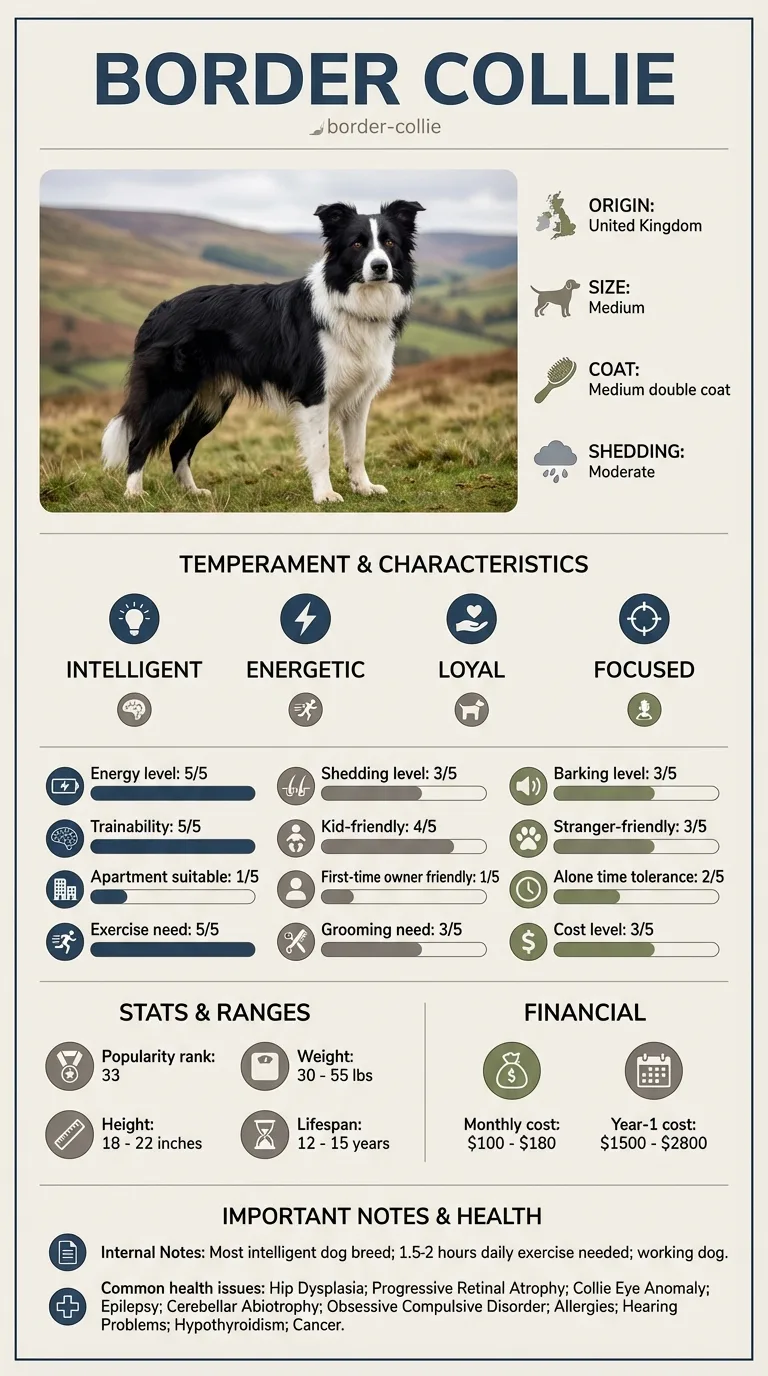
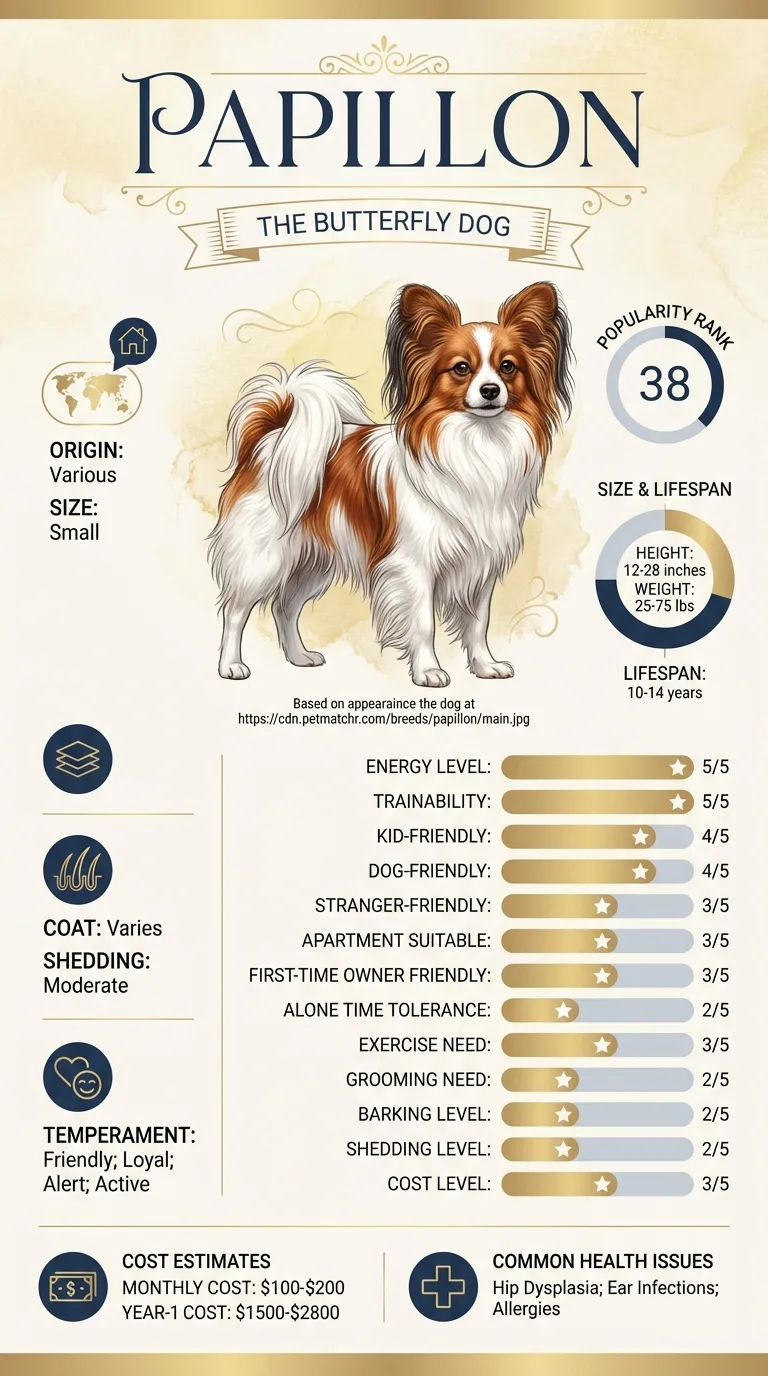
This is for someone already down to Border Collie and Papillon and deciding between them. For this pair the decision usually turns on apartment suitability and good for first-time owners, so those are covered first and in most detail. Anyone choosing from a flat has a clear answer here: Papillon rates 5/5 against 1/5. There is no origin story here — only what changes about your week.
Between Border Collie and Papillon, apartment suitability is what separates them, and Papillon is the lower-effort dog of the two to keep.
Choose Border Collie if there are young children at home, you want a dog that can keep up with an active routine and you want a dog that is more watchful with visitors.
Choose Papillon if you are in a flat or a smaller home, this is your first dog and you do not want a standing grooming appointment.
| Feature | border collie | papillon | Winner |
|---|---|---|---|
| Size class | medium | small | Equal |
| Weight | 30–55 lbs | 5–10 lbs | Equal |
| Height | 18–22 in | 8–11 in | Equal |
| Lifespan | 12–15 years | 14–16 years | papillon |
| Exercise need | Very high (5/5) | Moderate (3/5) | papillon |
| Grooming need | Moderate (3/5) | Low (2/5) | papillon |
| Shedding | Moderate (3/5) | Low (2/5) | papillon |
| Energy level | Very high (5/5) | High (4/5) | Equal |
| Barking | Moderate (3/5) | High (4/5) | border collie |
| Apartment suitability | Very low (1/5) | Very high (5/5) | papillon |
| Good for first-time owners | Very low (1/5) | High (4/5) | papillon |
| Tolerates being alone | Low (2/5) | Low (2/5) | Equal |
| Trainability | Very high (5/5) | Very high (5/5) | Equal |
| Good with kids | High (4/5) | Moderate (3/5) | border collie |
| Good with other dogs | High (4/5) | High (4/5) | Equal |
| Friendly to strangers | Moderate (3/5) | High (4/5) | papillon |
| Cost level | Moderate (3/5) | Low (2/5) | papillon |
| Coat | Medium double coat | Long, silky single coat | Equal |
| Origin | United Kingdom | Various | Equal |
| Typical monthly cost | $100–$180 | $80–$150 | Equal |
| Typical first-year cost | $1,500–$2,800 | $1,100–$2,300 | Equal |
Fifty pounds of Border Collie could sit on top of two full-grown Papillons and still have room; the Border Collie's 30-55 lb, 18-22 inch frame outsizes the 5-10 lb, 8-11 inch Papillon by a wide margin. Picture the two side by side at a dog park: one is a medium-sized herding athlete with a weatherproof double coat, the other a toy breed whose signature butterfly-shaped ears (the name literally means 'butterfly' in French) are its most recognizable feature. A single glance settles which breed fits into a jacket pocket and which needs a proper yard to stretch its legs in.
Five out of five. That's where the Border Collie sits on both exercise need and energy level, a maxed-out score shared by very few breeds on this site, and it reflects a dog engineered to run sheep across open hillsides for hours. Drop the number to a still-respectable moderate 3/5 exercise need and you've got the Papillon, whose energy tops out at high 4/5, active and alert but nowhere near the Border Collie's relentless drive. A Border Collie without a serious daily outlet doesn't just get restless, it can spiral into obsessive, repetitive behavior; a Papillon simply naps more.
Neither dog demands salon-level coat care, but the numbers still split moderate 3/5 grooming and moderate 3/5 shedding for the Border Collie against low 2/5 and low 2/5 for the Papillon. Here's the twist: despite carrying a long, silky single coat that looks high-maintenance, the Papillon actually sheds less and needs less brushing than the Border Collie's shorter-looking medium double coat, which blows its undercoat seasonally. Anyone judging coat effort by appearance alone would guess wrong on this pair; the fluffier-looking dog is, in practice, the easier one to keep brushed.
A young couple renting a 650-square-foot one-bedroom asked which of these two breeds could realistically live there. The answer is stark: Papillon, rated very high 5/5 for apartment suitability, versus Border Collie, rated very low 1/5, the lowest score this pairing produces anywhere on the table. That single point of separation, born from the Border Collie's maxed-out exercise need, effectively rules the breed out for small-space living. Both dogs tolerate solitude equally poorly, low 2/5 each, so neither is the right pick for an empty apartment during a nine-to-five shift, regardless of square footage.
Here's a genuine tie that hides a real split: both breeds rate very high, 5/5, on trainability, matching intelligence with intelligence. But flip to first-time-owner suitability and the Border Collie collapses to very low 1/5, the worst score of any breed comparison metric here, while the Papillon holds steady at high 4/5. The lesson is that raw trainability isn't the same as ease of ownership; a Border Collie's focused, energetic mind needs a job and an experienced handler to channel it productively, while the alert, quick-witted Papillon channels the same intelligence into a package a beginner can actually manage.
A family with three kids under ten and a resident Labrador called to ask which breed would slot in easiest. Both dogs tie at high 4/5 with other dogs, so the existing Labrador isn't the deciding factor either way. Kids tip toward the Border Collie, high 4/5 against the Papillon's moderate 3/5, partly a size consideration since a 6-lb Papillon is more easily injured by rough play than a 40-lb herding dog. Strangers flip the other direction: the Papillon, friendly and confident by temperament, rates high 4/5, while the more focused, work-minded Border Collie sits at moderate 3/5.
Fourteen to sixteen years versus twelve to fifteen: the Papillon's lifespan edges out the Border Collie's, a modest gap but a real one for toy versus medium breeds. Where the two diverge sharply is the health list itself. The Border Collie's ten conditions include cerebellar abiotrophy and obsessive compulsive disorder, both linked to its intense working drive, plus cancer and epilepsy. The Papillon's shorter five-item list stays largely mechanical: patellar luxation, open fontanel and collapsing trachea, structural issues tied to its small size rather than the neurological and behavioral concerns that shadow its higher-drive counterpart.
Run the numbers for a year of ownership and the Border Collie comes out ahead in raw dollars: $1,500-2,800 against the Papillon's $1,100-2,300, with monthly costs of $100-180 versus $80-150. Cost level itself splits moderate 3/5 for the Border Collie and low 2/5 for the Papillon. A bigger dog simply eats more, needs a bigger crate, and often incurs higher medication doses when treatment is needed. Add in the Border Collie's likely need for training classes or agility work to satisfy its drive, and the true cost gap tends to widen further than the sticker figures alone suggest.
Border Collie weighs 30–55 lbs and lives 12–15 years; Papillon weighs 5–10 lbs and lives 14–16 years. The two diverge most on apartment suitability, good for first-time owners and exercise need. They are level on tolerates being alone, good with other dogs and trainability, so those cannot decide it. Where the table declares a winner it means less work for the owner, nothing more; descriptive rows are left as ties on purpose. The value here is in the differences between the two columns; treat any single score as approximate.

The Papillon, rated very high (5/5) for apartment suitability against the Border Collie's very low (1/5), driven by the huge gap in exercise need between them.
Yes on paper, both rate very high (5/5) trainability, but the Border Collie's first-time-owner score of very low (1/5) shows that trainability alone doesn't make it easy to live with day to day.
The Border Collie, rated moderate (3/5) shedding against the Papillon's low (2/5), despite the Papillon's longer-looking silky coat.
More than Border Collies, rated high (4/5) barking against the Border Collie's moderate (3/5), consistent with the Papillon's alert temperament.
The Border Collie's ten-item list includes cerebellar abiotrophy, obsessive compulsive disorder and cancer, generally more serious than the Papillon's five structural conditions like patellar luxation and collapsing trachea.
The Border Collie is rated higher, high (4/5) versus the Papillon's moderate (3/5), though the Papillon's small 5-10 lb size makes it more fragile around rough play regardless of temperament.
The Papillon, at 14-16 years, edges out the Border Collie's 12-15 year range.
Papillon, rated 5/5 apartment suitability versus the Border Collie's 1/5.
The Border Collie, maxed out at 5/5 versus the Papillon's 3/5.
Yes, its friendly, confident nature earns a 4/5 stranger-friendliness score versus the Border Collie's more reserved 3/5.
The Papillon, at $1,100-2,300 first-year cost versus the Border Collie's $1,500-2,800.
Secure checkout on Stripe. We never see your card.
7-day money-back guarantee. Instant access.
Health information here is general and is not veterinary advice. If your dog shows pain, sudden behaviour change, or worsening symptoms, consult a licensed veterinarian.
Some links on this site are affiliate links. We may earn a commission at no extra cost to you, and we only suggest products we believe are helpful for dog owners.
We research and check what we publish, but we do not warrant that any figure, date, price, or statement is accurate, complete, or current, and we accept no liability for any loss, cost, injury, or other harm arising from the use of this site. Use it as one reference among several. You remain responsible for your own decisions and for your dog's care - confirm anything that matters with a licensed veterinarian or another qualified professional before you act on it. Full disclaimer.
Match your lifestyle to the right dog.
Take quizNot sure which breed is right for you? Take our 2-minute quiz to find out.
Take the quiz