Health
What does 'brachycephalic features' mean for this breed?
A moderately shortened, broad muzzle with loose lips and deep flews, distinct from extreme brachycephalic breeds like Bulldogs.

Quick answer
What does 'brachycephalic features' mean for this breed?
A moderately shortened, broad muzzle with loose lips and deep flews, distinct from extreme brachycephalic breeds like Bulldogs.
The droopy, jowly, unmistakably 'Saint Bernard' face is not just character — it is a specific head structure with real, everyday consequences, from the drool on your sleeve to how the dog's eyelids sit.
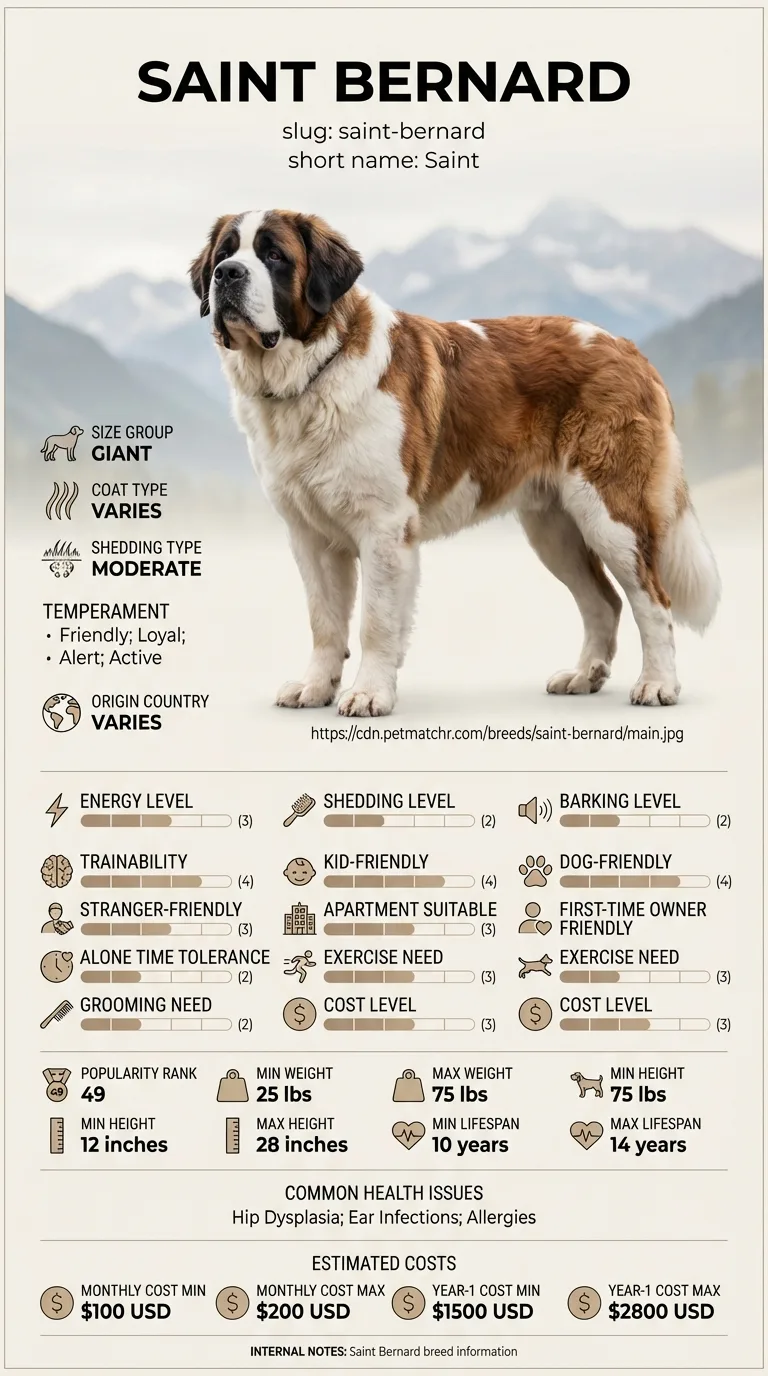
New owners charmed by the classic droopy expression who are surprised by how much daily maintenance — drool management, facial fold cleaning, eyelid checks — that same structure actually requires.
This guide is not medical advice. If your dog shows pain, sudden behavior change, or worsening symptoms, consult a licensed veterinarian.
Some links may be affiliate links. We may earn a commission at no extra cost to you. We only suggest products we believe are helpful for dog owners.
Brachycephalic features in a Saint Bernard describe a moderately shortened, broad muzzle with loose lips and deep flews — far milder than extreme brachycephalic breeds, but still responsible for everyday realities like heavy drooling, facial fold care, and a conformation-related link to entropion.
Every Saint Bernard has this head structure to some degree, since it is a defining breed feature rather than an occasional individual trait, though the degree of looseness and drooling varies somewhat between individual dogs.
The breed standard calls for a broad skull and a moderately shortened muzzle with loose lips and deep flews, a look selectively bred for over generations. This structure is intentional and consistent across the breed, unlike an incidental individual trait.
Warm weather and exertion increase both drooling and heat load, while a home environment without regular fold-cleaning habits can allow moisture-related skin irritation to develop in the folds over time.
See a vet if drooling suddenly increases well beyond normal, if facial folds show persistent redness or odor despite regular cleaning, or if you notice the eyelid rolling inward or excessive eye rubbing. Treat any sudden breathing difficulty or collapse as an emergency, though this is uncommon for this breed's typical head structure.
See all Saint Bernard health problems, which breeds are prone to brachycephalic features, or the full Saint Bernard breed guide for temperament, exercise needs and ownership costs.
Facial fold care and drool management are daily, lifelong routines rather than something that resolves — this is simply what living with this head structure involves.
Success is a comfortable, well-maintained face — clean folds, no chronic irritation, and eyes checked regularly — with drooling accepted as a normal breed trait rather than treated as a problem to fix.
The moderately shortened muzzle and broad skull are the base structure. Layered onto that are loose, heavy lips and deep flews — the pendulous folds at the corners of the mouth — which do not seal as tightly as a tighter-lipped breed's do. That looseness is the direct cause of this breed's famous drooling, especially after drinking, eating or exertion, since saliva pools in the folds rather than being held in by a snug mouth seal.
The same loose-skin tendency extends to the lower eyelids, which is part of why entropion — a documented health issue in this breed where the eyelid rolls inward — is a related concern. Loose facial skin does not directly cause entropion, but the overall facial conformation genetics that produce a droopy, heavy face are part of the same broader package. Owners get a genuinely gentle, expressive face, along with drool and fold maintenance as the trade-off.
None of this is about fixing the structure — it is simply about maintaining a face built the way this breed's is, rather than treating drooling and fold care as unexpected surprises.

When the Hendersons brought home their Saint Bernard puppy, Chief, they had seen photos of the breed's droopy face but underestimated how much drool it would actually produce. Within the first month, they were wiping down walls and furniture near his water bowl daily. Rather than fighting it, they adjusted: a dedicated drool towel lived by the water bowl, a daily fold-wiping routine became part of his evening care, and they learned to check his lower eyelids weekly after their vet mentioned the entropion connection. Four years in, Chief's facial skin stays clean and irritation-free, and the drool, while constant, is simply part of the household routine now.
Key takeaway: The Hendersons stopped treating drool and fold care as problems to solve and started treating them as the standing maintenance this breed's face requires — a small shift that made daily life with Chief far less frustrating.
Yes, moderately so — a broad, somewhat shortened muzzle compared to a long-nosed breed, though far less extreme than Bulldogs or Pugs.
Loose lips and deep flews do not seal tightly, so saliva pools and drips rather than being held in, especially after eating, drinking or exertion.
Not on its own — it is a structural feature of the breed's face. Sudden increases in drooling alongside other symptoms, though, are worth mentioning to a vet.
The genetics behind a droopy, heavy face are part of the same broader facial conformation package associated with entropion, though loose skin itself does not directly cause it.
Daily or near-daily wiping helps prevent moisture buildup and skin irritation in the folds, especially after meals.
No — most Saint Bernards do not have significant resting breathing obstruction, though heat and exertion tolerance are somewhat reduced compared to longer-muzzled breeds.
A moderately shortened, broad muzzle with loose lips and deep flews, distinct from extreme brachycephalic breeds like Bulldogs.
Loose lips and flews don't seal tightly, letting saliva pool and drip rather than stay contained.
It's part of the same broader facial conformation package, though loose skin doesn't directly cause it.
Daily or near-daily wiping, especially after meals, helps prevent moisture-related skin irritation.
Generally no — most individuals do not have significant resting airway obstruction unlike extreme brachycephalic breeds.
A one-page prep sheet for this condition: the signs, the questions to ask, what to get priced. Unlocks here.
You get: Vet visit prep sheet
No spam. One-click unsubscribe. See our privacy policy.
Preview page 1 before you decide.