Behavior
What are quick tips for managing Cavalier King Charles Spaniel brachycephalic features?
Keep your Cavalier cool and avoid vigorous exercise, especially in heat. Regular vet visits are crucial to monitor their respiratory health.

Quick answer
What are quick tips for managing Cavalier King Charles Spaniel brachycephalic features?
Keep your Cavalier cool and avoid vigorous exercise, especially in heat. Regular vet visits are crucial to monitor their respiratory health.
Cavalier King Charles Spaniels are adorable, but their brachycephalic features can lead to breathing difficulties.
First-time dog owners, families with young children, and those living in warmer climates often struggle with these challenges. If you’re a Cavalier parent, you may notice your dog panting excessively or having difficulty exercising, which can be concerning.
This guide is not medical advice. If your dog shows pain, sudden behavior change, or worsening symptoms, consult a licensed veterinarian.
Some links may be affiliate links. We may earn a commission at no extra cost to you. We only suggest products we believe are helpful for dog owners.
We research and check what we publish, but we do not warrant that any figure, date, price, or statement is accurate, complete, or current, and we accept no liability for any loss, cost, injury, or other harm arising from the use of this site. Use it as one reference among several. You remain responsible for your own decisions and for your dog's care - confirm anything that matters with a licensed veterinarian or another qualified professional before you act on it. Full disclaimer.
Check this first
It's important to recognize when your Cavalier King Charles Spaniel's breathing issues become serious. If your dog shows any red-flag signs, it's crucial to call your vet immediately. These signs may include extreme difficulty breathing, blue-tinged gums, or excessive panting that doesn’t improve with rest.
On the other hand, there are situations where you can monitor your Cavalier's condition at home. Mild cases can include slight wheezing or occasional snoring, especially during sleep. If your dog seems otherwise healthy and playful, you can keep an eye on them while ensuring they stay cool and stress-free.
Make note of any changes in behavior or breathing patterns, and have a plan for a vet visit if their condition worsens. Always trust your instincts as a pet owner; if you feel something isn't right, it's better to get professional advice.
If any of these apply, call your vet or an emergency clinic now. The rest of this page is for the cases that are not an emergency.
Cavalier King Charles Spaniels often exhibit brachycephalic features, which can lead to breathing difficulties. This condition is commonly seen in breeds with short noses, affecting their comfort during physical activity and even at rest. Owners may notice their Cavalier snoring, struggling to breathe, or having trouble with heat regulation, particularly in warm weather.
Brachycephalic features are quite common in Cavalier King Charles Spaniels due to their breed characteristics. Many Cavaliers experience mild to moderate breathing problems, especially as they age or if they are not properly managed.
Cavalier King Charles Spaniels have brachycephalic features due to their short snouts and flat faces. This breed's anatomy can lead to breathing difficulties, especially during exercise or in hot weather. Their genetic background prioritizes a cute appearance over respiratory health, which is a factor in their brachycephalic traits.
Environmental factors can exacerbate breathing issues in Cavaliers. Heat, humidity, and stress can all lead to increased respiratory strain. Additionally, a lack of proper exercise or a sedentary lifestyle can worsen their health and breathing problems.
If your Cavalier experiences severe breathing difficulties or persistent cough, it's essential to consult a vet. They can assess your dog’s health and recommend treatments or lifestyle changes. Regular vet check-ups are vital for monitoring their condition, especially given their predisposition to heart issues.
Avoid these common mistakes to help your Cavalier King Charles Spaniel manage their brachycephalic features more effectively.
Start here: Cavalier King Charles Spaniel Genetic Disorders: Screening
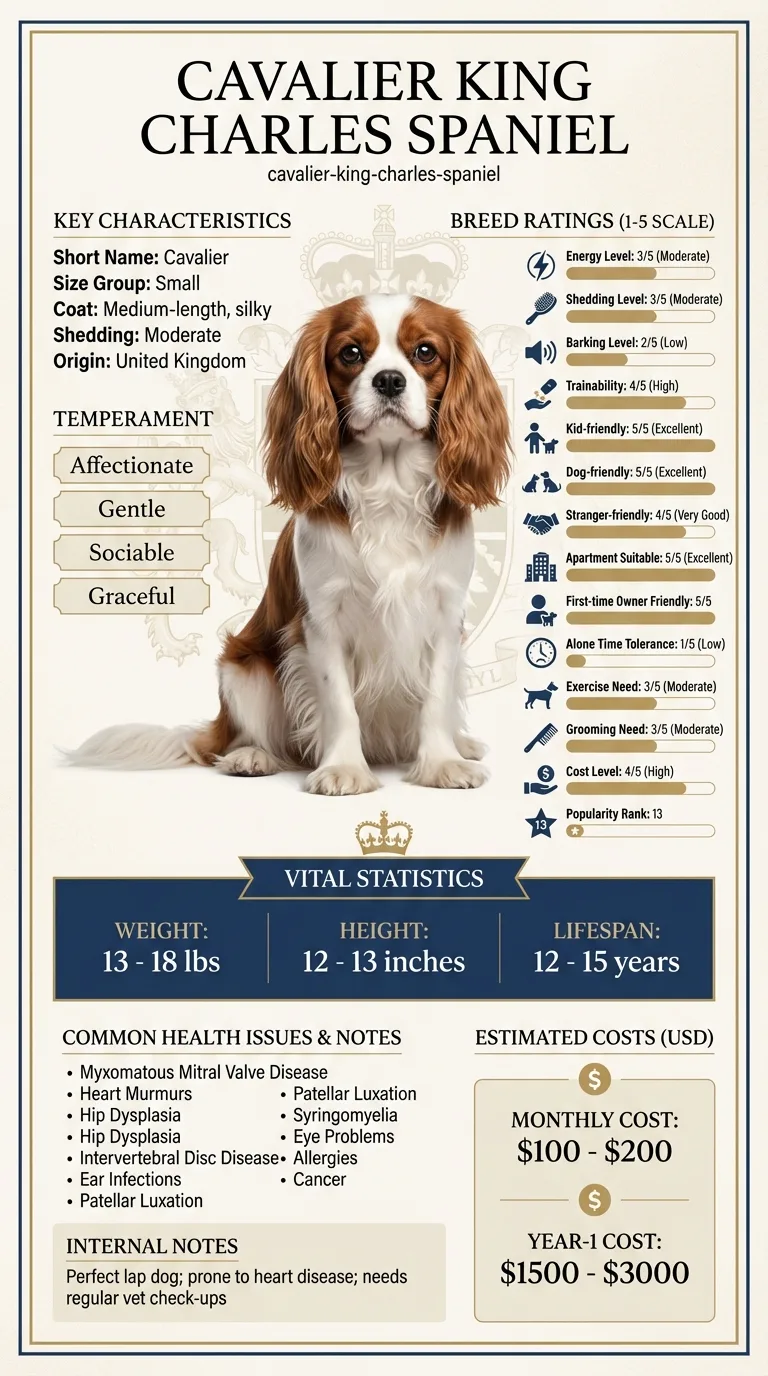
See all Cavalier King Charles Spaniel health problems, which breeds are prone to brachycephalic features, or the full Cavalier King Charles Spaniel breed guide for temperament, exercise needs and ownership costs.
Expect to see improvements in 6 to 12 weeks with consistent care and management.
Success means your Cavalier can breathe comfortably during walks and play, with reduced instances of wheezing or coughing.
Jenna adopted Max, a Cavalier King Charles Spaniel, and soon noticed he struggled to breathe, especially after running. Concerned, Jenna consulted her vet and learned about brachycephalic features. She started a training routine focused on controlled exercise and gradually taught Max to pace himself, ensuring he stayed calm during playtime. Within a couple of months, Max was more energetic and could play without gasping for air.
Key takeaway: With patience and proper training, managing a Cavalier's brachycephalic features is possible, leading to a happier, healthier dog.
Cavalier King Charles Spaniels can have brachycephalic features due to their genetic heritage. These traits lead to shorter snouts and can result in breathing difficulties. If your Cavalier shows signs of distress or labored breathing, it's essential to consult a vet.
While you can't change their anatomy, you can manage their breathing challenges. Ensure your Cavalier maintains a healthy weight and avoid strenuous exercise in hot weather. Regular vet check-ups are crucial to monitor their respiratory health.
Look for signs like snoring, excessive panting, or difficulty breathing during play. If your Cavalier struggles to catch its breath, especially after mild activity, it's time to see a vet. Early intervention can make a significant difference.
Training should focus on gentle commands and positive reinforcement. Avoid high-energy activities that may exacerbate breathing issues. Instead, opt for short, fun sessions that keep your Cavalier engaged without overexertion.
Provide a cool, well-ventilated environment, especially in hot weather. Limit strenuous activities and ensure hydration. Regular grooming can also reduce the risk of overheating by keeping their coat manageable.
Yes, brachycephalic features can lead to significant health issues over time, including respiratory distress and heart problems. Regular veterinary care is essential to catch any potential issues early and ensure your Cavalier's well-being.
Common signs include snoring, difficulty breathing during exercise, and excessive panting. If your Cavalier struggles to breathe or seems fatigued easily, it's time to consult your vet.
Yes, but they may need special care to manage their breathing issues. Regular vet check-ups and avoiding extreme heat or strenuous activities can help them thrive.
If you notice persistent coughing, wheezing, or if your dog is lethargic, it’s best to see a vet. Early intervention can prevent more serious health issues related to their brachycephalic features.
Positive reinforcement training works well for Cavaliers. Focus on short, fun training sessions to keep their stress levels low, especially during warm weather.
Older Cavaliers may require more frequent vet visits and a comfortable living environment. Make sure they have a cool place to rest and monitor their breathing closely.
Keep your Cavalier cool and avoid vigorous exercise, especially in heat. Regular vet visits are crucial to monitor their respiratory health.
Yes, focus on gentle training techniques and short sessions. Avoid high-energy activities to prevent breathing difficulties.
Ensure a healthy weight, provide a cool environment, and limit strenuous activities. Regular vet check-ups are essential.
A one-page prep sheet for this condition: the signs, the questions to ask, what to get priced. Unlocks here.
You get: Vet visit prep sheet
No spam. One-click unsubscribe. See our privacy policy.
Preview page 1 before you decide.