Training
What are quick tips for handling Basset Hound x-scid?
Keep your Basset Hound away from sick dogs and crowded areas. Regular vet check-ups are vital to catch any infections early.

Quick answer
What are quick tips for handling Basset Hound x-scid?
Keep your Basset Hound away from sick dogs and crowded areas. Regular vet check-ups are vital to catch any infections early.
Basset Hound x-scid is a rare but serious condition that affects your dog's immune system.
Typically, Basset Hound owners who may notice frequent illnesses in their pets or have a history of health issues with their dogs face this challenge. It can be particularly concerning for first-time dog owners who may not recognize the signs early.
This guide is not medical advice. If your dog shows pain, sudden behavior change, or worsening symptoms, consult a licensed veterinarian.
Some links may be affiliate links. We may earn a commission at no extra cost to you. We only suggest products we believe are helpful for dog owners.
We research and check what we publish, but we do not warrant that any figure, date, price, or statement is accurate, complete, or current, and we accept no liability for any loss, cost, injury, or other harm arising from the use of this site. Use it as one reference among several. You remain responsible for your own decisions and for your dog's care - confirm anything that matters with a licensed veterinarian or another qualified professional before you act on it. Full disclaimer.
Check this first
Understanding when Basset Hound x-scid becomes an emergency is vital for your pet's health. Red flags include sudden lethargy, persistent vomiting, or severe diarrhea. If your Basset is struggling to breathe or shows signs of swelling, these are immediate calls for veterinary help.
In less urgent cases, you can monitor your dog if they show mild symptoms like occasional sneezing or minor fatigue. Keeping a close eye on them can help manage the situation. It’s wise to have a plan in place for any changes in behavior or health.
Always trust your instincts as a pet owner. If you’re ever in doubt, it's best to err on the side of caution and consult your vet. Early detection can make a significant difference in outcomes for conditions like x-scid.
If any of these apply, call your vet or an emergency clinic now. The rest of this page is for the cases that are not an emergency.
Basset Hound x-scid, or X-Linked Severe Combined Immunodeficiency, can be a challenging condition for both the dog and its owner. This genetic disorder makes it difficult for affected Basset Hounds to fight off infections. As a result, these dogs may experience frequent illnesses, leading to a day-to-day struggle for care and management.
X-scid is a rare condition among Basset Hounds, but it can occur. While not every Basset will develop this issue, awareness and proactive management are essential for those that do.
Basset Hounds, including those with X-SCID, have a genetic predisposition to certain health issues. This breed is known for its calm demeanor but can be prone to severe combined immunodeficiency due to inherited factors. Their unique genetic makeup may lead to a weakened immune system, making them more susceptible to infections.
Environmental factors can also contribute to the severity of X-SCID in Basset Hounds. Stressful situations, such as changes in the household or lack of socialization, can worsen their condition. Additionally, exposure to other sick animals or unsanitary conditions may further increase their risk of health problems.
If you notice symptoms such as frequent infections, lethargy, or unusual behavior, it's crucial to talk to your vet. They can assess your dog’s health and recommend treatments or tests to manage X-SCID effectively.
Ignoring symptoms can lead to serious health complications. If your Basset Hound shows signs of illness, consult your vet promptly. Early detection is critical for managing X-SCID effectively.
Overexerting your Basset during play can strain their immune system. Keep activities calm and controlled to prevent unnecessary stress. Short, gentle walks are usually better than high-energy play.
Neglecting regular vet visits can delay necessary treatments. Schedule check-ups to monitor your dog's health. These visits are crucial for understanding their specific needs.
Using harsh training methods can increase anxiety. Instead, focus on positive reinforcement techniques. This builds trust and encourages good behavior without fear.
Failing to provide a clean environment can expose your Basset to infections. Regularly clean their living area and avoid places where other dogs may have been sick. A tidy space helps keep your dog safe.
Start here: Basset Hound Most Common Genetic Disorders: Screening
See all Basset Hound health problems, which breeds are prone to x scid, or the full Basset Hound breed guide for temperament, exercise needs and ownership costs.
Managing Basset Hound x-scid typically requires a long-term commitment to regular veterinary check-ups and careful monitoring. You should start seeing improvements in your dog's health and vitality within a few months of implementing a tailored care plan.
Success looks like maintaining your Basset Hound's overall health, minimizing symptoms of x-scid, and ensuring they can enjoy life with fewer health-related limitations.
When Sarah adopted Duke, her Basset Hound, she quickly noticed he was more prone to infections than other dogs. After a vet diagnosis of x-scid, Sarah felt overwhelmed but determined. She began a strict routine of regular vet visits, focused on keeping Duke away from sick dogs, and provided him with a high-nutrient diet. Over time, with consistent care, Duke showed improvement in his energy levels and overall health. Sarah learned that while x-scid was a challenge, it was manageable with the right support and vigilance.
Key takeaway: With dedication and the right care plan, owning a dog with Basset Hound x-scid can still lead to a fulfilling companionship.
X-SCID, or Severe Combined Immunodeficiency, is a rare genetic disorder. It affects your Basset Hound's immune system, making them more susceptible to infections. If your dog shows signs of illness, consult your vet for testing and treatment options. This answer relates to Basset Hound x-scid.
Managing X-SCID involves regular veterinary care and monitoring for infections. Keep your Basset Hound away from crowded places where they might catch illnesses. Vaccinations should be discussed with your vet, as some may not be suitable.
Currently, there is no cure for X-SCID, but supportive care can help manage the condition. This may include medication to treat infections and maintaining a clean environment. Regular check-ups with your vet are essential.
X-SCID is an inherited condition, so it cannot be prevented if the dog carries the gene. However, responsible breeding practices can help reduce its occurrence. Choose breeders who screen for genetic disorders.
If your Basset Hound shows symptoms of x-scid, like frequent infections or unusual lethargy, it's important to consult a veterinarian immediately. Early detection can help manage the condition better and improve your dog's quality of life.
While there is no cure for x-scid, some medications can help manage symptoms and improve your older Basset Hound's immune response. Speak to your vet about the best options tailored to your dog's specific needs.
While training a Basset Hound with x-scid is similar to training any Basset, it's crucial to keep their health in mind. Focus on gentle, positive reinforcement techniques and avoid overly strenuous activities that could stress their immune system.
Long-term care for a Basset Hound with x-scid includes regular vet check-ups and maintaining a clean environment to reduce infection risks. Pay close attention to their diet and any changes in behavior, as these can indicate health issues.
Keep your Basset Hound away from sick dogs and crowded areas. Regular vet check-ups are vital to catch any infections early.
Provide a clean and stress-free environment, and consult your vet regarding appropriate vaccinations and treatments.
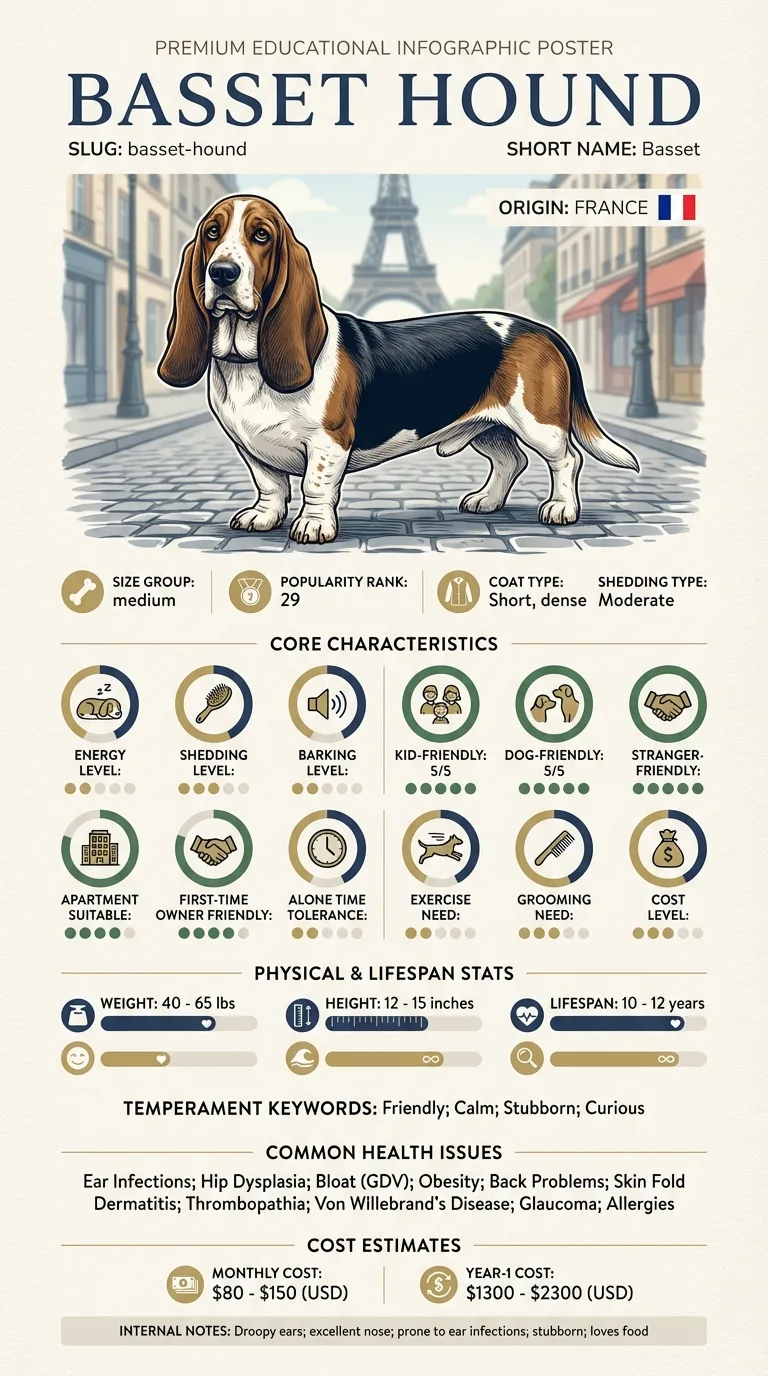
Monthly costs for managing health issues can range from $80 to $150, depending on treatment needs.
Consider using calming aids and training techniques to help ease their anxiety. A structured routine can also provide comfort.
A one-page prep sheet for this condition: the signs, the questions to ask, what to get priced. Unlocks here.
You get: Vet visit prep sheet
No spam. One-click unsubscribe. See our privacy policy.
Preview page 1 before you decide.