Costs
Chihuahua cost in Phoenix
About $52–$100/month, $820–$1,500 for year one — near-average, with real Valley Fever and pavement-heat considerations specific to the Sonoran Desert.

See Chihuahua price across all cities →
Quick answer
Chihuahua cost in Phoenix
About $52–$100/month, $820–$1,500 for year one — near-average, with real Valley Fever and pavement-heat considerations specific to the Sonoran Desert.
A Chihuahua in Phoenix costs about $52–$100 a month, with the first year around $820–$1,500 — close to the national average, in a region with one specific, genuinely regional disease risk.
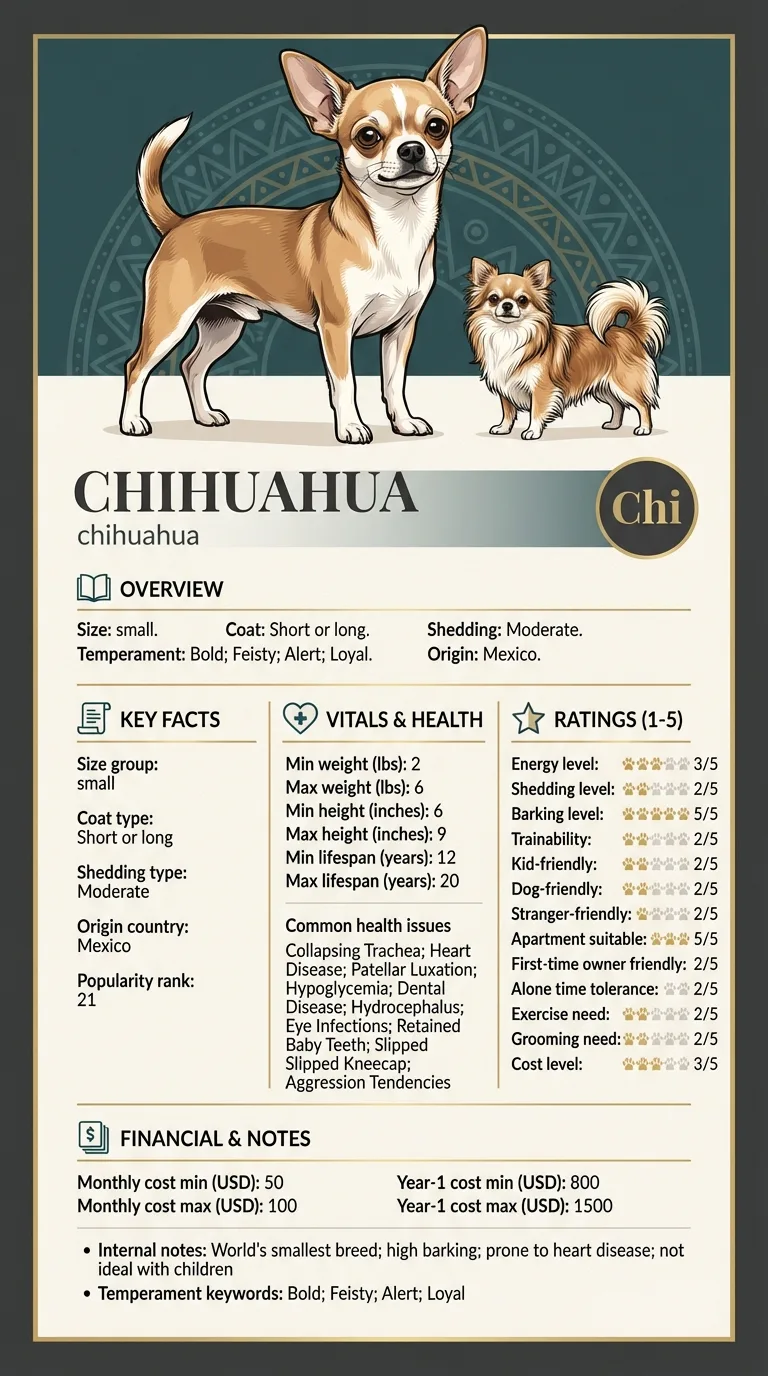
Heart disease and collapsing trachea are the two chronic conditions most worth a vet's early attention in this breed. Hypoglycemia is the acute risk specific to small puppies — a missed meal can turn dangerous fast in a dog this size.
These figures reflect Phoenix's near-national-average general pricing, with summer heat-safety gear and awareness of Valley Fever priced in given the region's specific desert-soil disease risk.
Estimate · source: estimation · confidence: medium · updated 2026-09-05 · not a quote
| Item | Cost range |
|---|---|
Paw protection (summer booties) A genuinely relevant cost given Phoenix's extreme summer pavement temperatures for a dog this small and low to the ground. | $20 - $40 |
One-time setup (initial vet visit, spay/neuter, gear) Covers the first exam, vaccinations, spay/neuter if needed, and basic gear. | $210 - $355 |
| Item | Cost range |
|---|---|
Food Genuinely low given this breed's tiny size, close to the national average for Phoenix's general cost of living. | $13 - $24 |
Flea & tick prevention Lower than a humid climate would show — fleas and ticks generally struggle in Phoenix's dry desert conditions. | $7 - $14 |
Each range starts from a national baseline for this breed's size class and is then adjusted for local cost of living and veterinary pricing. The baselines, and the source each one came from, are listed on our sources page (dataset 2026.09). Two inputs, the purchase price and the emergency reserve, have no published national figure we could verify, so we leave them to you rather than invent them.
These are planning estimates, not quotes. Your own numbers will move with the individual dog, your vet and your insurer. Build a budget with your own figures.
For a Chihuahua in Phoenix, insurance is especially worth taking seriously given the combination of this breed's documented health risks with a genuine, elevated risk of a heat- or Valley-Fever-related emergency specific to this region.
This breed's documented heart disease and dental risk make insurance a genuinely proactive purchase — buy before a diagnosis, not after, since pre-existing conditions won't be covered.
Self-insuring is reasonable for a household that's already earmarked real savings for this exact scenario, rather than assuming they'll figure it out if and when a diagnosis comes.
Phoenix's costs are close to the national average overall, but disciplined summer precautions and Valley Fever awareness are the single most important, cost-relevant habits for this breed here.
Valley Fever, caused by fungal spores that live in Sonoran Desert soil, is a genuinely regional health risk well documented by Phoenix-area vets, contracted when a dog inhales dust kicked up during digging, a windy day, or even a normal walk through disturbed dirt. Symptoms range from a mild, self-resolving cough to a more serious systemic illness requiring extended antifungal treatment, and any persistent cough or lethargy in a Phoenix-area dog is worth mentioning to a vet with this specific regional risk in mind.
Phoenix summer pavement can also exceed 150°F on peak days, and this breed's small size and low ground clearance mean essentially no buffer against that heat — press the back of your hand to the concrete for a slow count of seven before deciding a walk is safe, and treat anything uncomfortable to your own skin as a hard no for the dog's paws.
Phoenix's substantial retiree and snowbird population has supported a genuinely robust local veterinary infrastructure, including several 24-hour emergency practices, and Arizona's dry climate keeps some parasite pressure lower than a humid city despite the year-round warm season.

A Phoenix Chihuahua developed a mild but persistent cough that the owner initially assumed was a minor cold. A vet visit and chest X-ray confirmed Valley Fever, caught early enough that a course of oral antifungal medication resolved it fully over several months, though the treatment and monitoring added a real, unexpected cost to that year's budget.
Key takeaway: In Phoenix specifically, a persistent cough is worth taking to a vet promptly rather than waiting it out — Valley Fever is common enough here that local vets test for it as a matter of course.
About $52–$100, close to the national average for this cost tier, though summer heat-management costs push this toward the higher end of what a similarly priced city elsewhere might show.
Roughly $820–$1,500, including the initial vet exam, spay/neuter if needed, and gear on top of ongoing monthly costs.
A real, regional fungal disease from spores in Sonoran Desert soil, contracted by inhaling dust from disturbed dirt. It's not unique to this breed, but any persistent cough or lethargy in a Phoenix-area dog is worth mentioning to a vet with it in mind.
Genuinely, yes — asphalt can exceed 150°F on peak summer days, and this breed's small size and low ground clearance mean essentially no buffer against it. The seven-second hand test before any summer walk is a real, necessary precaution.
Worth pricing out given the breed's documented heart disease and dental risk, bought while the dog is young and before anything is on record.
Around $430 covers a typical significant vet visit in this market, reflecting both the national baseline and the real added risk of a heat- or Valley-Fever-related visit here.
About $52–$100/month, $820–$1,500 for year one — near-average, with real Valley Fever and pavement-heat considerations specific to the Sonoran Desert.
This guide is not medical advice. If your dog shows pain, sudden behavior change, or worsening symptoms, consult a licensed veterinarian.
Some links may be affiliate links. We may earn a commission at no extra cost to you. We only suggest products we believe are helpful for dog owners.
We research and check what we publish, but we do not warrant that any figure, date, price, or statement is accurate, complete, or current, and we accept no liability for any loss, cost, injury, or other harm arising from the use of this site. Use it as one reference among several. You remain responsible for your own decisions and for your dog's care - confirm anything that matters with a licensed veterinarian or another qualified professional before you act on it. Full disclaimer.
One sheet with every line item, the emergency fund and when insurance pays off - unlocks on this page.
You get: 12-month budget sheet
No spam. One-click unsubscribe. See our privacy policy.
Preview page 1 before you decide.