Costs
Chihuahua cost in Baltimore
About $50–$96/month, $780–$1,430 for year one — near average, a genuinely good rowhouse fit, with one real rodenticide risk worth managing.

See Chihuahua price across all cities →
Quick answer
Chihuahua cost in Baltimore
About $50–$96/month, $780–$1,430 for year one — near average, a genuinely good rowhouse fit, with one real rodenticide risk worth managing.
A Chihuahua in Baltimore costs about $50–$96 a month, with the first year around $780–$1,430 — close to the national average, in a rowhouse city that suits this breed's tiny footprint well.
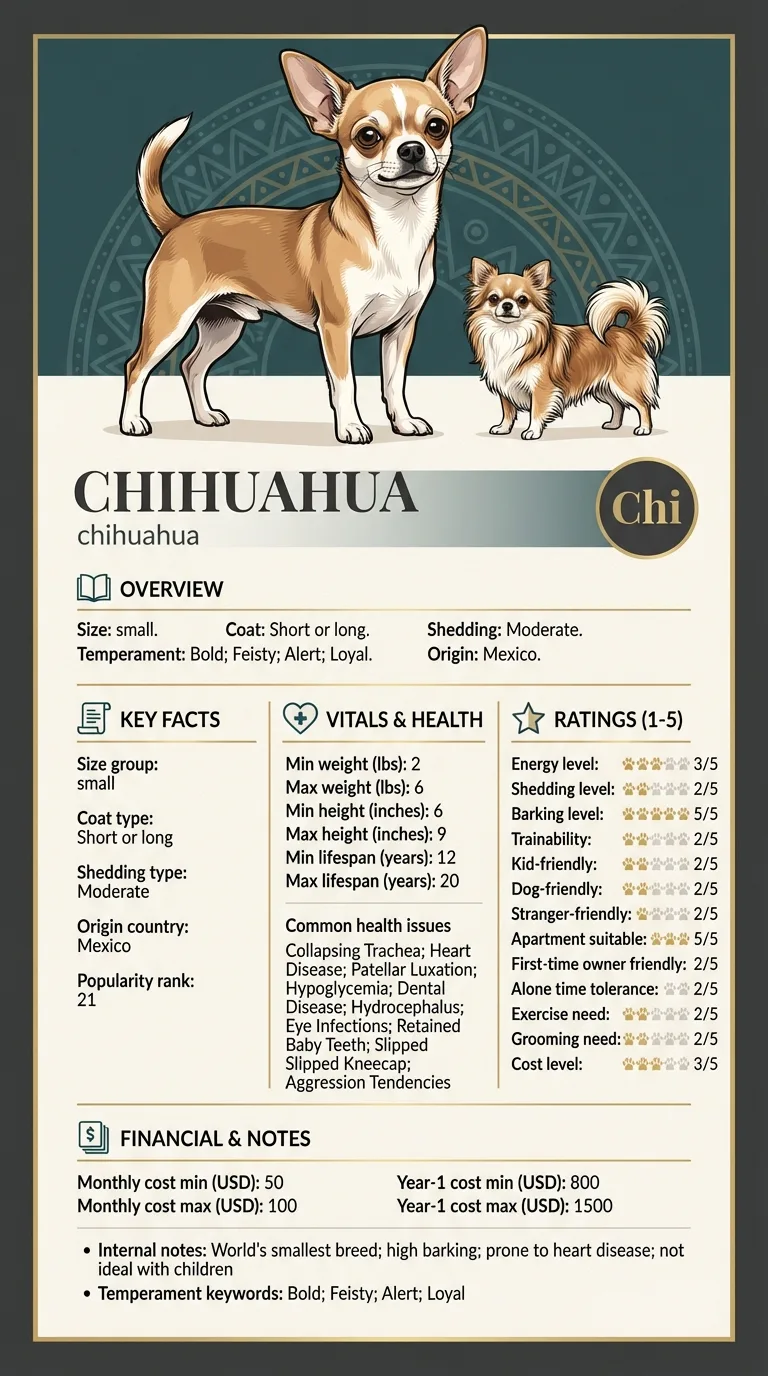
Heart disease and collapsing trachea are the two chronic conditions most worth a vet's early attention in this breed. Hypoglycemia is the acute risk specific to small puppies — a missed meal can turn dangerous fast in a dog this size.
These figures reflect Baltimore's modestly above-national-average pricing, with a note that this breed avoids the dog-walking cost many larger-breed rowhouse owners face here.
Estimate · source: estimation · confidence: medium · updated 2026-09-05 · not a quote
| Item | Cost range |
|---|---|
One-time setup (initial vet visit, spay/neuter, gear) Covers the first exam, vaccinations, spay/neuter if needed, and basic gear. | $220 - $370 |
| Item | Cost range |
|---|---|
Food Genuinely low given this breed's tiny size, close to national-average pricing for Baltimore's general cost of living. | $13 - $23 |
Flea & tick prevention Maryland's temperate climate keeps this seasonal rather than year-round. | $8 - $16 |
Grooming Most owners handle basic brushing at home for both the short- and long-coat variety without frequent professional grooming. | $5 - $12 |
Each range starts from a national baseline for this breed's size class and is then adjusted for local cost of living and veterinary pricing. The baselines, and the source each one came from, are listed on our sources page (dataset 2026.09). Two inputs, the purchase price and the emergency reserve, have no published national figure we could verify, so we leave them to you rather than invent them.
These are planning estimates, not quotes. Your own numbers will move with the individual dog, your vet and your insurer. Build a budget with your own figures.
For a Chihuahua in Baltimore, insurance is worth taking seriously given the breed's documented heart disease and collapsing trachea risk, and it also covers the genuine, if uncommon, cost of treating an accidental rodenticide exposure.
This breed's real heart-disease and tracheal-collapse statistics make insurance worth locking in early — a policy bought before any diagnosis covers costs a self-funded emergency fund alone often can't stretch to match.
Owners with a solid emergency fund and the discipline to leave it untouched for anything but a genuine vet emergency can reasonably self-insure instead.
Baltimore's modestly above-average costs are eased by this breed's genuine fit with rowhouse living; the real added planning here is alley and yard safety, not routine cost-cutting.
Baltimore's rowhouse-heavy neighborhoods, often without much private yard space, make dog-walking a realistic recurring cost for a lot of local owners with larger, more active breeds. A Chihuahua is a real exception to that pattern: this breed's low exercise needs and tiny size mean a small rowhouse or apartment, even without outdoor space, is a genuinely comfortable fit rather than a compromise.
What is worth real attention here is Baltimore's documented urban rat population, addressed through both city and private rodenticide baiting in alleys and small rowhouse yards. A dog under six pounds has a far lower toxicity threshold than a larger breed, and secondary poisoning from eating a poisoned rodent, or the bait itself if left accessible, is a genuine risk worth being deliberate about during any unsupervised yard or alley time.
Baltimore's general cost of living runs modestly above the national average, and Maryland's temperate climate keeps flea-and-tick prevention seasonal rather than year-round.

A Baltimore Chihuahua owner let their dog out briefly into a small fenced rowhouse yard one evening and noticed the dog sniffing intently at something near the fence line. A closer look revealed a rodenticide bait station placed by a neighbor, unmarked and easily accessible. The owner switched to always leashing the dog for yard time afterward and asked neighbors to flag any bait placement going forward.
Key takeaway: In Baltimore specifically, a dog this small and light can't be assumed safe in even a familiar small yard without checking for rodenticide bait — a real, low-cost habit worth building given the city's documented rat population.
About $50–$96, close to the national average, consistent with Baltimore's modestly above-average general cost of living.
Roughly $780–$1,430, including the initial vet exam, spay/neuter if needed, and gear on top of ongoing monthly costs.
Genuinely, yes — this breed's low exercise needs and tiny size make a yard-free rowhouse or apartment a comfortable fit, unlike the real dog-walking cost a larger, more active breed often faces here.
A genuine one worth attention — Baltimore's documented urban rat population means bait shows up in alleys and small yards, and a dog under six pounds has a far lower toxicity threshold than a larger breed if exposed.
Worth pricing out given the breed's documented heart disease and dental risk, bought while the dog is young and before anything is on record.
Around $410 covers a typical significant vet visit in this market, reflecting Baltimore's modestly above-average general pricing.
About $50–$96/month, $780–$1,430 for year one — near average, a genuinely good rowhouse fit, with one real rodenticide risk worth managing.
This guide is not medical advice. If your dog shows pain, sudden behavior change, or worsening symptoms, consult a licensed veterinarian.
Some links may be affiliate links. We may earn a commission at no extra cost to you. We only suggest products we believe are helpful for dog owners.
We research and check what we publish, but we do not warrant that any figure, date, price, or statement is accurate, complete, or current, and we accept no liability for any loss, cost, injury, or other harm arising from the use of this site. Use it as one reference among several. You remain responsible for your own decisions and for your dog's care - confirm anything that matters with a licensed veterinarian or another qualified professional before you act on it. Full disclaimer.
One sheet with every line item, the emergency fund and when insurance pays off - unlocks on this page.
You get: 12-month budget sheet
No spam. One-click unsubscribe. See our privacy policy.
Preview page 1 before you decide.