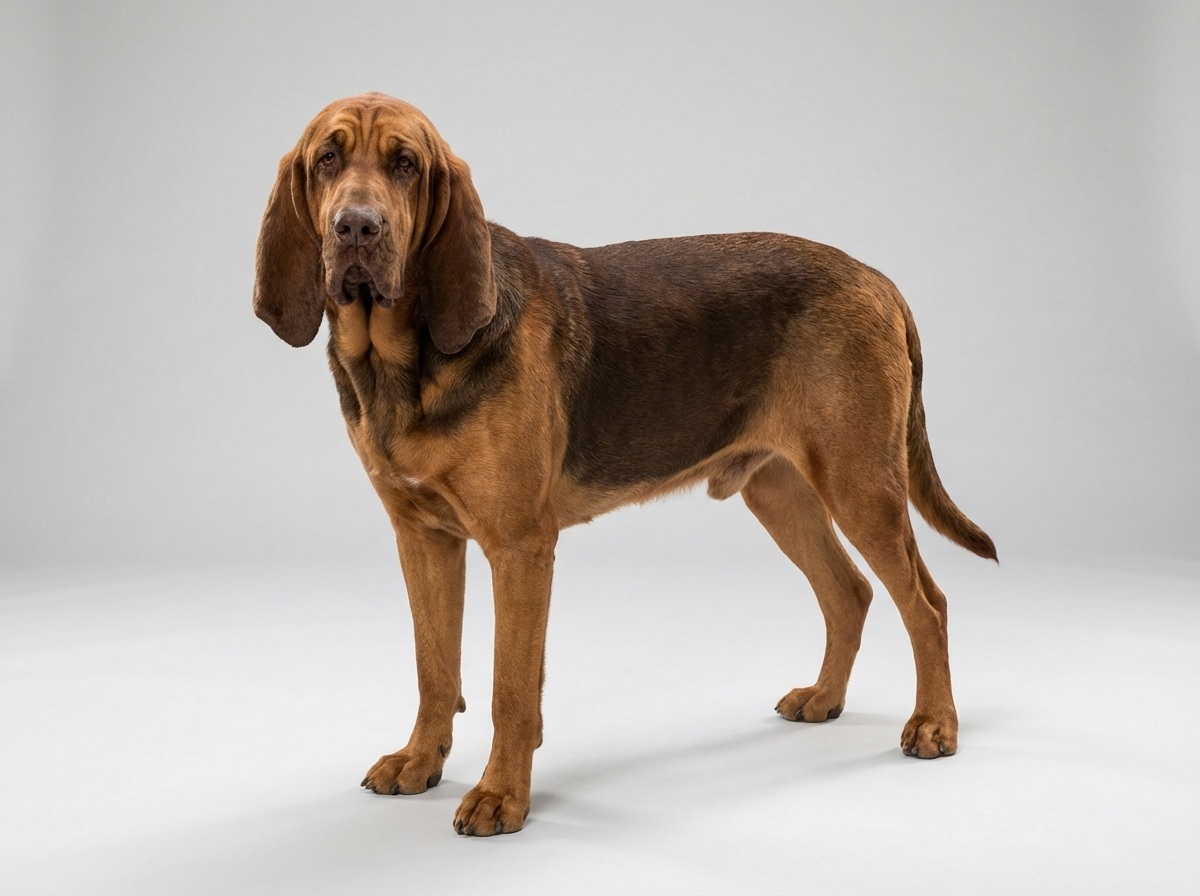
Costs
Bloodhound cost in Columbus
About $110–$210/month, $1,650–$2,950 for year one — average Midwest pricing, with real eyelid-surgery and ear-care costs specific to this breed.

See Bloodhound price across all cities →
Quick answer
Bloodhound cost in Columbus
About $110–$210/month, $1,650–$2,950 for year one — average Midwest pricing, with real eyelid-surgery and ear-care costs specific to this breed.
A Bloodhound in Columbus costs about $110–$210 a month, with the first year around $1,650–$2,950 — close to the Midwest average, with two genuinely common breed-specific procedures worth planning for.
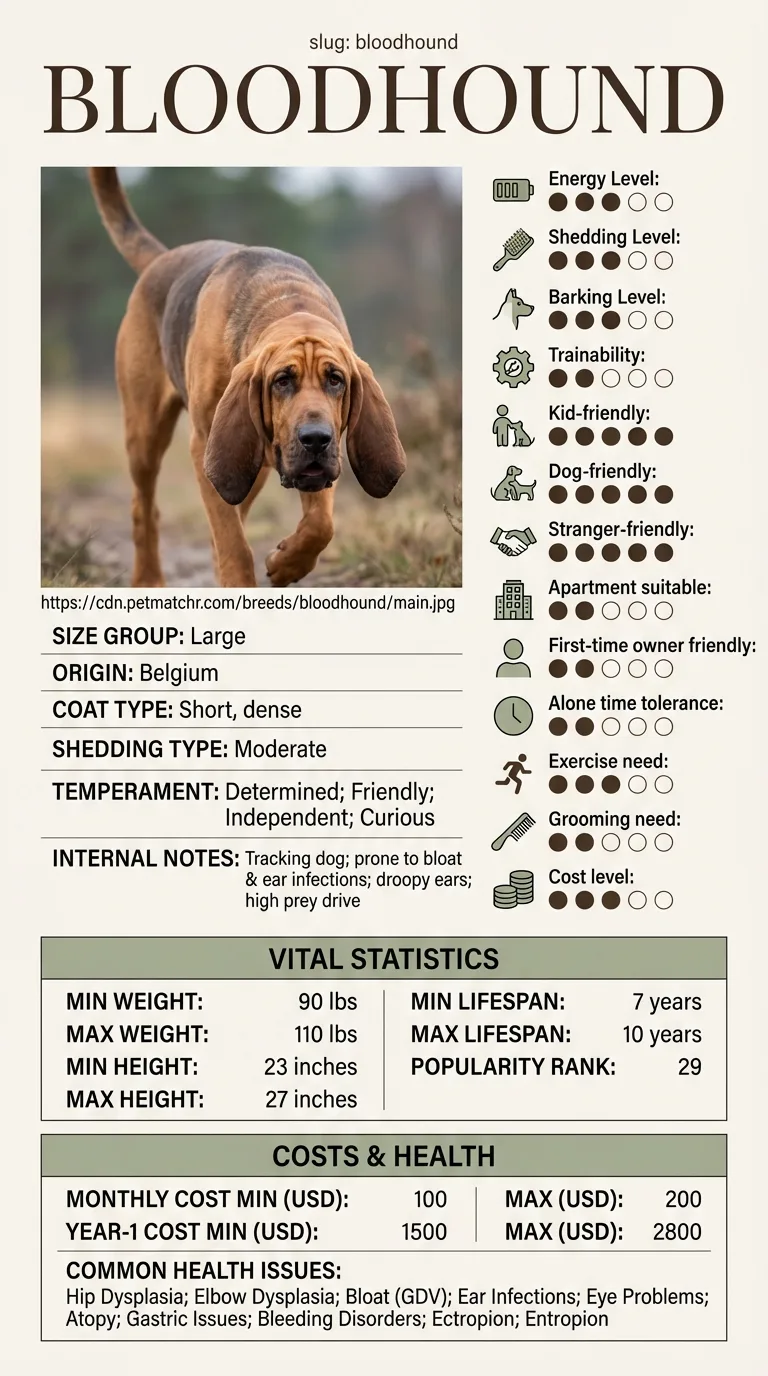
Bloat (GDV) is a sudden true emergency this breed carries a well-documented elevated risk for, requiring immediate surgery. Hip and elbow dysplasia, along with a documented tendency toward bleeding disorders, are separate risks worth discussing with a vet, particularly before any surgical procedure.
These figures reflect Columbus's near-Midwest-average general pricing, with ear-care and a potential eyelid-surgery line item added given this breed's well-documented skin-related conditions, and a note on the city's unusually accessible veterinary ophthalmology specialty.
Estimate · source: estimation · confidence: medium · updated 2026-09-05 · not a quote
| Item | Cost range |
|---|---|
Eyelid-correction surgery (if needed) Ectropion or entropion correction is common enough in this breed that many owners eventually face this decision; not every dog needs it, but it's worth budgeting for as a real possibility. | $800 - $1800 |
One-time setup (initial vet visit, spay/neuter, gear) Covers the first exam, vaccinations, spay/neuter if needed, and gear sized for the breed's large adult frame. | $345 - $590 |
| Item | Cost range |
|---|---|
Food Sized for the breed's large adult frame; close to the Midwest regional average. | $48 - $78 |
Ear cleaning supplies and treatment A near-universal recurring cost for this breed's long, low-hanging ears, which trap moisture and debris more than an upright-eared breed's. | $10 - $22 |
Flea & tick prevention Clearly seasonal given Ohio's real four-season climate. | $11 - $21 |
Each range starts from a national baseline for this breed's size class and is then adjusted for local cost of living and veterinary pricing. The baselines, and the source each one came from, are listed on our sources page (dataset 2026.09). Two inputs, the purchase price and the emergency reserve, have no published national figure we could verify, so we leave them to you rather than invent them.
These are planning estimates, not quotes. Your own numbers will move with the individual dog, your vet and your insurer. Build a budget with your own figures.
For a Bloodhound in Columbus, insurance is worth taking seriously given the breed's documented bloat risk and the genuine possibility of eyelid-correction surgery, a cost most breeds this site covers don't routinely face.
Given how commonly ectropion or entropion correction comes up in this breed, alongside its bloat risk, insurance purchased while the dog is young and healthy is worth pricing out seriously rather than relying on an emergency fund alone.
Owners who've set aside a solid emergency fund and are comfortable managing both a possible eyelid surgery and, if it arises, a bloat emergency themselves can reasonably self-insure instead.
Columbus's near-average costs mean the real savings lever for this specific breed is consistent ear care and early awareness of eyelid conditions, both genuinely preventable escalations.
A Bloodhound's loose, deeply wrinkled skin is central to what makes it the world's premier tracking breed — those folds trap and hold scent particles longer than a tighter-skinned dog's coat would — but the same anatomy predisposes the breed to ectropion (an outward-rolling lower eyelid) and entropion (an inward-rolling eyelid that can irritate the cornea), both common enough in this breed that a corrective surgery conversation comes up for a meaningful share of owners at some point, not a rare complication.
The breed's long, low-hanging ears are a related, near-universal cost: they trap moisture and debris more than an upright-eared breed's, making ear infections one of this breed's most frequent vet-visit reasons, and a consistent weekly cleaning routine is genuinely the highest-value habit an owner can build from the start.
Columbus's general cost of living tracks close to the broader Midwest average, and Ohio State University's veterinary teaching hospital includes an ophthalmology specialty directly relevant to this breed's eyelid conditions, a genuinely useful local resource rather than requiring a longer referral trip. Ohio's real winters keep flea-and-tick prevention clearly seasonal.

A Columbus Bloodhound owner noticed their dog squinting and tearing up on one side during a routine grooming session and mentioned it at the next scheduled vet visit rather than waiting. The vet diagnosed early-stage entropion and referred the family to a veterinary ophthalmologist through OSU's teaching hospital, where a relatively straightforward corrective procedure resolved the issue before it caused any corneal damage.
Key takeaway: For a breed this prone to eyelid conditions, mentioning subtle symptoms early rather than waiting for them to worsen can mean a simpler, less expensive procedure and a better outcome for the dog's eye health.
About $110–$210, close to the broader Midwest average across most categories.
Roughly $1,650–$2,950, including the initial vet exam, spay/neuter if needed, and gear on top of ongoing monthly costs.
Ectropion is an outward-rolling eyelid, entropion an inward-rolling one that can irritate the cornea — both are common in this breed given its loose facial skin, common enough that many owners eventually face a corrective surgery decision. Ohio State's veterinary ophthalmology specialty is a genuinely useful local resource for this.
Weekly is a reasonable baseline — this breed's long, low-hanging ears trap moisture and debris more than an upright-eared breed's, making ear infections one of the most common reasons for a vet visit, and consistent cleaning is the highest-value preventive habit.
Worth pricing out given the breed's documented bloat risk and the real possibility of eyelid-correction surgery, bought while the dog is young and before anything is on record.
Around $700 covers a typical significant vet visit in this market. Bloat surgery specifically can run well beyond a routine visit, so a plan and insurance are worth considering alongside a cash reserve.
About $110–$210/month, $1,650–$2,950 for year one — average Midwest pricing, with real eyelid-surgery and ear-care costs specific to this breed.
This guide is not medical advice. If your dog shows pain, sudden behavior change, or worsening symptoms, consult a licensed veterinarian.
Some links may be affiliate links. We may earn a commission at no extra cost to you. We only suggest products we believe are helpful for dog owners.
We research and check what we publish, but we do not warrant that any figure, date, price, or statement is accurate, complete, or current, and we accept no liability for any loss, cost, injury, or other harm arising from the use of this site. Use it as one reference among several. You remain responsible for your own decisions and for your dog's care - confirm anything that matters with a licensed veterinarian or another qualified professional before you act on it. Full disclaimer.
One sheet with every line item, the emergency fund and when insurance pays off - unlocks on this page.
You get: 12-month budget sheet
No spam. One-click unsubscribe. See our privacy policy.
Preview page 1 before you decide.