DogBreedCompass
← Back to breed profile

Understanding Bloodhound Most Common Genetic Disorders

Bloodhounds are known for their incredible tracking abilities, but they can also face a range of genetic disorders. Understanding these issues is crucial for ensuring your dog's health and happiness. (Bloodhound most common genetic disorders)

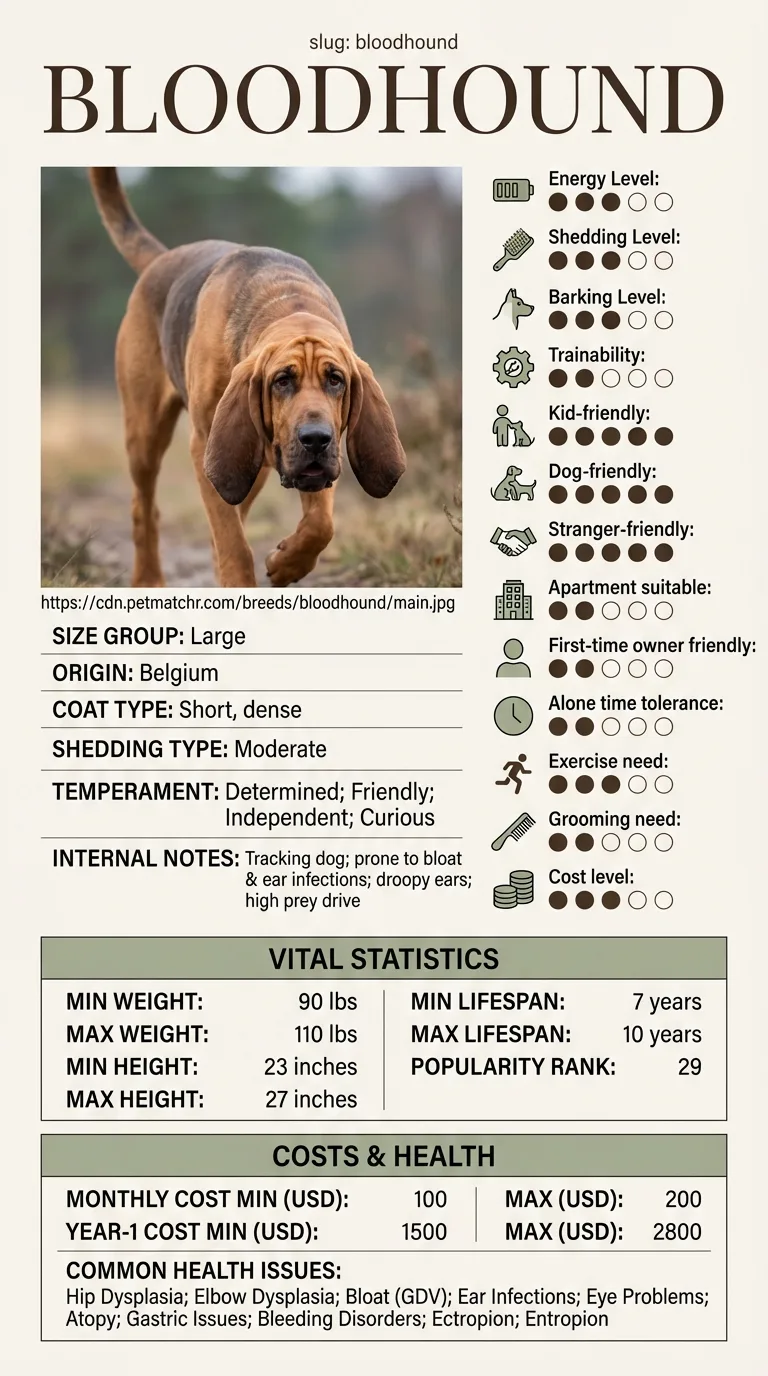
Understanding Bloodhound Most Common Genetic Disorders infographic

Owners of Bloodhounds, especially first-time dog parents or those living in busy households, often struggle with these genetic health issues. It’s vital for them to be aware of these conditions to provide the best care possible.

Important reminder

This guide is not medical advice. If your dog shows pain, sudden behavior change, or worsening symptoms, consult a licensed veterinarian.

Some links may be affiliate links. We may earn a commission at no extra cost to you. We only suggest products we believe are helpful for dog owners.

What this problem looks like

Bloodhounds are known for their friendly and curious nature, but they can also be prone to several genetic disorders. Common issues include hip and elbow dysplasia, bloat, and various eye problems. These conditions can affect their quality of life and may require ongoing veterinary care.

Common triggers

  • Genetics from breeding practices
  • Age-related changes
  • Obesity from improper diet or lack of exercise
  • Inadequate veterinary care or early detection

Genetic disorders are relatively common in Bloodhounds, particularly due to their breeding for specific traits. As a large breed, they can also face more health challenges as they age, making awareness and preventive care essential.

Why this happens

Breed factors

Bloodhounds are prone to several genetic disorders, including hip dysplasia, elbow dysplasia, and specific eye problems. These issues often arise from their breeding history, where certain traits were favored over health considerations. Additionally, their large size contributes to problems like bloat, which can be life-threatening.

Environment factors

Environmental factors can exacerbate genetic predispositions. Poor diet, lack of exercise, and inadequate healthcare can lead to weight gain, which stresses their joints. Furthermore, if they are not socialized properly, they might develop behavioral issues that mimic genetic disorders.

What you can try

At-home strategies

  • Provide a balanced diet tailored to large breeds, focusing on joint health. Consult your vet for recommendations on supplements.
  • Engage your Bloodhound in regular, moderate exercise to maintain a healthy weight and reduce strain on their joints. Aim for at least 30 to 60 minutes of activity each day.
  • Monitor your Bloodhound for signs of discomfort or unusual behavior. Early detection can help manage health issues before they escalate.

When to consider a trainer

If your Bloodhound shows signs of anxiety, aggression, or other behavioral problems, consider hiring a professional trainer. Trainers can provide tailored strategies to address these issues effectively.

When to talk to your vet

Consult your vet if you notice symptoms like limping, excessive drooling, or changes in appetite. Regular check-ups are essential for early detection of genetic disorders, especially as your dog ages.

Realistic expectations

You can expect to see some improvements in your Bloodhound's health within 6 months to a year of implementing preventive measures and regular vet check-ups.

Success means your Bloodhound shows fewer signs of discomfort or health issues, maintains a healthy weight, and enjoys a good quality of life.

Mistakes that make this worse – Bloodhound most common genetic disorders

Avoiding common pitfalls is essential when managing Bloodhound most common genetic disorders. Here are some mistakes that could hinder progress and what to do instead.

  • Ignoring health screenings: Failing to schedule regular vet check-ups can lead to undiagnosed conditions. Instead, prioritize regular health screenings to catch issues early.
  • Neglecting exercise: Overlooking your Bloodhound's need for physical activity can exacerbate genetic disorders. Ensure they get daily exercise tailored to their needs.
  • Poor diet choices: Feeding low-quality food can worsen health problems. Invest in a nutritious diet that supports your Bloodhound's overall health.
  • Inconsistent training: Inconsistent or harsh training methods may increase anxiety and behavioral issues. Use positive reinforcement consistently to foster a trusting relationship.
  • Delaying treatment: Waiting too long to address health issues can lead to severe complications. Contact your vet promptly if you notice any concerning signs.
  • Lack of socialization: Not exposing your Bloodhound to different environments can lead to behavioral problems. Gradually introduce them to new experiences to build confidence.
  • Overlooking genetics: Dismissing the importance of genetic predispositions can lead to preventable issues. Research your Bloodhound's lineage and be aware of specific genetic concerns.

When Bloodhound Genetic Disorders Are an Emergency

Not all genetic disorders in Bloodhounds require immediate action. However, some signs indicate you should call your vet right away. If your Bloodhound shows symptoms like severe lethargy, difficulty breathing, or persistent vomiting, these are red flags. Other urgent signs include sudden swelling in the abdomen or unusual bleeding, which may indicate serious conditions like bloat or bleeding disorders.

On the other hand, if your Bloodhound has mild symptoms such as occasional limping or mild ear infections, you might monitor them for a few days. Keep notes on any changes in behavior or physical condition. It can help to create a simple observation plan, checking in on their eating, drinking, and activity levels.

If the symptoms worsen or don’t improve in a few days, reach out to your vet. Early intervention can make a significant difference in treatment outcomes for Bloodhounds prone to genetic disorders. Always err on the side of caution when it comes to your furry friend's health.

Understanding Bloodhound Most Common Genetic Disorders - When Bloodhound Genetic Disorders Are an Emergency

Jessica's Journey with Max: A Bloodhound's Health Struggles

Jessica, a first-time dog owner, adopted Max, a lively Bloodhound. Soon after bringing him home, she noticed Max was limping and had difficulty getting up after naps. After a vet visit, Jessica learned that Max had hip dysplasia, a common issue in Bloodhounds. Determined to help her furry friend, Jessica started a regimen of controlled exercise, joint supplements, and regular vet visits. Over time, Max became more active and comfortable, allowing them to enjoy their daily walks together.

Key takeaway: With the right care and attention, you can manage common genetic disorders in Bloodhounds, leading to a happier, healthier dog.

Frequently asked questions

What are the most common genetic disorders in Bloodhounds?

Bloodhounds are prone to several genetic disorders, including hip dysplasia, elbow dysplasia, and bloat. They can also suffer from ear infections and eye problems. Regular vet check-ups can help catch these issues early. This answer relates to Bloodhound most common genetic disorders.

Why does my Bloodhound have most common genetic disorders?

Genetic disorders often arise from breeding practices that emphasize certain traits over health. In Bloodhounds, factors like hip dysplasia and ear infections are particularly common due to their anatomy and lineage. Responsible breeding and health screenings can reduce these risks.

How can I help my Bloodhound with genetic disorders?

To help manage genetic disorders in your Bloodhound, ensure they receive regular veterinary care and maintain a healthy diet. Weight management is crucial, especially for those prone to bloat. Training can also help improve their overall health and well-being.

What training can help with Bloodhound genetic disorders?

Training your Bloodhound can help mitigate some issues related to their genetic disorders. Focus on obedience training to manage their behavior and reduce stress. Regular exercise can also improve their physical health and alleviate some symptoms.

Are Bloodhounds more likely to develop genetic disorders than other breeds?

Yes, Bloodhounds are more susceptible to certain genetic disorders compared to mixed breeds. Their purebred status can lead to inherited health issues like hip dysplasia and bloat. It's essential to be aware of these risks when considering this breed.

What should I do if my Bloodhound shows signs of a genetic disorder?

If your Bloodhound shows signs of a genetic disorder, it's crucial to consult with a veterinarian as soon as possible. Early diagnosis can lead to better management and treatment options. Be prepared to discuss your dog's symptoms and any family history of health issues.

Can Bloodhound genetic disorders affect older dogs differently?

Yes, older Bloodhounds may experience genetic disorders more acutely due to their age. Conditions like hip dysplasia can worsen over time, leading to increased pain or mobility issues. Regular vet check-ups are essential to monitor their health and adjust care as needed.

How can I prevent genetic disorders in my Bloodhound?

While you can't completely prevent genetic disorders, you can reduce risks by choosing a reputable breeder who tests for common genetic issues. Additionally, maintaining a healthy diet and regular exercise can help keep your Bloodhound in good shape. Early training and socialization can also mitigate some behavior problems.

What are the signs of bloat in Bloodhounds?

Signs of bloat in Bloodhounds include a swollen abdomen, restlessness, drooling, and attempts to vomit without success. This is a serious condition that requires immediate veterinary attention. If you notice these symptoms, take your dog to the vet without delay.

Are Bloodhounds prone to ear infections due to their genetics?

Yes, Bloodhounds are genetically predisposed to ear infections because of their floppy ears, which can trap moisture and dirt. Regular ear cleaning and inspections are essential to prevent infections. If you notice any signs of discomfort or discharge, consult your vet.

Quick answers

View more answers
Health

What are quick tips for managing Bloodhound most common genetic disorders?

Regular vet visits and a healthy diet are key for Bloodhounds. Ensure they get plenty of exercise to maintain a healthy weight and consult your vet for specific health screenings.

Costs

How much do Bloodhound most common genetic disorders cost to treat?

Treating genetic disorders in Bloodhounds can range from a few hundred to several thousand dollars, depending on the issue. Regular vet visits can help prevent costly treatments.

Living

What living conditions are best for a Bloodhound with genetic disorders?

Bloodhounds thrive in homes with space to roam and play. They do best in environments where they can avoid stress and receive regular exercise.

Training

Can training help prevent Bloodhound genetic disorders?

While training can't prevent genetic disorders, it can improve behavior and overall health. Regular exercise and mental stimulation are important for their well-being.

Behavior

Why is it important to know about Bloodhound genetic disorders?

Understanding genetic disorders in Bloodhounds helps owners make informed decisions about care and training. Awareness can lead to better health outcomes for your dog.

Related DogBreedCompass guides

  • Bloodhound behavior problemsLearn about common health issues that can affect Bloodhounds and how to manage them.
  • Bloodhound separation anxiety guideFind out how to support a Bloodhound with separation anxiety and improve their well-being.
  • Bloodhound health issues overviewDiscover the most common health issues and genetic disorders in Bloodhounds.
  • Bloodhound cost breakdownUnderstand the costs associated with owning a Bloodhound, including medical expenses.
  • Bloodhound training techniquesExplore training tips that can help mitigate common genetic disorders in Bloodhounds.

Related guides