Understanding Bloodhound Allergies: Causes and Solutions
Bloodhound allergies can be a frustrating challenge for owners. These allergies often lead to discomfort and health issues for your furry friend.
Typically, owners of Bloodhounds may struggle with allergies, especially if they live in areas with pollen or other allergens. New owners or those who are unfamiliar with dog allergies might find it particularly challenging to recognize and manage these issues.
Important reminder
This guide is not medical advice. If your dog shows pain, sudden behavior change, or worsening symptoms, consult a licensed veterinarian.
Some links may be affiliate links. We may earn a commission at no extra cost to you. We only suggest products we believe are helpful for dog owners.
What this problem looks like
Bloodhound allergies can be a frustrating issue for owners. These large, friendly dogs may suffer from food and environmental allergies, leading to symptoms like itchy skin, ear infections, and gastrointestinal problems. Daily life can involve frequent visits to the vet, managing their diet, and finding the right medications to ease discomfort.
Common triggers
Certain foods or ingredients in their diet
Environmental factors like pollen or dust mites
Fleas or other pests
Chemical irritants from household cleaners or grooming products
Allergies are fairly common in Bloodhounds, especially since they have sensitive skin and are prone to chronic ear infections. Many owners report dealing with allergy-related issues at some point, making it essential to be proactive about their health and environment.
Why this happens
Breed factors
Bloodhounds may be more prone to allergies due to their genetic makeup. Their droopy ears can trap moisture, leading to infections and allergic reactions. Additionally, their sensitive skin may react to various allergens in their environment.
Environment factors
Environmental factors such as pollen, dust mites, and mold can trigger allergies in Bloodhounds. Changes in climate or exposure to new substances, like cleaning products or certain foods, can also contribute to allergy symptoms.
What you can try
At-home strategies
Keep your Bloodhound's environment clean by vacuuming regularly and using air purifiers to reduce allergens.
Bathe your dog with hypoallergenic shampoo to soothe irritated skin. Aim for once every few weeks, but consult your vet for personalized advice.
Monitor their food intake and consider switching to a limited ingredient diet if food allergies are suspected. Introduce new foods gradually.
When to consider a trainer
If your Bloodhound's allergy symptoms lead to behavioral changes, like increased anxiety or aggression, consider working with a trainer. They can help you manage these behaviors while addressing the allergies.
When to talk to your vet
Consult your vet if your Bloodhound shows persistent symptoms such as itching, ear infections, or gastrointestinal issues. They can recommend allergy testing, medications, or dietary changes to help manage the condition.
Realistic expectations
Expect to see improvement within 4 to 8 weeks after starting a treatment plan.
Success means your Bloodhound experiences fewer allergy symptoms, such as itching or ear infections, allowing them to enjoy daily activities without discomfort.
Mistakes that make this worse
Avoiding these common mistakes can help manage your Bloodhound's allergies effectively.
Ignoring symptoms: Many owners overlook signs of allergies, like itching or redness. Early intervention can prevent worsening conditions.
Using human medications: Some human allergy medications aren't safe for dogs. Always consult your vet before administering any medication.
Skipping regular grooming: Bloodhounds need grooming to reduce allergens in their coat. Regular brushing helps minimize skin irritations.
Not adjusting diet: Many allergies stem from food. Failing to change your Bloodhound's diet can keep them suffering. Talk to your vet about a hypoallergenic diet.
Neglecting cleaning routines: Dust and pollen can worsen allergies. A regular cleaning schedule for your home can significantly reduce exposure to allergens.
Using harsh cleaning products: Strong chemicals can irritate your dog's skin. Opt for pet-friendly cleaning supplies to help maintain a safe environment.
Failing to identify triggers: Without identifying what causes your Bloodhound's allergies, you can't effectively manage them. Keep a diary of symptoms and possible triggers.
When Bloodhound Allergies Are an Emergency
Recognizing when Bloodhound allergies require immediate veterinary attention is crucial for your dog's health. Certain signs indicate that you should act quickly. If your Bloodhound experiences severe itching, swelling, or difficulty breathing, it is time to call your vet immediately. These symptoms could signal a severe allergic reaction or anaphylaxis, which can be life-threatening.
Other red flags include persistent vomiting or diarrhea, especially if accompanied by blood. If your dog shows signs of extreme lethargy or unresponsiveness, this could indicate a serious reaction that needs urgent care. In these cases, swift action can make all the difference.
On the other hand, mild allergy symptoms can often be monitored at home. If your Bloodhound has occasional sneezing, mild itching, or skin irritations without swelling or severe distress, you can develop a plan to manage these issues. Keeping a close eye on their symptoms and documenting any changes can help you and your vet determine the best course of action. Regular baths with hypoallergenic shampoo and maintaining a clean environment can also support your Bloodhound’s health. Always remember, if you're unsure, it’s better to err on the side of caution and consult your veterinarian.

Understanding Bloodhound Allergies: Causes and Solutions - When Bloodhound Allergies Are an Emergency
Finding Relief for Max the Bloodhound
When Sarah adopted Max, her playful Bloodhound, she noticed he frequently scratched and had red patches on his skin. After a visit to the vet, they discovered Max had allergies—likely to certain foods and environmental triggers. Sarah started a strict elimination diet and adjusted Max's grooming routine to reduce allergens. Over the next few weeks, Max's symptoms lessened significantly. He became more active and playful, enjoying outings at the park without constant scratching.
Key takeaway: With commitment to a proper diet and grooming, many Bloodhound allergies can be managed effectively, improving your dog's quality of life.
Frequently asked questions
Why does my Bloodhound have allergies?
Bloodhounds can develop allergies due to various factors, including food ingredients or environmental allergens like pollen and dust. Common symptoms include itching, excessive scratching, and ear infections. If you notice these signs, it's essential to consult a vet for proper diagnosis and treatment.
How can I manage my Bloodhound's allergies?
To manage Bloodhound allergies, start by identifying potential allergens through an elimination diet or allergy testing. You may also consider regular baths with hypoallergenic shampoos and keeping your home clean to reduce dust and pollen exposure. Always consult your vet for tailored advice and treatment options.
What are the best foods for a Bloodhound with allergies?
For Bloodhounds with allergies, look for high-quality, limited-ingredient diets that avoid common allergens like wheat, corn, and soy. Novel protein sources like duck or fish can be helpful. Always transition to a new food gradually to avoid digestive upset.
Can training help with my Bloodhound's allergies?
While training won’t cure allergies, it can help manage your Bloodhound's behavior. Teaching commands can help redirect their attention away from irritating allergens or teach them to avoid certain areas. Consistent training can also improve their overall comfort and coping mechanisms.
When should I take my Bloodhound to the vet for allergies?
If your Bloodhound shows persistent symptoms like itching, redness, or recurrent ear infections, it's time to see a vet. Early intervention can prevent more severe health issues. Your vet may recommend allergy testing or treatments to help relieve your dog's discomfort.
What are the signs that my Bloodhound might have allergies?
Common signs of Bloodhound allergies include excessive itching, scratching, ear infections, and watery eyes. You may also notice gastrointestinal issues like vomiting or diarrhea. If your Bloodhound shows any of these symptoms, it's best to consult your vet.
Can Bloodhound allergies develop later in life?
Yes, Bloodhound allergies can develop at any age. Some dogs may not show symptoms until they are older, even if they had been exposed to allergens for years. Monitoring your Bloodhound closely and seeking veterinary advice can help manage unexpected allergy issues.
What should I do if my Bloodhound has a severe allergic reaction?
If your Bloodhound has a severe allergic reaction, such as swelling, difficulty breathing, or hives, seek emergency veterinary care immediately. These symptoms can escalate quickly and may require urgent treatment. Always keep your vet's contact information handy for emergencies.
How can I differentiate between Bloodhound allergies and other skin conditions?
It can be tricky to differentiate Bloodhound allergies from other skin conditions like dermatitis or infections. A vet can perform tests to determine the cause of your dog's symptoms. It's important to get an accurate diagnosis for effective treatment.
Are certain foods more likely to trigger Bloodhound allergies?
Some Bloodhounds may be sensitive to specific ingredients in their food, such as beef, chicken, or grains. A vet can help you identify potential food allergens and recommend an elimination diet to find the best food for your Bloodhound. This process can help reduce allergy symptoms.
To help manage Bloodhound allergies, keep their living area clean, use hypoallergenic products, and regularly check for fleas or ticks. Consult your vet for skin treatments or allergy medications as needed.
Costs
Are Bloodhound allergies expensive to treat?
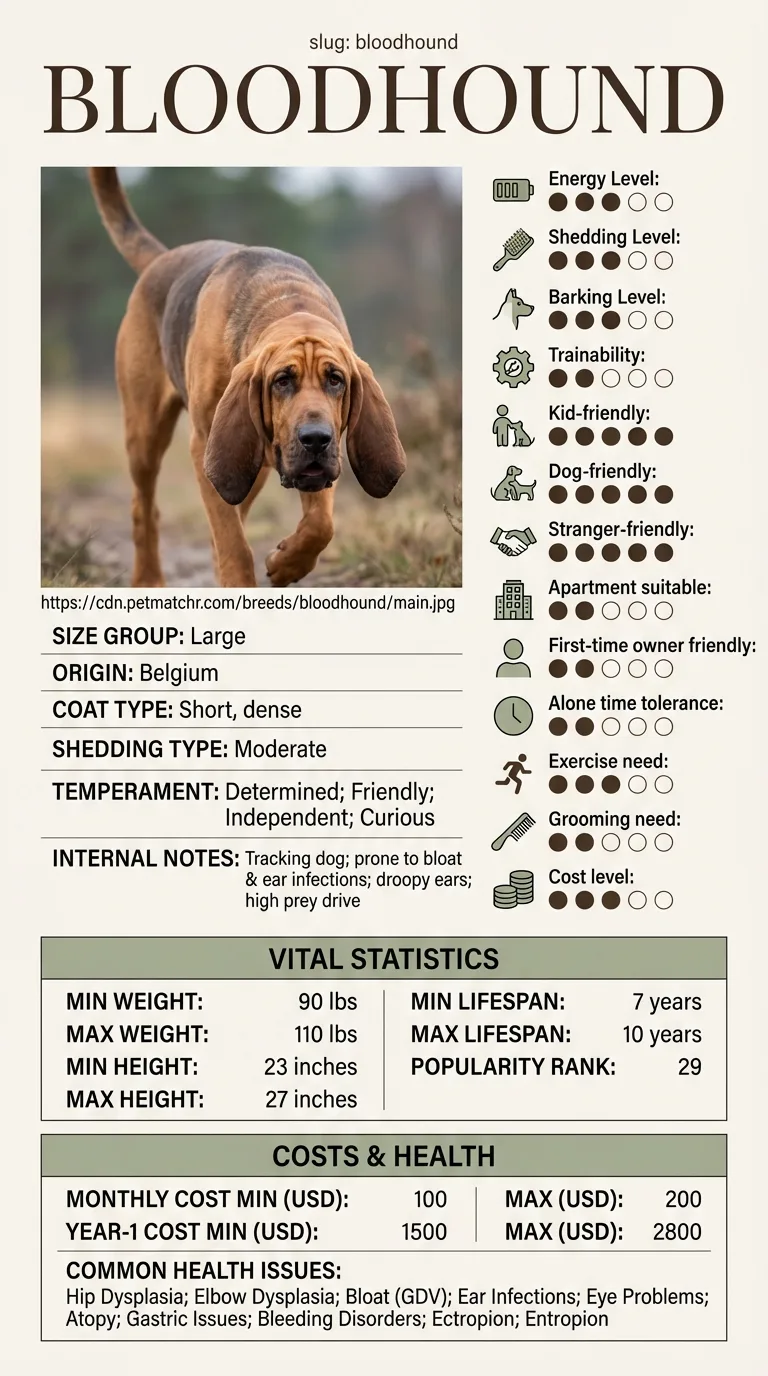
Treating Bloodhound allergies can vary in cost, ranging from $100 to $200 monthly depending on medications, vet visits, and special diets. Budgeting for these expenses is crucial for managing their health.
Health
Can I give my Bloodhound over-the-counter allergy medications?
Some over-the-counter medications may help, but it's essential to consult your vet first. They can recommend safe options and dosages specifically for your Bloodhound.
Training
How can I train my Bloodhound to avoid allergens?
Use positive reinforcement to teach your Bloodhound commands that help them avoid allergens, like 'leave it' or 'come.' Consistent practice can make a significant difference in their behavior.
Living
What are common signs of Bloodhound allergies?
Signs of Bloodhound allergies include itching, scratching, ear infections, and skin irritations. Observing these symptoms early can help you manage their allergies effectively.
Related DogBreedCompass guides
Bloodhound behavior problems – Understanding the common issues Bloodhounds face can help you provide better care.
Bloodhound separation anxiety guide – Find ways to manage your Bloodhound's anxiety, which can sometimes accompany allergies.
Bloodhound cost breakdown – Explore the costs associated with owning a Bloodhound, including potential vet bills for allergies.