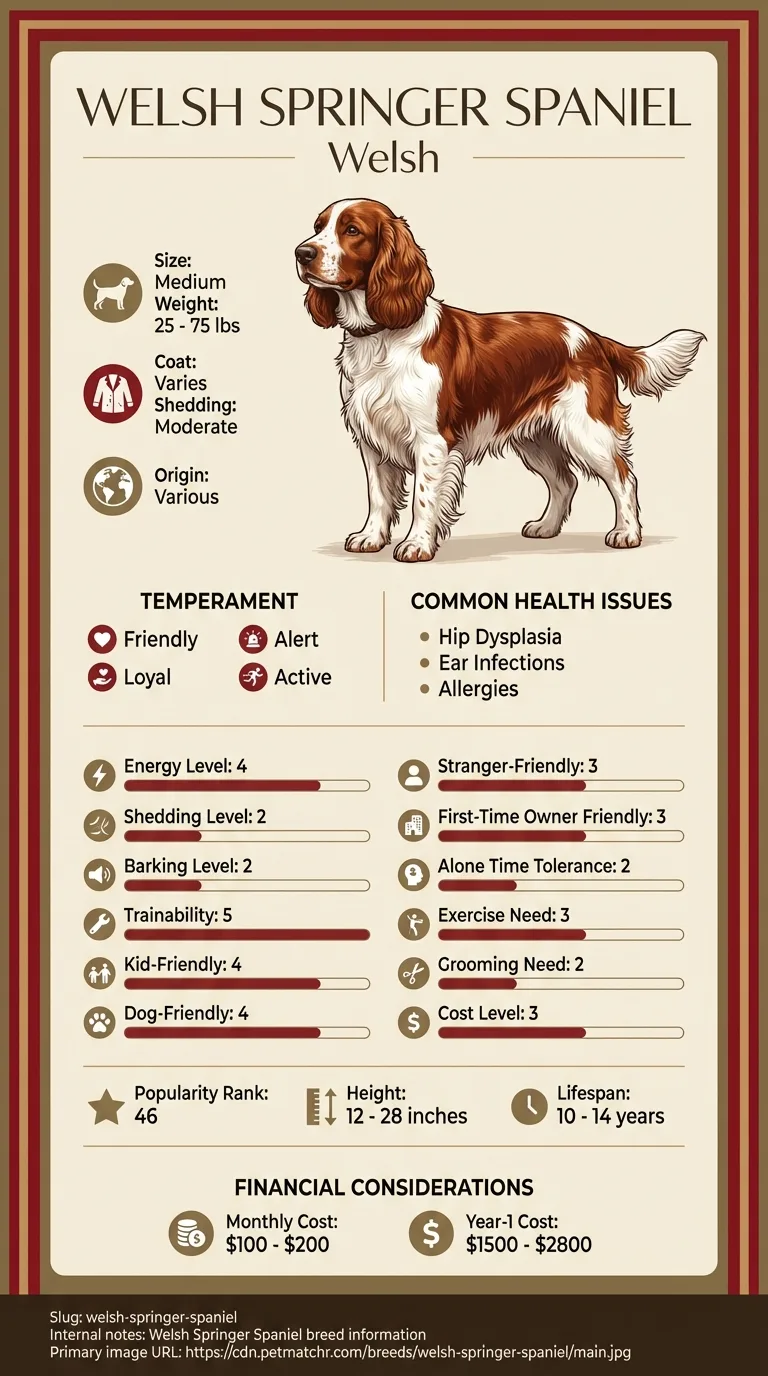
About $103 to $206 a month and $1,442 to $2,987 in year one, just above average with no state sales tax helping. The New Hampshire-specific problem is mud season: six weeks with the trails off limits and a feathered coat that mats if the rinse-and-comb routine slips.
A Welsh Springer Spaniel in Manchester costs roughly $103 to $206 a month, with year one between $1,442 and $2,987 — a shade above the national average, softened by New Hampshire charging no state sales tax on the supplies you buy every month. The local complication arrives once a year, has a name, and lasts about six weeks.
Why costs vary
Nothing on this breed's documented health list is caused by mud. What mud season creates is a six-week gap in the exercise plan for a dog rated 4 out of 5 on exercise need, plus the single worst stretch of the year for a coat with this much feathering.
Cost summary
Slightly above-average New Hampshire pricing offset by no state sales tax, with a seven-month prevention window and a spring grooming spike built in.
Estimate · source: estimation · confidence: medium · updated 2026-09-06 · not a quote
First year
$1442 - $2987
Ongoing monthly
$103 - $206
First-year expenses
Item
Cost range
One-time setup: first exam, spay or neuter, towels and combs
A proper comb and a hose attachment are the specific mud-season purchases worth making early.
$400 - $670
Monthly expenses
Item
Cost range
Food for a 35-to-55-pound active dog
Bought without state sales tax, a small saving that repeats every month of a twelve-to-fifteen-year life.
$49 - $83
How these numbers are estimated
Each range starts from a national baseline for this breed's size class and is then adjusted for local cost of living and veterinary pricing. The baselines, and the source each one came from, are listed on our sources page (dataset 2026.09). Two inputs, the purchase price and the emergency reserve, have no published national figure we could verify, so we leave them to you rather than invent them.
These are planning estimates, not quotes. Your own numbers will move with the individual dog, your vet and your insurer. Build a budget with your own figures.
Is pet insurance worth it?
Manchester prices close to average, so insurance here is a judgement about this breed's documented list rather than about local rates.
When insurance makes sense
Worth quoting young, particularly if the plan involves driving to Boston for specialist work, where a single episode can outrun several years of premiums.
When you might skip it
An owner with a genuine reserve can self-fund at New Hampshire's near-average pricing without much strain.
Ways to save without cutting essentials
The Manchester savings are a quiet tax advantage plus a spring routine that keeps the groomer's job small.
Go low rather than far during mud season; low-elevation ground dries weeks earlier.
Turn back if your boot leaves a print with standing water in it — the trail is telling you something.
Rinse legs and chest properly after mud walks, then comb the feathering while it is still damp.
Use the riverwalk and rail-trail corridors as the reliable spring default.
Buy consumables locally to make use of the state's lack of a sales tax on repeat purchases.
Manchester Cost Factors: Six Weeks With the Good Ground Off Limits
The request to stay off soft trails in spring is not fussiness, and it is worth honouring. A saturated path widens permanently when people and dogs skirt the wet middle, and New Hampshire's trail networks are largely maintained by volunteers who then spend the summer repairing it. But honouring it means a Welsh Springer loses the woods for a month and a half at exactly the point in the year when everyone, dog included, is desperate to get outside.
The substitutions are available and mostly free. Manchester's paved riverwalk along the Merrimack drains and dries immediately. The rail-trail corridors running out of the city are surfaced and hold up fine. Low-elevation town conservation land dries considerably earlier than anything with height on it, so the rule of thumb is to go low rather than to go far. If the ground squelches or your boot leaves a print with standing water in it, that is the trail asking you to turn around.
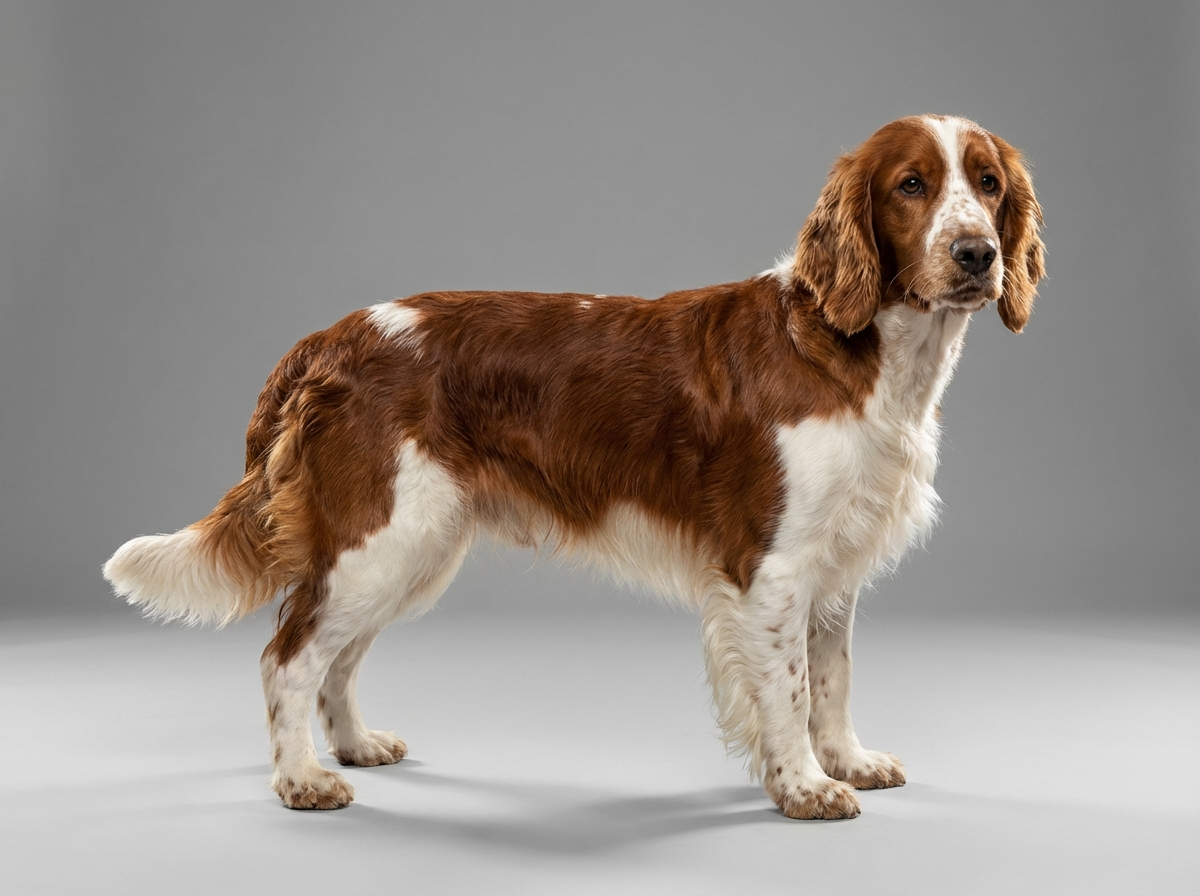
The other half of the cost is the coat. This breed carries feathering on the ears, the backs of the legs and the chest — longer hair that mats rather than shedding cleanly — and mud dries into it like cement. A dog walked through six weeks of spring thaw and towelled off carelessly will arrive at the groomer with mats that have to be cut out rather than combed out. Rinsing the legs and chest properly, then drying and combing while the coat is still damp, is the difference between a tidy-up and a repair job.
No Sales Tax, Seven Months of Prevention, and a Small Care Market
New Hampshire levies no state sales tax, which is a modest but genuinely real saving on everything you buy repeatedly for a dog: food, preventives, grooming tools, bedding, gear. Over a breed that lives twelve to fifteen years, that adds up quietly in the background without ever appearing as a line item.
Real winters keep the flea and tick window to roughly seven months. That said, deer ticks stay active whenever the ground is unfrozen, and New England thaws mid-winter often enough that a rigid calendar can leave a gap. Set the schedule with a local veterinarian rather than a national default.
Manchester's veterinary market is small but solid for ordinary work, with emergency and specialty capacity in the southern part of the state and the Boston hospitals about fifty miles down the interstate for anything requiring a board-certified ophthalmologist or neurologist. That is close enough to be practical and far enough that you should know the drive before you need it — particularly for the acute end of this breed's documented list, where the useful decision is made at home rather than in the car.
Welsh Springer Spaniel Cost in Manchester - No Sales Tax, Seven Months of Prevention, and a Small Care Market
The April That Cost a Haircut
A Welsh Springer in Manchester spent a wet April doing exactly what he had done all winter — long walks on the wooded trails outside town — and came home each time caked to the elbow. His owner hosed the worst off and let him dry by the stove, which seemed adequate.
By the start of May the feathering behind both front legs and along the chest had set into mats that no comb was going to rescue. The groomer clipped them out, the dog looked oddly bare for two months, and the appointment cost roughly triple a routine one. The following spring the routine included a proper rinse and a comb-through before the dog was allowed to dry.
Key takeaway: New Hampshire's mud season is not just a trail problem — for a feathered breed it is a grooming deadline, and the work has to be done while the coat is still wet.
Frequently asked questions
How much does a Welsh Springer Spaniel cost per month in Manchester?
About $103 to $206, marginally above the national average, with New Hampshire's lack of a state sales tax taking a small edge off recurring supplies.
What is the first-year total?
Roughly $1,442 to $2,987, covering the initial exam, vaccinations, spay or neuter if needed, and gear alongside monthly costs.
What is mud season and why does it matter for a dog?
It is the spring thaw period, roughly late March to May, when unpaved trails become saturated. Land managers ask people to stay off them, which removes the best walking ground for about six weeks.
Where can I walk during mud season?
Paved and surfaced routes — the Merrimack riverwalk, the rail-trail corridors, and low-elevation conservation land, which dries far sooner than anything with height on it.
Why is mud season expensive for this breed specifically?
Because the feathering on the ears, legs and chest mats rather than sheds, and dried mud in it turns a routine groom into a clipping job. Rinsing and combing while damp prevents most of that.
What emergency fund makes sense in Manchester?
Around $720 for a serious unplanned visit locally, with the Boston specialty hospitals about fifty miles away for advanced ophthalmic or neurological work.
About $103 to $206 a month and $1,442 to $2,987 in year one, just above average with no state sales tax helping. The New Hampshire-specific problem is mud season: six weeks with the trails off limits and a feathered coat that mats if the rinse-and-comb routine slips.
This guide is not medical advice. If your dog shows pain, sudden behavior change, or worsening symptoms, consult a licensed veterinarian.
Some links may be affiliate links. We may earn a commission at no extra cost to you. We only suggest products we believe are helpful for dog owners.
We research and check what we publish, but we do not warrant that any figure, date, price, or statement is accurate, complete, or current, and we accept no liability for any loss, cost, injury, or other harm arising from the use of this site. Use it as one reference among several. You remain responsible for your own decisions and for your dog's care - confirm anything that matters with a licensed veterinarian or another qualified professional before you act on it. Full disclaimer.