Costs
What is the Great Dane first year cost?
Budget $3,900 to $9,000 for year one with a Great Dane in Wichita.

See Great Dane price across all cities →
Quick answer
What is the Great Dane first year cost?
Budget $3,900 to $9,000 for year one with a Great Dane in Wichita.
Bringing a Great Dane into your home in Wichita can be a rewarding experience, but it comes with significant costs.
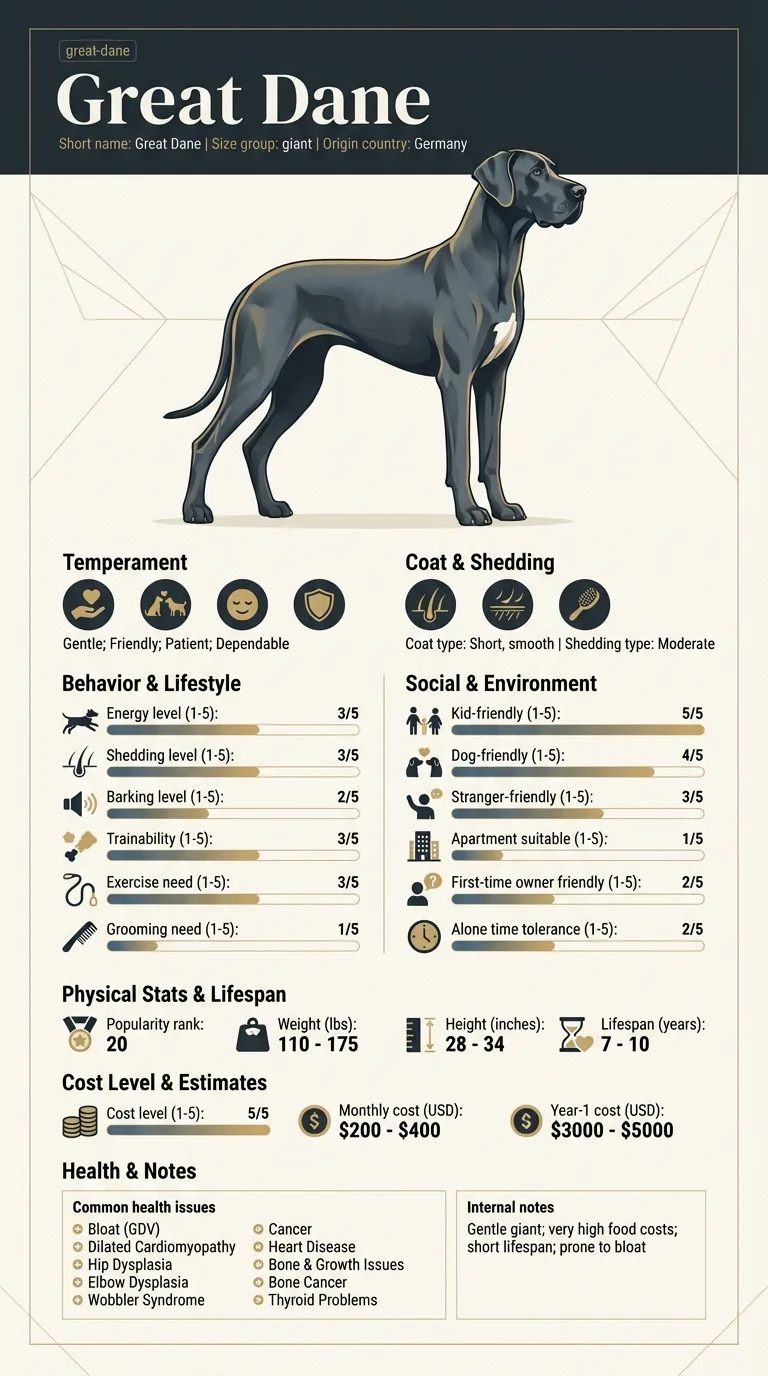
Costs can increase unexpectedly due to emergencies, vet visits, or big-ticket items like food and health care.
The Great Dane cost in Wichita can vary widely, influenced by factors like food, veterinary care, and supplies. Ongoing monthly costs generally range from $200 to $400.
Estimate · source: us average · confidence: medium · updated 2026-09-05 · not a quote
| Item | Cost range |
|---|---|
Purchase Price The cost of acquiring a Great Dane can vary depending on the breeder, adoption fees, and pedigree. | $1000 - $2500 |
Training Classes Basic obedience training is crucial for this giant breed to ensure good behavior. | $200 - $500 |
Supplies (collars, leashes, etc.) Initial setup costs for supplies can add up, especially for larger items. | $100 - $300 |
| Item | Cost range |
|---|---|
Food Great Danes eat a lot due to their size. Quality dog food is essential for their health. | $100 - $200 |
Pet Insurance Insuring your Great Dane can help manage unexpected health costs. | $50 - $100 |
Each range starts from a national baseline for this breed's size class and is then adjusted for local cost of living and veterinary pricing. The baselines, and the source each one came from, are listed on our sources page (dataset 2026.09). Two inputs, the purchase price and the emergency reserve, have no published national figure we could verify, so we leave them to you rather than invent them.
These are planning estimates, not quotes. Your own numbers will move with the individual dog, your vet and your insurer. Build a budget with your own figures.
When considering the Great Dane cost in Wichita, pet insurance can be a smart choice for many owners. It helps mitigate unexpected veterinary bills, especially for a breed prone to health issues like bloat and heart disease.
Insurance makes sense if your Great Dane is young and healthy, as premiums are often lower at this stage. If you're financially strained by potential vet bills, insurance can offer peace of mind. Additionally, if you plan on extensive medical care for chronic conditions, having insurance can significantly reduce those costs.
You might skip insurance if you have a robust emergency fund that can cover unexpected expenses. If your Great Dane is older and has pre-existing conditions, insurance might not pay out much. Also, if you prefer to budget for regular vet visits and know your dog's health will be stable, insurance may not be necessary.
Owning a Great Dane in Wichita can be costly, but there are practical ways to save money without sacrificing your dog's well-being.
Surprise vet visits can also be a part of the Great Dane experience. These gentle giants are prone to certain health issues like bloat and hip dysplasia. Depending on the situation, a vet visit can cost anywhere from $100 to several hundred dollars, especially if emergency care is needed. Having a budget for unexpected health concerns is crucial for any Great Dane owner. Another cost to consider is gear replacement. Great Danes are powerful dogs, and they can wear out collars, leashes, and toys more quickly than smaller breeds. Expect to spend around $50 to $100 annually for durable gear and toys that can withstand their strength. Additionally, food costs can be a significant surprise. A Great Dane's monthly food expenses can range from $200 to $400, depending on the brand and quality you choose. Lastly, lifestyle-driven extras can add to the financial burden. Training classes, which are especially beneficial for this breed, can also run $100 to $300 for a series of sessions. These hidden costs can make the overall Great Dane ownership experience much more expensive than initially anticipated.
Wichita offers a unique environment for dog ownership, especially with a giant breed like the Great Dane. Living costs in Wichita are generally lower than in larger cities, which can help offset some of the expenses associated with owning a Great Dane. However, factors such as vet availability and services can influence your overall budget significantly.

Meet Sarah, a nurse living in Wichita who recently brought home a Great Dane named Max. With a budget of around $300 per month, Sarah was prepared for routine costs, but she quickly learned that the first year would be more expensive than expected. In addition to Max's food, grooming, and vet visits, Sarah faced a surprise expense when Max developed a mild case of bloat, leading to an emergency vet visit that cost her an additional $1,200. Fortunately, she had researched Great Dane vet bills in Wichita and was somewhat prepared for this unexpected cost. Sarah diligently tracked her expenses and found that her monthly costs averaged around $350, which included high-quality food and regular vet check-ups. She also set aside funds for pet insurance, which she found to be about $75 per month. By budgeting for the first year, which she estimated to be around $4,500, Sarah was able to manage her finances better than she expected. This included everything from puppy training classes to buying a sturdy dog bed for Max, who loves to sprawl out. Despite the surprises, Sarah has learned to love the process of caring for her gentle giant. She often shares tips with friends about the Great Dane cost in Wichita and how to prepare for unexpected expenses.
Key takeaway: Budgeting for a Great Dane in Wichita involves planning for routine costs and unexpected expenses, like emergency vet visits. It's essential to set aside extra funds for surprises and focus on quality care.
Yes, a Great Dane can be quite expensive to own.
In Wichita, you can expect the Great Dane cost to be similar to national averages, with initial costs around $1,500 to $3,000.
Given their size and potential health issues, it's wise to invest in good coverage.
Vet bills for a Great Dane in Wichita can vary widely. Routine check-ups may cost around $100 to $200, but emergency visits or treatments can run into the thousands.
This includes initial expenses like vaccinations, spaying/neutering, and supplies.
The monthly cost of owning a Great Dane generally falls between $200 and $400. This covers food, basic grooming, and routine veterinary care.
Yes, there can be hidden costs like specialty food, larger crates, and increased vet bills due to their health issues. It's important to budget for these unexpected expenses.
Vet bills for a Great Dane in Wichita can vary widely. On average, you might pay around $500 to $1,000 annually for routine care, including vaccinations and check-ups. Keep in mind that emergencies or health issues can lead to significantly higher costs.
Yes, pet insurance can be beneficial for a Great Dane due to their potential health issues. Expect to pay around $50 to $100 monthly for insurance coverage.
Feeding a Great Dane can be expensive, costing between $100 to $200 monthly. Their large size means they consume a lot of food, so it's crucial to choose quality options for their health. Be prepared for fluctuations in cost based on food quality and availability.
Yes, owning a Great Dane in Wichita may come with extra costs. Also, larger living spaces may be necessary, impacting your housing costs.
The first-year cost for a Great Dane in Wichita can range from $3,000 to $5,000. It's essential to plan ahead for this financial commitment.
Budget $3,900 to $9,000 for year one with a Great Dane in Wichita.
Keeping a Great Dane in Wichita costs $150 to $300 a month. Food is the biggest piece at $100 to $200.
Pet insurance for a Great Dane in Wichita runs $50 to $100 a month, moving with the deductible and payout limit you choose.
This guide is not medical advice. If your dog shows pain, sudden behavior change, or worsening symptoms, consult a licensed veterinarian.
Some links may be affiliate links. We may earn a commission at no extra cost to you. We only suggest products we believe are helpful for dog owners.
We research and check what we publish, but we do not warrant that any figure, date, price, or statement is accurate, complete, or current, and we accept no liability for any loss, cost, injury, or other harm arising from the use of this site. Use it as one reference among several. You remain responsible for your own decisions and for your dog's care - confirm anything that matters with a licensed veterinarian or another qualified professional before you act on it. Full disclaimer.
One sheet with every line item, the emergency fund and when insurance pays off - unlocks on this page.
You get: 12-month budget sheet
No spam. One-click unsubscribe. See our privacy policy.
Preview page 1 before you decide.