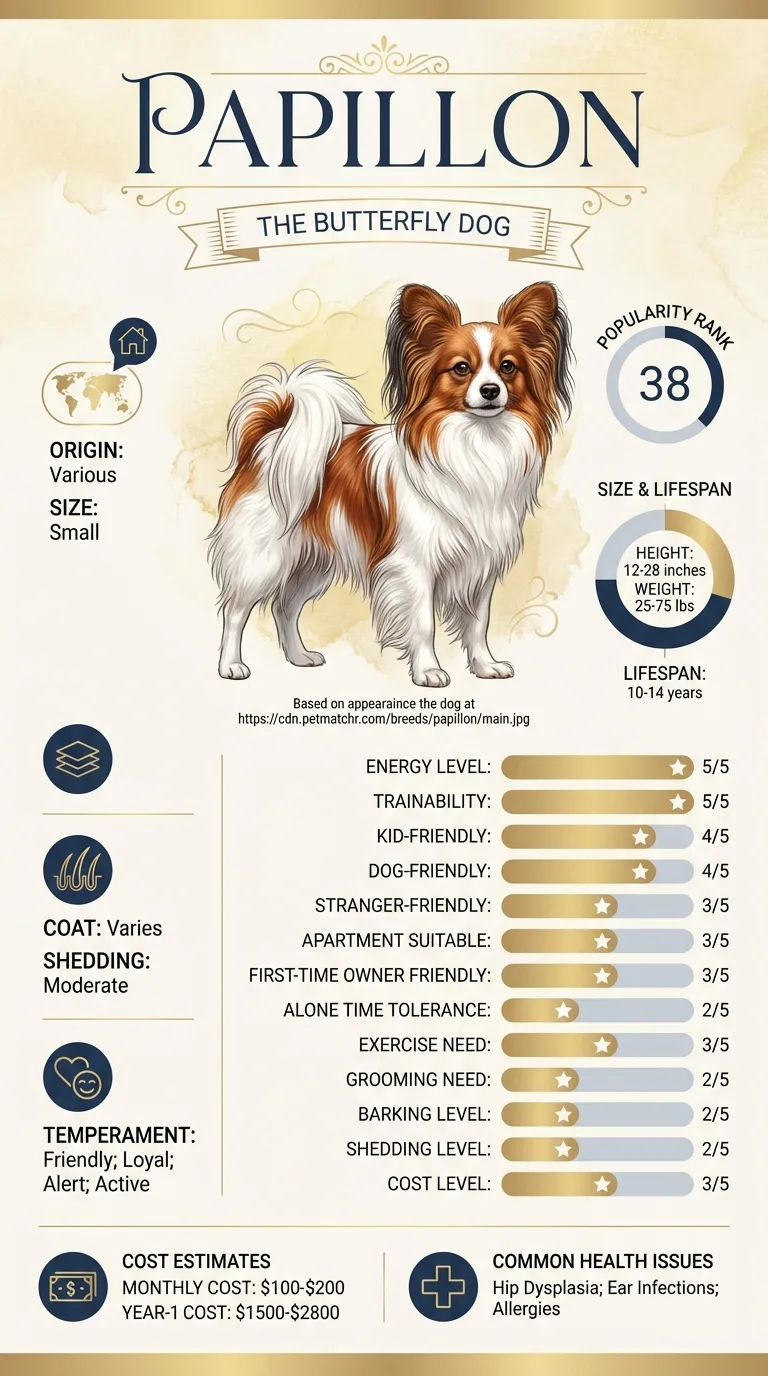
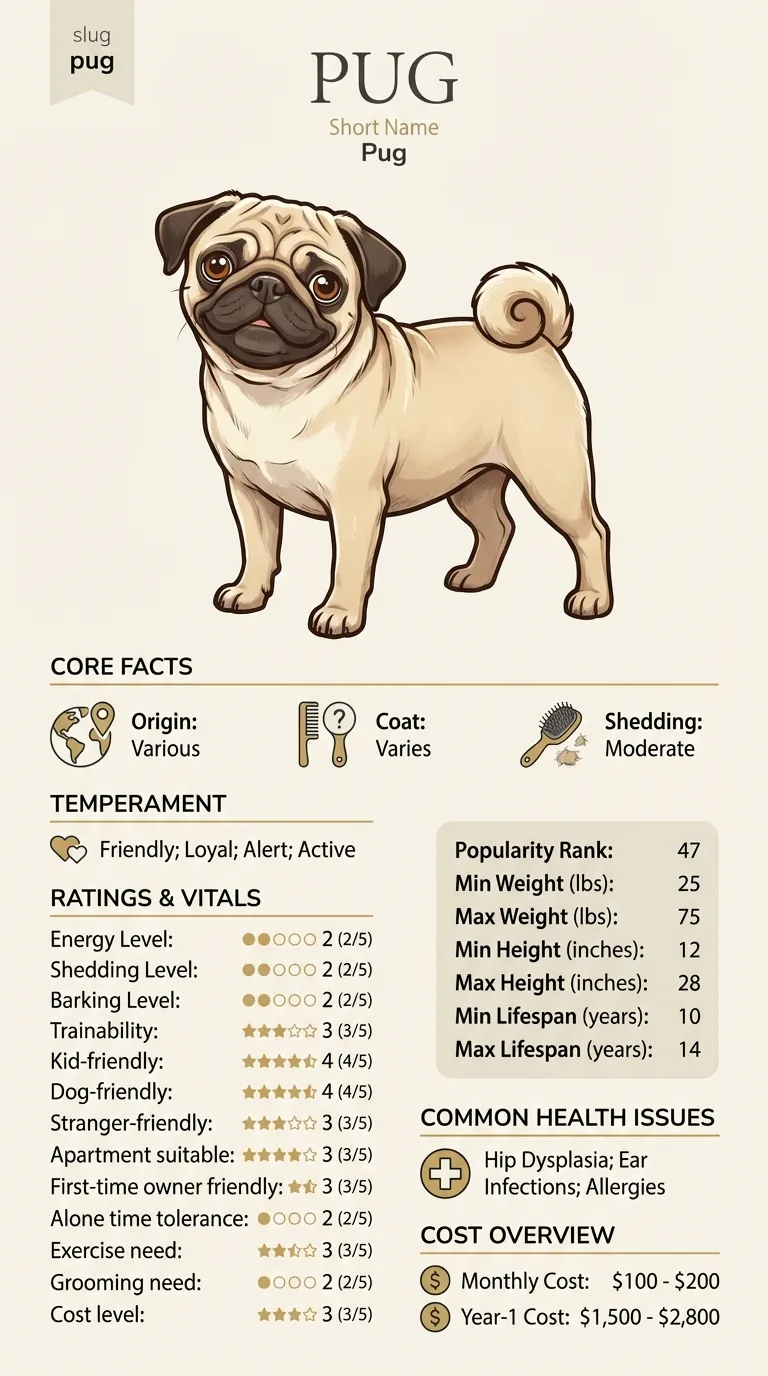
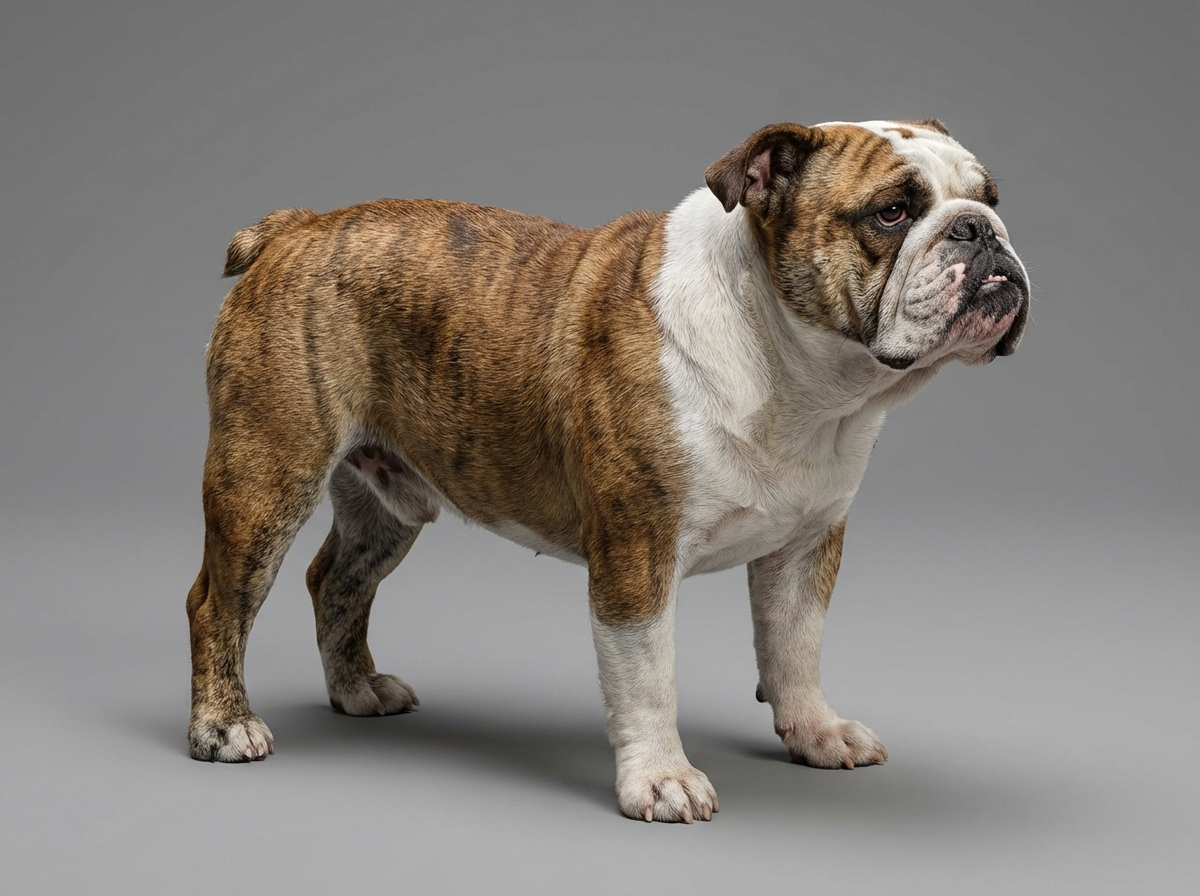
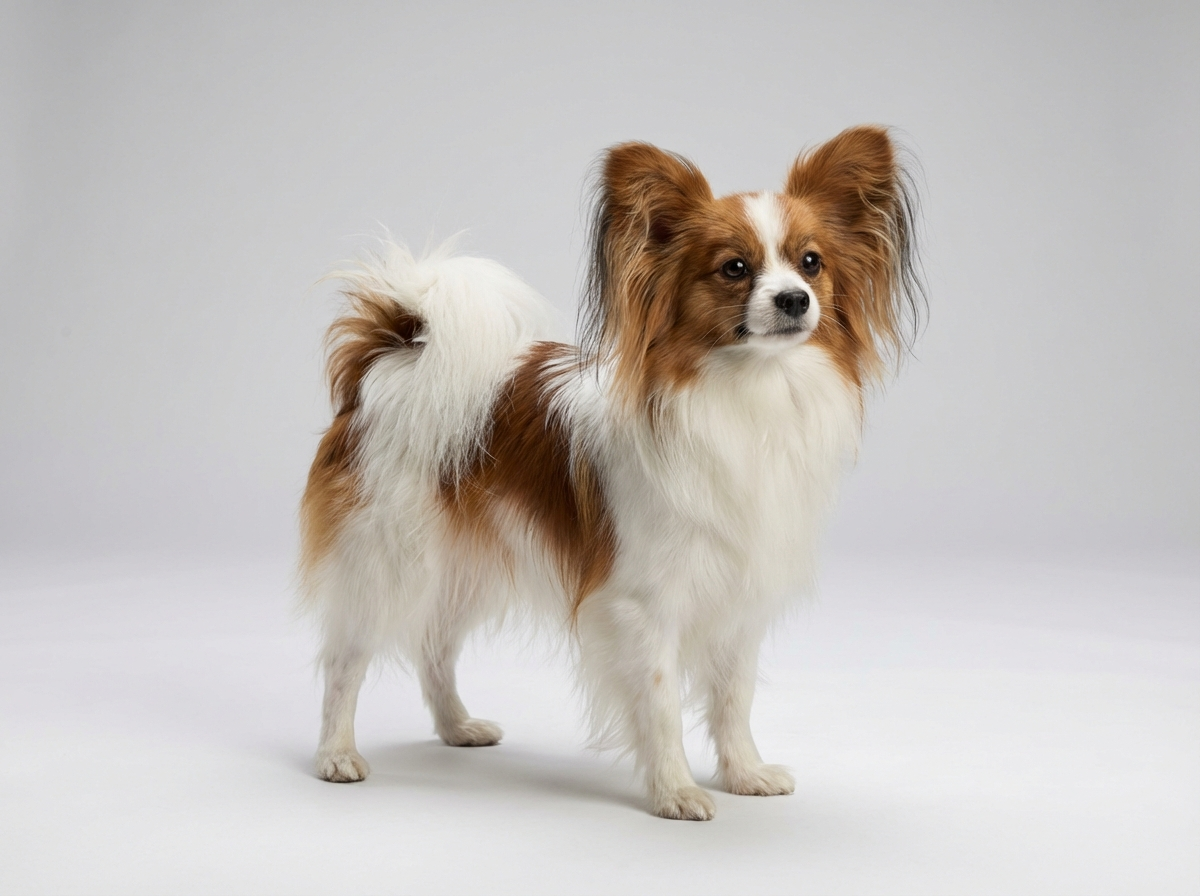
Pick the pug if you want a mellow, quiet housemate that's great with kids and forgiving of a first-timer's mistakes. Pick the papillon if you want a sharper, more trainable dog and don't mind more barking.
Papillon or Pug? On paper they differ most on energy level, and on the scales Pug is the heavier at 14–18 lbs. Here is how the two compare on everything that shapes an ordinary week.
This is for someone already down to Papillon and Pug and deciding between them. For this pair the decision usually turns on energy level and shedding, so those are covered first and in most detail. Both rate 5/5 for flats, so housing does not settle this one. Breed history is left out; what follows is what you will actually live with.
Quick verdict
Between Papillon and Pug, energy level is what separates them, and Pug is the lower-effort dog of the two to keep.
Choose papillon if...
Choose Papillon if shedding is a problem in your house, you want a dog that picks up training quickly and a smaller dog suits your car, your home or your back.
Choose pug if...
Choose Pug if this is your first dog, your walking routine is modest and there are young children at home.
Head-to-head comparison
Feature
papillon
pug
Winner
Size class
small
small
Equal
Weight
5–10 lbs
14–18 lbs
Equal
Height
8–11 in
10–13 in
Equal
Lifespan
14–16 years
13–15 years
papillon
Exercise need
Moderate (3/5)
Low (2/5)
pug
Grooming need
Low (2/5)
Low (2/5)
Equal
Shedding
Low (2/5)
High (4/5)
papillon
Energy level
High (4/5)
Low (2/5)
Equal
Barking
High (4/5)
Low (2/5)
pug
Apartment suitability
Very high (5/5)
Very high (5/5)
Equal
Good for first-time owners
High (4/5)
Very high (5/5)
pug
Tolerates being alone
Low (2/5)
Low (2/5)
Equal
Trainability
Very high (5/5)
Moderate (3/5)
papillon
Good with kids
Moderate (3/5)
Very high (5/5)
pug
Good with other dogs
High (4/5)
High (4/5)
Equal
Friendly to strangers
High (4/5)
Very high (5/5)
pug
Cost level
Low (2/5)
Moderate (3/5)
papillon
Coat
Long, silky single coat
Short, smooth double coat
Equal
Origin
Various
Various
Equal
Typical monthly cost
$80–$150
$80–$150
Equal
Typical first-year cost
$1,100–$2,300
$1,100–$2,300
Equal
Deep dive
Size and build
Both dogs stay under a foot tall, but the papillon is the lighter of the two by a wide margin -- 5 to 10 pounds against the pug's 14 to 18. That's nearly double the mass on a frame only a couple inches taller. The papillon's build is fine-boned and quick; the pug is compact and dense, built more like a doorstop than a dancer. If you want a dog you can carry in one arm without noticing the weight, the papillon is the one.
Energy and exercise
The papillon rates moderate on exercise need (3/5) and pairs that with a genuinely high energy level (4/5) -- it wants to move, even if a short walk covers the requirement. The pug sits at low on both exercise need and energy (2/5 each), and its flat face makes hard exertion risky in heat anyway. A daily walk and some indoor play satisfies the pug; the papillon does better with a walk plus a training or fetch session layered on top.
Grooming and shedding
Grooming comes out even at low (2/5) for both, but shedding does not. The papillon's long single coat sheds lightly (2/5) despite its looks, while the pug's short double coat sheds heavily (4/5) year-round. If you're the type who vacuums reluctantly, the papillon's coat is the better bet -- it just needs occasional brushing to avoid mats behind the ears, not the daily lint-rolling a pug demands.
Apartment living, noise and time alone
Both breeds score a full 5/5 for apartment suitability, so square footage isn't the deciding factor here. Barking is: the papillon rates high (4/5) and will sound off at hallway noise and doorbells, while the pug rates low (2/5) and is one of the quieter small breeds around. Neither tolerates being left alone well (2/5 each), so an apartment with long solo hours suits neither dog particularly well.
Training and owner experience
The papillon is rated very high (5/5) for trainability and is routinely near the top of obedience-competition breed lists -- it picks up commands fast and enjoys the work. The pug is more middling (3/5), food-motivated but easily bored by repetition. Both are rated well for first-time owners, with the pug edging ahead at very high (5/5) against the papillon's high (4/5), mostly because pugs forgive training lapses more easily.
Kids, other dogs and visitors
With kids the pug pulls ahead clearly -- very high (5/5) versus the papillon's moderate (3/5) -- and its sturdier body handles rough toddler affection better than the papillon's delicate frame. Both breeds are rated high (4/5) with other dogs. The pug also edges out the papillon with strangers, very high (5/5) against high (4/5), fitting its reputation as an easygoing greeter of anyone who walks through the door.
Health and lifespan
The papillon is the longer-lived breed here, 14 to 16 years against the pug's 13 to 15, and it also carries a shorter list of common conditions: patellar luxation, progressive retinal atrophy, dental disease, open fontanel, and collapsing trachea. The pug's flat face brings its own set -- brachycephalic airway syndrome, pug dog encephalitis, corneal ulcers, hemivertebrae, and a strong tendency toward obesity. Ask any pug vet and airway issues come up first; it's a face built for looks, not for breathing.
Cost to keep
Cost level favors the papillon at low (2/5) against the pug's moderate (3/5), though the two land in the same typical monthly range of $80 to $150 and the same first-year range of $1,100 to $2,300. The gap shows up mostly in vet visits -- a brachycephalic breed like the pug tends to need more of them over its life, which the flat cost-level rating doesn't fully capture.
Papillon vs Pug at a glance
Papillon weighs 5–10 lbs and lives 14–16 years; Pug weighs 14–18 lbs and lives 13–15 years. The two diverge most on energy level, shedding and barking and 2 other rated axes. They are level on tolerates being alone, apartment suitability and good with other dogs, so those cannot decide it. The comparison marks an easier option only where one exists. Facts like weight and country of origin are not scored. Both dogs are rated from the same dataset, which is what makes the numbers comparable with each other even though any individual dog sits somewhere inside its breed's range.
Papillon vs Pug: Which Suits Your Home? - Papillon vs Pug at a glance
Frequently asked questions
Which is smaller, papillon or pug?
The papillon, by a good margin on weight. It runs 5 to 10 pounds compared to the pug's 14 to 18, even though both stand under a foot at the shoulder. Height-wise they're close; weight is where they really diverge.
Which sheds less?
The papillon. It rates low (2/5) on shedding versus the pug's high (4/5), despite having the longer coat of the two. The pug's short double coat is a near-constant shedder.
Is a pug or papillon better for a first-time owner?
Both score well -- pug very high (5/5), papillon high (4/5) -- so either is a reasonable first dog. The pug's more relaxed temperament makes it slightly more forgiving of training mistakes.
Which is better in an apartment?
They tie at 5/5 for apartment suitability. The difference is noise: the papillon barks more (4/5 versus the pug's 2/5), which matters more than square footage in thin-walled buildings.
How much does each cost to keep monthly?
Both land in the same $80 to $150 monthly range and $1,100 to $2,300 first-year range. The papillon rates a lower overall cost level (2/5 versus 3/5), largely reflecting the pug's higher veterinary needs.
Do they share any health risks?
Not directly. The pug's risks center on its flat face -- airway syndrome, corneal ulcers -- while the papillon's skew toward joints and eyes, like patellar luxation and progressive retinal atrophy.
Which is easier to train?
The papillon, clearly. It rates very high (5/5) for trainability against the pug's moderate (3/5), and papillons are frequently seen in agility and obedience rings for exactly that reason.
Pick the pug if you want a mellow, quiet housemate that's great with kids and forgiving of a first-timer's mistakes. Pick the papillon if you want a sharper, more trainable dog and don't mind more barking.
Costs
What's the monthly cost for each?
Both run about the same, $80 to $150 a month for food, routine vet care, and basics.
Behavior
How much exercise does each need?
The papillon needs moderate exercise (3/5) despite high energy; the pug needs even less (2/5) and shouldn't be pushed hard in heat.
Health
Which one lives longer?
The papillon typically, 14 to 16 years against the pug's 13 to 15.
Related DogBreedCompass guides
Papillon breed guide – Readers comparing the two usually want the full profile of Papillon before deciding.
Pug breed guide – The same for Pug, so the comparison can be checked against the detail.
Papillon vs Maltese – Maltese is the closest breed to Papillon on the measured axes, so it is the natural next comparison.
Pug vs Boston Terrier – Boston Terrier sits closest to Pug, which makes it the alternative worth ruling out.
Health information here is general and is not veterinary advice. If your dog shows pain, sudden behaviour change, or worsening symptoms, consult a licensed veterinarian.
Some links on this site are affiliate links. We may earn a commission at no extra cost to you, and we only suggest products we believe are helpful for dog owners.
We research and check what we publish, but we do not warrant that any figure, date, price, or statement is accurate, complete, or current, and we accept no liability for any loss, cost, injury, or other harm arising from the use of this site. Use it as one reference among several. You remain responsible for your own decisions and for your dog's care - confirm anything that matters with a licensed veterinarian or another qualified professional before you act on it. Full disclaimer.