Living
Which is bigger?
The Vizsla, typically 45–65 lbs versus the Schnauzer's 26–50 lbs.

Quick answer
Which is bigger?
The Vizsla, typically 45–65 lbs versus the Schnauzer's 26–50 lbs.
Schnauzer (Standard) or Vizsla? On paper they differ most on grooming need, and on the scales Vizsla is the heavier at 45–65 lbs. Here is how the two compare on everything that shapes an ordinary week.
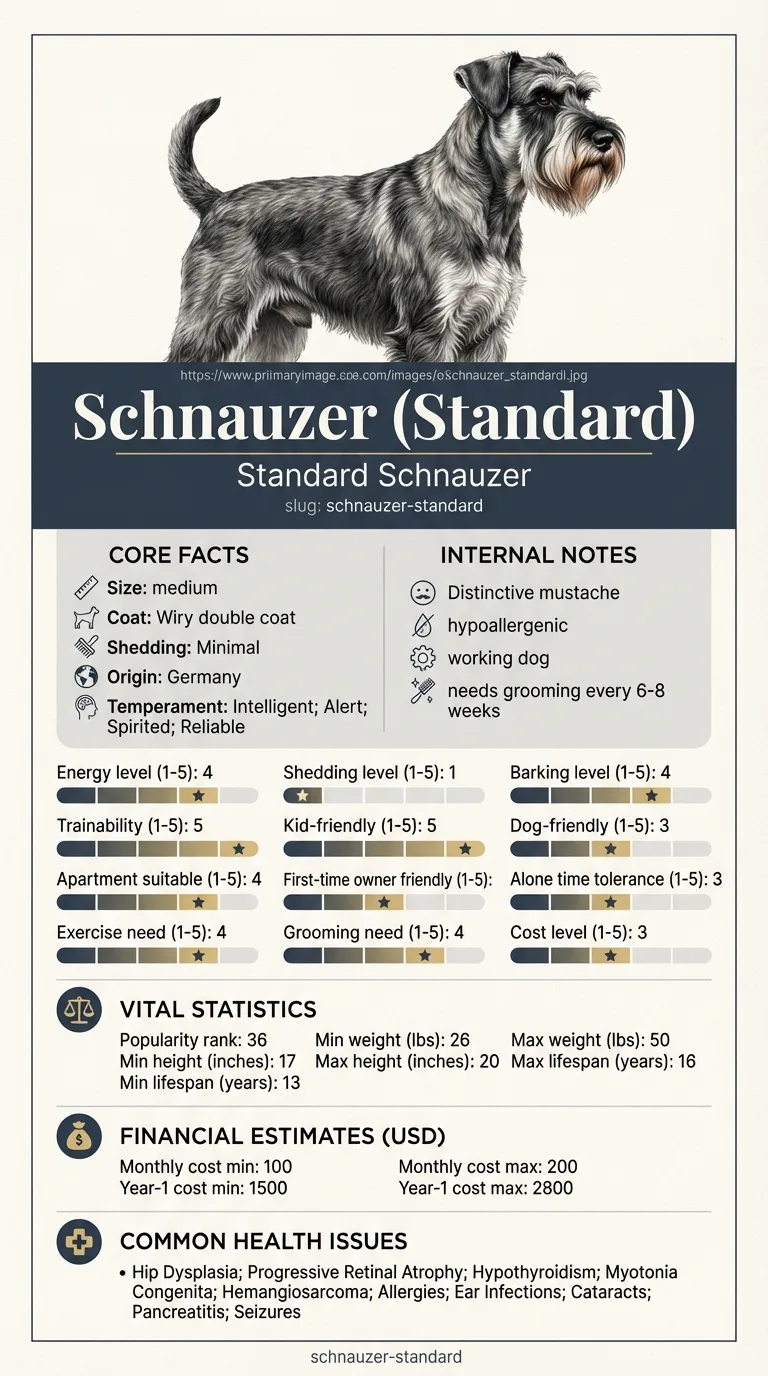
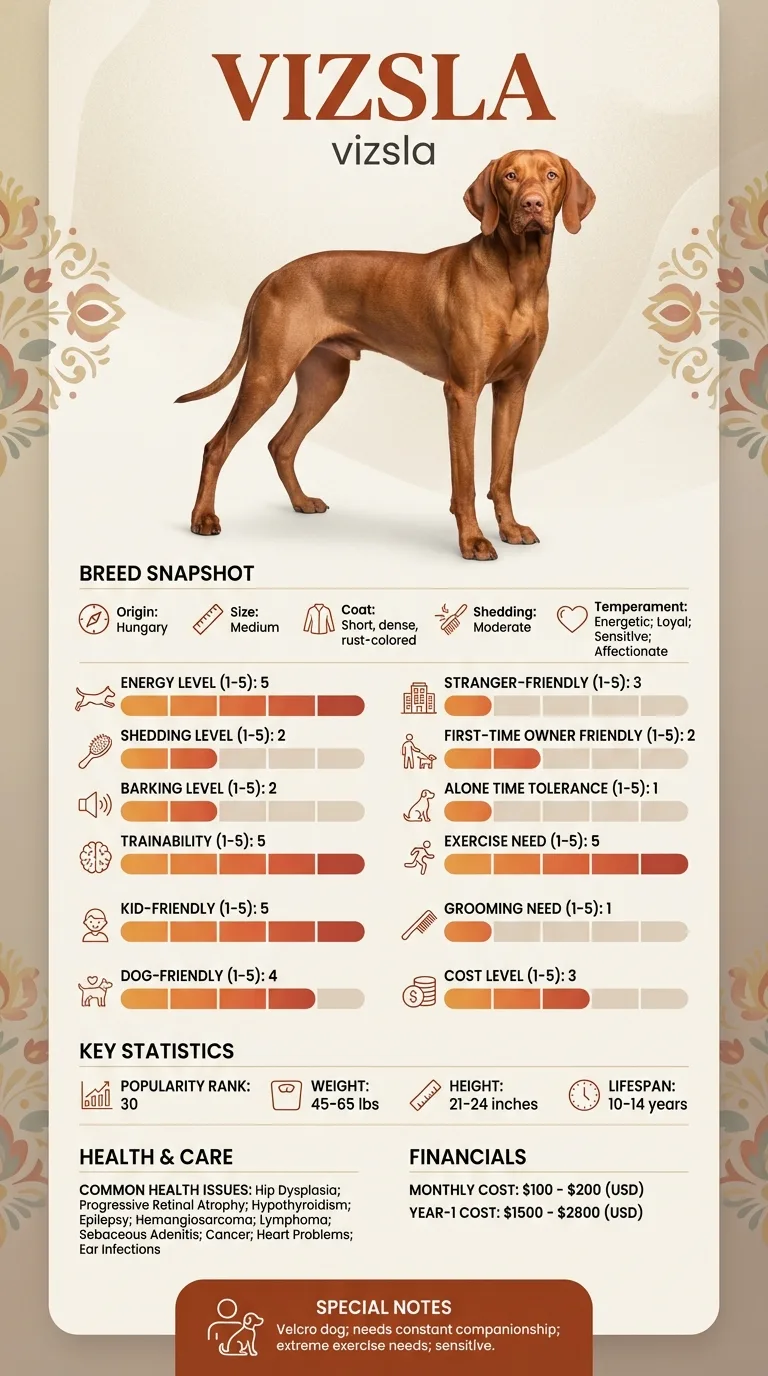
This is for someone already down to Schnauzer (Standard) and Vizsla and deciding between them. For this pair the decision usually turns on grooming need and apartment suitability, so those are covered first and in most detail. Anyone choosing from a flat has a clear answer here: Schnauzer (Standard) rates 4/5 against 1/5. There is no origin story here — only what changes about your week.
Between Schnauzer (Standard) and Vizsla, grooming need is what separates them, and Schnauzer (Standard) is the lower-effort dog of the two to keep.
Choose Schnauzer (Standard) if you are in a flat or a smaller home, this is your first dog and shedding is a problem in your house.
Choose Vizsla if you do not want a standing grooming appointment, you already have another dog and you want a dog that can keep up with an active routine.
| Feature | schnauzer standard | vizsla | Winner |
|---|---|---|---|
| Size class | medium | medium | Equal |
| Weight | 26–50 lbs | 45–65 lbs | Equal |
| Height | 17–20 in | 21–24 in | Equal |
| Lifespan | 13–16 years | 10–14 years | schnauzer standard |
| Exercise need | High (4/5) | Very high (5/5) | schnauzer standard |
| Grooming need | High (4/5) | Very low (1/5) | vizsla |
| Shedding | Very low (1/5) | Low (2/5) | schnauzer standard |
| Energy level | High (4/5) | Very high (5/5) | Equal |
| Barking | High (4/5) | Low (2/5) | vizsla |
| Apartment suitability | High (4/5) | Very low (1/5) | schnauzer standard |
| Good for first-time owners | Moderate (3/5) | Low (2/5) | schnauzer standard |
| Tolerates being alone | Moderate (3/5) | Very low (1/5) | schnauzer standard |
| Trainability | Very high (5/5) | Very high (5/5) | Equal |
| Good with kids | Very high (5/5) | Very high (5/5) | Equal |
| Good with other dogs | Moderate (3/5) | High (4/5) | vizsla |
| Friendly to strangers | Moderate (3/5) | Moderate (3/5) | Equal |
| Cost level | Moderate (3/5) | Moderate (3/5) | Equal |
| Coat | Wiry double coat | Short, dense, rust-colored | Equal |
| Origin | Germany | Hungary | Equal |
| Typical monthly cost | $100–$200 | $100–$200 | Equal |
| Typical first-year cost | $1,500–$2,800 | $1,500–$2,800 | Equal |
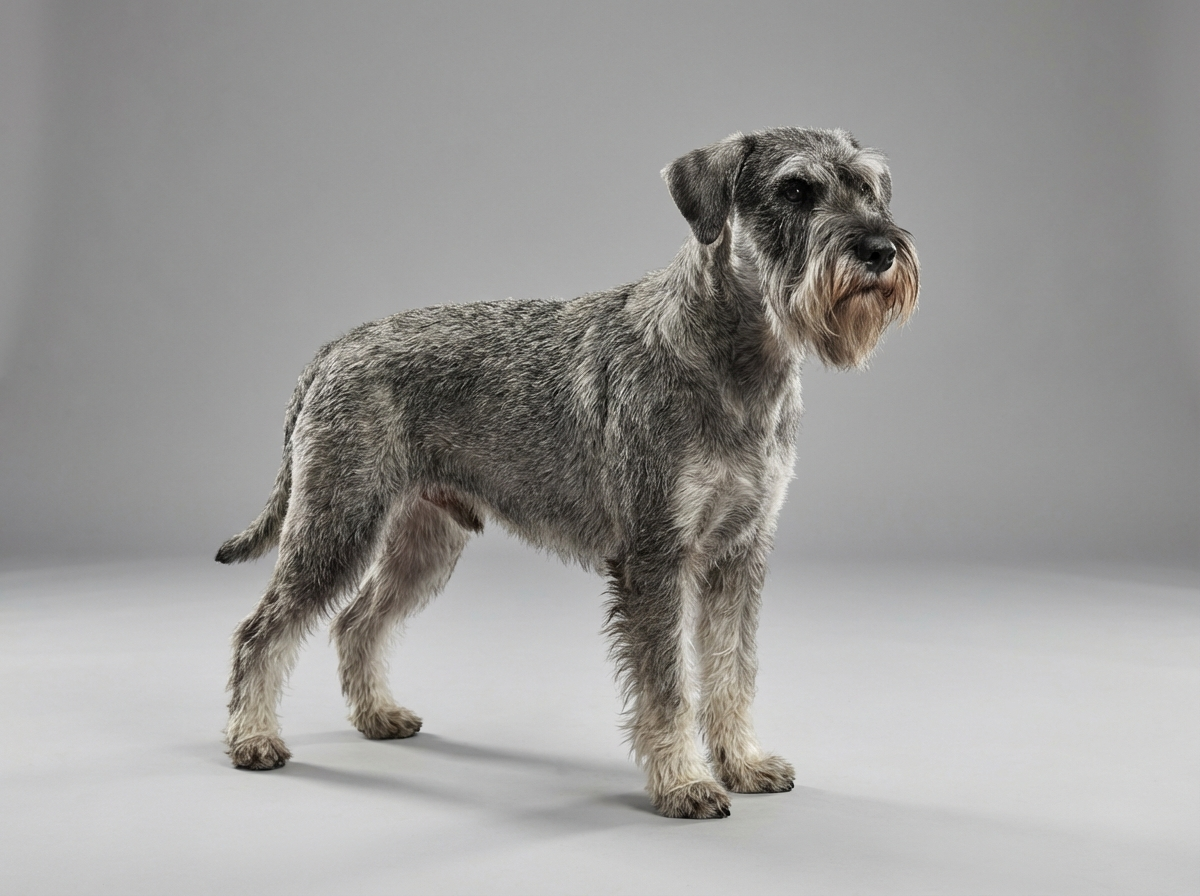
Stand a Standard Schnauzer next to a Vizsla and the difference is more about shape than raw size — the Schnauzer's 26–50 lbs and 17–20 inches sits close to the Vizsla's 45–65 lbs and 21–24 inches, but the Vizsla is taller and rangier, built as a lean pointing-and-retrieving gundog rather than a square-bodied farm guardian. Both are medium-class breeds, yet the Vizsla's greater height and weight ceiling means it can end up notably bigger than a Schnauzer in practice. The Schnauzer's wiry coat also adds visual bulk that the Vizsla's short coat doesn't.
The Vizsla rates Very High (5/5) for exercise need, a notch above the Schnauzer's High (4/5), and its Energetic temperament trait shows up throughout its profile. Vizslas were bred to hunt all day alongside horseback riders, and that heritage means they typically need well over an hour of vigorous activity — running, retrieving, or off-leash work — to stay settled. The Schnauzer's High exercise need is serious but more forgiving of a solid daily walk and yard time. Owners without significant time for structured daily exercise should think twice about the Vizsla especially.
The Vizsla is dramatically easier on the grooming front, rating Very Low (1/5) against the Schnauzer's High (4/5) — its short, dense coat needs little beyond occasional brushing, while the Schnauzer's wiry double coat requires regular hand-stripping or clipping to look and feel right. Shedding tilts slightly the other way: the Schnauzer rates Very Low (1/5) and the Vizsla Low (2/5), so the Vizsla sheds a bit more despite needing far less maintenance. For owners who want minimal coat upkeep but don't mind a little hair on the couch, the Vizsla is the clear pick.
The Schnauzer rates High (4/5) for apartment suitability while the Vizsla rates Very Low (1/5), and the alone-tolerance scores tell the same story — Moderate (3/5) for the Schnauzer versus Very Low (1/5) for the Vizsla. Vizslas are sometimes called 'Velcro dogs' for how closely they bond to their people, and that Sensitive, Affectionate temperament makes separation genuinely hard on them. Interestingly, the Vizsla barks less (Low, 2/5) than the Schnauzer (High, 4/5), so noise complaints are less likely — but the bigger issue for apartment dwellers is the Vizsla's near-constant need for space, exercise and company.
Both breeds rate Very High (5/5) for trainability, so obedience work goes smoothly with either — but first-time-owner suitability splits them apart, Moderate (3/5) for the Schnauzer versus Low (2/5) for the Vizsla. The Vizsla's Sensitive temperament means it responds poorly to harsh corrections and needs a gentle, consistent hand, while its high drive can overwhelm an inexperienced owner unprepared for its exercise and attention demands. The Schnauzer's Alert, Reliable nature makes it a bit more forgiving of training missteps, which is likely why it scores better for owners new to the breed.
Kids and trainability are ties here — both breeds rate Very High (5/5) with children — but the Vizsla pulls ahead with other dogs, High (4/5) versus the Schnauzer's Moderate (3/5), fitting its Loyal, pack-friendly nature. Both rate Moderate (3/5) with strangers, so neither is instantly outgoing with new people. Families with an existing dog or plans to add a second pet may lean toward the Vizsla's stronger sociability score, while those wanting a dog that's equally steady with kids but slightly more reserved around unfamiliar dogs might prefer the Schnauzer.
The Schnauzer's 13–16 year lifespan is notably longer than the Vizsla's 10–14 years. Both share Hip Dysplasia, Progressive Retinal Atrophy and Hypothyroidism as concerns, and both carry Hemangiosarcoma risk — a cancer of the blood vessels worth discussing with a vet early. Beyond the overlap, the Vizsla's list adds Lymphoma, Sebaceous Adenitis, Cancer and Heart Problems, a heavier cancer burden than the Schnauzer's profile, which instead includes the breed-specific Myotonia Congenita. Owners of either breed should ask breeders about cancer screening in the lines, given how often it appears on both lists.
Cost tracks closely between these two: both rate Moderate (3/5) overall, with identical typical monthly spend of $100–$200 and matching first-year costs of $1,500–$2,800. The Vizsla's savings on grooming — Very Low upkeep versus the Schnauzer's High demand — likely offsets higher food costs from its larger frame and potentially higher training-class or exercise-equipment spending given its intense activity needs. Either way, budget for extras beyond food and vet care: the Schnauzer for professional clipping, the Vizsla for the toys, long leashes and fenced yard access its energy level demands.
Schnauzer (Standard) weighs 26–50 lbs and lives 13–16 years; Vizsla weighs 45–65 lbs and lives 10–14 years. The two diverge most on grooming need, apartment suitability and tolerates being alone and 1 other rated axes. They are level on cost level, good with kids and friendly to strangers, so those cannot decide it. Where the table declares a winner it means less work for the owner, nothing more; descriptive rows are left as ties on purpose. The value here is in the differences between the two columns; treat any single score as approximate.

The Vizsla, rated Very High (5/5) versus the Schnauzer's High (4/5) — Vizslas were bred as all-day hunting companions and typically need well over an hour of vigorous activity daily.
No, the opposite — the Vizsla rates Very Low (1/5) for grooming need thanks to its short coat, while the Schnauzer rates High (4/5) due to its wiry double coat.
The Standard Schnauzer, rated High (4/5) for apartment suitability versus the Vizsla's Very Low (1/5) — the Vizsla's intense exercise and companionship needs make small spaces difficult.
Yes — both rate Very High (5/5) for trainability, though the Vizsla needs a gentler, more patient training style due to its Sensitive temperament.
The Schnauzer, with a 13–16 year lifespan compared to the Vizsla's 10–14 years.
Yes — both are prone to Hip Dysplasia, Progressive Retinal Atrophy, Hypothyroidism and Hemangiosarcoma, so regular screening for these conditions matters for either breed.
The Schnauzer, rated Moderate (3/5) for alone-tolerance versus the Vizsla's Very Low (1/5) — Vizslas are known for strong separation anxiety.
The Vizsla, typically 45–65 lbs versus the Schnauzer's 26–50 lbs.
The Standard Schnauzer, rated High (4/5) versus the Vizsla's Low (2/5).
The Vizsla, rated High (4/5) versus the Schnauzer's Moderate (3/5).
Neither — both typically run $100–$200 per month.
Secure checkout on Stripe. We never see your card.
7-day money-back guarantee. Instant access.
Health information here is general and is not veterinary advice. If your dog shows pain, sudden behaviour change, or worsening symptoms, consult a licensed veterinarian.
Some links on this site are affiliate links. We may earn a commission at no extra cost to you, and we only suggest products we believe are helpful for dog owners.
We research and check what we publish, but we do not warrant that any figure, date, price, or statement is accurate, complete, or current, and we accept no liability for any loss, cost, injury, or other harm arising from the use of this site. Use it as one reference among several. You remain responsible for your own decisions and for your dog's care - confirm anything that matters with a licensed veterinarian or another qualified professional before you act on it. Full disclaimer.
Match your lifestyle to the right dog.
Take quizNot sure which breed is right for you? Take our 2-minute quiz to find out.
Take the quiz