Brussels Griffon vs English Springer Spaniel: Which Suits Your Home?
Quick answer
Which breed should most people pick between these two?
If you live in a smaller space or can't commit to daily hard exercise, the Griffon fits more households. If you're active and want a dog that trains fast and loves kids, the Springer wins.
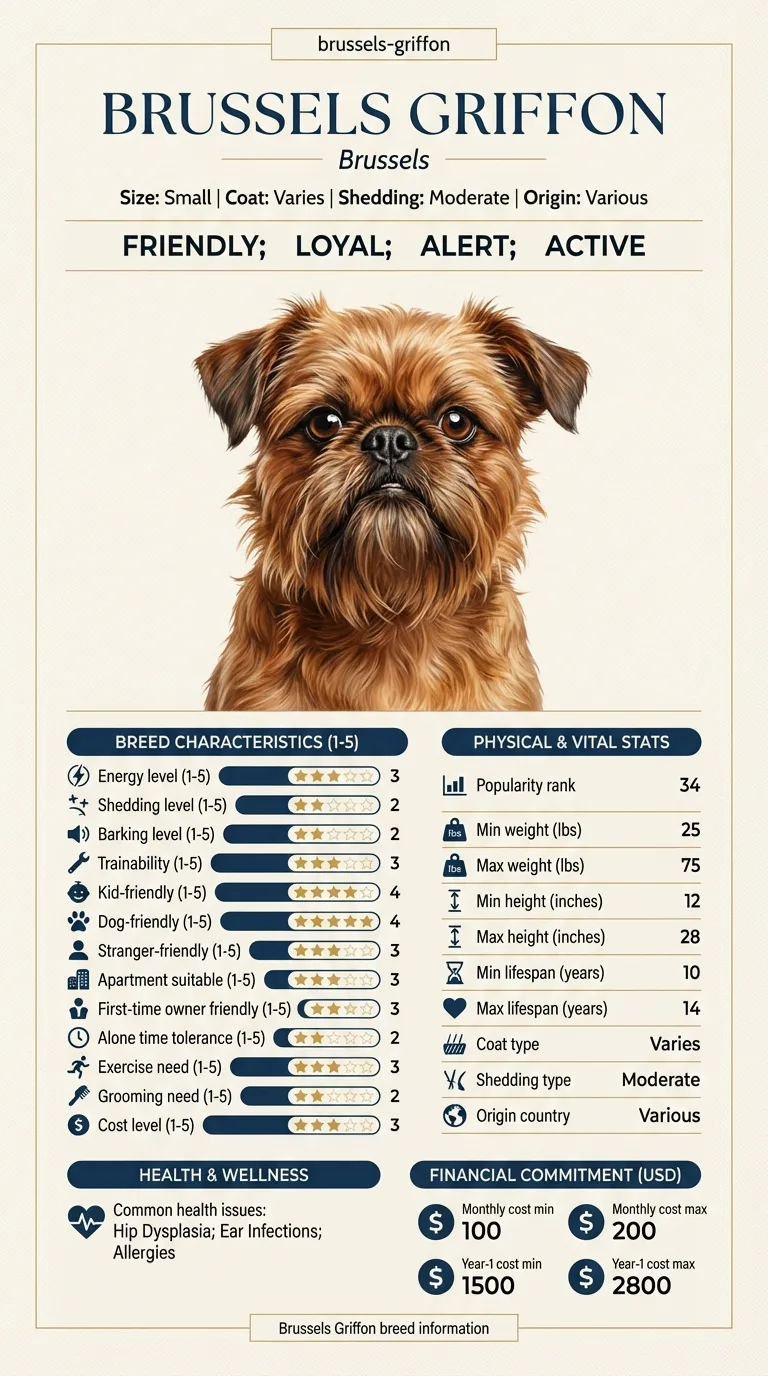
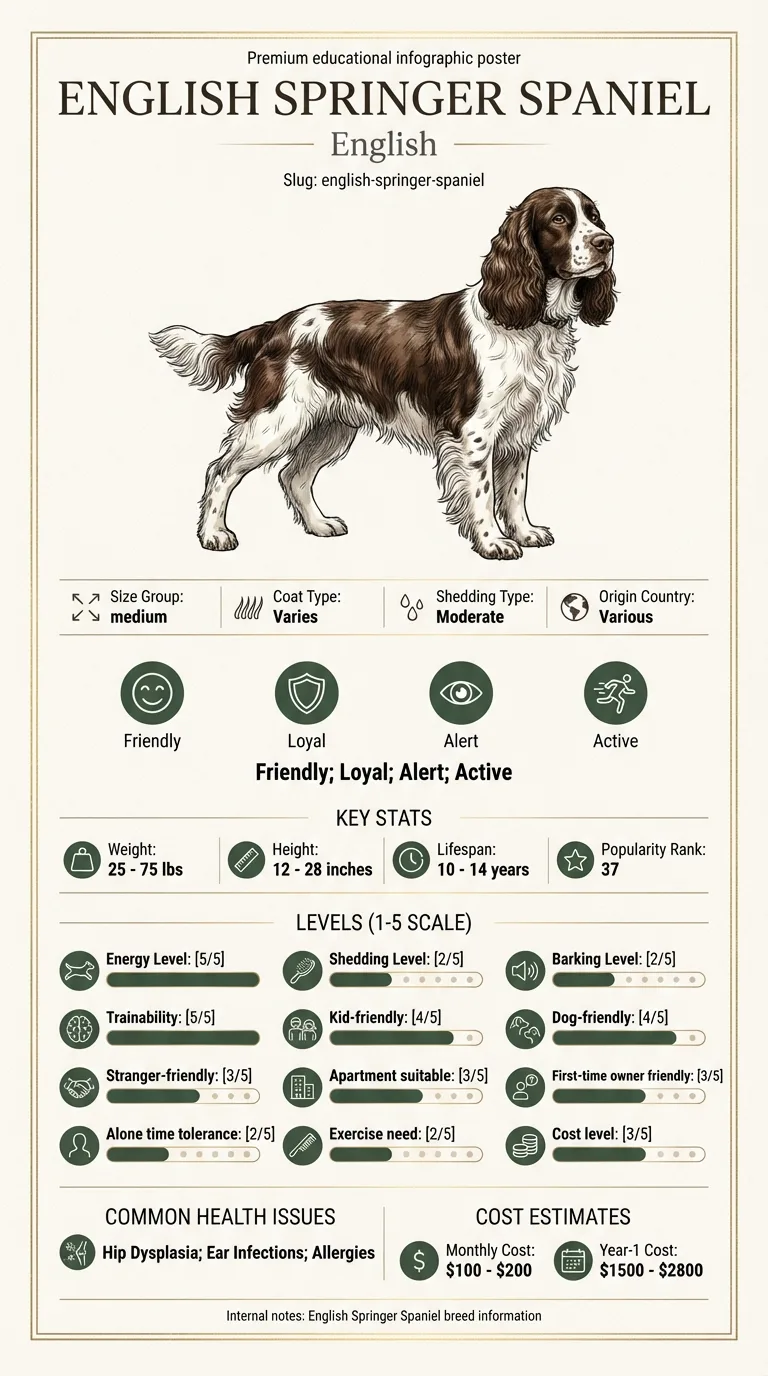
Brussels Griffon or English Springer Spaniel? On paper they differ most on exercise need, and on the scales English Springer Spaniel is the heavier at 40–50 lbs. Here is how the two compare on everything that shapes an ordinary week.
This is for someone already down to Brussels Griffon and English Springer Spaniel and deciding between them. For this pair the decision usually turns on exercise need and apartment suitability, so those are covered first and in most detail. Anyone choosing from a flat has a clear answer here: Brussels Griffon rates 5/5 against 2/5. Breed history is left out; what follows is what you will actually live with.
Quick verdict
Between Brussels Griffon and English Springer Spaniel, exercise need is what separates them, and Brussels Griffon is the lower-effort dog of the two to keep.
Choose brussels griffon if...
Choose Brussels Griffon if you are in a flat or a smaller home, you do not want a standing grooming appointment and shedding is a problem in your house.
Choose english springer spaniel if...
Choose English Springer Spaniel if there are young children at home, you already have another dog and you want a dog that picks up training quickly.
Head-to-head comparison
Feature
brussels griffon
english springer spaniel
Winner
Size class
small
medium
Equal
Weight
8–12 lbs
40–50 lbs
Equal
Height
7–10 in
19–20 in
Equal
Lifespan
12–15 years
12–14 years
brussels griffon
Exercise need
Low (2/5)
Very high (5/5)
brussels griffon
Grooming need
Moderate (3/5)
High (4/5)
brussels griffon
Shedding
Low (2/5)
Moderate (3/5)
brussels griffon
Energy level
Moderate (3/5)
Very high (5/5)
Equal
Barking
Moderate (3/5)
Moderate (3/5)
Equal
Apartment suitability
Very high (5/5)
Low (2/5)
brussels griffon
Good for first-time owners
Moderate (3/5)
Moderate (3/5)
Equal
Tolerates being alone
Low (2/5)
Low (2/5)
Equal
Trainability
Moderate (3/5)
Very high (5/5)
english springer spaniel
Good with kids
Moderate (3/5)
Very high (5/5)
english springer spaniel
Good with other dogs
Moderate (3/5)
High (4/5)
english springer spaniel
Friendly to strangers
Moderate (3/5)
High (4/5)
english springer spaniel
Cost level
Moderate (3/5)
Moderate (3/5)
Equal
Coat
Rough or smooth
Medium, feathered double coat
Equal
Origin
Various
Various
Equal
Typical monthly cost
$80–$150
$100–$200
Equal
Typical first-year cost
$1,100–$2,300
$1,400–$2,900
Equal
Deep dive
Size and build
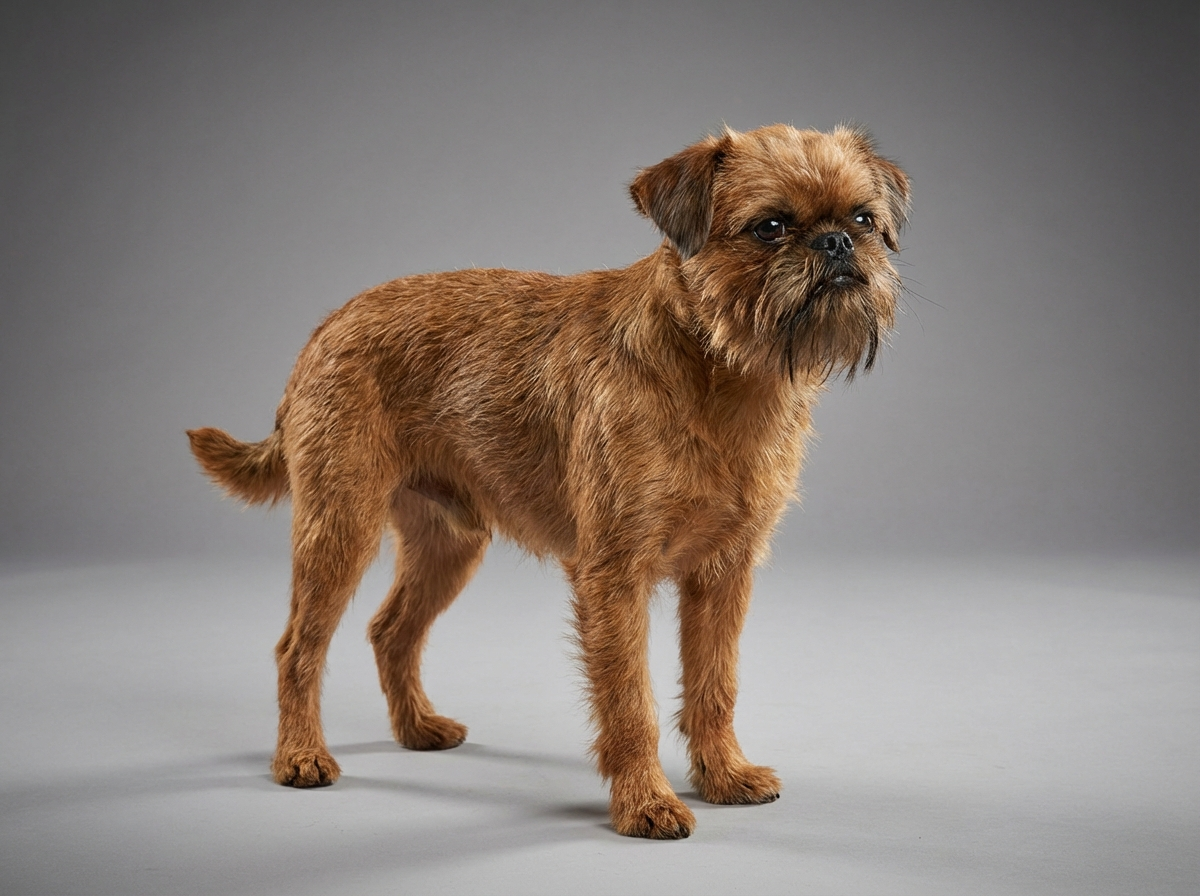
These two aren't in the same weight class, and it isn't close. A Brussels Griffon tops out around 12 lbs and stands 7-10 inches at the shoulder; an English Springer Spaniel runs 40-50 lbs and 19-20 inches. You could carry the Griffon in a tote bag. The Springer needs its own seat in the car. Pick based on how much dog you actually want underfoot, not just which one photographs cuter.
Energy and exercise
The gap here matters more than the size gap. The Griffon rates a 2/5 for exercise need and a moderate 3/5 energy level - a couple of short walks and some indoor play covers it. The Springer sits at 5/5 for both exercise and energy. Bred to flush and retrieve birds all day, it wants a real run, not a stroll. Underexercise a Springer and you'll see it in the furniture.
Grooming and shedding
Neither is wash-and-go, but the Griffon is the lighter lift: moderate grooming (3/5) and low shedding (2/5), with rough or smooth coat variants that mostly need regular brushing. The Springer's feathered double coat pushes grooming to 4/5 and shedding to moderate (3/5) - expect regular trims around the ears and legs plus more hair on your floors, especially through seasonal blowouts.
Apartment living, noise and time alone
This is where the Griffon pulls ahead decisively: a 5/5 apartment suitability score against the Springer's 2/5. A dog that needs to run daily and has a hunting dog's stamina doesn't settle well into 700 square feet. Both dogs tolerate being alone poorly (2/5 each), so neither is the right pick if you're out of the house 10 hours a day. Barking is a wash - moderate on both.
Training and owner experience
Trainability tips clearly to the Springer at 5/5, described as biddable and eager - it wants a job and takes direction well. The Griffon sits at moderate (3/5) and its temperament runs sensitive, which calls for gentler, more patient handling rather than repetition-heavy drilling. Both land at a moderate 3/5 for first-time owners, so neither is a hard no for a beginner, but they need different approaches.
Kids, other dogs and visitors
The Springer is the more socially easygoing of the two: high marks with kids (5/5), other dogs (4/5) and strangers (4/5), consistent with its friendly, biddable nature. The Griffon scores moderate (3/5) across all three - not unfriendly, just more selective and, per its temperament tags, more sensitive and devoted to its person than eager to please a crowd. Households with young kids or frequent guests will find the Springer the easier fit.
Health and lifespan
Lifespans are close - 12-15 years for the Griffon versus 12-14 for the Springer - with the Griffon holding a slight edge. The Griffon's flat face brings Brachycephalic Airway Syndrome into the picture along with patellar luxation, hip dysplasia, eye injuries and syringomyelia. The Springer's risks run toward hip and elbow dysplasia, ear infections, progressive retinal atrophy and a breed-specific metabolic condition, phosphofructokinase deficiency. Different bodies, different failure points - neither list is short.
Cost to keep
Budget less for the Griffon on paper: $80-150 a month and $1,100-2,300 in year one, against the Springer's $100-200 monthly and $1,400-2,900 first-year range. Both land in the moderate cost tier overall, so the difference is real but not dramatic - a few hundred dollars a year, mostly reflecting the Springer's larger food intake and heavier grooming needs.
Brussels Griffon vs English Springer Spaniel at a glance
Brussels Griffon weighs 8–12 lbs and lives 12–15 years; English Springer Spaniel weighs 40–50 lbs and lives 12–14 years. The two diverge most on exercise need, apartment suitability and energy level and 2 other rated axes. They are level on tolerates being alone, barking and cost level, so those cannot decide it. The comparison marks an easier option only where one exists. Facts like weight and country of origin are not scored. Both dogs are rated from the same dataset, which is what makes the numbers comparable with each other even though any individual dog sits somewhere inside its breed's range.
Brussels Griffon vs English Springer Spaniel: Which Suits Your Home? - Brussels Griffon vs English Springer Spaniel at a glance
Frequently asked questions
Which is bigger, the Brussels Griffon or the English Springer Spaniel?
The Springer, by a wide margin. It weighs 40-50 lbs and stands 19-20 inches versus the Griffon's 8-12 lbs and 7-10 inches. This is a small-dog versus medium-dog comparison, not two similarly sized breeds.
Which sheds less?
The Griffon, rated low (2/5) shedding against the Springer's moderate (3/5). Neither is shed-free, but the Griffon leaves less hair behind day to day.
Is either good for a first-time owner?
Both score a moderate 3/5, so neither is off-limits for a beginner. The difference is in what kind of effort they demand - the Springer needs daily hard exercise, the Griffon needs patient, gentle handling given its sensitive temperament.
Which fits an apartment better?
The Griffon, clearly - 5/5 apartment suitability versus the Springer's 2/5. A dog bred for all-day field work doesn't do well cooped up without a serious daily outlet.
How much more does the Springer cost to keep?
Roughly $20-50 more per month and $300-600 more in the first year, driven mainly by its larger size and heavier grooming needs.
Do they share any health risks?
Both breeds carry hip dysplasia risk. Beyond that their concerns diverge - the Griffon's issues relate to its brachycephalic build, while the Springer's lean toward joint, eye and a metabolic enzyme condition specific to the breed.
Which is better with kids?
The Springer, scoring 5/5 versus the Griffon's 3/5. Its friendly, energetic nature tends to mesh well with active kids, though any dog around children needs supervision.
Which breed should most people pick between these two?
If you live in a smaller space or can't commit to daily hard exercise, the Griffon fits more households. If you're active and want a dog that trains fast and loves kids, the Springer wins.
Costs
What's the monthly cost difference?
Griffon runs $80-150/month, Springer $100-200/month - the Springer costs more mainly due to food volume and grooming.
Living
How much exercise does each need?
The Griffon needs minimal exercise (2/5). The Springer needs a lot (5/5) - this is the single biggest lifestyle difference between them.
Health
Which lives longer?
The Griffon, typically 12-15 years versus the Springer's 12-14 years - close, with a slight edge to the Griffon.
Related DogBreedCompass guides
Brussels Griffon breed guide – Readers comparing the two usually want the full profile of Brussels Griffon before deciding.
Health information here is general and is not veterinary advice. If your dog shows pain, sudden behaviour change, or worsening symptoms, consult a licensed veterinarian.
Some links on this site are affiliate links. We may earn a commission at no extra cost to you, and we only suggest products we believe are helpful for dog owners.
We research and check what we publish, but we do not warrant that any figure, date, price, or statement is accurate, complete, or current, and we accept no liability for any loss, cost, injury, or other harm arising from the use of this site. Use it as one reference among several. You remain responsible for your own decisions and for your dog's care - confirm anything that matters with a licensed veterinarian or another qualified professional before you act on it. Full disclaimer.