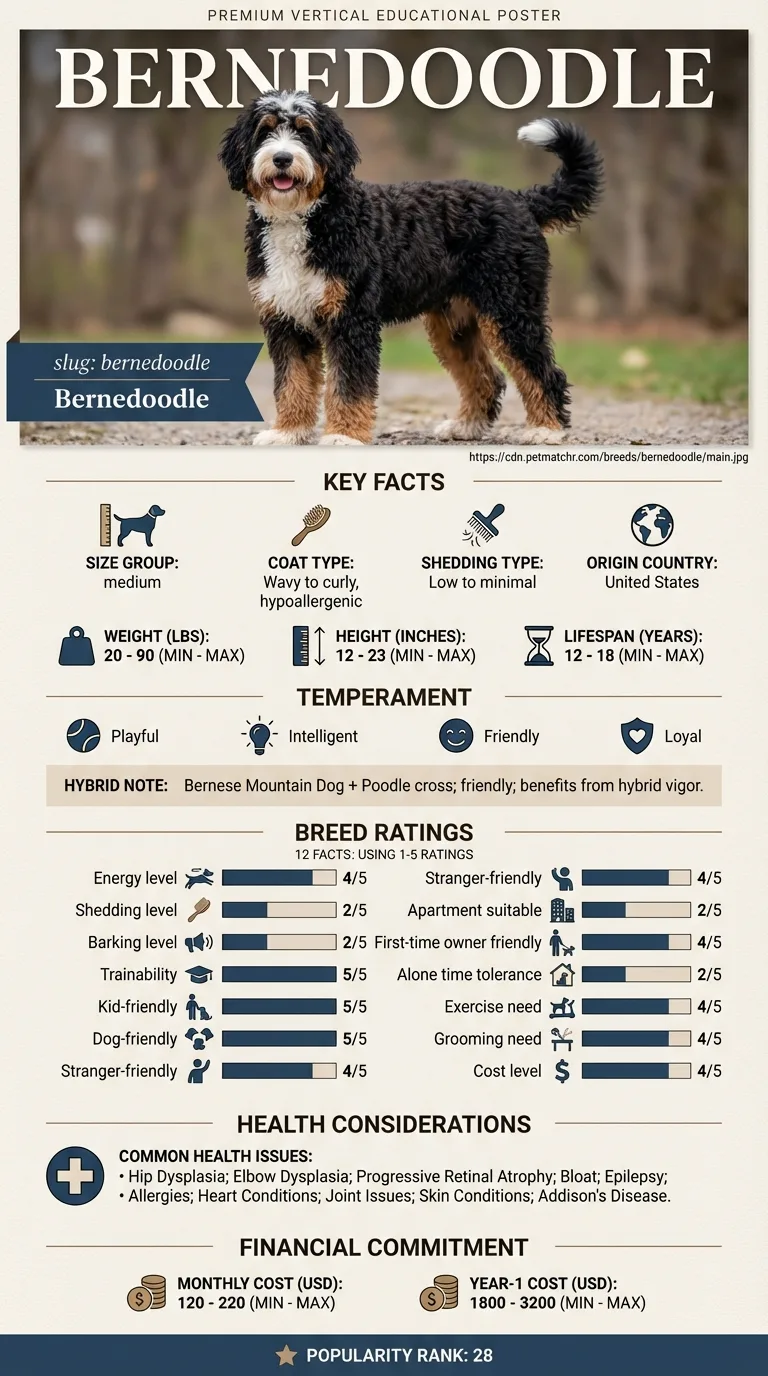
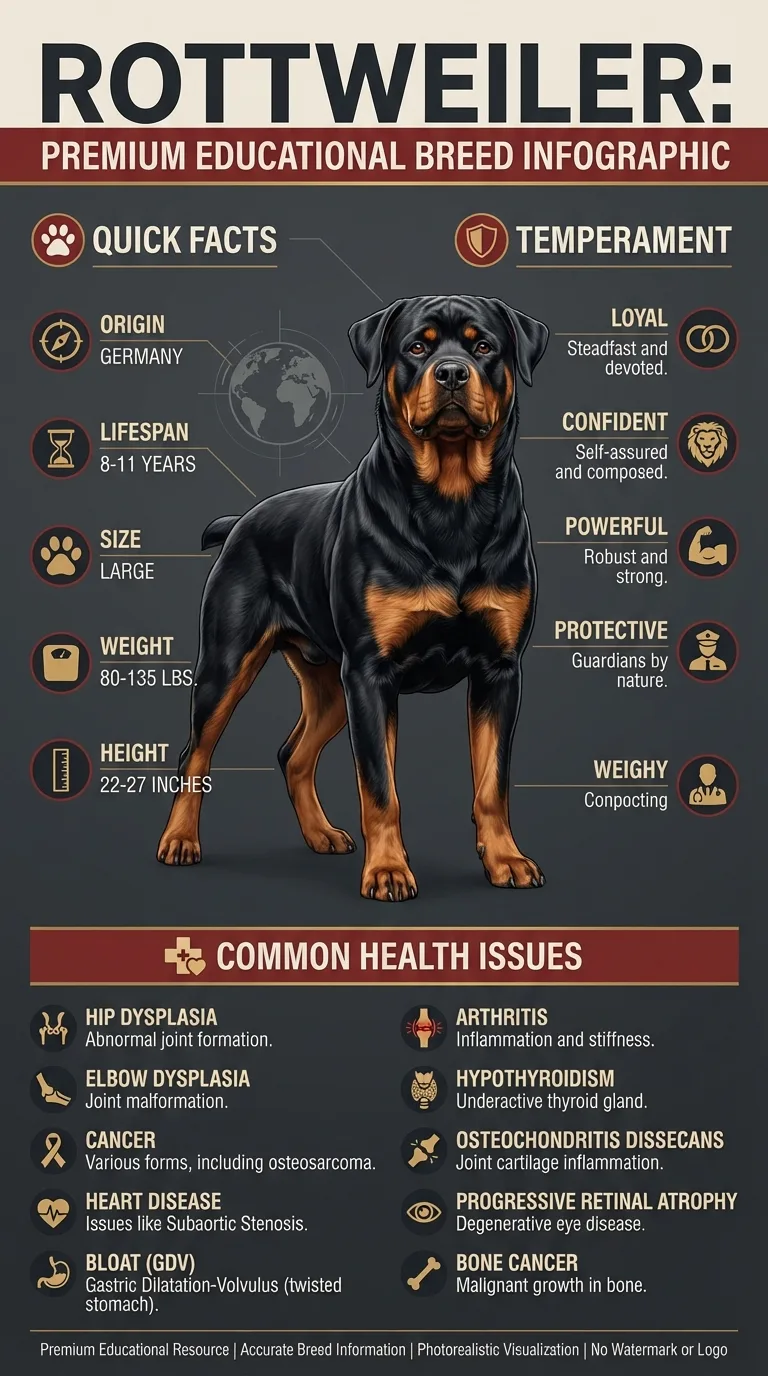
If you want a dog that's easier to place with a first-time owner and lives significantly longer, the Bernedoodle wins on paper; if you want a dog bred for guarding work with less grooming upkeep, the Rottweiler fits.
Bernedoodle or Rottweiler? On paper they differ most on grooming need, and on the scales Rottweiler is the heavier at 80–135 lbs. Here is how the two compare on everything that shapes an ordinary week.
This is for someone already down to Bernedoodle and Rottweiler and deciding between them. For this pair the decision usually turns on grooming need and shedding, so those are covered first and in most detail. Both rate 2/5 for flats, so housing does not settle this one. There is no origin story here — only what changes about your week.
Quick verdict
Between Bernedoodle and Rottweiler, grooming need is what separates them; neither is the lower-effort dog overall.
Choose bernedoodle if...
Choose Bernedoodle if this is your first dog, shedding is a problem in your house and there are young children at home.
Choose rottweiler if...
Choose Rottweiler if you do not want a standing grooming appointment and you want a dog that is more watchful with visitors.
Head-to-head comparison
Feature
bernedoodle
rottweiler
Winner
Size class
medium
large
Equal
Weight
20–90 lbs
80–135 lbs
Equal
Height
12–23 in
22–27 in
Equal
Lifespan
12–18 years
8–11 years
bernedoodle
Exercise need
High (4/5)
High (4/5)
Equal
Grooming need
High (4/5)
Low (2/5)
rottweiler
Shedding
Low (2/5)
High (4/5)
bernedoodle
Energy level
High (4/5)
High (4/5)
Equal
Barking
Low (2/5)
Moderate (3/5)
bernedoodle
Apartment suitability
Low (2/5)
Low (2/5)
Equal
Good for first-time owners
High (4/5)
Low (2/5)
bernedoodle
Tolerates being alone
Low (2/5)
Low (2/5)
Equal
Trainability
Very high (5/5)
High (4/5)
bernedoodle
Good with kids
Very high (5/5)
High (4/5)
bernedoodle
Good with other dogs
Very high (5/5)
Moderate (3/5)
bernedoodle
Friendly to strangers
High (4/5)
Low (2/5)
bernedoodle
Cost level
High (4/5)
High (4/5)
Equal
Coat
Wavy to curly, hypoallergenic
Double coat, short
Equal
Origin
United States
Germany
Equal
Typical monthly cost
$120–$220
$125–$250
Equal
Typical first-year cost
$1,800–$3,200
$2,000–$3,500
Equal
Deep dive
Size and build
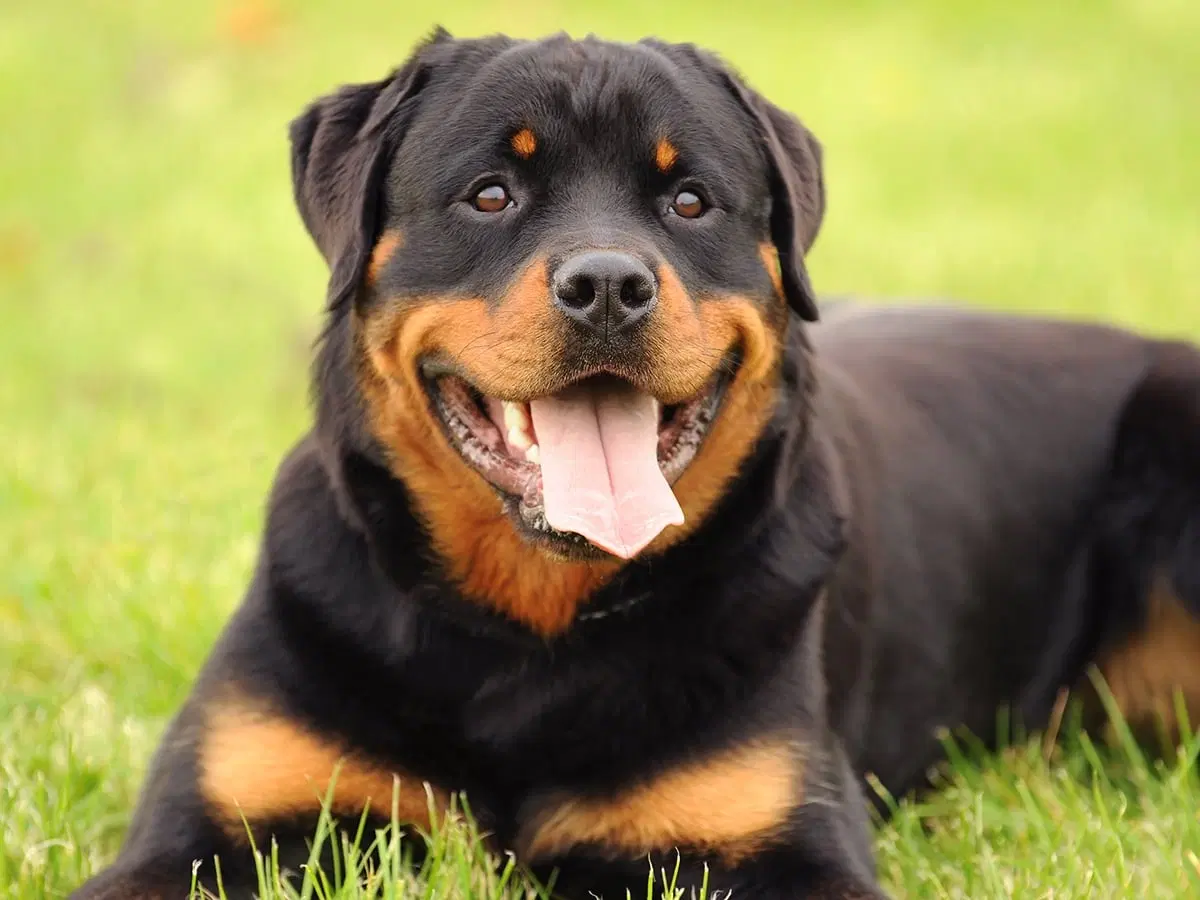
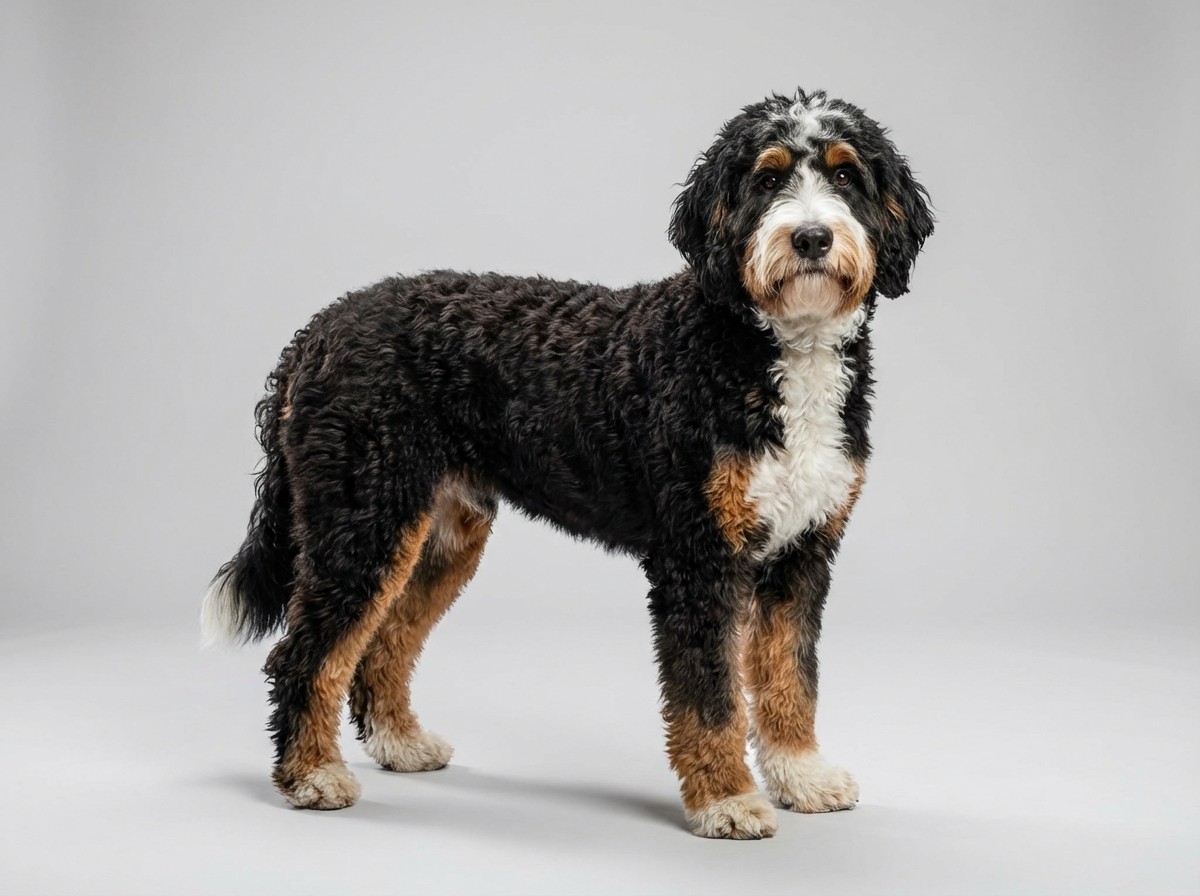
A Bernedoodle tops out around 90 lbs at the high end of its 20-90 lb range, but a Rottweiler starts nearly there: 80-135 lbs is standard, with a height of 22-27 inches against the Bernedoodle's 12-23. Depending on which generation you get, a Bernedoodle can land anywhere from a large lapdog to a genuinely big animal, while a Rottweiler is reliably a large, dense, muscular dog from puppyhood on. If you want predictable mass in your living room, the Rottweiler gives you less guesswork.
Energy and exercise
Both breeds rate a 4 out of 5 for exercise and energy, so neither is a dog you can skip walking for a few days. What differs is style: the Bernedoodle's poodle heritage tends toward retrieving games and mental puzzles, while the Rottweiler's working-dog build favors sustained pulling and structured activity like carting or weight work. Plan on 45-60 minutes of real exercise daily for either one.
Grooming and shedding
Here the two breeds trade places. The Bernedoodle rates 4/5 on grooming need but only 2/5 on shedding — that curly, hypoallergenic coat mats without regular brushing but doesn't cover your floor. The Rottweiler flips that: a 2/5 grooming need but 4/5 shedding, thanks to a short double coat that sheds steadily and needs almost no styling. If allergies are the concern, the Bernedoodle wins; if you just don't want to brush a dog weekly, the Rottweiler is less work.
Apartment living, noise and time alone
Neither dog is an apartment natural — both score a 2/5 for apartment suitability, and both tolerate being left alone poorly (2/5 each). The Bernedoodle is the quieter housemate at 2/5 barking versus the Rottweiler's moderate 3/5, which matters if you share walls. Either way, plan on a yard or frequent long walks rather than four hours alone in a studio.
Training and owner experience
The Bernedoodle rates high (4/5) for first-time owners and very high (5/5) on trainability — it's built to please. The Rottweiler is rated low (2/5) for first-timers despite a still-strong 4/5 trainability score, because what it needs is firm, experienced handling from an early age, not just patience. A Rottweiler responds well to training; it just requires someone who already knows what they're doing.
Kids, other dogs and visitors
With kids, both score well but the Bernedoodle edges ahead at 5/5 versus the Rottweiler's still-solid 4/5. The gap widens with other dogs (5/5 vs 3/5) and with strangers, where the Bernedoodle's 4/5 friendliness contrasts with the Rottweiler's 2/5 — a Rottweiler's wariness toward unfamiliar people is closer to its job description than a flaw, but it does mean more socialization work if you host often.
Health and lifespan
The lifespan gap is the headline: 12-18 years for a Bernedoodle against 8-11 for a Rottweiler. Both breeds share hip and elbow dysplasia, bloat, and progressive retinal atrophy on their health lists, so joint monitoring and slow-feeding to prevent bloat apply to either dog. The Rottweiler's list also carries cancer and heart disease risks that shorten its average run more than orthopedic issues alone would.
Cost to keep
Both breeds land in the high cost bracket (4/5), and the numbers back that up: $120-220 a month for a Bernedoodle versus $125-250 for a Rottweiler, with first-year costs of $1,800-3,200 and $2,000-3,500 respectively. The Rottweiler's larger body drives food and vet-visit costs up slightly; the Bernedoodle's grooming needs eat into the budget instead. Neither is a cheap dog to own.
Bernedoodle vs Rottweiler at a glance
Bernedoodle weighs 20–90 lbs and lives 12–18 years; Rottweiler weighs 80–135 lbs and lives 8–11 years. The two diverge most on grooming need, shedding and good for first-time owners and 2 other rated axes. They are level on tolerates being alone, apartment suitability and cost level, so those cannot decide it. Where the table declares a winner it means less work for the owner, nothing more; descriptive rows are left as ties on purpose. The value here is in the differences between the two columns; treat any single score as approximate.
Bernedoodle vs Rottweiler: Which Suits Your Home? - Bernedoodle vs Rottweiler at a glance
Frequently asked questions
Is a Bernedoodle or Rottweiler bigger?
The Rottweiler, by a wide margin — 80-135 lbs and up to 27 inches tall versus the Bernedoodle's 20-90 lbs and 23 inches. Even a standard-generation Bernedoodle at its heaviest is still lighter than an average Rottweiler.
Which one sheds less?
The Bernedoodle, rated 2/5 for shedding against the Rottweiler's 4/5. Its curly coat holds onto loose hair instead of dropping it, though that means more brushing to prevent mats.
Is either good for a first-time dog owner?
The Bernedoodle is rated 4/5 for first-time owners; the Rottweiler only 2/5. A Rottweiler's trainability is still high, but it needs someone with prior experience in structured, early socialization.
Can either live in an apartment?
Not comfortably — both score just 2/5 for apartment suitability and 2/5 for tolerating time alone. Either dog does better with yard access and a household that isn't gone all day.
How much more does one cost to keep?
They're close. A Bernedoodle runs $120-220 a month and $1,800-3,200 in year one; a Rottweiler runs $125-250 a month and $2,000-3,500 in year one. The Rottweiler's larger size nudges food and vet costs slightly higher.
Do they share health risks?
Yes — hip dysplasia, elbow dysplasia, bloat, and progressive retinal atrophy appear on both lists. The Rottweiler's list additionally includes cancer and heart disease, conditions tied to its shorter 8-11 year average lifespan.
Why is the lifespan gap so large?
A Bernedoodle's 12-18 years reflects its smaller-breed poodle ancestry; the Rottweiler's 8-11 years is typical for a large, deep-chested working breed prone to cancer and cardiac issues. It's one of the biggest gaps in a same-size-class comparison on this site.
If you want a dog that's easier to place with a first-time owner and lives significantly longer, the Bernedoodle wins on paper; if you want a dog bred for guarding work with less grooming upkeep, the Rottweiler fits.
Costs
What will I pay monthly?
$120-220 for a Bernedoodle, $125-250 for a Rottweiler — close enough that grooming and food choices decide it.
Behavior
How much exercise does each need?
Both need real daily exercise — 4/5 on the scale, roughly 45-60 minutes of activity, not just a short walk.
Health
Which lives longer?
The Bernedoodle, by a wide margin — 12-18 years versus 8-11 for the Rottweiler.
Related DogBreedCompass guides
Bernedoodle breed guide – Readers comparing the two usually want the full profile of Bernedoodle before deciding.
Rottweiler breed guide – The same for Rottweiler, so the comparison can be checked against the detail.
Bernedoodle vs Goldendoodle – Goldendoodle is the closest breed to Bernedoodle on the measured axes, so it is the natural next comparison.
Rottweiler vs Rottweiler Mix – Rottweiler Mix sits closest to Rottweiler, which makes it the alternative worth ruling out.
What Bernedoodle costs to keep – Anyone weighing these two is usually also pricing them, and the cost pages carry city-level figures.
Rottweiler health problems – The health pages set out what each breed is actually screened for.
Health information here is general and is not veterinary advice. If your dog shows pain, sudden behaviour change, or worsening symptoms, consult a licensed veterinarian.
Some links on this site are affiliate links. We may earn a commission at no extra cost to you, and we only suggest products we believe are helpful for dog owners.
We research and check what we publish, but we do not warrant that any figure, date, price, or statement is accurate, complete, or current, and we accept no liability for any loss, cost, injury, or other harm arising from the use of this site. Use it as one reference among several. You remain responsible for your own decisions and for your dog's care - confirm anything that matters with a licensed veterinarian or another qualified professional before you act on it. Full disclaimer.