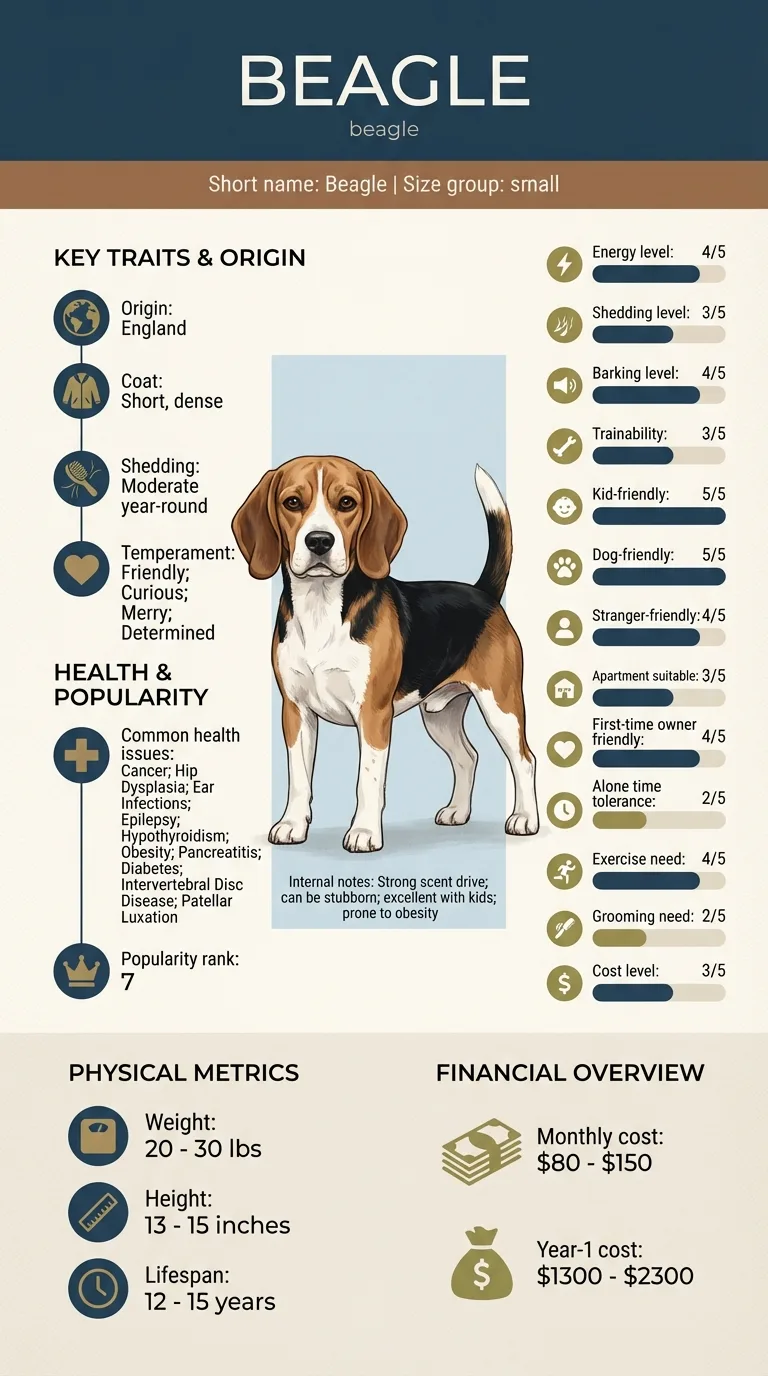
The Beagle's health list names obesity, pancreatitis and diabetes as separate entries, and in practice they are frequently the same story told in three stages.
Beagles are among the most food-motivated dogs in existence. A Beagle will counter-surf, bin-raid, open cupboards, eat things that are not food, and never once appear to have had enough. That is a hunting hound's metabolism paired with a pack animal's competitive feeding instinct, and it does not switch off.
Unmanaged, the outcome is a heavy dog. Excess weight then raises the risk of pancreatitis, particularly with fatty foods, and repeated pancreatic damage is one of the routes to diabetes. Weight also worsens the intervertebral disc disease and patellar luxation that sit further down the list, and it shortens the comfortable part of the dog's life.
The management is unglamorous and effective: measured meals rather than a filled bowl, treats counted within the daily total, a bin the dog cannot open, no fatty scraps, and body-condition scoring by feel every few weeks rather than judging by eye. Food-dispensing toys and scatter feeding turn mealtimes into enrichment and slow the dog down.
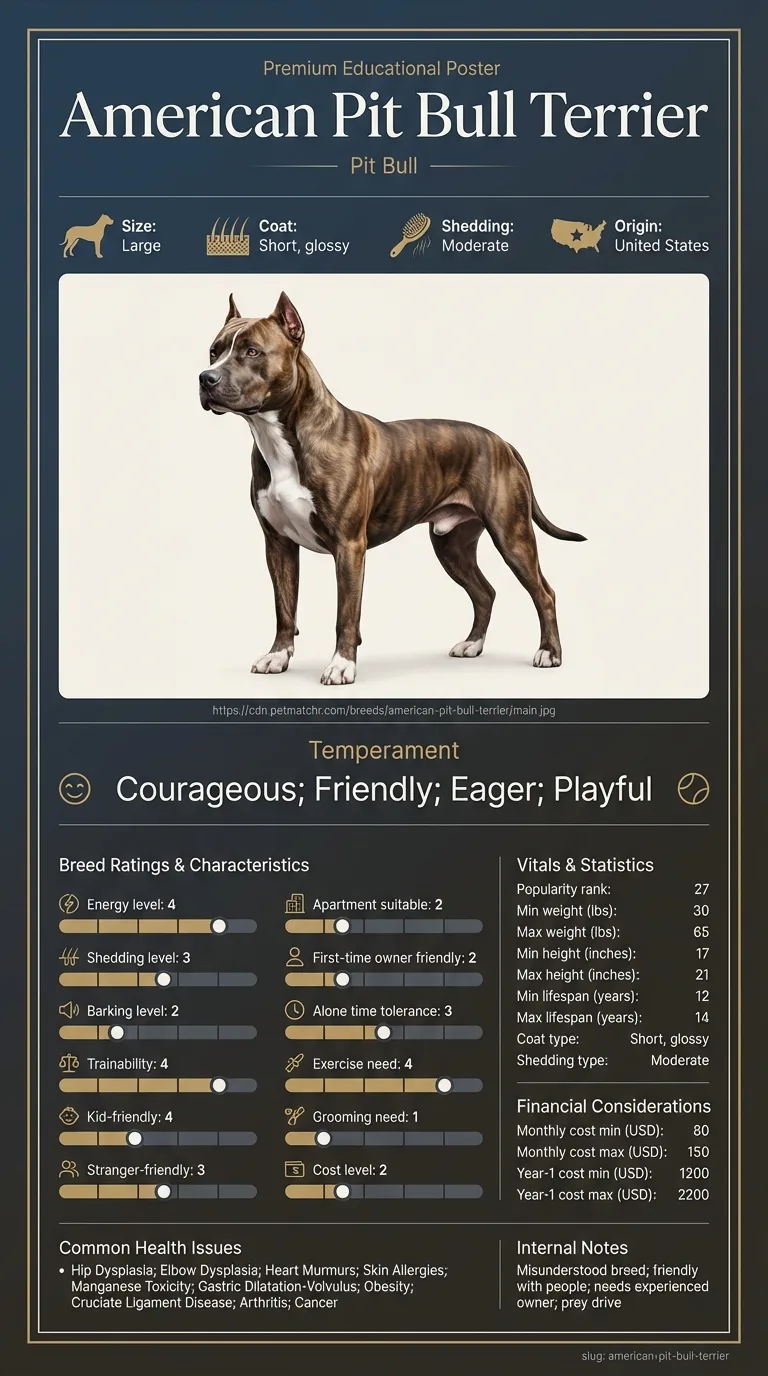
The Pit Bull's list also names obesity, and the mechanism is the same though the appetite is less extreme. In its case the downstream risk is cruciate ligament disease — a common, painful and expensive orthopaedic injury that is strongly weight-linked — along with arthritis and hip dysplasia.
So the single most valuable habit is identical for both breeds, and it is the one thing an owner fully controls. Keep the dog lean.
The rest of the Beagle's list runs cancer, hip dysplasia, ear infections, epilepsy and hypothyroidism. The Pit Bull's adds elbow dysplasia, skin allergies, heart murmurs and bloat.