Health
What are quick tips for managing Cane Corso heart conditions?
Ensure regular vet check-ups, maintain a healthy diet, and provide moderate exercise. Avoid strenuous activities that could strain their heart.

Quick answer
What are quick tips for managing Cane Corso heart conditions?
Ensure regular vet check-ups, maintain a healthy diet, and provide moderate exercise. Avoid strenuous activities that could strain their heart.
Cane Corso heart conditions can be serious and require attention from owners. These issues can impact your dog's quality of life and longevity.
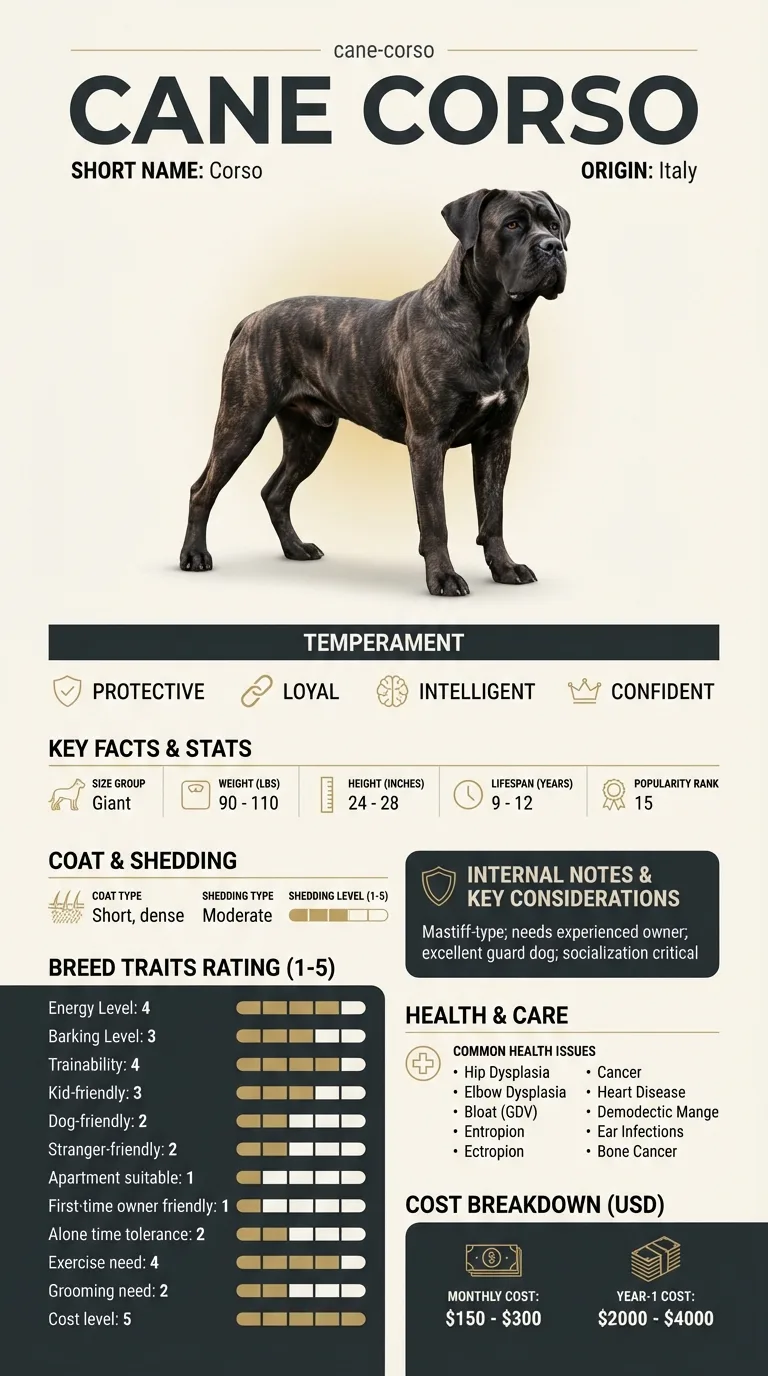
This problem often affects first-time Cane Corso owners or those unfamiliar with the breed's specific health needs. Families who want a strong, loving companion may find heart issues surprising and concerning.
This guide is not medical advice. If your dog shows pain, sudden behavior change, or worsening symptoms, consult a licensed veterinarian.
Some links may be affiliate links. We may earn a commission at no extra cost to you. We only suggest products we believe are helpful for dog owners.
We research and check what we publish, but we do not warrant that any figure, date, price, or statement is accurate, complete, or current, and we accept no liability for any loss, cost, injury, or other harm arising from the use of this site. Use it as one reference among several. You remain responsible for your own decisions and for your dog's care - confirm anything that matters with a licensed veterinarian or another qualified professional before you act on it. Full disclaimer.
Check this first
Cane Corso heart conditions can be serious, and recognizing when to act quickly is crucial. If your Corso shows symptoms like difficulty breathing, persistent coughing, or fainting, these are red flags. Call your vet immediately. Other signs such as severe lethargy, excessive panting, or swelling in the abdomen also require prompt attention.
On the other hand, if your Cane Corso occasionally coughs or seems a bit more tired than usual, it may be manageable. Monitor these mild symptoms at home, but keep a detailed record. Make sure to consult your vet if you notice any changes, especially if they worsen over time. Understanding the difference between urgent and mild cases can help you act appropriately and keep your dog safe.
If any of these apply, call your vet or an emergency clinic now. The rest of this page is for the cases that are not an emergency.
Cane Corso heart conditions can significantly affect your dog's quality of life. These issues may manifest as lethargy, coughing, or difficulty breathing. It's essential to recognize these signs early and consult a vet, as heart problems can escalate quickly.
Heart conditions among Cane Corsos are relatively common, especially in older dogs or those with poor breeding backgrounds. Regular vet check-ups can help catch these problems early, improving your dog's chances for a healthier life.
Cane Corsos are a giant breed, which can predispose them to heart conditions due to their larger size and the stress it puts on their hearts. Genetic factors also play a role, as certain heart diseases are more common in this breed. Additionally, their protective nature can sometimes lead to stress-related heart issues.
Environmental factors can contribute to heart conditions in Cane Corsos. Lack of exercise can lead to obesity, putting extra strain on their hearts. Poor diet or exposure to toxins can also negatively impact heart health.
If you notice symptoms like coughing, lethargy, or difficulty breathing, contact your vet immediately. Regular check-ups are essential, especially as they age, to catch any potential heart issues early.
Avoiding common mistakes can help your Cane Corso's heart health. Here are some behaviors to steer clear of.
Start here: Cane Corso Most Common Genetic Disorders: What to Screen For
See all Cane Corso health problems, which breeds are prone to heart conditions, or the full Cane Corso breed guide for temperament, exercise needs and ownership costs.
Managing Cane Corso heart conditions can take several weeks to months, depending on the severity and type of condition. Regular vet visits and monitoring will be essential during this time.
Success means your Cane Corso shows improvement in energy levels, appetite, and overall health. You'll notice a reduction in symptoms, such as coughing or lethargy, and your vet will confirm stability in heart function.
Maria, a devoted dog mom, noticed her Cane Corso, Bruno, was more tired than usual. After a vet visit, she learned that he had a heart condition. Initially overwhelmed, Maria started researching how to manage his care. She learned about diet adjustments, exercise modifications, and the importance of regular vet check-ups. Over a few months, she followed a tailored plan, and Bruno gradually regained his energy. They now enjoy daily walks, and Maria feels confident in managing his health.
Key takeaway: With the right support and information, you can effectively manage your Cane Corso's heart conditions, improving their quality of life.
Cane Corsos are prone to certain heart conditions due to their genetics and size. Common issues include dilated cardiomyopathy and other cardiac diseases. Regular vet check-ups can help identify problems early.
To help prevent heart conditions, ensure your Cane Corso maintains a healthy weight and gets regular exercise. A balanced diet and routine vet visits are essential for monitoring heart health.
Signs can include coughing, fatigue, difficulty breathing, and fainting. If you notice any of these symptoms, consult your vet immediately for a thorough examination.
Training methods should focus on low-impact exercises to avoid overexertion. Gentle activities like leash walks can keep them active without straining their hearts.
Yes, a nutritious diet plays a vital role in heart health. Ensure your Cane Corso eats high-quality food with appropriate nutrients to support their cardiovascular system.
Follow your vet's recommendations, which may include medication and lifestyle changes. Regular follow-ups are crucial for managing their condition effectively.
It's recommended to have a vet check-up at least once a year, but more frequent visits may be necessary if your Cane Corso shows any signs of heart issues.
Common signs include coughing, difficulty breathing, fatigue, and fainting. If your Cane Corso shows any of these symptoms, it's important to consult a veterinarian for proper evaluation.
Yes, some heart conditions can be hereditary in Cane Corsos. Regular health screenings and choosing a reputable breeder can help reduce the risk of inherited issues.
Managing your Cane Corso's heart condition involves providing a balanced diet, regular low-impact exercise, and following your vet's treatment plan. Monitoring their weight and stress levels is also crucial.
If you notice any signs of distress, such as rapid breathing or lethargy, it's time to visit the vet. Regular check-ups are also important for early detection of potential heart conditions.
Training should focus on low-impact activities and positive reinforcement. It's important to avoid overly strenuous exercises that could stress their heart, and consult with a trainer experienced in working with dogs with health issues.
Ensure regular vet check-ups, maintain a healthy diet, and provide moderate exercise. Avoid strenuous activities that could strain their heart.
Feeding them high-quality food and keeping them active with gentle exercises can help support their heart health.
Yes, many heart conditions in Cane Corsos are genetic, which is why regular screenings are important.
Look for signs like decreased exercise tolerance or persistent coughing, which can indicate heart issues.
Treatment costs can vary widely, ranging from a few hundred to thousands of dollars depending on the condition and required care.
A one-page prep sheet for this condition: the signs, the questions to ask, what to get priced. Unlocks here.
You get: Vet visit prep sheet
No spam. One-click unsubscribe. See our privacy policy.
Preview page 1 before you decide.