Costs
Labrador Retriever cost in Burlington
About $105–$205/month, $1,650–$2,850 for year one — near average, where Vermont's smaller vet market offers real, valuable continuity of care for this breed's extensive health-monitoring needs.

See Labrador Retriever price across all cities →
Quick answer
Labrador Retriever cost in Burlington
About $105–$205/month, $1,650–$2,850 for year one — near average, where Vermont's smaller vet market offers real, valuable continuity of care for this breed's extensive health-monitoring needs.
A Labrador Retriever in Burlington costs about $105–$205 a month, with the first year around $1,650–$2,850 — close to the national average, and Vermont's genuinely smaller vet market, while offering fewer clinics to comparison-shop between, is a real, underrated advantage for a breed with this many documented conditions worth tracking consistently over time.
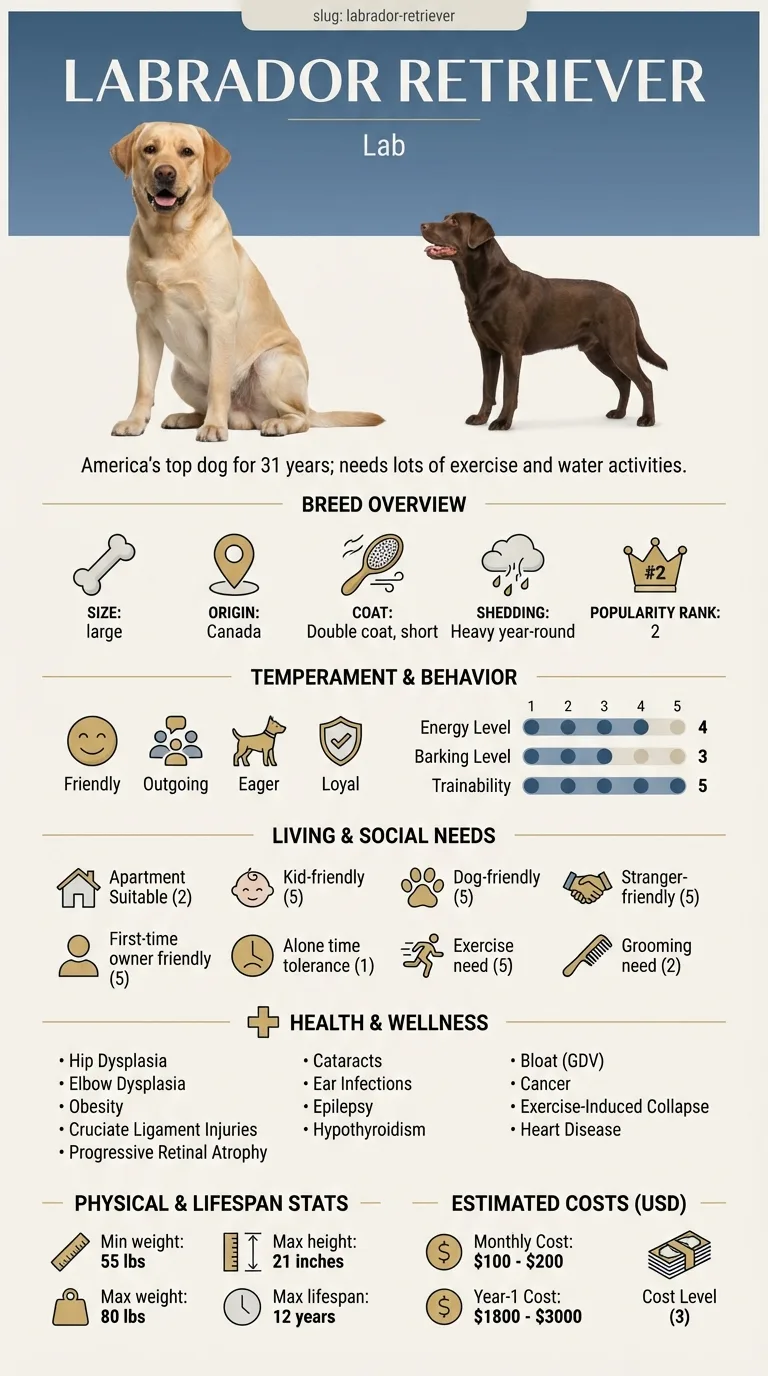
Cruciate ligament injuries are a well-documented, common orthopedic issue in this breed, often requiring surgery in the $3,000–$5,000 range. Bloat (GDV) is the separate, sudden emergency risk given this breed's deep chest — no warning, immediate surgery needed.
These figures reflect Burlington's near-national-average pricing, with a note on the real, practical value of vet continuity in a smaller market for this breed's extensive documented health-monitoring needs.
Estimate · source: estimation · confidence: low · updated 2026-09-05 · not a quote
| Item | Cost range |
|---|---|
One-time setup (initial vet visit, spay/neuter, gear) Covers the first exam, vaccinations, spay/neuter if needed, and basic gear. | $340 - $575 |
| Item | Cost range |
|---|---|
Food Close to the national average, consistent with Burlington's general cost of living; this breed's large size and documented obesity risk make portion control worth watching closely. | $48 - $90 |
Grooming (short double coat) Genuinely low compared to a longer-coated breed, though this breed's documented heavy year-round shedding means frequent brushing at home matters more than professional visits. | $17 - $40 |
Each range starts from a national baseline for this breed's size class and is then adjusted for local cost of living and veterinary pricing. The baselines, and the source each one came from, are listed on our sources page (dataset 2026.09). Two inputs, the purchase price and the emergency reserve, have no published national figure we could verify, so we leave them to you rather than invent them.
These are planning estimates, not quotes. Your own numbers will move with the individual dog, your vet and your insurer. Build a budget with your own figures.
For a Labrador Retriever in Burlington, insurance is worth taking seriously given the breed's extensive documented health risk list, regardless of the genuine benefit of local vet continuity.
This breed's real cruciate ligament injury and bloat statistics make insurance worth locking in early — a policy bought before any diagnosis covers costs a self-funded emergency fund alone often can't stretch to match.
Skipping coverage is a reasonable call for an owner who's already set aside a meaningful cash reserve and is comfortable managing a serious diagnosis without monthly premiums.
Burlington's near-average costs are straightforward, and building a long-term relationship with one vet is a genuinely valuable habit for this breed here.
This breed's documented health risk list runs genuinely longer than most breeds this site covers, spanning joint conditions, obesity, cancer, hormonal issues and more, all conditions where subtle, gradual changes matter as much as any single dramatic symptom. Vermont's smaller vet market, with fewer competing clinics than a larger metro, means less clinic-hopping in practice, and a real, practical benefit follows: the same vet seeing the same dog year after year is more likely to notice a gradual weight creep, a slightly different gait, or a coat change than a rotating cast of providers would.
That continuity is worth valuing on its own terms, separate from whatever pricing competition a bigger market might otherwise offer.
Vermont's real winters shorten the parasite-prevention season here, and this breed's documented heavy shedding means frequent at-home brushing matters more than professional grooming visits.

A Burlington Labrador Retriever owner had seen the same vet for every visit since puppyhood, mostly because the small local market didn't offer many alternatives to shop between. That familiarity paid off when the vet flagged a subtle gait change at a routine checkup, something the owner hadn't even noticed, catching an early cruciate ligament issue well before it became a full tear. The relationship the family had assumed was just a matter of limited options turned out to be a real asset.
Key takeaway: In Burlington specifically, Vermont's smaller vet market's real upside is the continuity it encourages, a genuine advantage for catching this breed's documented conditions early.
About $105–$205, close to the national average, consistent with Burlington's typical general cost of living.
Roughly $1,650–$2,850, including the initial vet exam, spay/neuter if needed, and gear on top of ongoing monthly costs.
Less than it might seem — real continuity with the same vet over time is a genuine, practical advantage for a breed with this many documented conditions worth monitoring consistently, even if there's less pricing competition to shop between.
Its documented health risk list includes several gradual, easy-to-miss conditions, like weight creep and early joint stiffness, that a vet who knows the dog's history well is better positioned to catch early.
Worth pricing out given this breed's extensive documented health risks, including cruciate ligament injuries and bloat, bought while the dog is young and before anything is on record.
Around $730 covers a typical significant vet visit in this market, reflecting Burlington's near-national-average pricing.
About $105–$205/month, $1,650–$2,850 for year one — near average, where Vermont's smaller vet market offers real, valuable continuity of care for this breed's extensive health-monitoring needs.
This guide is not medical advice. If your dog shows pain, sudden behavior change, or worsening symptoms, consult a licensed veterinarian.
Some links may be affiliate links. We may earn a commission at no extra cost to you. We only suggest products we believe are helpful for dog owners.
We research and check what we publish, but we do not warrant that any figure, date, price, or statement is accurate, complete, or current, and we accept no liability for any loss, cost, injury, or other harm arising from the use of this site. Use it as one reference among several. You remain responsible for your own decisions and for your dog's care - confirm anything that matters with a licensed veterinarian or another qualified professional before you act on it. Full disclaimer.
One sheet with every line item, the emergency fund and when insurance pays off - unlocks on this page.
You get: 12-month budget sheet
No spam. One-click unsubscribe. See our privacy policy.
Preview page 1 before you decide.