Costs
French Bulldog cost in Cheyenne
About $180–$345/month, $2,900–$5,250 for year one — below average, in one of the few cities that stacks both real altitude and real cold risk for this breed at once.

See French Bulldog price across all cities →
Quick answer
French Bulldog cost in Cheyenne
About $180–$345/month, $2,900–$5,250 for year one — below average, in one of the few cities that stacks both real altitude and real cold risk for this breed at once.
A French Bulldog in Cheyenne costs about $180–$345 a month, with the first year around $2,900–$5,250 — below the national average, in one of the few cities on this site that combines two of this breed's real risk factors at the same time.
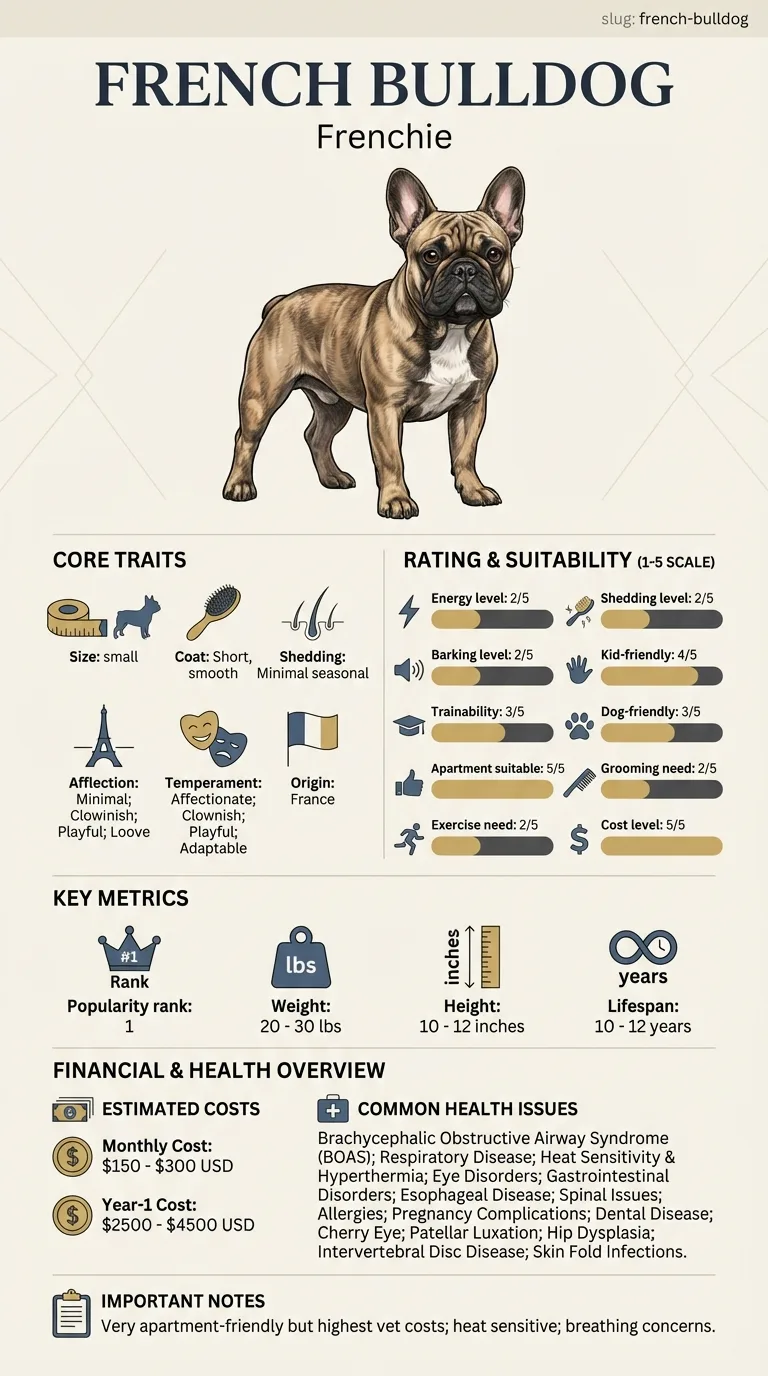
BOAS-related breathing difficulty is this breed's single most consequential health risk, worsened by thinner high-altitude air. Cold intolerance is the separate, compounding risk here — frostbite on exposed ears, nose and paw pads is a real possibility in a genuine high-plains winter.
These figures reflect Cheyenne's below-national-average general pricing, with real cold-weather gear priced in given how this breed's altitude and cold risks stack here.
Estimate · source: estimation · confidence: medium · updated 2026-09-05 · not a quote
| Item | Cost range |
|---|---|
Winter coat and paw protection A genuinely necessary cost given this breed's poor cold tolerance and Cheyenne's real high-plains winters. | $35 - $85 |
One-time setup (initial vet visit, spay/neuter, gear) Covers the first exam, vaccinations, spay/neuter if needed, and basic gear — priced at Cheyenne's below-average rates. | $415 - $705 |
| Item | Cost range |
|---|---|
Food Below the national average for a small breed, consistent with Wyoming's generally lower price level. | $35 - $57 |
Heartworm and flea/tick prevention Clearly seasonal given Wyoming's short, dry warm season. | $9 - $16 |
Each range starts from a national baseline for this breed's size class and is then adjusted for local cost of living and veterinary pricing. The baselines, and the source each one came from, are listed on our sources page (dataset 2026.09). Two inputs, the purchase price and the emergency reserve, have no published national figure we could verify, so we leave them to you rather than invent them.
These are planning estimates, not quotes. Your own numbers will move with the individual dog, your vet and your insurer. Build a budget with your own figures.
For a French Bulldog in Cheyenne, insurance is worth taking seriously given this breed's extensive documented health risks, compounded here by the real combination of altitude and cold.
This breed's real BOAS statistics make insurance a near-necessity here — buy before a diagnosis, not after, since pre-existing conditions won't be covered.
Self-insuring is reasonable only for a household that's already earmarked real, substantial savings for this exact scenario.
Cheyenne's below-average costs help offset this breed's inherently high national cost tier, but the real altitude-and-cold combination deserves deliberate winter planning.
Most cities on this site present this breed with one climate-related risk factor at a time, either real heat, real cold, or real altitude. Cheyenne is a genuine exception: its roughly 6,062-foot elevation means thinner air compounding this breed's already-restricted airway, while its real high-plains winters bring the kind of sustained cold this short-coated, low-body-fat breed manages poorly on its own. Neither factor alone is unmanageable, but together they mean winter exercise here deserves closer attention than either factor would on its own, shorter outings, real cold-weather gear, and a closer eye for unusual fatigue than a sea-level, temperate city would require.
Wyoming's status as the least populous state also means Cheyenne's veterinary market, while solid for general and routine care, has limited board-certified specialists locally, and a case requiring surgical airway correction would typically mean a trip to Denver.
Wyoming's lack of a state income tax and its high-plains climate both work in a Cheyenne owner's favor for the routine budget: overall costs run well below the national average, and the short, dry season keeps flea-and-tick prevention clearly seasonal rather than year-round.
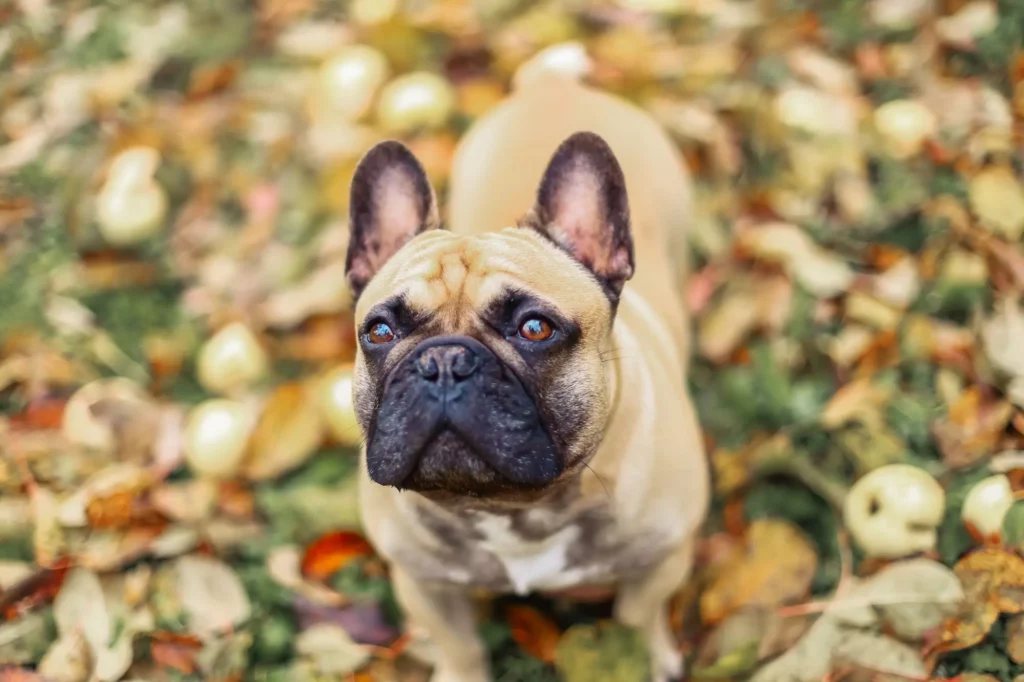
A Cheyenne French Bulldog owner took their dog on what had always been an easy five-minute loop around the block on a cold January morning, only to have the dog stop twice to catch its breath and shiver hard by the time they got back. A vet visit ruled out anything acute but walked the family through how both the cold and the altitude were likely working against the dog at the same time, something the owner hadn't considered as a combined factor before. They now keep winter walks to a couple of minutes, always with a coat, and watch closely for the first sign of labored breathing.
Key takeaway: In Cheyenne specifically, this breed's real altitude and cold risks can compound each other in a way that makes even a familiar, short walk worth watching closely during winter.
About $180–$345, below the national average, consistent with Wyoming's generally lower cost of living and lack of a state income tax.
Roughly $2,900–$5,250, including the initial vet exam, spay/neuter if needed, and gear on top of ongoing monthly costs.
Genuinely worth attention — the roughly 6,062-foot elevation means thinner air on top of this breed's documented airway restriction, worth discussing directly with a vet, especially for an older dog or one with known symptoms.
Yes — this breed's short coat and low body fat make it a poor cold-regulator, and Wyoming's real high-plains winters mean cold-weather gear and shortened outdoor time are both genuinely necessary here.
Especially worth pricing out given this breed's extensive documented health risks, bought while the dog is young and before anything is on record.
Around $920 covers a typical significant vet visit in this market, reflecting Cheyenne's below-average general pricing.
About $180–$345/month, $2,900–$5,250 for year one — below average, in one of the few cities that stacks both real altitude and real cold risk for this breed at once.
This guide is not medical advice. If your dog shows pain, sudden behavior change, or worsening symptoms, consult a licensed veterinarian.
Some links may be affiliate links. We may earn a commission at no extra cost to you. We only suggest products we believe are helpful for dog owners.
We research and check what we publish, but we do not warrant that any figure, date, price, or statement is accurate, complete, or current, and we accept no liability for any loss, cost, injury, or other harm arising from the use of this site. Use it as one reference among several. You remain responsible for your own decisions and for your dog's care - confirm anything that matters with a licensed veterinarian or another qualified professional before you act on it. Full disclaimer.
One sheet with every line item, the emergency fund and when insurance pays off - unlocks on this page.
You get: 12-month budget sheet
No spam. One-click unsubscribe. See our privacy policy.
Preview page 1 before you decide.
