Costs
French Bulldog cost in Charleston
About $215–$405/month, $3,400–$6,050 for year one — near average, in a historic city where confirming reliable central air before renting genuinely matters for this breed.

See French Bulldog price across all cities →
Quick answer
French Bulldog cost in Charleston
About $215–$405/month, $3,400–$6,050 for year one — near average, in a historic city where confirming reliable central air before renting genuinely matters for this breed.
A French Bulldog in Charleston costs about $215–$405 a month, with the first year around $3,400–$6,050 — close to the national average, in a historic city where housing choice deserves real, specific attention for this breed.
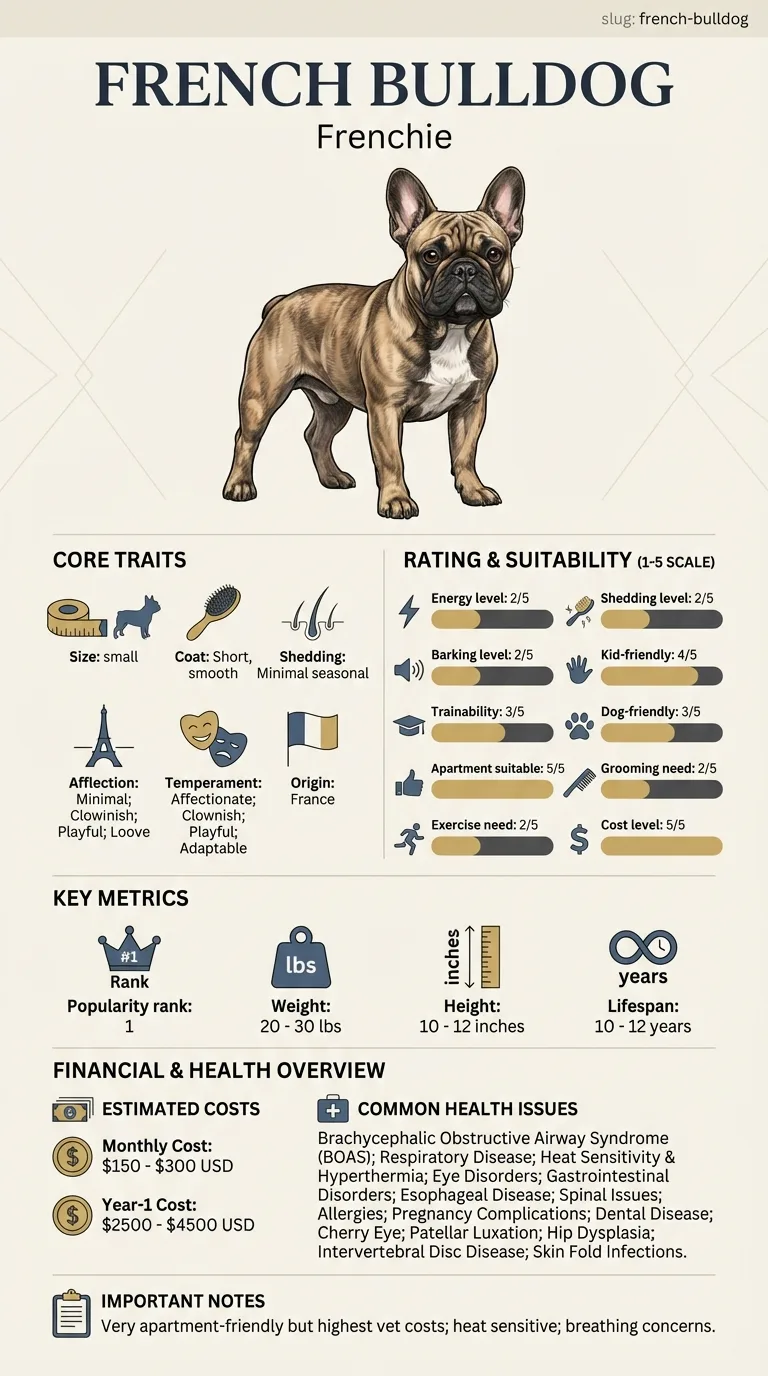
BOAS-related breathing difficulty is this breed's single most consequential health risk, sometimes requiring corrective airway surgery. Heatstroke is the acute risk layered on top — this breed can't pant-cool effectively, making it a genuine emergency faster than in most other breeds.
These figures reflect Charleston's near-national-average general pricing, with a note on the real housing question this breed's owners should settle before signing a lease.
Estimate · source: estimation · confidence: medium · updated 2026-09-05 · not a quote
| Item | Cost range |
|---|---|
One-time setup (initial vet visit, spay/neuter, gear) Covers the first exam, vaccinations, spay/neuter if needed, and basic gear. | $470 - $800 |
| Item | Cost range |
|---|---|
Food Close to the national average for a small breed, consistent with Charleston's general cost of living. | $41 - $66 |
Cooling gear and window-unit backup A genuinely serious, necessary cost given this breed's coastal-humidity heat intolerance and the real chance of imperfect cooling in an older rental. | $16 - $35 |
Boarding and professional grooming Priced a little above the state average given Charleston's tourism-driven boarding and grooming market. | $20 - $45 |
Each range starts from a national baseline for this breed's size class and is then adjusted for local cost of living and veterinary pricing. The baselines, and the source each one came from, are listed on our sources page (dataset 2026.09). Two inputs, the purchase price and the emergency reserve, have no published national figure we could verify, so we leave them to you rather than invent them.
These are planning estimates, not quotes. Your own numbers will move with the individual dog, your vet and your insurer. Build a budget with your own figures.
For a French Bulldog in Charleston, insurance is especially worth taking seriously given the combination of this breed's extensive documented health risks with a genuinely serious, elevated risk of a heat emergency specific to this coastal humid climate.
This breed's real BOAS and heatstroke statistics make insurance a near-necessity here — buy before a diagnosis, not after, since pre-existing conditions won't be covered.
Self-insuring is reasonable only for a household that's already earmarked real, substantial savings for this exact scenario.
Charleston's costs are close to the national average overall, but confirming genuinely reliable cooling before choosing a home is the single most important habit for this breed here.
Charleston's iconic historic single houses were designed around porches, high ceilings and cross-ventilation long before central air conditioning existed, and a meaningful share of the city's older downtown rentals still lean on window units or genuinely inconsistent cooling rather than reliable central air. For most dogs, that's an inconvenience. For this breed specifically, whose coastal-humidity heat intolerance makes air conditioning close to a real necessity rather than a comfort, it's worth confirming directly with a landlord before signing anything, not assuming a charming historic listing has it figured out.
Charleston's tourism-driven market also pushes boarding and grooming prices a little above the state average, a real, if modest, added cost for an owner who travels or needs regular professional grooming access.
Coastal humidity keeps flea-and-tick and heartworm prevention close to year-round here, one of the longer active seasons this site tracks.

A Charleston renter fell for a beautifully restored historic single house downtown, complete with a wraparound porch and original wide-plank floors, and was ready to sign a lease before thinking to ask about cooling. The landlord confirmed the unit relied on ceiling fans and two window units that struggled to keep the upstairs bedroom below 80 degrees most summer afternoons, a dealbreaker once the renter thought through what that would mean for their French Bulldog. They found a similarly charming, slightly less historic unit two blocks over with reliable central air instead.
Key takeaway: In Charleston specifically, this breed's real heat intolerance means asking about cooling needs to happen before falling in love with a listing's architecture, not after moving in.
About $215–$405, close to the national average, though the city's tourism-driven market pushes boarding and grooming a little above the state average.
Roughly $3,400–$6,050, including the initial vet exam, spay/neuter if needed, and gear on top of ongoing monthly costs.
Genuinely, yes — many of Charleston's classic historic homes predate central air, and this breed's coastal-humidity heat intolerance makes reliable cooling close to a real necessity, worth confirming with a landlord directly rather than assuming.
Coastal humidity is a real, elevated risk given this breed's restricted airway and inability to pant-cool effectively, making reliable air conditioning genuinely important here.
Especially worth pricing out given this breed's extensive documented health risks and the genuine, elevated heat-emergency risk specific to this coastal climate.
Around $1,150 covers a typical significant vet visit in this market, reflecting both the national baseline and this breed's real coastal heat-emergency risk.
About $215–$405/month, $3,400–$6,050 for year one — near average, in a historic city where confirming reliable central air before renting genuinely matters for this breed.
This guide is not medical advice. If your dog shows pain, sudden behavior change, or worsening symptoms, consult a licensed veterinarian.
Some links may be affiliate links. We may earn a commission at no extra cost to you. We only suggest products we believe are helpful for dog owners.
We research and check what we publish, but we do not warrant that any figure, date, price, or statement is accurate, complete, or current, and we accept no liability for any loss, cost, injury, or other harm arising from the use of this site. Use it as one reference among several. You remain responsible for your own decisions and for your dog's care - confirm anything that matters with a licensed veterinarian or another qualified professional before you act on it. Full disclaimer.
One sheet with every line item, the emergency fund and when insurance pays off - unlocks on this page.
You get: 12-month budget sheet
No spam. One-click unsubscribe. See our privacy policy.
Preview page 1 before you decide.