Costs
Bernese Mountain Dog cost in Phoenix
About $150–$285/month, $2,200–$3,850 for year one — near-average, but hot pavement is a real, specific summer hazard for this breed's paws.

See Bernese Mountain Dog price across all cities →
Quick answer
Bernese Mountain Dog cost in Phoenix
About $150–$285/month, $2,200–$3,850 for year one — near-average, but hot pavement is a real, specific summer hazard for this breed's paws.
A Bernese Mountain Dog in Phoenix costs about $150–$285 a month, with the first year around $2,200–$3,850 — close to the national average for this cost tier, with one very specific, physical summer hazard worth knowing about.
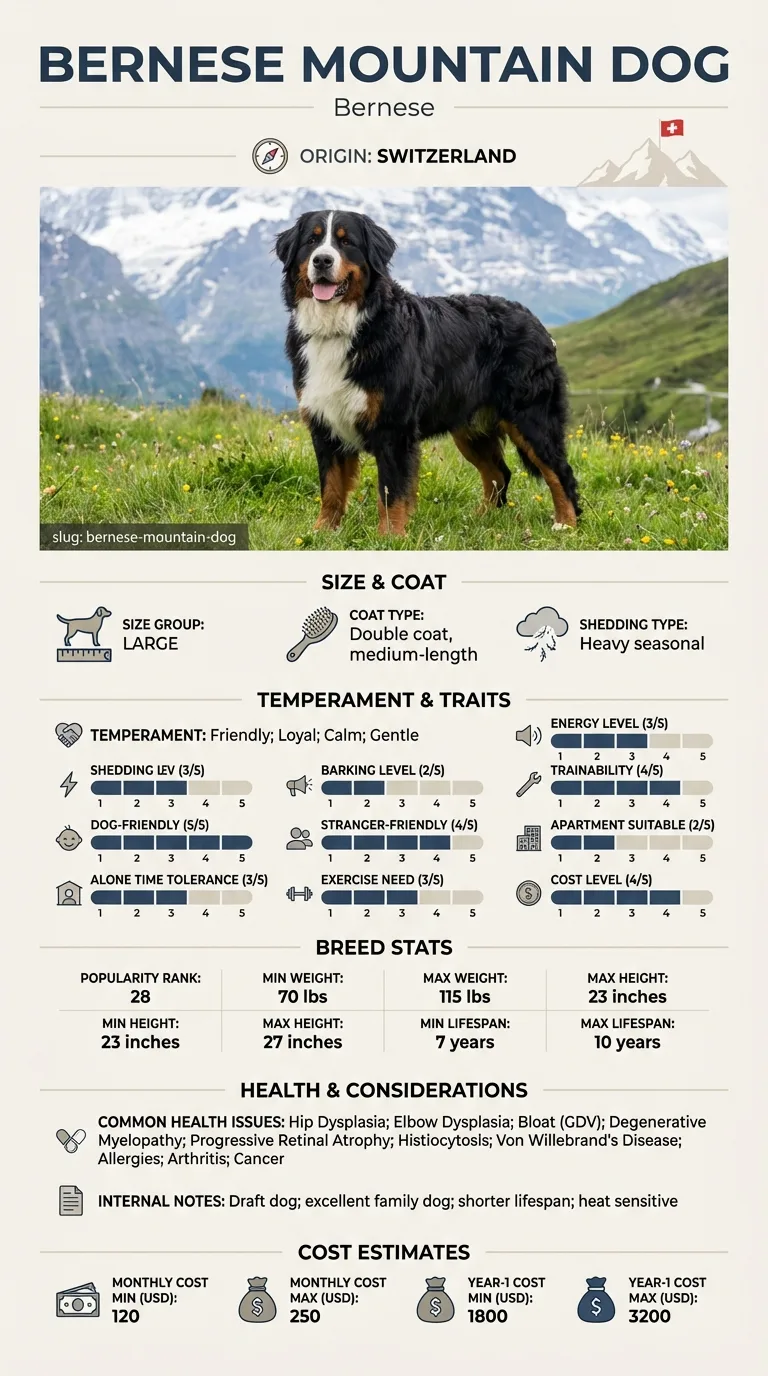
Hip and elbow dysplasia are common large-breed risks, but this breed's more consequential concern is its documented elevated cancer risk, including histiocytosis, contributing to a shorter typical lifespan than most large breeds. Heat stress and pavement burns are real, additional risks in Phoenix specifically, on top of the breed's other documented health concerns.
These figures reflect Phoenix's near-national-average general pricing, with heat-management costs priced up given this breed's documented risk category and a note on the real, specific pavement-burn hazard summer here presents.
Estimate · source: estimation · confidence: medium · updated 2026-09-05 · not a quote
| Item | Cost range |
|---|---|
One-time setup (initial vet visit, spay/neuter, large-breed gear) Covers the first exam, vaccinations, spay/neuter if needed, and gear sized for the breed's substantial adult weight. | $440 - $745 |
| Item | Cost range |
|---|---|
Food Close to the national average for a large breed with substantial food needs. | $64 - $100 |
Grooming The heavy seasonal-shedding double coat needs regular brushing; most owners handle this at home rather than paying for professional grooming. | $17 - $33 |
Cooling gear (mat, vest, paw protection) and added AC use A genuinely relevant, elevated cost here given this breed's heat-risk category and Phoenix's extreme summer pavement temperatures, including protective paw booties for peak-heat walks. | $15 - $30 |
Flea & tick prevention Lower than a humid climate would show — fleas and ticks generally struggle in Phoenix's dry desert conditions. | $11 - $21 |
Each range starts from a national baseline for this breed's size class and is then adjusted for local cost of living and veterinary pricing. The baselines, and the source each one came from, are listed on our sources page (dataset 2026.09). Two inputs, the purchase price and the emergency reserve, have no published national figure we could verify, so we leave them to you rather than invent them.
These are planning estimates, not quotes. Your own numbers will move with the individual dog, your vet and your insurer. Build a budget with your own figures.
For a Bernese Mountain Dog in Phoenix, insurance is especially worth taking seriously given the combination of this breed's documented cancer and bloat risks with a genuine, elevated risk of a heat- or pavement-related emergency specific to this climate.
Given both this breed's documented health risks and Phoenix's explicit heat-and-pavement danger for heavy-coated breeds, insurance purchased while the dog is young and healthy is one of the higher-value purchases an owner of this breed can make here.
Owners who've built a genuinely large emergency fund and are strictly disciplined about summer heat and pavement precautions, reducing the added emergency risk, can reasonably self-insure instead.
Phoenix's costs are close to the national average overall, but disciplined summer precautions, including the pavement test, are the single most important, cost-relevant habit for this specific breed here.
Phoenix's summer pavement temperatures routinely exceed the air temperature by a wide margin — asphalt has been measured well above 140°F on peak days, hot enough to burn a dog's paw pads within seconds of contact, a risk distinct from general heat exhaustion and one that many new-to-the-desert owners don't fully appreciate until it happens. The simple test recommended by local vets — pressing the back of a hand to the pavement for seven seconds — is worth doing before any summer walk rather than assuming a dog's paws can tolerate what a shoe protects a person from.
For a heavy-coated breed like the Bernese Mountain Dog, that pavement risk sits alongside the broader heat-stress cost driver Phoenix presents for any breed with a dense coat — cooling gear, strict exercise timing, and occasional heat-related vet visits are a real, budgetable part of ownership here through the long summer.
Phoenix's substantial retiree and snowbird population has supported a genuinely robust local veterinary infrastructure, including several 24-hour emergency and specialty practices, a real practical asset alongside the climate challenge. Arizona's dry climate does keep some parasite pressure lower than a humid city despite the year-round warm season.

A Phoenix Bernese Mountain Dog owner took their dog for a normal midday walk during an early-summer heat wave, not yet aware of how hot the sidewalk had become. The dog began limping and lifting its paws within a block, and a vet visit confirmed mild pavement burns on two paw pads. The family switched permanently to early-morning walks only, and adopted the hand test as a standing habit before any warm-weather outing, with no repeat incidents.
Key takeaway: In Phoenix specifically, pavement heat is a genuinely distinct hazard from general heat exhaustion — a simple hand test before walking becomes a real, necessary habit rather than an excessive precaution.
About $150–$285, close to the national average for this cost tier, though summer heat-management costs push this toward the higher end of what a similarly priced city elsewhere might show.
Roughly $2,200–$3,850, including the initial vet exam, spay/neuter if needed, and large-breed gear on top of ongoing monthly costs.
Genuinely, yes — asphalt can exceed 140°F on peak summer days, hot enough to burn paw pads within seconds. The seven-second hand test (pressing the back of your hand to the pavement) before any summer walk is a simple, real precaution worth taking.
Genuinely robust — the area's substantial retiree and snowbird population has supported several 24-hour emergency and specialty veterinary practices, a real practical asset for this breed's documented health risks.
Worth pricing out seriously given the breed's elevated cancer risk, bloat risk, and the added heat-related emergency risk specific to this climate, bought while the dog is young and before anything is on record.
Around $900 covers a typical significant vet visit in this market, reflecting both the national baseline and the real added risk of a heat-related emergency here.
About $150–$285/month, $2,200–$3,850 for year one — near-average, but hot pavement is a real, specific summer hazard for this breed's paws.
This guide is not medical advice. If your dog shows pain, sudden behavior change, or worsening symptoms, consult a licensed veterinarian.
Some links may be affiliate links. We may earn a commission at no extra cost to you. We only suggest products we believe are helpful for dog owners.
We research and check what we publish, but we do not warrant that any figure, date, price, or statement is accurate, complete, or current, and we accept no liability for any loss, cost, injury, or other harm arising from the use of this site. Use it as one reference among several. You remain responsible for your own decisions and for your dog's care - confirm anything that matters with a licensed veterinarian or another qualified professional before you act on it. Full disclaimer.
One sheet with every line item, the emergency fund and when insurance pays off - unlocks on this page.
You get: 12-month budget sheet
No spam. One-click unsubscribe. See our privacy policy.
Preview page 1 before you decide.