Behavior
What are some Bernese Mountain Dog anxiety quick tips?
Provide a consistent routine and safe space to help reduce anxiety. Positive reinforcement training can build confidence and lessen stress.

Quick answer
What are some Bernese Mountain Dog anxiety quick tips?
Provide a consistent routine and safe space to help reduce anxiety. Positive reinforcement training can build confidence and lessen stress.
Bernese Mountain Dog anxiety can be a real challenge for owners and their furry friends.
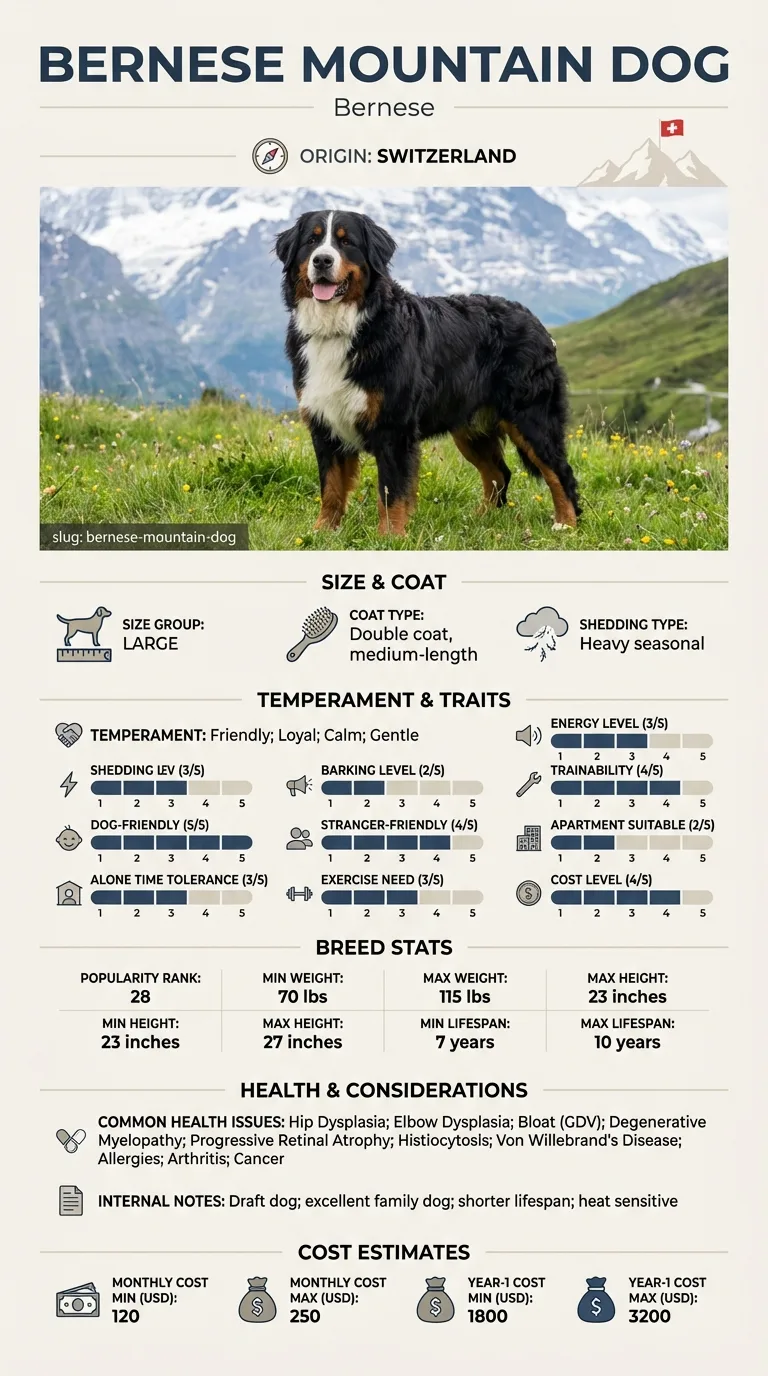
This guide is for anyone who owns a Bernese Mountain Dog or is considering adopting one, especially those dealing with anxiety-related issues.
Bernese Mountain Dog anxiety often manifests as excessive clinginess, restlessness, or destructive behavior. These dogs may seem uneasy, frequently pacing or whining when left alone. Owners may notice their Bernese becoming overly excited or nervous in unfamiliar situations, which can lead to heightened anxiety levels.
If your Bernese Mountain Dog anxiety persists despite at-home strategies, consider professional training. A behaviorist can help address specific fears and anxieties with tailored techniques.
If your dog shows severe signs of anxiety, such as destructive behavior or excessive barking, consult a vet or behaviorist. They can rule out health issues and recommend treatment options.
There are many helpful products to support your Bernese Mountain Dog's anxiety management. From calming tools to training aids, you can find options that fit your dog's needs.
Adjusting your daily routine can greatly improve your Bernese Mountain Dog's anxiety levels. Consistency is key, so stick to a schedule that includes regular exercise, playtime, and rest. This helps your dog know what to expect each day, reducing stress and anxiety.
Try to establish a daily schedule for meals, walks, and playtime. For instance, feed your Bernese Mountain Dog at the same times each day. Regular walks not only provide exercise but also help reduce anxiety.
Aim for at least one long walk and a few shorter ones throughout the day.

A Bernese Mountain Dog needs daily exercise to stay calm and happy. Plan for at least one hour of exercise each day. This can include walks, runs, or playtime in the yard.
Activities that engage their mind, like puzzle toys or training sessions, also help to alleviate anxiety.

If your Bernese struggles with separation anxiety, gradually increase the time you spend apart. Start with short periods and extend them as your dog becomes more comfortable. Provide engaging toys or a cozy space to help them feel secure when you're away.

Adjust your household routines to minimize stress. For example, create a quiet space where your dog can retreat during busy times. Consistent routines during high-activity times can help your Bernese feel more secure and less anxious.

Tracking progress with Bernese Mountain Dog anxiety can feel challenging, but focusing on small 'micro-wins' can help. Look for signs that your dog is feeling more comfortable, such as settling down quicker during stressful situations or showing less intense reactions to triggers. These small victories indicate that your training and management strategies are working, even if the overall anxiety hasn't disappeared yet.
It's also important to recognize typical setbacks. For example, if your dog experiences a new stressful event like a thunderstorm or a visit from an unfamiliar guest, they may revert to anxious behaviors. This is normal and shouldn't discourage you.
Instead, it’s a chance to reinforce your training by providing comfort and support during these times.
You’ll know your plan is effective when your Bernese Mountain Dog starts exhibiting more relaxed behaviors over time. If they begin to approach new situations with curiosity rather than fear, or if they can be left alone for longer periods without distress, these are positive indicators. If you notice little to no improvement after several weeks or if anxiety worsens, it might be time to escalate your approach.
This could include seeking advice from a trainer specializing in anxiety or considering veterinary support for additional options. Remember, progress can be slow, but your dedication will pay off.

When Sarah adopted her Bernese Mountain Dog, Lucy, she quickly noticed that Lucy was anxious during thunderstorms. Sarah tried to comfort her by staying close and speaking softly, but Lucy's anxiety didn't improve. After a particularly bad storm, Sarah decided to consult a dog trainer. The trainer suggested creating a safe space for Lucy and using calming music during storms. They also practiced desensitization techniques, gradually exposing Lucy to storm sounds while rewarding her for staying calm. With time, Lucy began to feel more secure, and storms became less stressful for both of them.
Key takeaway: For Bernese Mountain Dog anxiety, creating a safe environment and seeking professional help can make a significant difference.
Bernese Mountain Dog anxiety can stem from various factors, including genetics, lack of early socialization, or changes in their environment. This breed is sensitive and can develop anxiety when separated from their family or in stressful situations. Understanding your dog's triggers is the first step to helping them feel more secure.
Signs of anxiety in Bernese Mountain Dogs include excessive barking, destructive behavior, pacing, or hiding. They may also exhibit restlessness or try to escape when anxious. Monitoring their behavior can help you identify when they are feeling stressed.
To manage Bernese Mountain Dog anxiety, establish a routine that provides structure. Use positive reinforcement training to build confidence and consider calming products like anxiety wraps or pheromone diffusers. Regular exercise and mental stimulation can also help reduce anxiety levels.
Yes, Bernese Mountain Dog anxiety training can be very effective. Training helps them learn coping mechanisms and builds their confidence. A professional trainer experienced with anxiety issues can provide tailored strategies to support your dog.
Yes, environments with loud noises or frequent changes can increase anxiety in Bernese Mountain Dogs. They are sensitive to sounds like fireworks or thunderstorms. Creating a safe, quiet space for them can help alleviate their stress.
Consult a veterinarian if your Bernese Mountain Dog's anxiety leads to severe behavioral issues or if it affects their quality of life. They can recommend treatment options, including behavioral therapy or medication if necessary. Early intervention is key to managing anxiety effectively.
Yes, older Bernese Mountain Dogs can develop anxiety as they age. Changes in their health, vision, or hearing can contribute to feelings of insecurity, leading to anxiety. Regular vet check-ups can help monitor their health and address any emerging anxiety issues.
To ease travel anxiety for your Bernese Mountain Dog, make sure to prepare them gradually for car rides. Start with short trips and gradually increase the duration. Bringing their favorite blanket or toy can also provide comfort during longer journeys.
Common triggers for anxiety in Bernese Mountain Dogs include loud noises, being left alone, or changes in routine. Identifying these triggers is crucial for effective anxiety management. Once you know what causes their stress, you can work on desensitization techniques.
Having multiple Bernese Mountain Dogs can sometimes help with anxiety, as they may provide companionship and comfort to each other. However, it's essential to ensure that each dog has its own space and attention to avoid competition or jealousy, which can exacerbate anxiety.
Provide a consistent routine and safe space to help reduce anxiety. Positive reinforcement training can build confidence and lessen stress.
Aim for at least 60 minutes of exercise daily to help alleviate anxiety. Regular walks and playtime can make a significant difference.
Calming products like anxiety wraps or pheromone diffusers can be effective in reducing stress in anxious dogs. They can help create a more soothing environment.
Anxiety and pain look alike from the outside. Get the prep sheet for this breed's separation-anxiety page and take it to the vet.
You get: Vet visit prep sheet
No spam. One-click unsubscribe. See our privacy policy.
Preview page 1 before you decide.
This guide is not medical advice. If your dog shows pain, sudden behavior change, or worsening symptoms, consult a licensed veterinarian.
Some links may be affiliate links. We may earn a commission at no extra cost to you. We only suggest products we believe are helpful for dog owners.
We research and check what we publish, but we do not warrant that any figure, date, price, or statement is accurate, complete, or current, and we accept no liability for any loss, cost, injury, or other harm arising from the use of this site. Use it as one reference among several. You remain responsible for your own decisions and for your dog's care - confirm anything that matters with a licensed veterinarian or another qualified professional before you act on it. Full disclaimer.
Not sure which breed is right for you? Take our 2-minute quiz to find out.
Take the quiz