Costs
Australian Shepherd cost in Burlington
About $100–$188/month, $1,500–$2,700 for year one — near the national average, in a small market where specialist care means a trip to Boston.

See Australian Shepherd price across all cities →
Quick answer
Australian Shepherd cost in Burlington
About $100–$188/month, $1,500–$2,700 for year one — near the national average, in a small market where specialist care means a trip to Boston.
An Australian Shepherd in Burlington costs about $100–$188 a month, with the first year around $1,500–$2,700 — close to the national average, in a small vet market with real trade-offs worth understanding.
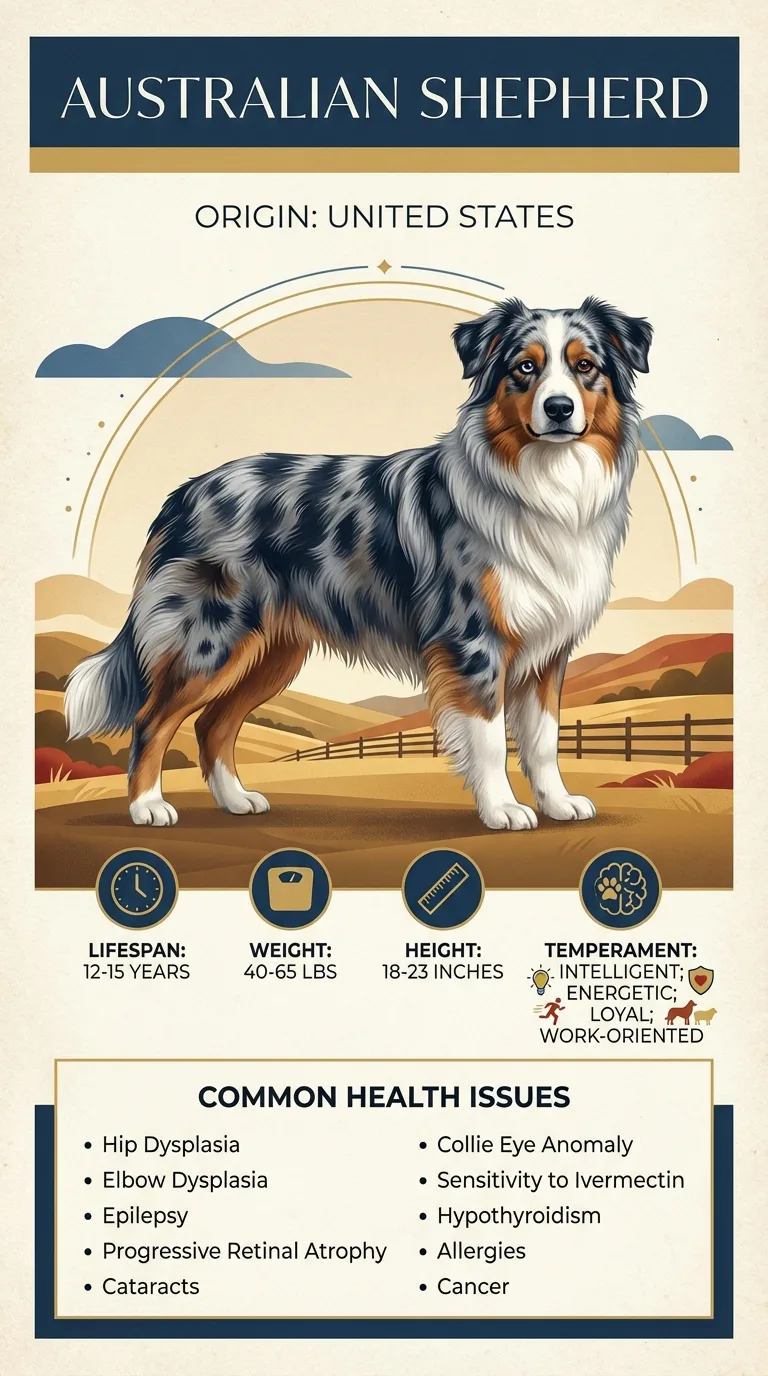
Hip and elbow dysplasia, along with epilepsy, are the breed's documented health risks most likely to produce an unplanned bill, and a specialist referral from Burlington's small market may mean traveling to Boston or another larger regional hub. Vermont's long, cold winters shorten the parasite-prevention season meaningfully, a real offset on the routine side.
These figures reflect Burlington's near-national-average general pricing with Vermont's small vet market offsetting somewhat lower base costs, plus a shortened parasite season from the state's long winters and an MDR1 genetic test as a breed-specific line item.
Estimate · source: estimation · confidence: low · updated 2026-09-05 · not a quote
| Item | Cost range |
|---|---|
MDR1 genetic test (one time) A single test, ideally done early, that tells every future vet whether the dog carries the drug-sensitivity mutation elevated in this breed. | $60 - $90 |
One-time setup (initial vet visit, spay/neuter, gear) Covers the first exam, vaccinations, spay/neuter if needed, and basic gear — priced close to the national average. | $360 - $615 |
| Item | Cost range |
|---|---|
Food Close to the national average for an active, medium-sized working breed. | $45 - $74 |
Grooming The medium double coat needs regular brushing, especially during heavy seasonal shedding; most owners handle this at home rather than paying for professional grooming. | $10 - $22 |
Flea & tick prevention One of the shorter active seasons this site covers — Vermont's long, cold winters mean several months a year with minimal flea-and-tick risk. | $10 - $20 |
Each range starts from a national baseline for this breed's size class and is then adjusted for local cost of living and veterinary pricing. The baselines, and the source each one came from, are listed on our sources page (dataset 2026.09). Two inputs, the purchase price and the emergency reserve, have no published national figure we could verify, so we leave them to you rather than invent them.
These are planning estimates, not quotes. Your own numbers will move with the individual dog, your vet and your insurer. Build a budget with your own figures.
For an Australian Shepherd in Burlington, insurance is less about local pricing and more about covering the cost and logistics of a specialist referral to Boston if hip dysplasia, elbow dysplasia, or epilepsy becomes a serious issue.
If a hip- or neurology-related case here would mean traveling out of state for a specialist, insurance purchased while the dog is young helps offset both the procedure itself and the added logistics of that trip.
Owners who've built a genuine emergency fund large enough to cover both a procedure and out-of-state travel, and who are comfortable coordinating that referral themselves, can reasonably self-insure instead.
Burlington's small market means the real planning here is around specialist logistics, not routine pricing, which stays close to the national norm.
Vermont's landscape remains genuinely dotted with small working farms, and that rural, small-farm character gives an Australian Shepherd's herding heritage real local relevance — informal herding opportunities and a general familiarity with working dogs are more common here than in a fully urbanized state, even without Montana or Idaho's scale of commercial agriculture.
The trade-off is market size: Burlington, as Vermont's largest city, still supports a comparatively small overall veterinary market, with fewer competing general practices and essentially no board-certified specialists locally. A case requiring advanced orthopedic surgery for hip or elbow dysplasia, or ongoing neurological management for epilepsy, typically means a referral to Boston or another larger regional hub several hours south — a real logistics and cost consideration worth planning for in advance rather than discovering during an emergency.
Vermont's long, cold winters shorten the flea-and-tick season meaningfully, one of the more limited active windows this site covers, and that's a genuine, if modest, offset to the added logistics cost a specialist referral can bring. The state's smaller market can also mean less price competition between the general practices that do exist, worth factoring in when comparing routine-care quotes.

A Burlington Australian Shepherd owner asked their general practitioner early on which Boston-area specialists they'd refer to if hip dysplasia symptoms ever appeared, mostly out of general caution. When the dog developed a mild limp at around age five, the owner already had a specialist's contact information and a rough sense of the drive, and was able to schedule an evaluation within days rather than scrambling to research options during a stressful moment.
Key takeaway: In a small market like Burlington's, having a specialist-referral plan in place before it's needed turns an already stressful situation into a straightforward next step rather than an added layer of scrambling.
About $100–$188, close to the national average — Vermont's smaller overall market means somewhat less price competition between clinics than a larger metro, offsetting the state's otherwise moderate cost of living.
Roughly $1,500–$2,700, including the initial vet exam, spay/neuter if needed, an MDR1 genetic test, and gear on top of ongoing monthly costs.
General veterinary care is solid, but Vermont's small market means essentially no board-certified specialists locally. A case requiring advanced orthopedic surgery or ongoing neurological management typically means a referral to Boston or another larger regional hub.
In spirit, yes — the state's small-farm-heavy landscape gives this breed's herding instincts genuine local relevance, with informal herding opportunities more common here than in a fully urbanized state, even without the commercial scale of a bigger agricultural state.
Worth considering specifically because of the referral-distance factor — if hip dysplasia or epilepsy requires specialist care out of the immediate area, insurance helps offset both the procedure and the added logistics of that trip.
Around $650 covers a typical local emergency vet visit. If a referral to Boston or a similar hub becomes necessary, plan for a considerably larger fund to cover both the procedure and the travel involved.
About $100–$188/month, $1,500–$2,700 for year one — near the national average, in a small market where specialist care means a trip to Boston.
This guide is not medical advice. If your dog shows pain, sudden behavior change, or worsening symptoms, consult a licensed veterinarian.
Some links may be affiliate links. We may earn a commission at no extra cost to you. We only suggest products we believe are helpful for dog owners.
We research and check what we publish, but we do not warrant that any figure, date, price, or statement is accurate, complete, or current, and we accept no liability for any loss, cost, injury, or other harm arising from the use of this site. Use it as one reference among several. You remain responsible for your own decisions and for your dog's care - confirm anything that matters with a licensed veterinarian or another qualified professional before you act on it. Full disclaimer.
One sheet with every line item, the emergency fund and when insurance pays off - unlocks on this page.
You get: 12-month budget sheet
No spam. One-click unsubscribe. See our privacy policy.
Preview page 1 before you decide.