Costs
Australian Shepherd cost in Anchorage
About $135–$250/month, $2,000–$3,500 for year one — high due to shipping costs, offset by a short parasite season and strong outdoor-dog culture.

See Australian Shepherd price across all cities →
Quick answer
Australian Shepherd cost in Anchorage
About $135–$250/month, $2,000–$3,500 for year one — high due to shipping costs, offset by a short parasite season and strong outdoor-dog culture.
An Australian Shepherd in Anchorage costs about $135–$250 a month, with the first year around $2,000–$3,500 — well above the national average, driven almost entirely by Alaska's remote-shipping costs rather than the breed itself.
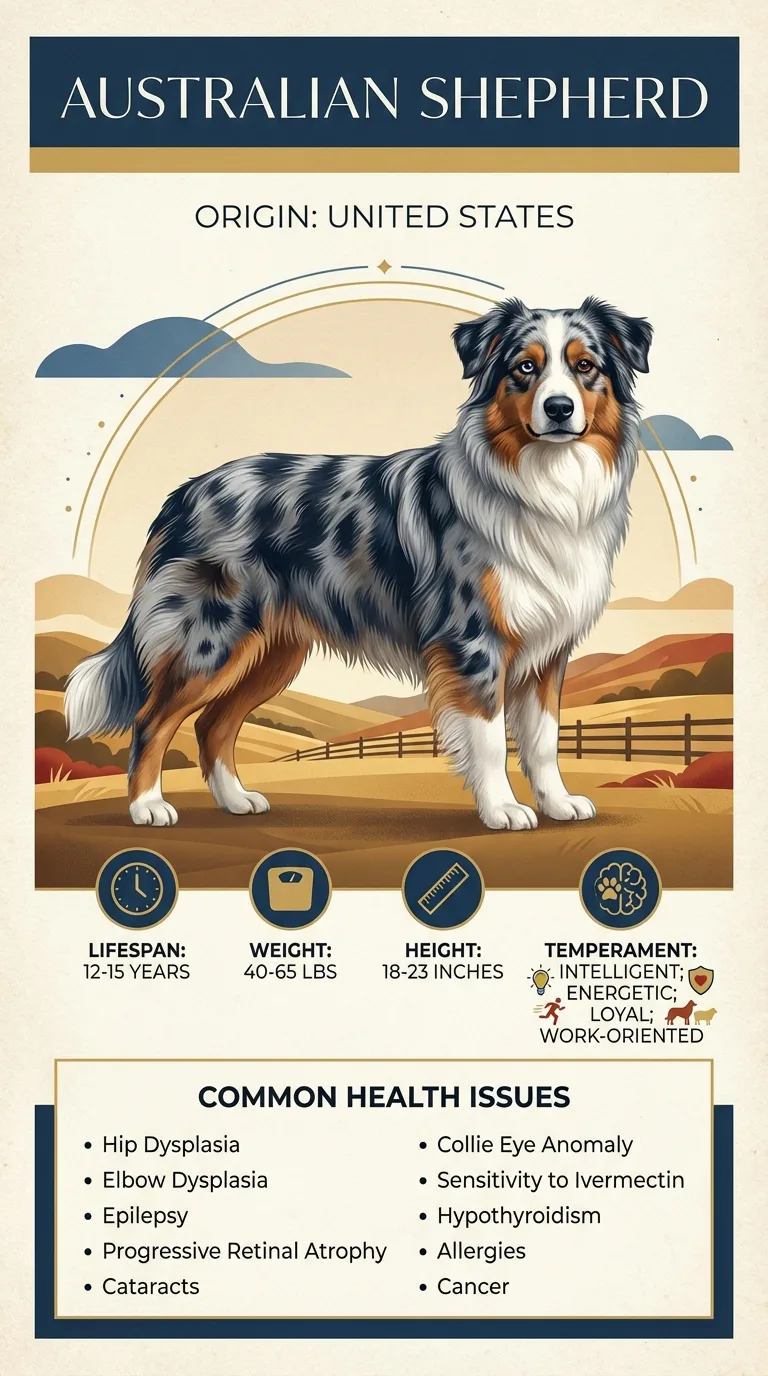
Hip and elbow dysplasia, along with epilepsy, are the breed's documented health risks most likely to produce an unplanned bill, and specialist care for either one means a flight south, not just a longer drive. This breed's very high exercise needs are less of a cost risk in Anchorage than almost anywhere else — the city has a genuinely unusual outdoor-dog culture built around its trail network and winter mushing tradition.
These figures adjust the Australian Shepherd's typical national cost range up substantially for Anchorage's remote-shipping-driven market, with a shortened parasite season as a partial offset and an MDR1 genetic test included as a breed-specific line item.
Estimate · source: estimation · confidence: medium · updated 2026-09-05 · not a quote
| Item | Cost range |
|---|---|
MDR1 genetic test (one time) A single test that tells every future vet whether the dog carries the drug-sensitivity mutation elevated in this breed — priced slightly above the national rate here, still worth doing early. | $70 - $105 |
One-time setup (initial vet visit, spay/neuter, gear) Covers the first exam, vaccinations, spay/neuter if needed, and cold-weather-appropriate gear — priced at Anchorage's above-average rates. | $420 - $720 |
| Item | Cost range |
|---|---|
Food Well above the national average due to Alaska's shipping costs; buying in bulk when a barge shipment restocks local shelves can meaningfully reduce the per-bag price. | $62 - $98 |
Grooming The medium double coat needs regular brushing, especially during heavy seasonal shedding; most owners handle this at home rather than paying premium local grooming rates. | $12 - $26 |
Flea & tick prevention One of the shortest active seasons this site covers — Alaska's brief summer means most of the year carries essentially no flea-and-tick risk. | $8 - $16 |
Each range starts from a national baseline for this breed's size class and is then adjusted for local cost of living and veterinary pricing. The baselines, and the source each one came from, are listed on our sources page (dataset 2026.09). Two inputs, the purchase price and the emergency reserve, have no published national figure we could verify, so we leave them to you rather than invent them.
These are planning estimates, not quotes. Your own numbers will move with the individual dog, your vet and your insurer. Build a budget with your own figures.
For an Australian Shepherd in Anchorage, insurance matters more than the local price level alone suggests, because a specialist referral for hip/elbow dysplasia or epilepsy typically means a flight to Seattle or another major Lower 48 city rather than a local option.
Given that a serious orthopedic or neurological case here means both a procedure cost and real travel logistics, insurance purchased while the dog is young is worth pricing out more seriously than in a market with local specialists.
Owners who've built a genuinely large emergency fund, accounting for both a procedure and potential Lower-48 travel, and who are comfortable coordinating that logistics themselves can reasonably self-insure instead.
Anchorage's shipping-driven costs are largely fixed, but this breed's other major cost lever — exercise and mental stimulation — is genuinely easier to meet here than almost anywhere else.
Alaska's remoteness from the Lower 48 means most goods, including dog food, supplies and even some veterinary consumables, travel by barge or air freight before reaching a store shelf, and that logistics cost is passed through to the buyer. It's the single biggest reason Anchorage prices run well above the national average across almost every category on this page, independent of anything specific to the Australian Shepherd.
What works genuinely in this breed's favor here is Anchorage's outdoor culture. The city maintains an extensive urban trail network, and mushing — competitive sled-dog racing — is a real, visible part of local identity, including the famous Iditarod's ceremonial start downtown. That culture means dog owners who want serious daily exercise for a high-drive working breed aren't unusual; they're the norm, and off-leash trail access is genuinely more available here than in most cities this site covers.
Alaska's short summer also means one of the shortest flea-and-tick seasons on this entire site — a real, if modest, offset to the shipping-driven cost increase elsewhere. Winter darkness and cold are the bigger practical consideration: exercising a dog that genuinely needs an hour or two of activity daily means investing in cold-weather gear and being comfortable with low-light walks for a real stretch of the year.

An Anchorage Australian Shepherd owner, new to the state, worried initially that the long dark winters would make meeting the breed's exercise needs impractical. After investing in proper cold-weather gear and connecting with the city's active local dog-trail community, daily exercise became a manageable, even social, part of the routine rather than a burden — several other owners in the neighborhood had high-energy breeds of their own and traded off group trail outings through the darkest months.
Key takeaway: Anchorage's genuine outdoor-dog culture can offset what looks on paper like a difficult climate for a high-energy breed — the real investment is gear and community, not extra money.
About $135–$250, well above the national average. This is driven almost entirely by Alaska's remote-shipping costs on food and supplies, not by anything specific to this breed.
Roughly $2,000–$3,500, including the initial vet exam, spay/neuter if needed, an MDR1 genetic test, and gear on top of ongoing monthly costs.
In several ways, yes — the city's extensive trail network and genuine outdoor-dog culture, visible in its mushing tradition, mean serious daily exercise is easier to find here than in most cities. Winter darkness and cold do require real gear and planning.
Yes — Alaska's short summer gives one of the shortest parasite-prevention seasons this site covers, a real if modest offset to the higher shipping-driven costs elsewhere in the budget.
Worth pricing out given the breed's hip/elbow dysplasia risk and epilepsy rate — a specialist referral from Anchorage typically means flying to Seattle or another major Lower 48 city, which makes insurance more valuable here than in a market with local specialists.
Around $800 covers a typical significant local vet visit. If a condition requires a specialist referral out of state, budget well beyond that for the procedure plus travel.
About $135–$250/month, $2,000–$3,500 for year one — high due to shipping costs, offset by a short parasite season and strong outdoor-dog culture.
This guide is not medical advice. If your dog shows pain, sudden behavior change, or worsening symptoms, consult a licensed veterinarian.
Some links may be affiliate links. We may earn a commission at no extra cost to you. We only suggest products we believe are helpful for dog owners.
We research and check what we publish, but we do not warrant that any figure, date, price, or statement is accurate, complete, or current, and we accept no liability for any loss, cost, injury, or other harm arising from the use of this site. Use it as one reference among several. You remain responsible for your own decisions and for your dog's care - confirm anything that matters with a licensed veterinarian or another qualified professional before you act on it. Full disclaimer.
One sheet with every line item, the emergency fund and when insurance pays off - unlocks on this page.
You get: 12-month budget sheet
No spam. One-click unsubscribe. See our privacy policy.
Preview page 1 before you decide.